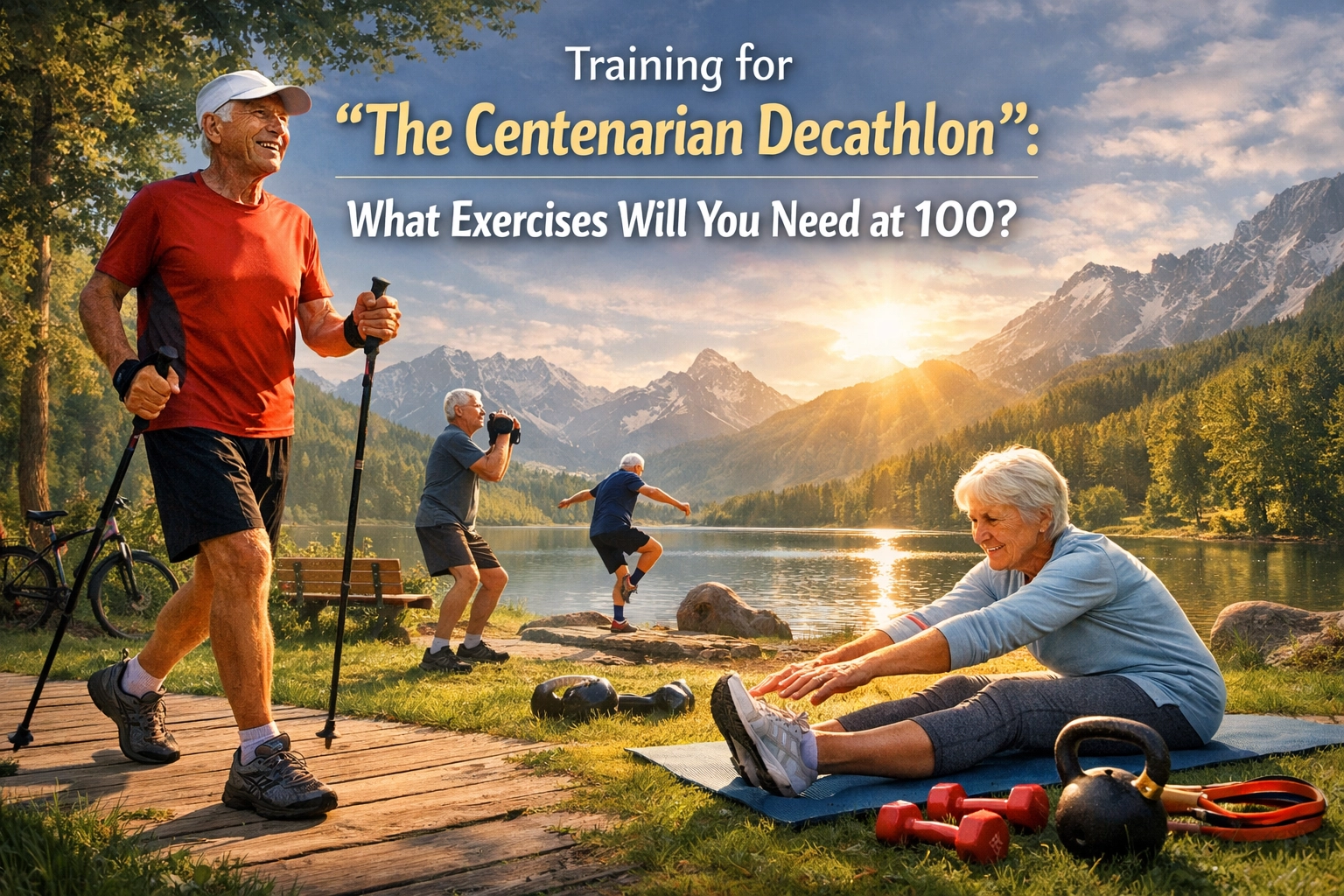
By the time most people reach their 80s or 90s, their world has shrunk. The "Marginal Decade": the final ten years of life: is often defined by physical limitation, loss of independence, and a reliance on others for basic tasks. But what if you could choose a different path? What if you trained today not for a summer beach body, but for the physical requirements of being a high-functioning 100-year-old?
This is the core philosophy of the Centenarian Decathlon, a framework popularized by longevity experts like Dr. Peter Attia. It shifts the focus from "exercise for weight loss" to "training for functional independence." In 2026, as we integrate more bio-monitoring and personalized data into our lives, the Centenarian Decathlon has become the ultimate roadmap for anyone serious about healthspan.
The Reality of Biological Decay
To understand why we need a specialized training program, we have to look at the data on aging. After the age of 30, humans typically lose 3% to 8% of their muscle mass per decade. This rate accelerates significantly after age 60. Even more concerning is the decline in VO2 max (aerobic capacity), which drops by roughly 10% per decade.
If you want to be able to hike a moderate trail at age 85, you need the aerobic capacity of a fit 50-year-old today. You have to over-index on fitness in your middle years to account for the inevitable "age tax."
The Four Pillars of Longevity Training
The Centenarian Decathlon is built on four technical pillars. Neglecting any one of these creates a "weak link" that leads to frailty.
1. Stability (The Foundation)
Stability is the ability to transfer force through the body without injury. It is the most overlooked pillar but the most critical for preventing falls: the leading cause of injury-related death in those over 65.
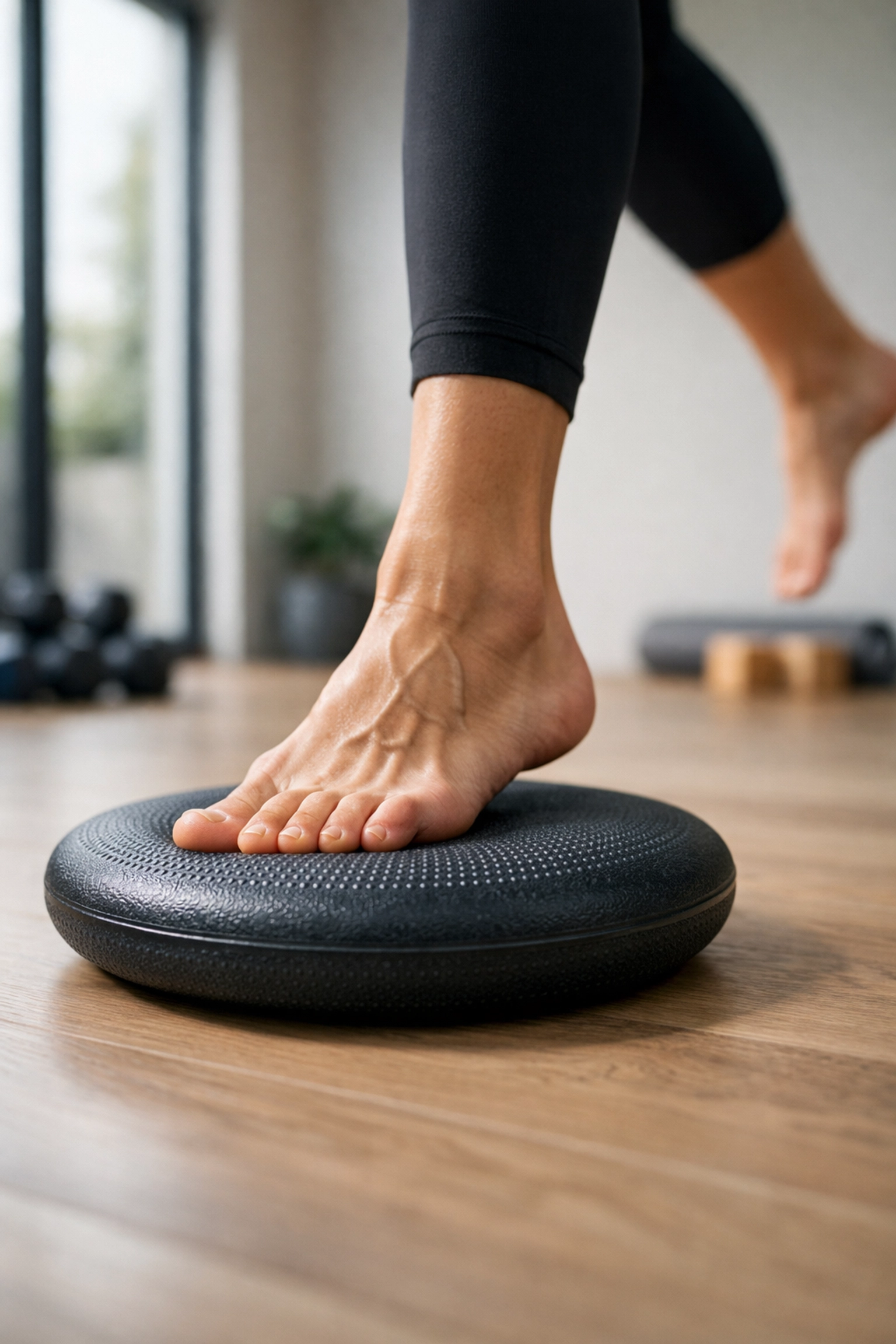
- Key Focus: Foot strength, pelvic floor stability, and spinal hygiene.
- The 2026 Standard: Using "Bio-feedback Stability Mats" or simple balance drills to ensure the brain and muscles are communicating correctly (proprioception).
2. Strength (The Longevity Currency)
Muscle is more than just a way to move; it is a metabolic organ. It regulates glucose and protects bones. In the Centenarian Decathlon, we focus on "concentric" (lifting) and "eccentric" (lowering) strength.
- Key Focus: Grip strength and compound movements.
- Why Grip Matters: Data consistently shows that grip strength is a highly accurate predictor of all-cause mortality. If you can’t hang onto a bar for 30 seconds today, you won't be able to catch yourself during a fall at age 90.
3. Zone 2 Aerobic Efficiency
Zone 2 training is low-intensity steady-state exercise where you can still hold a conversation but feel the effort. Technically, this is the intensity where your mitochondria are burning fat most efficiently.
- Metric: Maintaining a heart rate that stays below the lactate threshold.
- Goal: Building a massive "base" so your heart doesn't have to overwork during daily activities.
4. VO2 Max (The Peak)
While Zone 2 is your floor, VO2 Max is your ceiling. It is the maximum amount of oxygen your body can utilize during intense exercise. High VO2 max is the single strongest correlation with a long life.
| Age Group | "Elite" VO2 Max Goal (Men) | "Elite" VO2 Max Goal (Women) |
|---|---|---|
| 30-39 | 50+ | 44+ |
| 50-59 | 44+ | 38+ |
| 70-79 | 36+ | 30+ |
| Centenarian Target | 25+ | 20+ |
The 10 "Events" of the Centenarian Decathlon
What does a 100-year-old actually need to do? You aren't training to bench press 300 pounds. You are training for the "Decathlon of Life." Choose 10 events that matter to you. Here is a standard list of high-value functional movements:
- The Floor Reset: Get up off the floor from a lying position using only one arm for support (or none).
- The Grandchild Lift: Pick up a 30lb weight (simulating a child) from the floor without straining your back.
- The Overhead Reach: Place a 20lb suitcase in an overhead compartment.
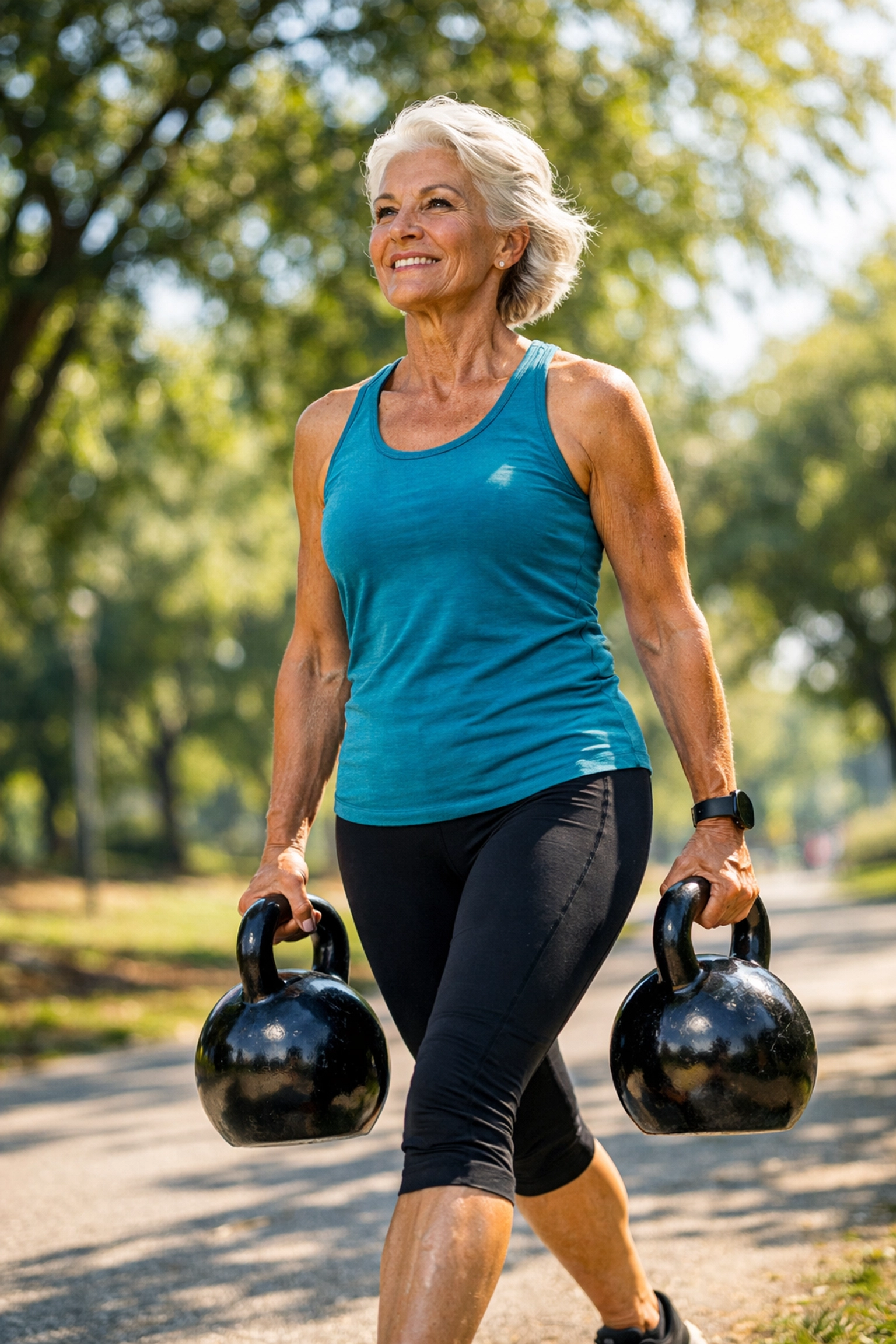
- The Grocery Carry: Carry 20lbs in each hand for 400 meters (The Farmer's Walk).
- The Stair Climb: Walk up four flights of stairs (approx. 48 steps) without having to stop or feeling "winded."
- The Jar Opener: Maintain enough grip strength to open a vacuum-sealed jar.
- The Dead Hang: Hang from a pull-up bar for at least 30 seconds to test shoulder stability and grip.
- The Single-Leg Balance: Stand on one leg for 30 seconds with eyes open (and 15 seconds with eyes closed).
- The Ruck: Walk 3 miles with a 20lb backpack in under 60 minutes.
- The Sit-to-Stand: Perform 15 repetitions of standing up from a chair without using your hands for momentum.
Technical Deep Dive: Why These Movements?
The Importance of Eccentric Strength
Most injuries in the elderly happen during the descending phase of a movement: going down stairs or sitting down too quickly. This requires eccentric strength. In your 2026 training protocol, you should focus on "tempo" lifting: 3 seconds down, 1 second up. This builds the structural integrity of the tendons and ligaments, which are the first things to fail as we age.
Mitochondrial Biogenesis
Zone 2 training (3-4 hours a week) stimulates the production of new mitochondria. As we age, mitochondrial dysfunction leads to fatigue and insulin resistance. By keeping the intensity low and the volume high, you are essentially "cleaning" your cellular engines.
Type II Muscle Fibers
While Zone 2 helps Type I (slow-twitch) fibers, the "events" like jumping or lifting heavy objects require Type II (fast-twitch) fibers. These are the fibers we lose fastest as we age. To combat this, your training must include some form of "explosive" movement: even if it’s just a fast step-up or a heavy kettlebell swing.
A Sample 2026 Weekly Protocol
To hit these decathlon goals, your week should be structured with a mix of the four pillars. In 2026, we prioritize recovery as much as the stimulus.
- Monday: Strength (Lower Body focus: Squats, Step-ups) + 10 mins Stability.
- Tuesday: Zone 2 Cardio (45–60 mins cycling or brisk walking).
- Wednesday: Strength (Upper Body focus: Over-head press, Rows, Dead Hangs) + 10 mins Stability.
- Thursday: Zone 2 Cardio (45–60 mins).
- Friday: VO2 Max Intervals (4×4 minutes at max effort with 4 mins rest).
- Saturday: "Event Practice" (Farmer's carries, rucking, or playing a sport).
- Sunday: Full Recovery / Long Walk.

Using Technology to Track Your Progress
In 2026, we no longer guess. To ensure you are on track for your 100th birthday, use the following tools:
- Continuous Glucose Monitors (CGM): To see how your Zone 2 sessions improve your metabolic flexibility.
- Wearable VO2 Max Tracking: Most high-end smartwatches now provide a "Fitness Age" based on aerobic capacity.
- DEXA Scans: Once a year, get a body composition scan to monitor your Lean Muscle Mass Index (LMMI). If this number drops, you need to increase your protein intake and resistance training.
Summary: It’s Not About the Mirror
The shift to the Centenarian Decathlon mindset is a psychological one. We are moving away from the "vanity metrics" of the 2010s and toward the "utility metrics" of the late 2020s. Every rep you do today is a deposit into a high-yield health account that you will withdraw from 40, 50, or 60 years from now.
Start by picking one event: perhaps the 30-second dead hang: and master it. Your 100-year-old self is waiting.
About the Author
Malibongwe Gcwabaza is the CEO of blog and youtube, a leading digital hub dedicated to the intersection of longevity science and practical fitness. With over a decade of experience in health-tech and performance coaching, Malibongwe focuses on simplifying complex medical research into actionable lifestyle protocols. He is a firm believer that "healthspan" is the most valuable asset any individual can own in the 21st century. When he isn't researching the latest in mitochondrial health, you can find him practicing his own Centenarian Decathlon events in the mountains of South Africa.
About the Author