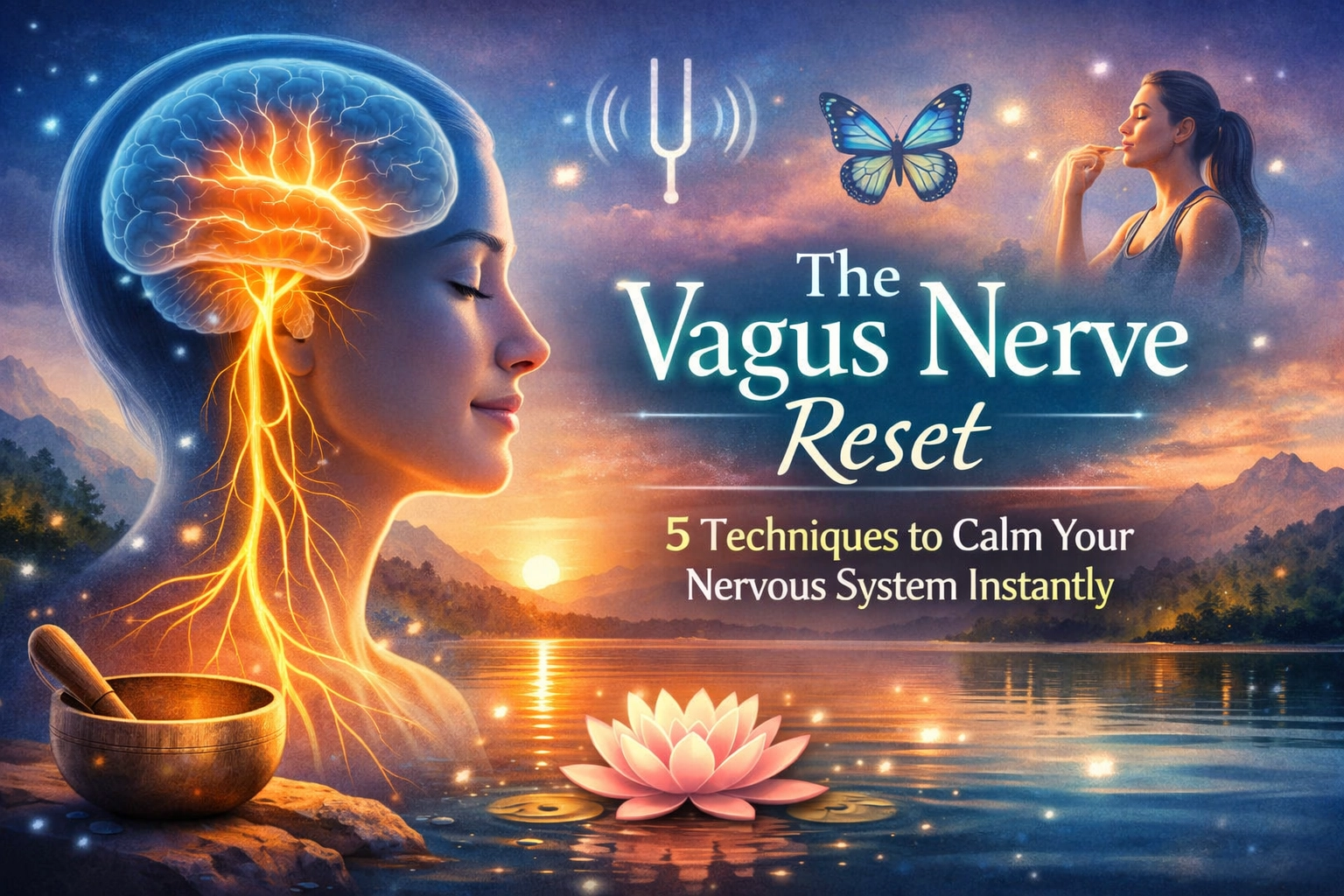
In the high-velocity world of 2026, our nervous systems are under constant siege. From the relentless stream of digital notifications to the biological stressors of modern urban living, most of us are stuck in a state of chronic "Sympathetic" dominance: the infamous fight-or-flight mode. But biology has provided us with a master "off-switch" for stress: the Vagus Nerve.
If you’ve ever felt your heart race before a presentation or experienced a "gut feeling" about a decision, you’ve felt the Vagus nerve in action. This isn't just wellness fluff; it is hard-coded biological infrastructure. Understanding how to manually "reset" this nerve is perhaps the most important health skill you can develop this decade.
Anatomy of the "Wanderer": What is the Vagus Nerve?
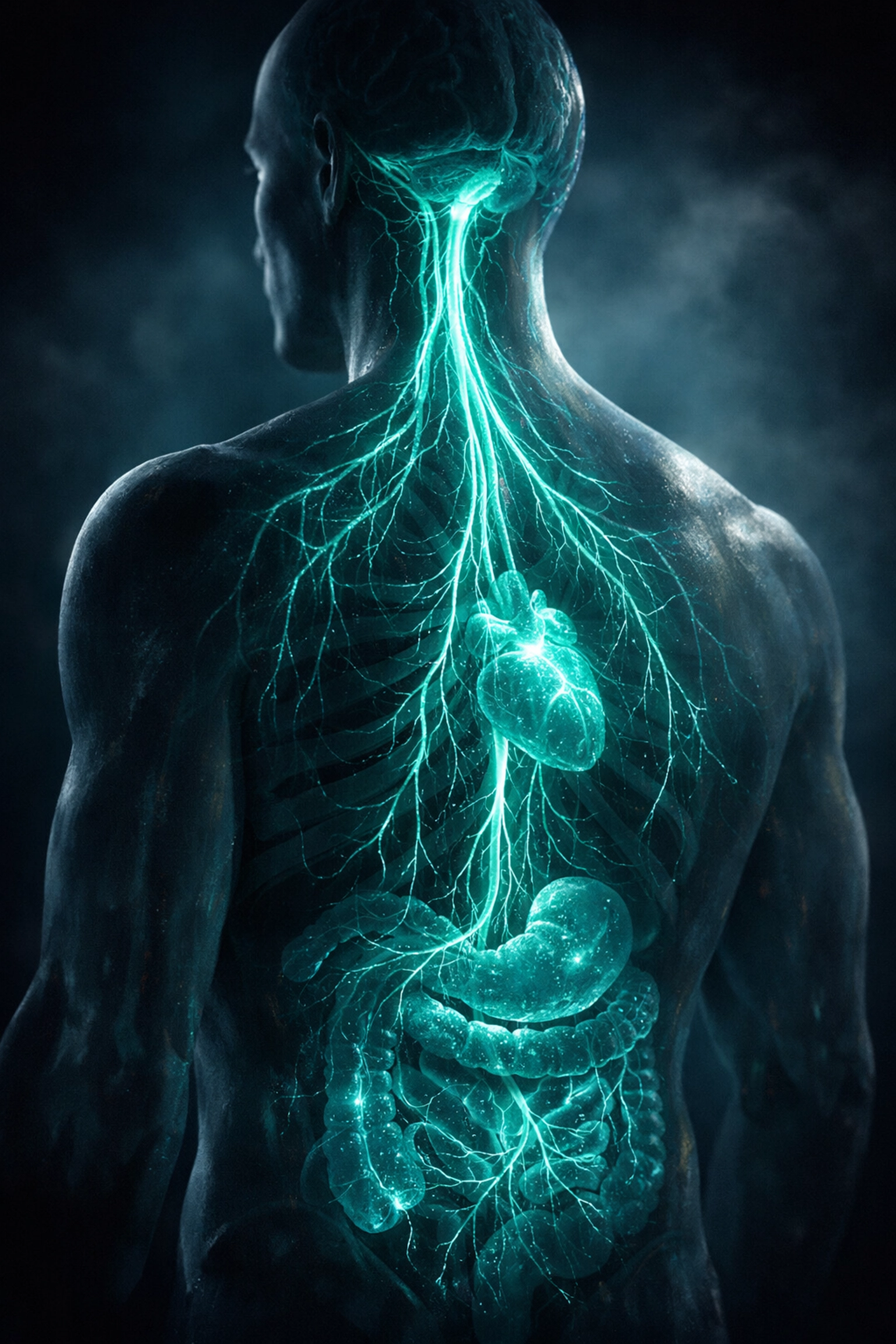
The word "Vagus" is Latin for "wandering," and for good reason. As the tenth cranial nerve, it is the longest and most complex nerve in your body. It originates in the brainstem and meanders down through the neck, into the chest, and deep into the abdomen. It acts as a bidirectional "information superhighway," carrying signals between your brain and your heart, lungs, and digestive tract.
The Vagus nerve is the primary component of the Parasympathetic Nervous System (PNS). While the Sympathetic nervous system prepares you for action (stress), the Parasympathetic system handles "Rest and Digest."
Why Vagal Tone Matters
In clinical terms, we talk about "Vagal Tone." Think of it like a muscle.
- High Vagal Tone: Your body can transition quickly from a stressed state back to a calm state. It is associated with better glucose regulation, reduced inflammation, and higher emotional resilience.
- Low Vagal Tone: You stay "wired and tired." You might struggle with anxiety, poor digestion, and chronic inflammation.
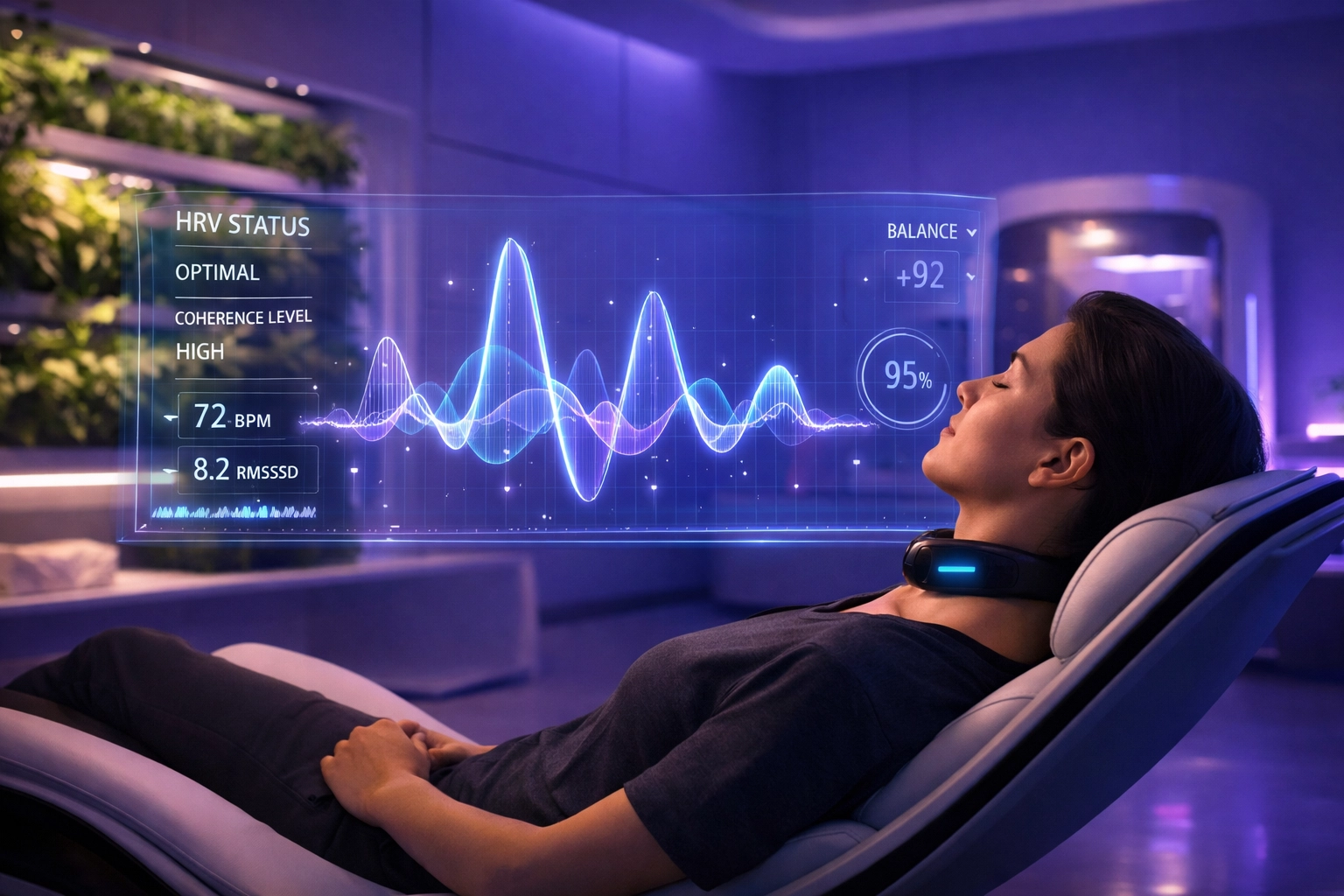
One of the most reliable ways to measure Vagal tone in 2026 is through Heart Rate Variability (HRV). A high HRV generally indicates a robust, healthy Vagus nerve responding well to the environment.
1. Controlled Diaphragmatic Breathing: The 6-8 Protocol
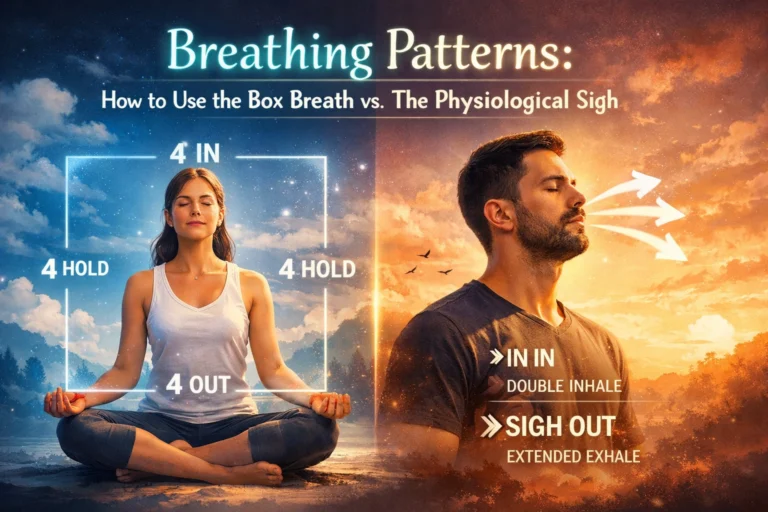
Breathing is the only autonomic function we can consciously control to influence the Vagus nerve. However, most people breathe into their upper chest when stressed, which actually signals more danger to the brain.
To trigger a Vagus reset, you must engage the diaphragm. The diaphragm is pierced by the Vagus nerve; as it moves, it physically stimulates the nerve fibers.
The Technique: The 6-in, 8-out Method
The secret to Vagus stimulation lies in the exhale. When you inhale, your heart rate speeds up. When you exhale, the Vagus nerve releases a neurotransmitter called acetylcholine, which slows the heart down. By making the exhale longer than the inhale, you force the nervous system into a parasympathetic state.
- Sit or lie down comfortably.
- Place one hand on your belly.
- Inhale through your nose for 6 seconds, feeling your belly expand (not your chest).
- Hold for a brief 1-second pause.
- Exhale slowly through pursed lips (like blowing through a straw) for 8 seconds.
- Repeat for 3 to 5 minutes.
Pro Tip: In 2026, many biohackers use "Resonant Frequency Breathing" apps to find their exact optimal breath rate, which for most adults is between 4.5 and 7 breaths per minute.
2. The Mammalian Dive Reflex: Cold Exposure
If you need an instant, "emergency" reset, cold water is your best friend. Humans share a biological remnant with diving mammals (like seals and whales) called the Mammalian Dive Reflex.
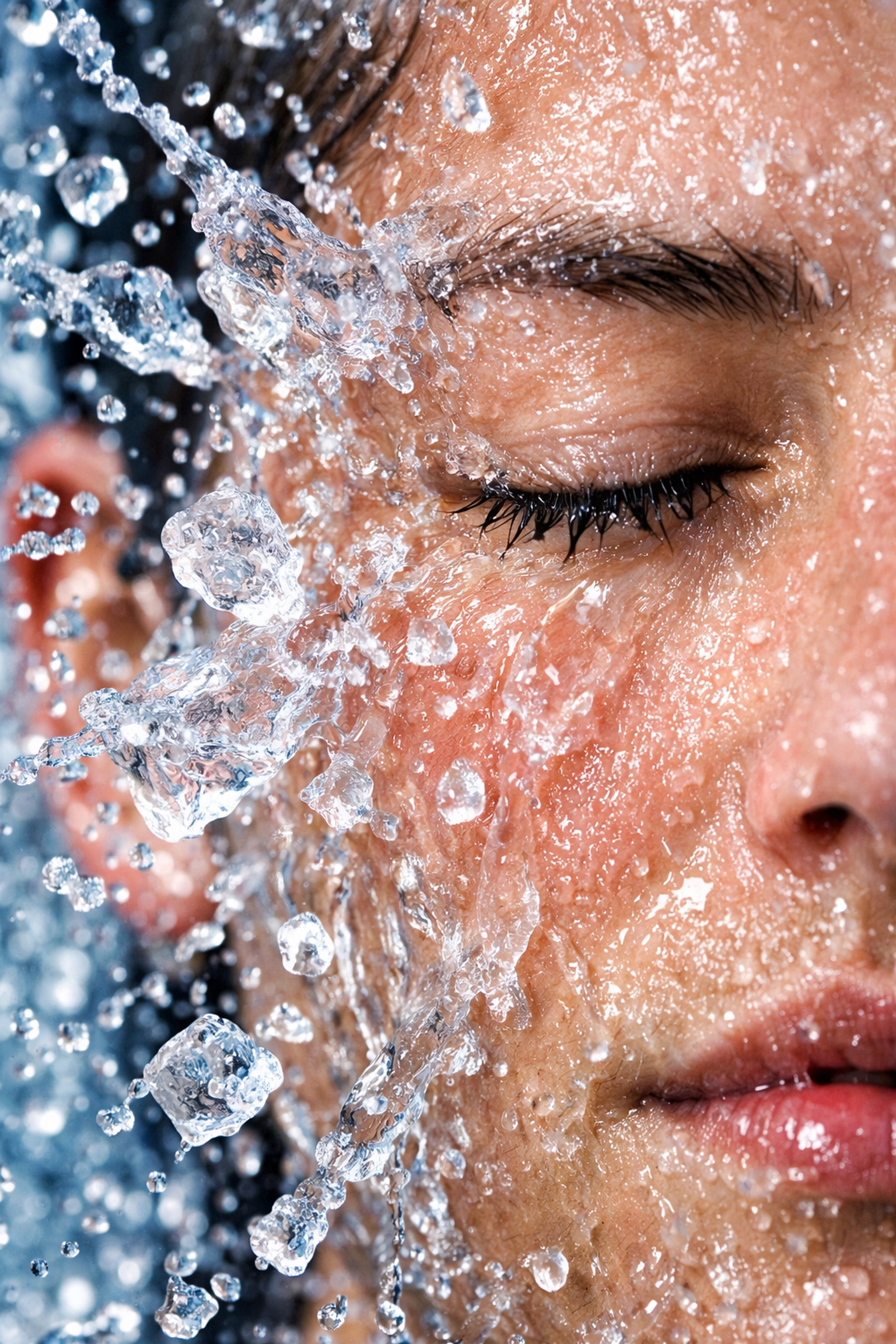
When your face: specifically the area around the eyes and nose: hits cold water, your brain triggers an immediate slowing of the heart rate and a shift in blood flow to the brain and heart. This is mediated entirely by the Vagus nerve.
How to do it:
- The Splash: Splash ice-cold water on your face for 30 seconds. Focus on the area just below the cheekbones.
- The Ice Pack: If you have makeup on or are at work, place a cold gel pack or a bag of frozen peas on the sides of your neck (where the carotid sinus is) for 2–3 minutes.
- The Full Reset: A 30-second cold finish to your morning shower. While intense, this provides a massive hit of norepinephrine and increases Vagal tone over time.
3. Vocal Vibrations: Humming, Chanting, and Singing
The Vagus nerve passes through the pharynx and larynx in the throat. This means that the mechanical vibrations of your vocal cords are a direct way to stimulate the nerve.
This is why "Om" chanting in yoga or choral singing in religious services feels so grounding. You are literally vibrating your nervous system into a state of calm.
Simple 2026 Techniques:
- Bee Breath (Bhramari Pranayama): Cover your ears with your thumbs and your eyes with your fingers. Take a deep breath and make a loud, low-pitched humming sound like a bee as you exhale. The internal vibration is incredibly potent.
- Gargling: Gargling water loudly for 30–60 seconds in the morning. This forces the muscles in the back of the throat to contract, which "wakes up" the Vagus nerve.
- Loud Singing: Belt out your favorite song in the car. The combination of deep breathing and vocal cord vibration is a double-whammy for stress reduction.
4. Manual Stimulation: The Auricular Branch
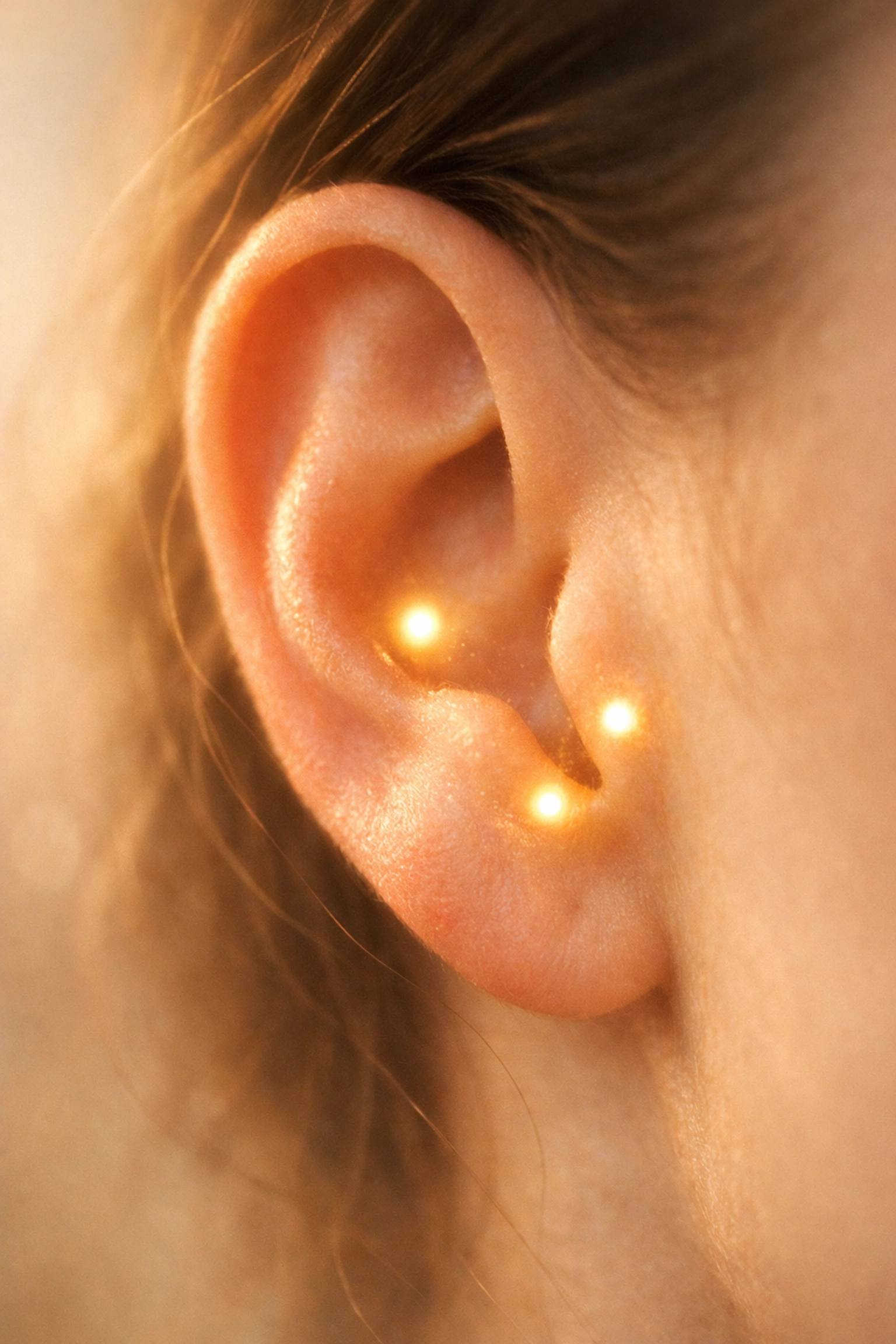
Did you know a branch of the Vagus nerve surfaces in your ear? Specifically, the Auricular Branch supplies the skin of the ear canal and the "concha" (the hollow part of the ear near the opening).
In clinical settings, "Transcutaneous Auricular Vagus Nerve Stimulation" (taVNS) is used to treat depression and epilepsy. You can achieve a milder version of this manually.
The Ear Massage Protocol:
- Use your index finger to gently massage the hollow area of your ear (the concha) in circular motions.
- Gently pull the earlobe downward and outward.
- Place your finger in the "tragus" (the small bump in front of the ear canal) and apply gentle pressure while breathing deeply.
- Do this for 2 minutes on each side.
5. The "Basic Exercise": Eye Movement Reset
Developed by somatic therapist Stanley Rosenberg, this technique uses the relationship between the cranial nerves that move the eyes and the Vagus nerve. It’s designed to "re-align" the first two cervical vertebrae (C1 and C2) and improve blood flow to the brainstem.
The Step-by-Step:
- Lie on your back.
- Interlace your fingers and place them behind your head, right at the base of the skull.
- Keeping your head still, look as far to the right as you can with your eyes only.
- Maintain this eye position until you feel a spontaneous sigh, yawn, or swallow. This is the physical sign of your nervous system "resetting." It usually takes 30–60 seconds.
- Bring your eyes back to center and repeat on the left side.
Comparative Analysis: Which Technique Should You Use?
| Technique | Speed of Effect | Best For… | Difficulty |
|---|---|---|---|
| Deep Breathing | 2-5 Minutes | General anxiety / Daily maintenance | Low |
| Cold Splash | Instant (<30 sec) | Panic attacks / Acute stress | Medium |
| Humming/Singing | 1-3 Minutes | Feeling "stuck" or emotionally low | Low |
| Ear Massage | 3-5 Minutes | Subtle, public-friendly calming | Low |
| The Basic Exercise | 1-2 Minutes | Physical tension / Neck stiffness | Medium |
The Future: Vagus Nerve Biohacking in 2026
We are seeing a massive surge in wearable tech designed to do this work for us. From "Pulsetto" to "Sensate," these devices use vibration or electrical micro-pulses to stimulate the Vagus nerve externally. While these tools are effective, they should supplement, not replace, the manual skills listed above.
The goal of Vagus nerve work isn't just to "feel relaxed" for ten minutes. The goal is Neuroplasticity. By consistently practicing these resets, you are teaching your brain that it is safe. Over months, your baseline HRV will rise, your resting heart rate will drop, and your capacity to handle the stresses of 2026 will expand exponentially.
Summary: Your Daily Vagus Protocol
To turn these "tips" into an "Ultimate Guide" for your life, try this daily stack:
- Morning: Gargle water after brushing your teeth and finish your shower with 30 seconds of cold.
- Workday: Use the "Ear Massage" during long Zoom calls or when feeling overwhelmed.
- Evening: Perform the "Basic Exercise" in bed to transition into deep, restorative sleep.
The Vagus nerve is the bridge between your physical body and your mental state. If you take care of the bridge, the traffic of your life flows much smoother.
About the Author: Malibongwe Gcwabaza
Malibongwe Gcwabaza is the CEO of blog and youtube and a leading voice in the 2026 longevity movement. With a background in systems thinking and a passion for functional fitness, Malibongwe focuses on bridging the gap between complex biological science and actionable daily habits. His mission is to empower individuals to take control of their "biological hardware" through simple, evidence-based interventions. When he’s not deep-diving into the latest PubMed research on epigenetics, you can find him practicing Zone 2 training or experimenting with the latest in neuro-wellness technology.
About the Author