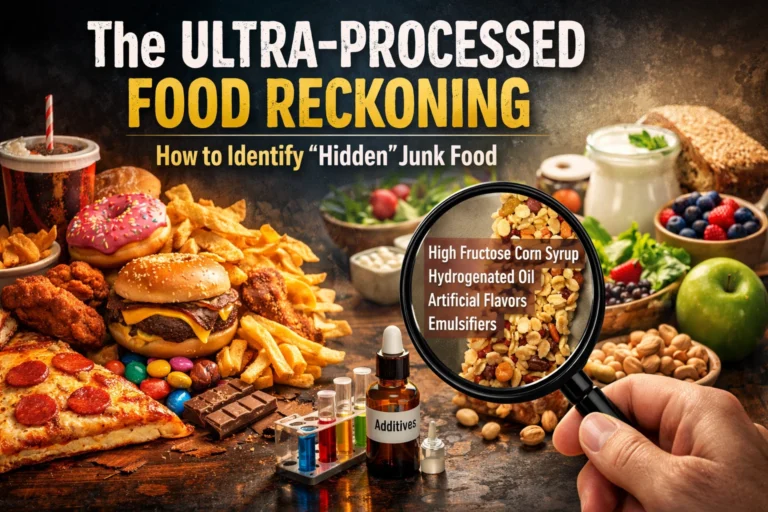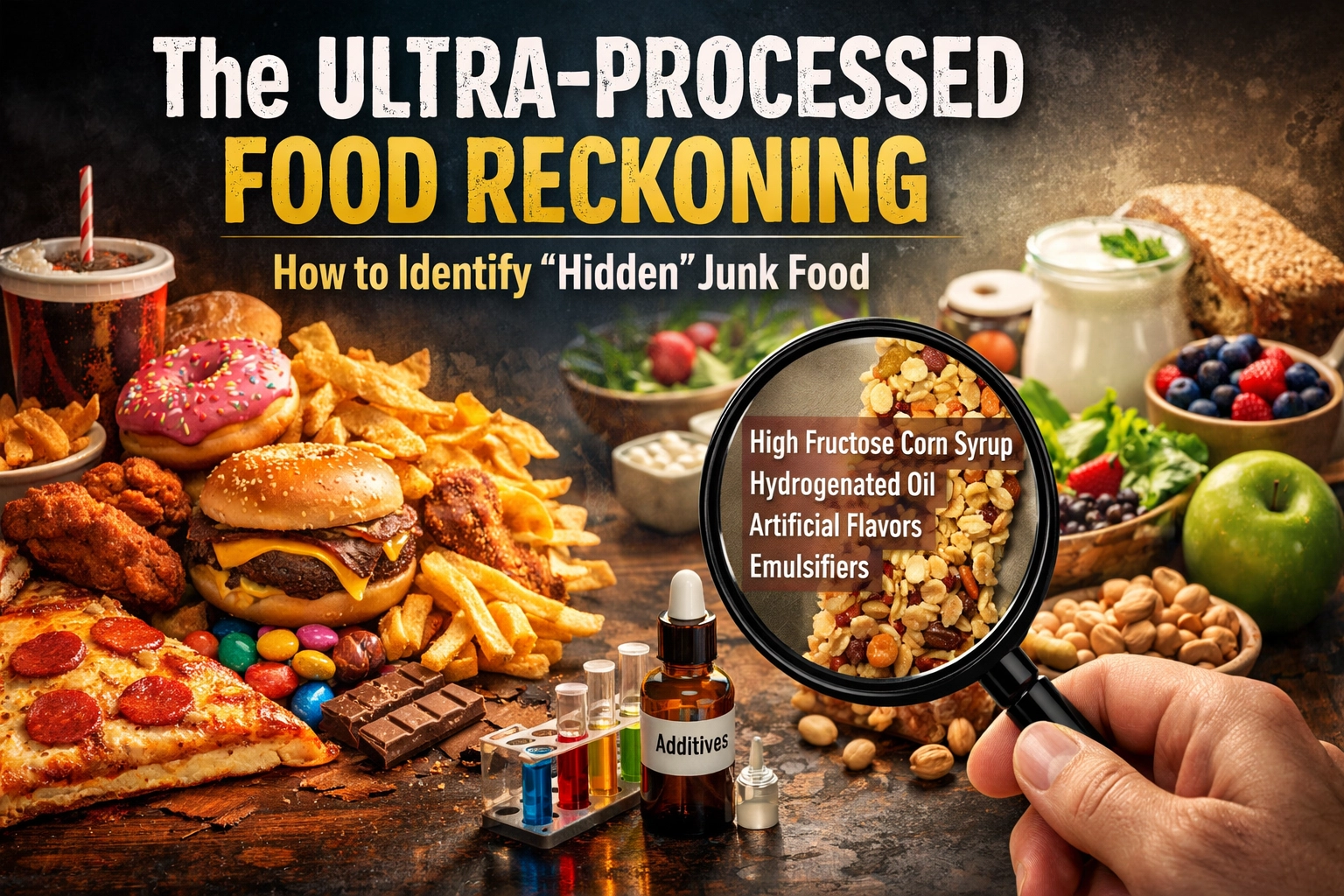
By 2026, the conversation around nutrition has shifted. We’ve moved past the simple "calories in vs. calories out" debate and landed squarely on a more pressing issue: the industrial manipulation of our food supply. We are currently in the middle of what experts call the "Ultra-Processed Food (UPF) Reckoning."
It’s no longer enough to look at the protein, carb, and fat macros on a label. If those nutrients are delivered within a chemically constructed matrix, your body processes them in a fundamentally different: and often damaging: way. The challenge is that many of these products don't look like "junk food." They look like organic protein shakes, heart-healthy cereals, and vegan meat alternatives.
This guide is designed to help you peel back the marketing layers and identify the hidden industrial additives that turn "food" into "edible substance."
What Exactly is Ultra-Processed Food? (The NOVA System)
To understand the reckoning, we have to use the scientific gold standard for food classification: the NOVA system. Developed by researchers at the University of Sao Paulo, NOVA categorizes food into four distinct groups based on the extent and purpose of industrial processing.
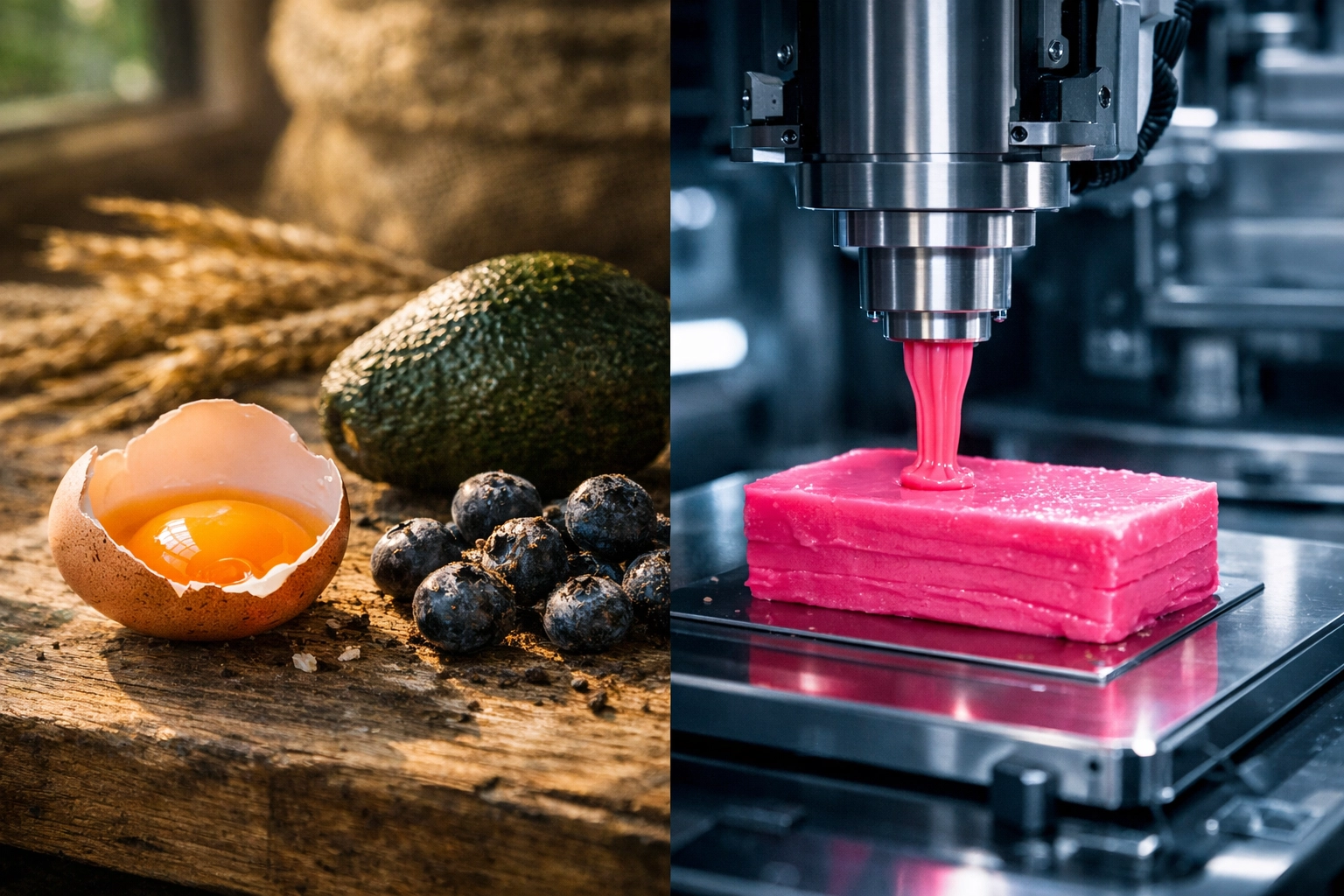
- Group 1: Unprocessed or Minimally Processed Foods. Think eggs, fruit, vegetables, nuts, and seeds. These are whole foods in their natural state or altered only by removing inedible parts (like shells or skins).
- Group 2: Processed Culinary Ingredients. Items like olive oil, butter, sugar, and salt. You don’t eat these alone; you use them to cook Group 1 foods.
- Group 3: Processed Foods. Simple combinations of Group 1 and Group 2. This includes freshly baked sourdough bread (flour, water, salt, yeast), canned beans in salted water, or simple cheeses.
- Group 4: Ultra-Processed Food (UPF). These are industrial formulations typically containing five or more ingredients. They include substances not found in a domestic kitchen: think hydrolyzed proteins, modified starches, hydrogenated oils, and "cosmetic" additives like emulsifiers and dyes.
The goal of UPF is not nutrition; it is profit and shelf-life. These foods are engineered to be hyper-palatable (you can’t stop eating them), extremely convenient, and low-cost to produce.
The Biological Cost of the "Industrial Matrix"
Why does it matter if your crackers are "ultra-processed" if the calorie count is the same as a whole-food snack?
The primary issue is the food matrix. When you eat a whole almond, the fiber, protein, and fats are bound together. Your body has to work to break them down, leading to a slow, controlled release of energy. When you eat an "ultra-processed" almond-flavored snack bar, the fiber has been stripped, the fats have been refined, and the sugars are free-floating.
Recent 2025 and 2026 longitudinal studies have shown that UPFs:
- Disrupt Satiety Signaling: They bypass the hormones (like PYY and GLP-1) that tell your brain you are full, leading to an average intake of 500 more calories per day than those on a whole-food diet.
- Decimate the Microbiome: Emulsifiers like carboxymethylcellulose and polysorbate 80 act like detergents in your gut, thinning the protective mucus lining and leading to "leaky gut" and systemic inflammation.
- Accelerate Biological Aging: High UPF consumption is directly linked to shortened telomeres: the protective caps on our DNA: effectively making your "biological age" older than your "chronological age."
How to Identify "Hidden" UPFs: The Red Flag Checklist
You won’t find "Ultra-Processed" written on the box. In fact, many UPFs are covered in "Greenwashed" labels like Natural, High Protein, or Gluten-Free. Here is how to spot them using the 2026 "Kitchen Test."
1. The "Can I Buy This?" Test
Look at the ingredient list. Can you buy every single ingredient in a standard grocery store or find it in a 1920s kitchen? If you see "Soya Protein Isolate," "Maltodextrin," or "Calcium Propionate," the answer is no. These are industrial chemicals, not food.
2. The Emulsifier Trap
Emulsifiers are the "glue" that keeps oil and water from separating in shelf-stable products. They are rampant in plant milks, "healthy" ice creams, and salad dressings.
Common culprits to avoid:
- Lecithins (when paired with other additives)
- Carrageenan
- Guar Gum / Xanthan Gum (fine in moderation, but a sign of processing)
- Mono- and diglycerides of fatty acids
3. The "Healthy" Cereal & Bread Illusion
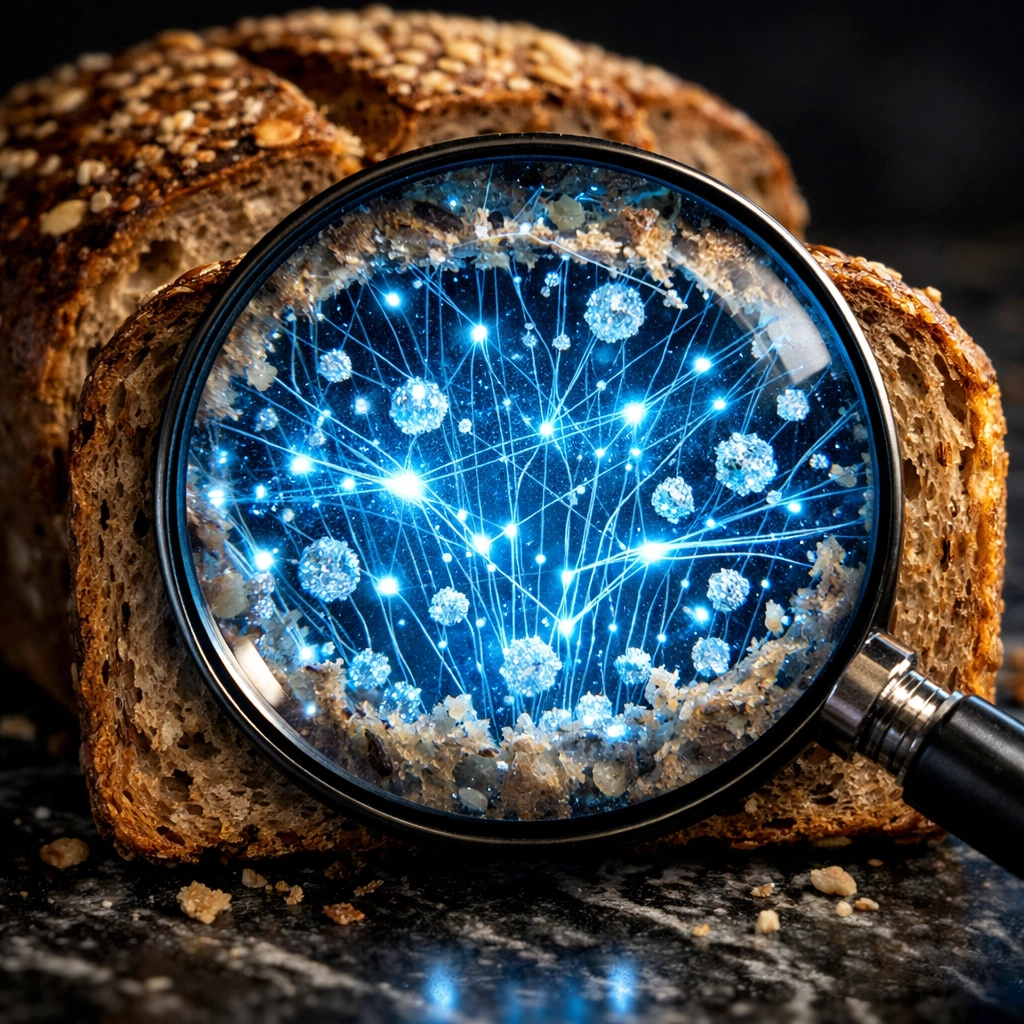
Most mass-produced "Whole Wheat" bread in 2026 contains dough conditioners and preservatives to keep it soft for weeks. Real bread (flour, water, salt) goes stale in two days. If your bread is still squishy after ten days, it’s a UPF.
| Food Category | Processed (Group 3) | Ultra-Processed (Group 4) |
|---|---|---|
| Yogurt | Plain Greek yogurt (Milk + Cultures) | Low-fat strawberry yogurt (Thickeners + Flavors + Aspartame) |
| Meat | Salted/Cured Ham | Chicken nuggets (Mechanically separated meat + Dextrose) |
| Grains | Steel-cut oats | "Instant" Maple Brown Sugar Oatmeal packets |
| Drinks | Freshly squeezed orange juice | "Fruit-flavored" Vitamin Water (Dyes + Synthetic vitamins) |
The "Healthy" Halo: UPFs Disguised as Fitness Foods
This is where most health-conscious people get tripped up. The fitness industry is one of the largest purveyors of UPFs.
Protein Bars and Shakes
Many protein bars are essentially "candy bars with a chemistry degree." They rely on sugar alcohols (erythritol, xylitol), fiber isolates (polydextrose), and protein powders that have been denatured through high-heat processing. These can cause massive bloating and disrupt your insulin sensitivity despite the "low sugar" claim.
Plant-Based Meat Alternatives
While the intent is often environmental, many "fake meats" are the definition of ultra-processed. They are constructed from pea protein isolates, methylcellulose, and coconut oil that has been chemically altered to mimic animal fat. From a metabolic standpoint, a grass-fed beef burger (Group 1) is infinitely superior to a lab-constructed plant patty (Group 4).
"Zero-Sugar" Electrolyte Drinks
Check your sports drinks. If they contain Acesulfame Potassium (Ace-K) or Sucralose, they are UPFs. Research suggests these artificial sweeteners can still trigger an insulin response and alter the gut microbiome, defeating the purpose of a "healthy" workout recovery.
Strategic Shopping: How to Reclaim Your Kitchen
Transitioning away from UPFs doesn't mean you have to live on a farm and churn your own butter. It’s about making higher-tier choices.
- Shop the Perimeter: 90% of UPFs live in the middle aisles. The produce, meat, and dairy sections (usually on the edges of the store) are your safe zones.
- The 5-Ingredient Rule: It’s not a perfect rule, but it’s a great heuristic. If a product has more than five ingredients, its likelihood of being a UPF increases exponentially.
- Ignore the Front, Read the Back: The front of the box is marketing (lies). The back of the box (the ingredient list) is the truth.
- Prioritize "Single Ingredient" Snacks: Instead of "Veggie Straws" (which are mostly potato starch and oil), go for actual carrots or raw almonds.
Summary: The Path Forward in 2026
The "Reckoning" is about regaining control. We have outsourced our cooking to giant corporations that prioritize shelf-life over human life. By identifying hidden junk food and choosing minimally processed alternatives, you aren't just "dieting": you are protecting your cellular health and your long-term healthspan.
The goal isn't 100% perfection. In 2026, we live in a busy world. The goal is to move the needle. If you can move from a diet that is 60% UPF (the current average in the US and UK) to 20% or less, the changes in your energy, skin, and metabolic markers will be nothing short of revolutionary.
Author Bio: Malibongwe Gcwabaza
CEO of blog and youtube
Malibongwe Gcwabaza is a wellness strategist and the CEO of "blog and youtube," a platform dedicated to translating complex health science into actionable lifestyle changes. With a background in metabolic health and a passion for longevity, Malibongwe has spent the last decade helping individuals navigate the modern food landscape. His "Simple Truths" philosophy has guided thousands toward better health through the power of whole-food nutrition and evidence-based fitness. When he isn't researching the latest in nutritional science, Malibongwe can be found exploring the intersection of technology and human performance.
About the Author