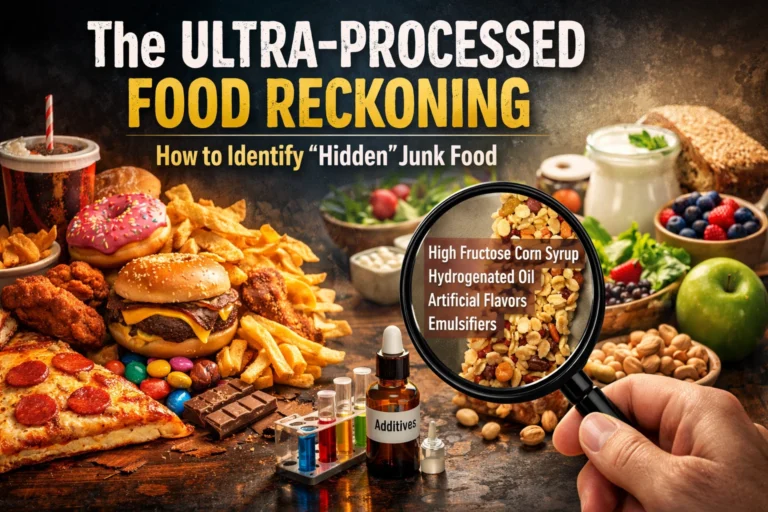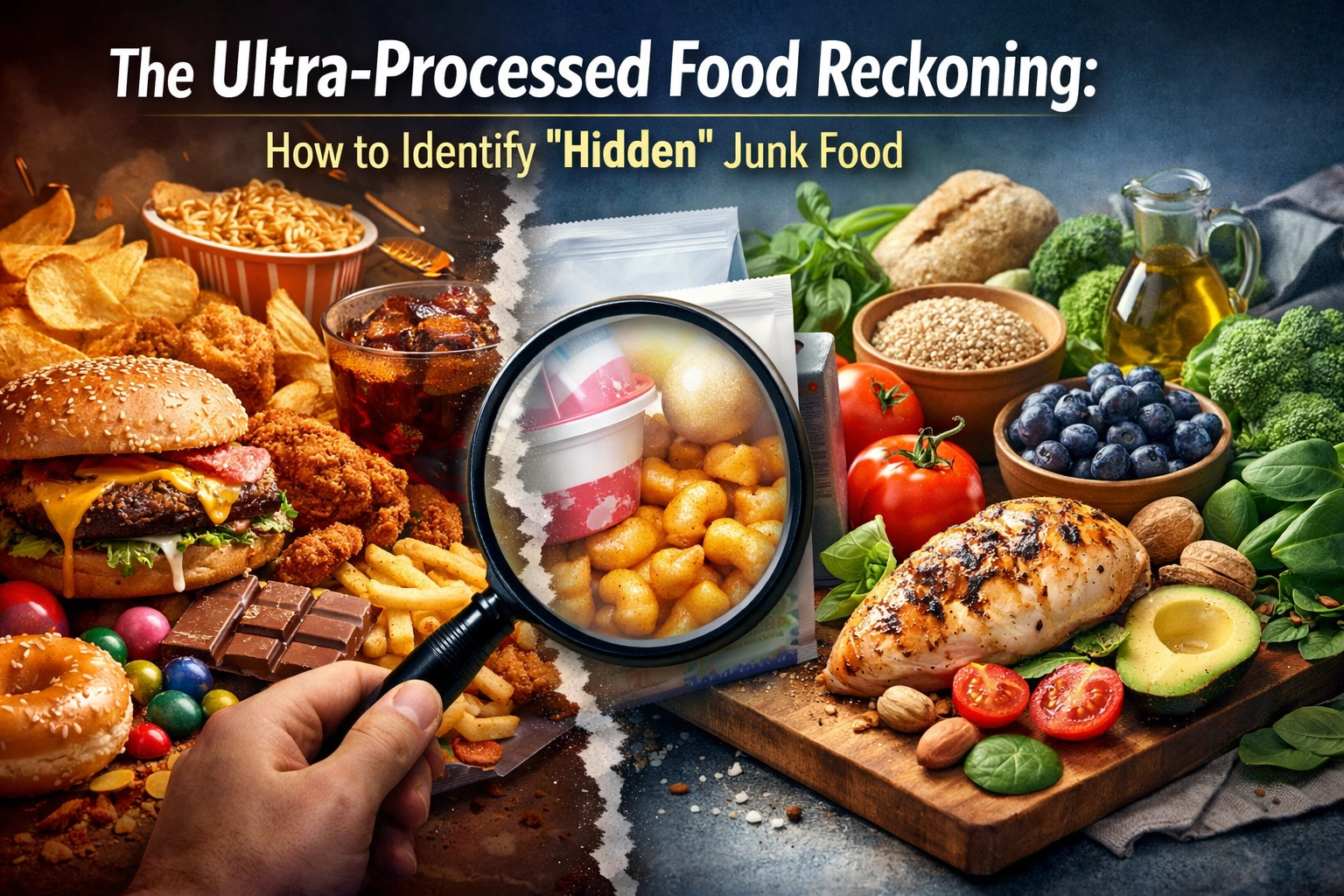
For decades, we’ve been told that "junk food" is synonymous with greasy burgers, neon-colored sodas, and bags of potato chips. But as we move through 2026, the scientific community and health-conscious consumers are facing a much harsher reality. The true danger isn't just the obvious treats; it’s the "healthy" loaf of whole-grain bread, the "organic" fruit yogurt, and the "plant-based" protein shake sitting in your pantry.
Welcome to the era of the Ultra-Processed Food (UPF) Reckoning.
Recent data suggests that in many Western nations, UPFs account for more than 60% of total caloric intake. We aren't just eating food anymore; we are consuming industrial formulations designed for profit and shelf-life rather than human biology. This guide dives deep into the technical nuances of UPFs, how they bypass your body’s natural satiety signals, and how to identify the "hidden" junk masquerading as health food.
The NOVA Classification: Understanding the Spectrum
To identify hidden junk, we must first use a scientific framework. The NOVA classification system, designed by researchers at the University of São Paulo, categorizes food into four distinct groups based on the extent and purpose of industrial processing.
Table 1: The NOVA Food Classification System
| Group | Category | Description | Examples |
|---|---|---|---|
| Group 1 | Unprocessed or Minimally Processed | Natural foods altered by removal of inedible parts, drying, crushing, or freezing. | Fresh fruit, eggs, pasteurized milk, frozen vegetables. |
| Group 2 | Processed Culinary Ingredients | Substances derived from Group 1 or nature by pressing, refining, or milling. | Butter, olive oil, honey, salt, sugar. |
| Group 3 | Processed Foods | Simple products made by adding Group 2 ingredients to Group 1 foods. | Freshly baked bread (flour, water, salt, yeast), canned sardines, simple cheeses. |
| Group 4 | Ultra-Processed Foods (UPFs) | Industrial formulations typically with 5+ ingredients. Contains substances not used in home kitchens. | Mass-produced bread, soft drinks, flavored yogurts, "instant" soups, most breakfast cereals. |
The "reckoning" happens when we realize that Group 3 is generally fine, but Group 4: the UPFs: are linked to chronic inflammation, metabolic dysfunction, and cognitive decline.
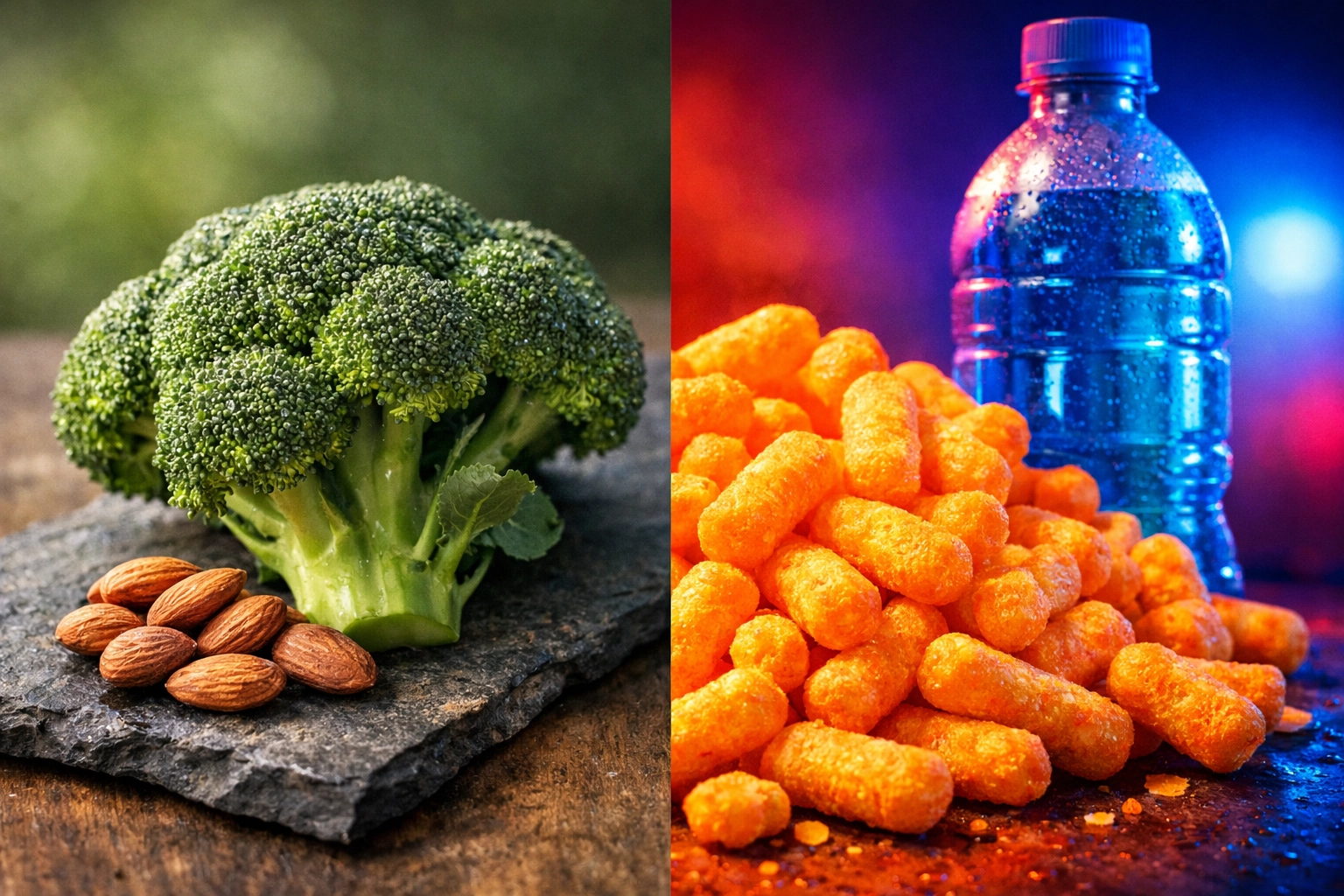
Why UPFs Are Not Just "Processed Food"
The term "processed" is often used as a catch-all, but there is a massive technical difference between a jar of fermented sauerkraut and a tube of "stackable" potato crisps.
UPFs are created through industrial processes like extrusion, molding, and pre-frying. They utilize "food-derived" substances rather than whole foods. Think of it as "deconstructing" a plant or animal into its base molecules (starches, oils, proteins) and then "reconstructing" it into something hyper-palatable using cosmetic additives.
The Mechanics of Hyper-Palatability
UPFs are engineered to hit the "Bliss Point": a specific ratio of salt, sugar, and fat that overrides the brain’s stop signals. Technically, these foods lack the fiber-to-calorie ratio found in nature. When you eat an apple, the fiber slows sugar absorption. When you drink an ultra-processed "fruit drink," the lack of cellular structure causes a glucose spike that disrupts metabolic flexibility and promotes fat storage.
How to Spot "Hidden" Junk Food: The 2026 Red Flag List
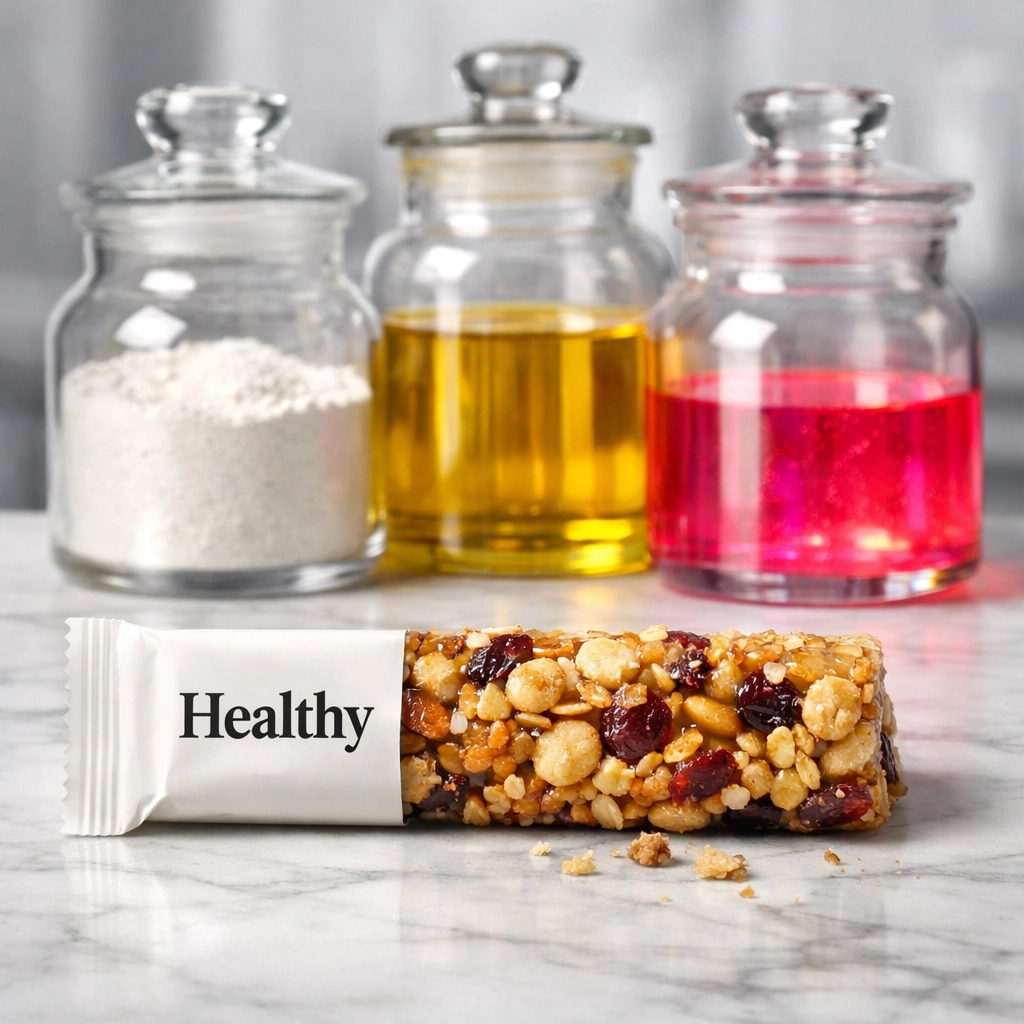
The marketing machines of 2026 are sophisticated. They use terms like "Natural," "High Protein," and "Gut Friendly" to mask a UPF profile. To protect your healthspan, you must ignore the front of the box and scrutinize the ingredient list.
1. The "Kitchen Test"
If the ingredient list contains items you wouldn't find in a standard home pantry, it’s likely a UPF.
- Red Flags: Soy protein isolate, maltodextrin, high-fructose corn syrup (HFCS), invert sugar, interesterified oils, and mechanically separated meat.
2. Cosmetic Additives
These are used to make industrial slurry look and taste like real food.
- Emulsifiers: Carboxymethylcellulose, polysorbate 80, and carrageenan. Emerging research in 2026 links these to "leaky gut" by thinning the protective mucosal layer of the intestines.
- Flavor Enhancers: Monosodium glutamate (MSG) derivatives and "natural flavors" (which can contain dozens of undisclosed chemicals).
3. The Surprising Culprits
- Supermarket Breads: Traditional bread needs only four ingredients. Most supermarket "whole wheat" breads contain 15+, including DATEM (an emulsifier), calcium propionate (preservative), and sugar.
- Plant-Based Meats: While marketed as eco-friendly, many are highly processed isolates held together by methylcellulose and refined seed oils.
- Flavored Yogurts: Often contain more sugar than a soda and use thickeners like modified corn starch to mimic the creaminess of real fat.
The Biological Impact: Beyond Just Calories
The reason we are prioritizing this "reckoning" is that UPFs change our biology in ways that simple "calorie counting" cannot explain.
1. The Gut Microbiome
UPFs are essentially "sterile" and devoid of the diverse fibers our gut bacteria crave. The emulsifiers and artificial sweeteners found in "diet" UPFs can shift the microbiome toward a pro-inflammatory state, contributing to what scientists call Inflammaging: the acceleration of the aging process via chronic low-grade inflammation.
2. The Satiety Gap
Research shows that people consuming UPFs tend to eat about 500 more calories per day than those eating unprocessed foods, even when the meals are matched for macro-nutrients. Why? Because UPFs are "soft" and require less chewing (reducing cephalic phase digestion) and are absorbed too quickly in the upper GI tract, failing to trigger the hormones (like PYY and GLP-1) that tell your brain you're full.
3. Rapid Glucose Spikes
Even savory UPFs often have a high Glycemic Index due to the breakdown of food structures during processing. This leads to insulin spikes, which over time, reduces Metabolic Flexibility: your body’s ability to switch between burning carbs and burning fat.

The 2026 Guide to "De-Processing" Your Diet
You don't have to live on a farm to escape the UPF trap. It’s about making strategic, informed choices.
- Prioritize the Perimeter: Shop the edges of the grocery store (produce, meat, eggs, dairy) where Group 1 foods live.
- The 5-Ingredient Rule: Aim for packaged foods with five or fewer ingredients. If you can’t pronounce it, your body probably doesn't know what to do with it.
- Swap Your Staples:
- Instead of: Flavored Instant Oats -> Try: Steel-cut oats with fresh berries.
- Instead of: Commercial Salad Dressing -> Try: Extra virgin olive oil and lemon juice.
- Instead of: "Protein Bars" -> Try: Hard-boiled eggs or a handful of raw walnuts.
- Demand Transparency: Support brands that use "Clean Label" processing or Group 3 methods (like traditional fermentation).
Conclusion: Reclaiming Your Biology
The Ultra-Processed Food Reckoning isn't about perfection; it’s about awareness. In 2026, the food industry is more skilled than ever at hiding junk behind health claims. By understanding the NOVA classification and learning to decode the technical language on labels, you take back control of your metabolic health.
Remember, your body is a biological system, not a steam engine. It doesn't just need fuel; it needs the complex information found in whole, unprocessed foods to function at its peak.
Author Bio: Malibongwe Gcwabaza
CEO of blog and youtube
Malibongwe Gcwabaza is a visionary leader in the digital health and wellness space, dedicated to bridging the gap between complex nutritional science and everyday lifestyle choices. With a background in strategic health communication, Malibongwe focuses on "The Centenarian Decathlon": helping people build the physical and metabolic foundations to live vibrantly well into their 90s and 100s. Through "blog and youtube," he champions deep-dive, data-driven content that empowers individuals to see through marketing hype and reclaim their biological potential. When not dissecting the latest longevity research, he is an advocate for functional fitness and holistic mental wellness.
About the Author