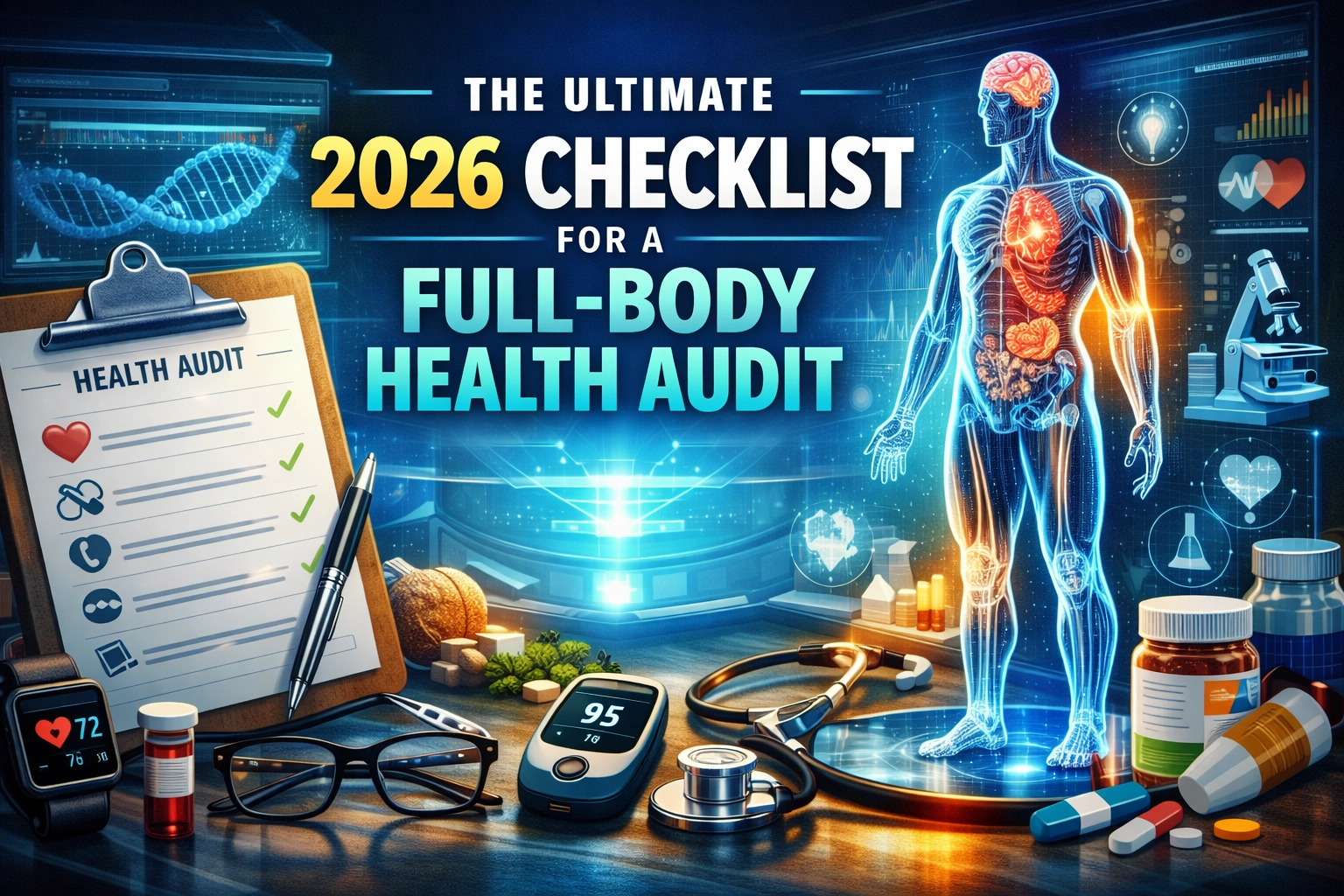
In 2026, the concept of a "yearly physical" has undergone a massive transformation. We’ve moved away from reactive medicine: where you only see a doctor when something breaks: and into the era of Proactive Longevity. A full-body health audit is no longer just a quick blood pressure check and a pat on the back. It is a data-driven deep dive into your biological machinery.
To truly understand your health status today, you need to look at traditional clinical markers alongside modern bio-metrics like VO2 max, biological age, and continuous glucose data. This guide provides a comprehensive, technical roadmap for conducting a full-body health audit that meets the high standards of 2026 preventive science.
1. The Foundational "Big Five" Clinical Markers
Before diving into advanced longevity testing, you must master the basics. These five areas represent the highest leverage points for preventing the "Four Horsemen" of aging: cardiovascular disease, cancer, neurodegenerative disease, and type 2 diabetes.
Cardiovascular Health (Lipidomics)
Standard cholesterol tests are often insufficient. In 2026, we prioritize Apolipoprotein B (ApoB). While LDL-C measures the amount of cholesterol, ApoB measures the number of particles that actually cause plaque buildup in your arteries.
- Target: ApoB < 60 mg/dL for optimal longevity.
- Audit Step: Request a full lipid panel plus ApoB and Lipoprotein(a).
Metabolic Health (Glycemic Control)
Your fasting glucose is a "snapshot," but your HbA1c is a three-month average. For a true audit, many professionals now use a 14-day Continuous Glucose Monitor (CGM) trial to see how specific foods affect their unique biology.
- Target: HbA1c < 5.3%; Fasting Insulin < 5 uIU/mL.
Blood Pressure
Hypertension remains the "silent killer." In 2026, the gold standard is no longer a single reading in a stressful doctor's office, but Ambulatory Blood Pressure Monitoring (ABPM) or consistent home tracking.
- Target: 115/75 mmHg.
Body Composition (Beyond BMI)
BMI is a blunt instrument that fails to account for muscle mass. A 2026 health audit requires a DEXA Scan. This provides a precise breakdown of bone density, lean muscle mass, and: most importantly: Visceral Adipose Tissue (VAT).
- Target: VAT < 1 lb (or as low as possible), as this fat surrounds your organs and drives inflammation.
Inflammation (hs-CRP)
Chronic systemic inflammation accelerates every aging process. The High-Sensitivity C-Reactive Protein (hs-CRP) test measures this internal "fire."
- Target: hs-CRP < 1.0 mg/L.

2. The 2026 Age-Specific Screening Matrix
Your health audit should evolve as you do. Below is a structured table showing which high-tech screenings to prioritize based on your current decade.
| Life Stage | Primary Focus | Key Screenings |
|---|---|---|
| The 20s & 30s | Baseline & Prevention | Baseline ApoB, Vitamin D3/Omega-3 Index, Skin Map (Mole tracking), STI screening. |
| The 40s | Early Detection | First Colonoscopy (or Cologuard), Mammogram/Prostate Baseline, Calcium Score (CAC) scan. |
| The 50s | Structural Integrity | Bone Density (DEXA), Cancer screening (Galleri multi-cancer early detection blood test). |
| The 60s+ | Cognitive & Functional | Cognitive baseline (MoCA), Frailty assessment, Carotid Ultrasound, Hearing/Vision audits. |
3. Advanced Blood Work: The Deep Dive
A comprehensive audit requires looking "under the hood" at your micronutrients and hormonal balance. Deficiencies here often explain symptoms like fatigue, brain fog, and poor recovery.
- Vitamin D (25-Hydroxy): Essential for immune function and bone health. Aim for 50-80 ng/mL.
- Omega-3 Index: Measures the percentage of EPA and DHA in red blood cell membranes. A level > 8% is associated with a 90% reduction in sudden cardiac death.
- Homocysteine: An amino acid that, when elevated, suggests B-vitamin deficiencies and increased stroke risk. Aim for < 9 µmol/L.
- Hormonal Panel: For men, Total and Free Testosterone. For women, Estrogen, Progesterone, and FSH/LH (especially in perimenopause).
- Thyroid Panel: Go beyond TSH. Request Free T3, Free T4, and Thyroid Antibodies to rule out subclinical autoimmunity.

4. Measuring Biological Age vs. Chronological Age
In 2026, we no longer just count birthdays. We measure Epigenetic Clocks. These tests look at DNA methylation patterns to see how "fast" your cells are aging.
- DunedinPACE: This is currently the most sensitive "speedometer" for aging. It tells you how many biological years you are aging for every chronological year.
- PhenoAge: A calculation based on 9 simple blood markers that correlates strongly with mortality risk.
If your biological age is higher than your chronological age, your health audit should trigger a "lifestyle intervention" in sleep, nutrition, or zone 2 exercise.
5. Functional Performance: The Longevity "Decathlon"
Dr. Peter Attia popularized the "Centenarian Decathlon": the idea that you should train for the physical tasks you want to perform at age 100. Your 2026 audit must include these functional metrics:
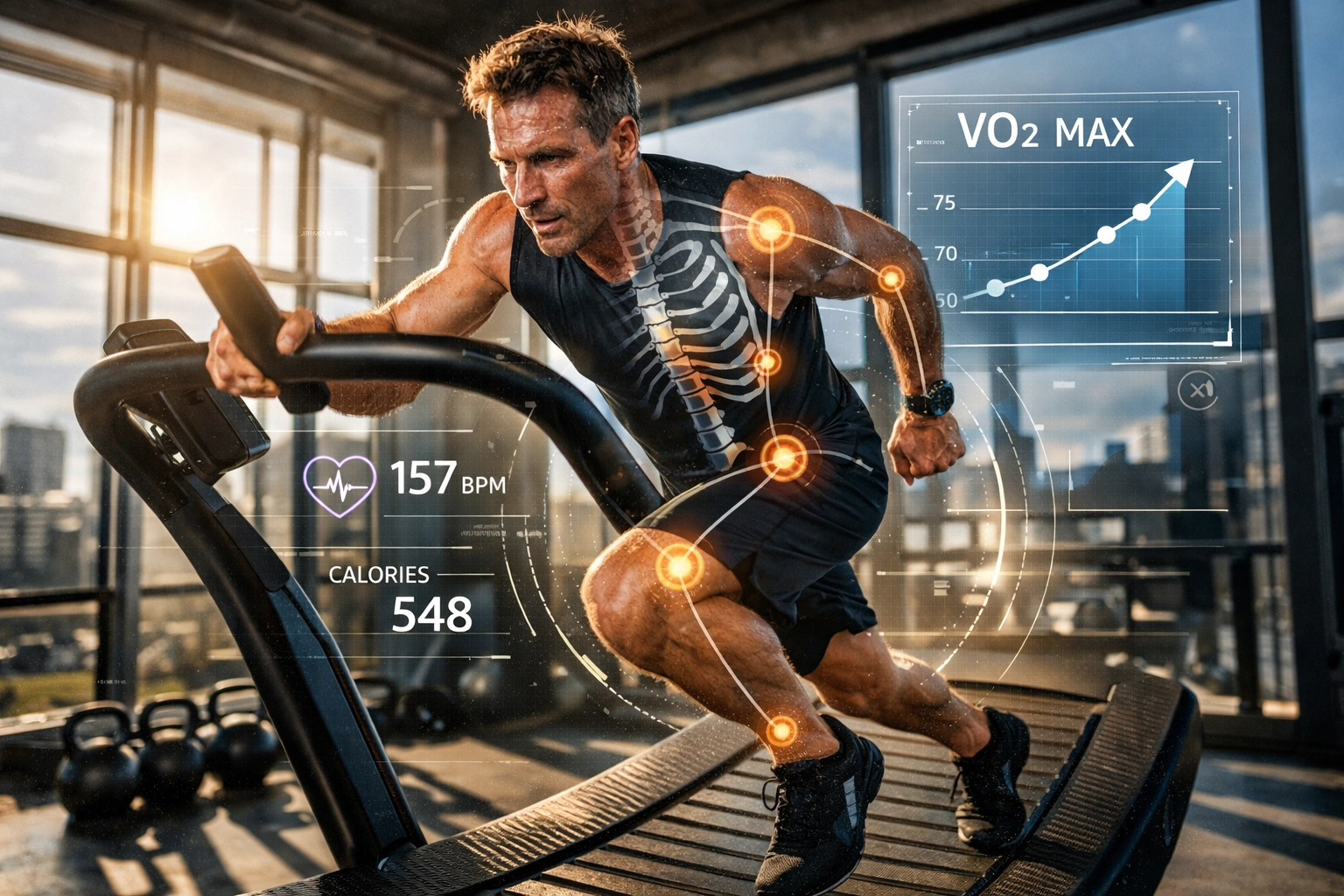
VO2 Max
This is the single best predictor of how long you will live. It measures your body's ability to utilize oxygen.
- The Audit: Perform a sub-maximal or maximal treadmill test. You want to be in at least the "Top 25th Percentile" for your age group to ensure a long "healthspan."
Grip Strength
Low grip strength is a proxy for overall muscle mass and is highly correlated with all-cause mortality.
- The Audit: Use a hand dynamometer. Men should aim for > 40kg; Women > 25kg (scaled for age).
Balance and Stability
Falls are a leading cause of injury in older adults.
- The Audit: The "Single-Leg Stance" test. Can you stand on one leg for 30 seconds with your eyes open? What about 10 seconds with your eyes closed?
6. The "Invisible" Audit: Mental and Neurological Health
A full-body audit is incomplete without checking the command center: your brain.
- Sleep Architecture: Use a wearable (Oura, Whoop, Apple Watch) to audit your sleep for 7 consecutive days. You are looking for a minimum of 1.5 hours of Deep Sleep and 1.5 hours of REM sleep.
- Heart Rate Variability (HRV): This is a window into your Autonomic Nervous System. A consistently low HRV for your baseline indicates chronic stress and poor recovery.
- Cognitive Baseline: Use digital tools like BrainHQ or Cambridge Brain Sciences to track your memory, focus, and processing speed annually.
7. Environmental & Gut Health
With the rise of microplastics and ultra-processed foods, the 2026 audit includes environmental stressors.
- Microbiome Diversity: A stool test (like Viome or DayTwo) can identify if your gut bacteria are producing anti-inflammatory short-chain fatty acids or harmful endotoxins.
- Heavy Metals: If you consume high-mercury fish or live in an older home, a blood or hair test for Lead, Mercury, and Arsenic is vital.
- Environmental Toxins: Tests for PFAS ("forever chemicals") and phthalates are becoming more common in premium longevity clinics.
8. Summary Checklist for Your Next Appointment
To make this actionable, here is your 2026 "Health Audit Script" to take to your practitioner:
- Comprehensive Metabolic Panel (CMP) & CBC.
- Cardiovascular: ApoB, Lp(a), hs-CRP.
- Metabolic: Fasting Insulin, HbA1c.
- Nutrients: Vitamin D, B12, Magnesium, Omega-3 Index.
- Hormones: Full Thyroid (T3/T4/TSH) and sex hormones.
- Imaging: Request a DEXA scan for body fat/bone density.
- Physical: Test VO2 Max and Grip Strength.
Author Bio
Malibongwe Gcwabaza is the CEO of blog and youtube and a leading voice in the 2026 health optimization space. With a background in data-driven wellness and a passion for longevity science, Malibongwe focuses on translating complex medical research into actionable lifestyle protocols. When not auditing his own biological markers, he explores the intersection of AI and personalized medicine to help others live better, not just longer.
About the Author