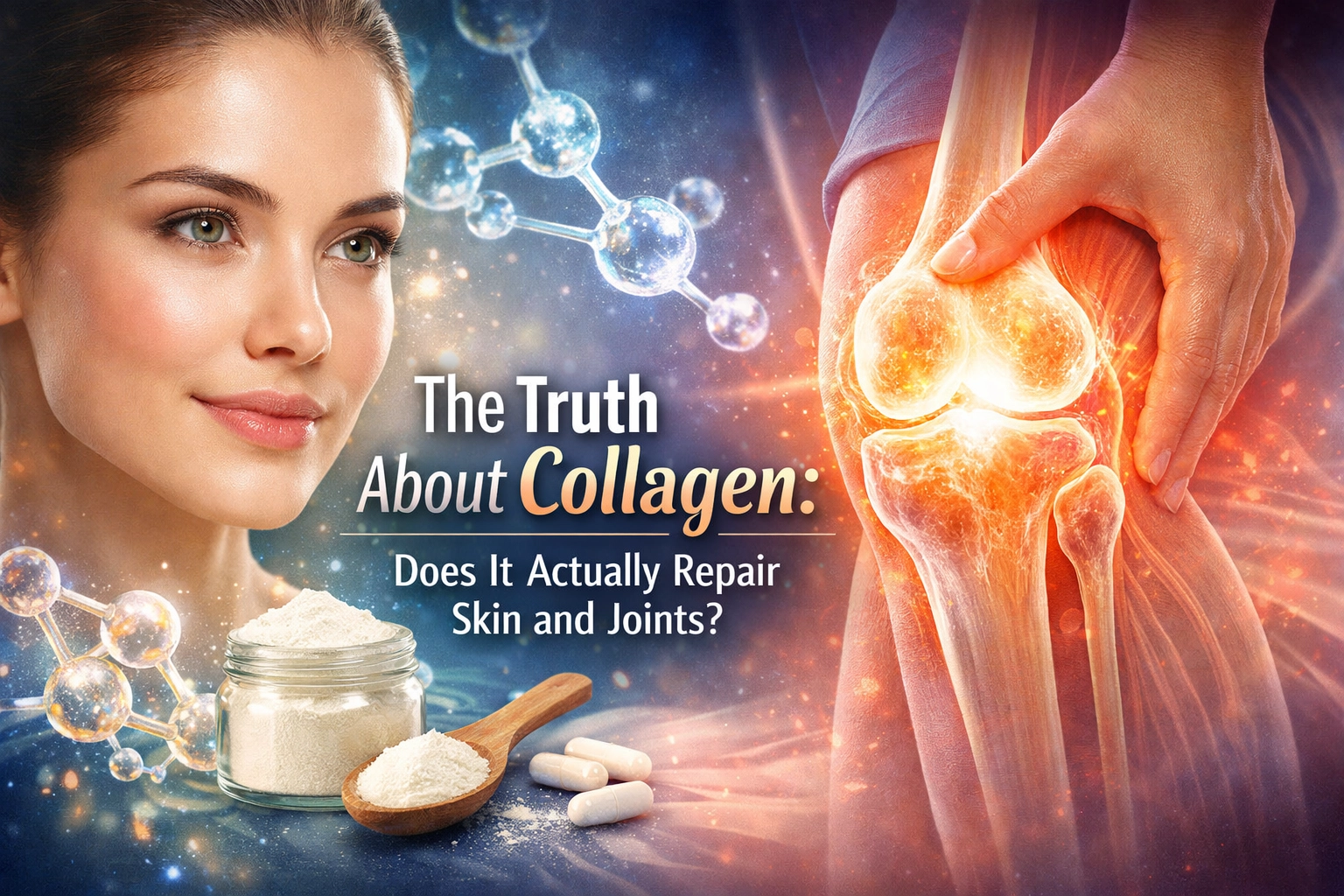
Collagen has moved from being a niche "beauty secret" to a global $10 billion industry. In 2026, you can find it in everything from morning lattes to protein bars. But for every person claiming it’s a "fountain of youth," there’s a skeptic arguing that collagen is just expensive protein powder that your stomach acid destroys before it ever reaches your skin.
As we dive into the latest clinical data and physiological research, the answer isn't a simple "yes" or "no." It’s about bioavailability, signaling molecules, and consistency. If you’re looking to repair your joints after a decade of distance running or erase the fine lines starting to appear in your 30s, you need to understand the science behind the scoop.
What is Collagen, Really?
Collagen is the most abundant protein in the human body. Think of it as the "glue" that holds your structure together. It makes up about 75% of your skin’s dry weight and is a primary component of your cartilage, tendons, and ligaments.
While there are at least 28 different types of collagen, 90% of the collagen in your body consists of three main types:
- Type I: Found in skin, hair, nails, organs, bone, and ligaments. This is the big one for "anti-aging."
- Type II: Found primarily in cartilage. This is the focus for joint health and "The Centenarian Decathlon" mobility.
- Type III: Found in reticular fibers (like muscle, organs, and arteries). Usually works alongside Type I.
The 2026 Biological Reality: Synthesis vs. Supplementation
As we age, our natural collagen production drops. By the time you reach 40, you’re losing about 1% of your collagen every year. Environmental factors like UV exposure and high-sugar diets (which cause glycation) speed up this process. Supplementation aims to provide the raw materials, amino acids like glycine, proline, and hydroxyproline, needed to restart the factory.

The Digestion Dilemma: Does It Actually Reach the Target?
The biggest argument against collagen supplements is that they are broken down into basic amino acids in the gut, just like a piece of chicken. If the body treats collagen like any other protein, why bother with the expensive tub?
Recent research has debunked this "all protein is equal" myth. Most high-quality supplements today use hydrolyzed collagen (collagen peptides). These are shorter chains of amino acids that have been pre-broken down.
Studies using "radiolabeled" peptides have shown that these specific sequences can survive digestion, enter the bloodstream, and, crucially, accumulate in the skin and cartilage. They don't just act as building blocks; they act as signaling molecules. They trick your body’s fibroblasts (the cells that make collagen) into thinking there’s a massive breakdown of tissue, which triggers a "repair mode" response.
Collagen and Skin: What the Data Says
If your goal is better skin, the science is actually quite robust. A 2026 meta-analysis of 26 randomized controlled trials involving over 1,700 participants confirmed that hydrolyzed collagen significantly improves skin hydration and elasticity.
Key Skin Metrics from Recent Clinical Trials:
| Metric | Improvement Observed | Timeline to Results |
|---|---|---|
| Skin Hydration | 12% – 28% increase | 8 Weeks |
| Wrinkle Depth | 7% – 15% reduction | 12 Weeks |
| Skin Elasticity | Significant improvement | 6 – 8 Weeks |
| Dermal Density | Noticeable thickening | 90 Days |
In one controlled study of 52 participants, mean wrinkle depth declined from 0.096mm to 0.089mm over 56 days. While that sounds small, the visual impact on "crows feet" and skin smoothness was rated as "significant" by 58% of the participants.

Joint Repair and Longevity: The "Active Recovery" Angle
For those of us focused on "Healthspan" and keeping our bodies moving into our 80s and 90s, joint health is the priority. This is where Type II collagen comes in.
The research here is slightly less "settled" than skin research, but it is trending positively. Clinical evidence suggests that collagen can mitigate cartilage degradation markers. This is critical for preventing Sarcopenia (muscle loss) and maintaining mobility.
How it helps joints:
- Reducing Inflammation: Specific peptides may reduce the inflammatory response in the joint capsule.
- Cartilage Support: Studies on athletes with activity-related joint pain found that 5g to 10g of collagen daily significantly reduced pain during exercise after 12 weeks.
- Tendon Elasticity: Collagen is high in glycine, which is essential for the "cross-linking" that gives tendons their snap and strength.
The "Vegan Collagen" Myth
You will see many products labeled as "Vegan Collagen." It is important to know that there is no such thing as plant-based collagen. Collagen is an animal protein.
"Vegan Collagen" products are actually collagen boosters. They contain Vitamin C, Zinc, and amino acids that help your body produce its own collagen. While these are helpful, they do not provide the specific signaling peptides found in bovine or marine sources. If you are strictly plant-based, focus on high doses of Vitamin C and Proline to maximize your own natural synthesis.
How to Optimize Your Results: The "Synergy" Factors
Taking a scoop of collagen in your coffee is a good start, but it won't work in a vacuum. To see real changes in your "Biological Age" vs. your "Chronological Age," you need the right environment.
1. The Vitamin C Requirement
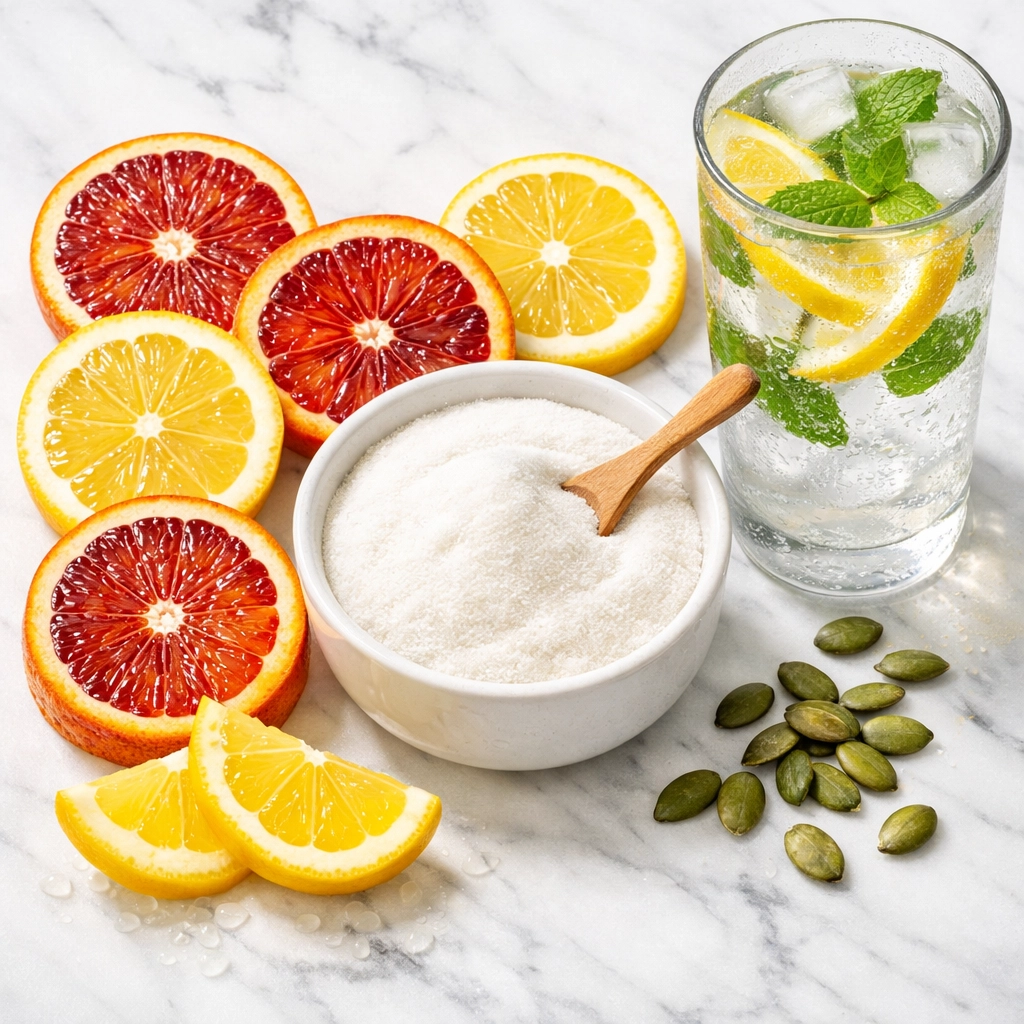
Vitamin C is the essential co-factor for collagen synthesis. Without it, your body cannot link the amino acids together to form the collagen triple-helix structure.
- Pro Tip: Take your collagen with a source of Vitamin C (like a squeeze of lemon or a 500mg supplement).
2. Copper and Zinc
These minerals act as the "mechanics" that help build the collagen structure. A deficiency in either can lead to brittle connective tissue, regardless of how much powder you take.
3. Avoiding "Collagen Killers"
- UV Radiation: 80% of facial aging is caused by the sun, which physically breaks down collagen fibers.
- Sugar (AGEs): High blood sugar leads to Advanced Glycation End-products (AGEs), which make collagen stiff and prone to breaking.
- Cortisol: Chronic stress tells your body to break down collagen for energy.
Buying Guide: What to Look for in 2026
Not all tubs are created equal. To ensure you aren't just buying expensive filler, check for these three things:
- Hydrolyzed Peptides: Ensure the label says "Hydrolyzed" or "Peptides." This guarantees the molecular weight is low enough for absorption.
- Third-Party Testing: Look for NSF or Informed Sport certifications. Since collagen is a byproduct of the meat industry, you want to ensure it's free of heavy metals (lead/arsenic) and pesticides.
- Dose: Many "collagen-infused" drinks only contain 500mg. The clinical effective dose is 10g to 15g per day.
Bovine vs. Marine: Which is better?
- Marine (Fish): Usually smaller particles (lower molecular weight), making it slightly more bioavailable. Higher in Type I. Better for skin.
- Bovine (Cow): Usually cheaper and contains both Type I and Type III. Better for overall body recovery and gut health.
The Final Verdict
Does collagen actually repair skin and joints? Yes, but it isn't magic.
It works by providing the specific raw materials and signaling triggers your body needs to maintain its structural integrity. You won't see results in a week. Think of it like a long-term investment account: you make small daily deposits (10g–15g), and after 3 to 6 months, you see a significant "dividend" in the form of hydrated skin and smoother-moving joints.
If you are over 30, active, and looking to optimize your "Healthspan," collagen is one of the few supplements that actually lives up to the hype: provided you choose the right source and stay consistent.
About the Author: Malibongwe Gcwabaza
Malibongwe Gcwabaza is the CEO of blog and youtube, a leading digital platform dedicated to cutting-edge health, wellness, and fitness science. With over a decade of experience in the wellness industry, Malibongwe focuses on translating complex physiological research into actionable habits for high-performers. His mission is to help people navigate the "bio-hacking" world with clarity and scientific integrity, ensuring that longevity isn't just a buzzword, but a lived reality. When not diving into clinical trials, he can be found practicing functional fitness and exploring the latest in metabolic health.
About the Author