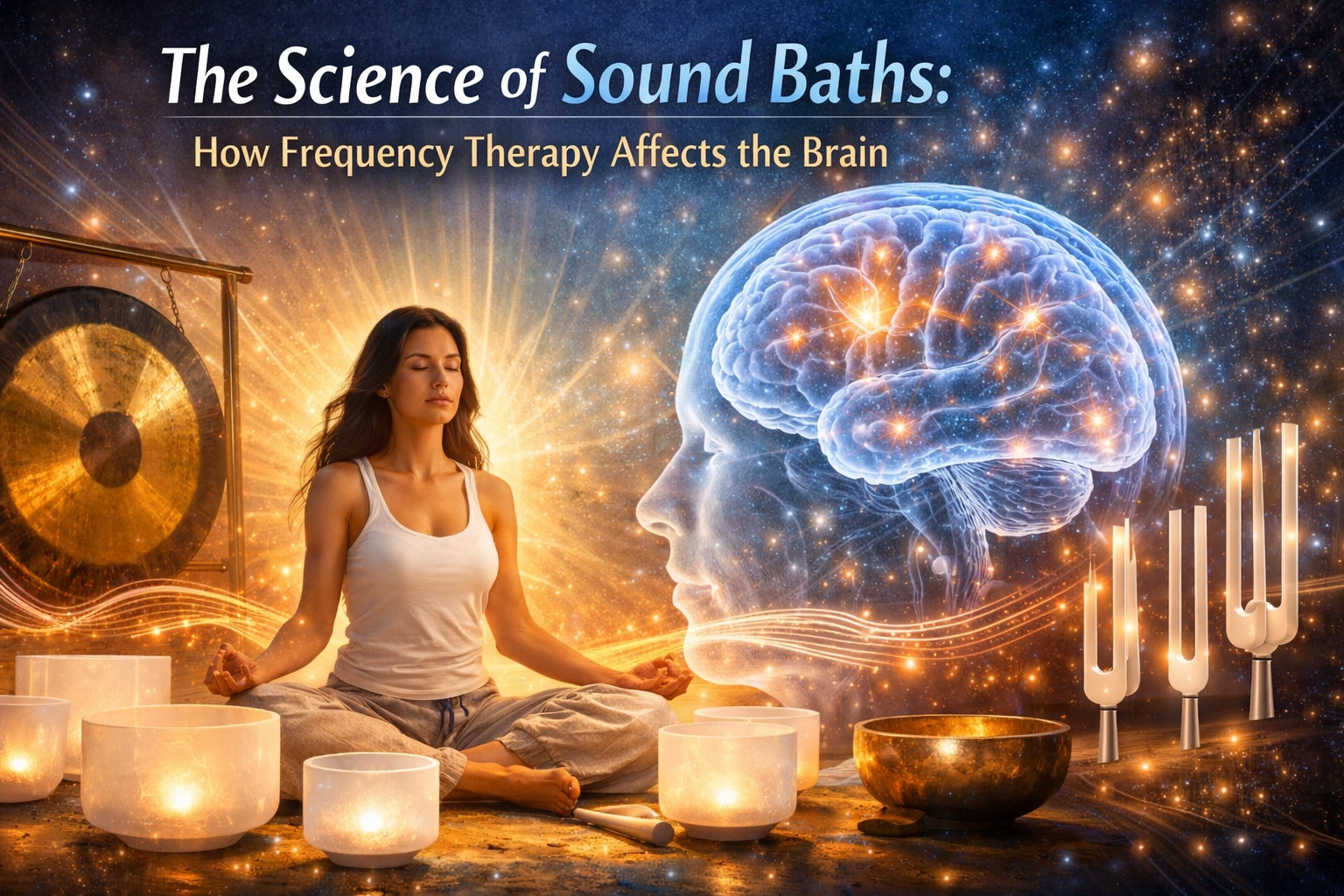
For a long time, sound baths were relegated to the "woo-woo" corners of wellness retreats, often dismissed as nothing more than pleasant background noise for people who enjoy expensive crystals. But as we move through 2026, the narrative has shifted. Neurologists, biohackers, and performance coaches are now looking at sound not as a spiritual accessory, but as a precise tool for neurological regulation.
In the world of high-performance health, we call this Vibroacoustic Therapy or Frequency Therapy. It is the intentional use of sound waves to influence brainwave states, nervous system tone, and cellular recovery. If you’ve ever wondered why a 20-minute session with a Himalayan singing bowl feels more restorative than a two-hour nap, the answer lies in physics and neurobiology.
The Frequency-Following Response: How Your Brain "Syncs" with Sound
At the heart of sound healing is a phenomenon called brainwave entrainment, specifically the Frequency-Following Response (FFR). Your brain is an electrochemical organ. At any given moment, billions of neurons are firing in rhythmic patterns, creating what we measure as brainwaves.
When you are exposed to a steady, external frequency (like the sustained hum of a crystal bowl), your internal rhythms begin to mirror that external stimulus. This is a biological "short-cut" to altered states of consciousness. Instead of spending decades learning how to manually drop into a deep meditative state, sound therapy uses physics to pull your brain there.
The Brainwave Spectrum in Sound Therapy
To understand a sound bath, you have to understand the "gears" of your brain. In 2026, we categorize these states with high precision:
| Brainwave State | Frequency Range (Hz) | Mental State | Sound Bath Goal |
|---|---|---|---|
| Gamma | 30 – 100+ Hz | Peak focus, high-level information processing | Not typical for baths; used in "active" cognitive training. |
| Beta | 12 – 30 Hz | Alert, analytical, logical, "The Hustle" | The state we usually arrive in; the "before" state. |
| Alpha | 8 – 12 Hz | Relaxed, creative, light visualization | The gateway; the transition into deep relaxation. |
| Theta | 4 – 8 Hz | Deep meditation, REM sleep, subconscious access | The Sweet Spot. This is where profound healing occurs. |
| Delta | 0.5 – 4 Hz | Dreamless sleep, physical repair, GH release | Inducing deep restorative rest for the nervous system. |
The Neurological Impact: Quieting the "Monkey Mind"
One of the most significant discoveries in 2026 neuro-wellness is the impact of sound on the Default Mode Network (DMN). The DMN is a collection of brain regions active when we aren't focused on the outside world. It’s the home of "self-referential thought": otherwise known as the "monkey mind" that keeps you awake at night worrying about your 401(k) or that awkward thing you said in a meeting three years ago.
Overactivity in the DMN is linked to depression, anxiety, and chronic stress. Research using fMRI scans has shown that during a sound bath, the DMN significantly quiets down. By flooding the auditory cortex with complex, harmonic overtones, the brain’s "narrative center" is essentially overwhelmed and forced to surrender, leading to a state of profound presence.
The Vagus Nerve and 40 Hz Stimulation
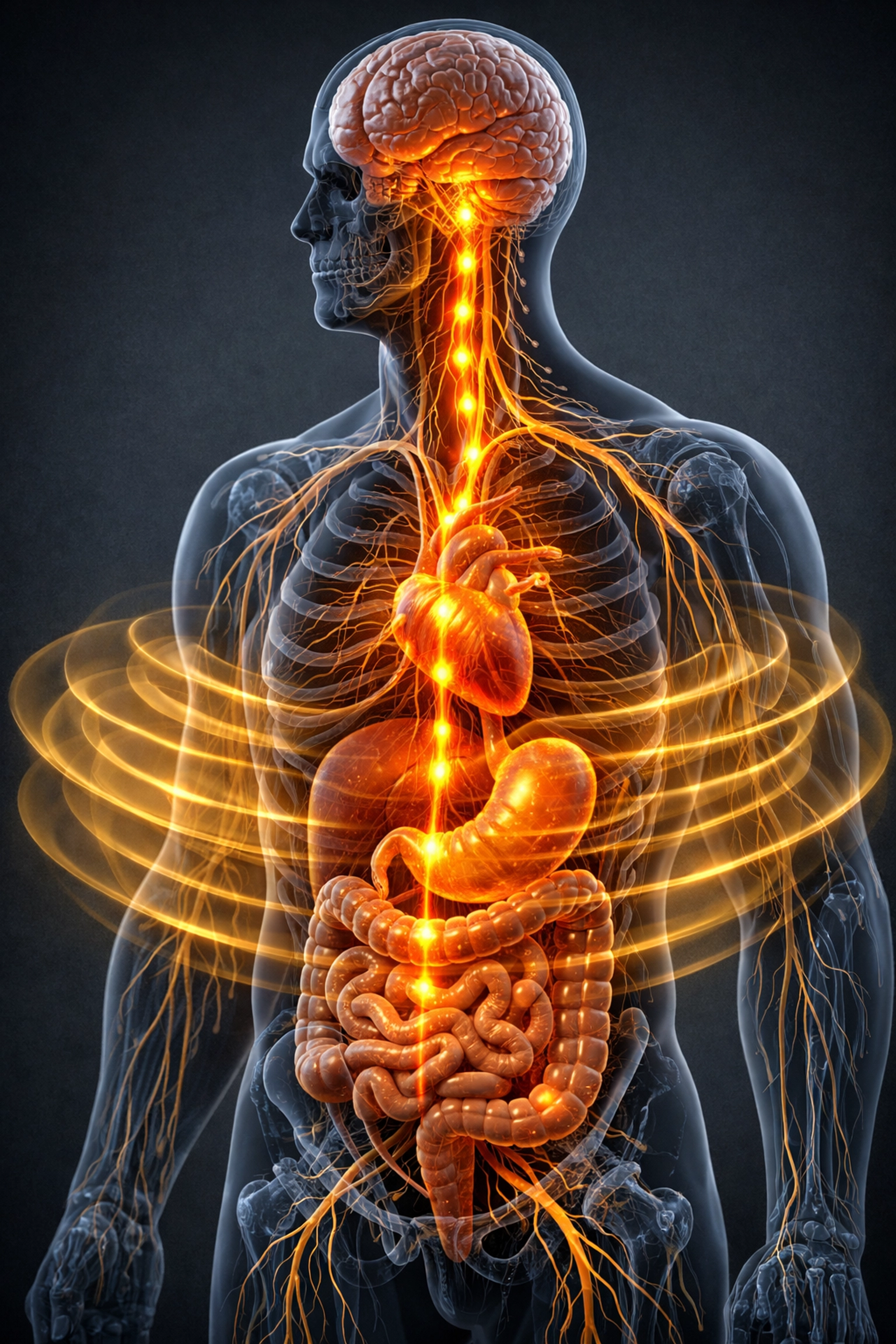
While the brain gets most of the attention, the body’s physical response to sound is equally scientific. Sound is a mechanical pressure wave. When a gong is struck, it moves air molecules, which then vibrate the skin and internal tissues.
Modern research highlights the Vagus Nerve: the highway of the parasympathetic nervous system: as a primary target for sound therapy. Frequencies in the 40 Hz to 150 Hz range have been shown to stimulate the vagus nerve directly. This stimulation increases Vagal Tone, which is a key marker of your body’s ability to bounce back from stress.
A high vagal tone correlates with:
- Improved digestion and gut-brain axis communication.
- Lower resting heart rate and higher Heart Rate Variability (HRV).
- Reduced systemic inflammation (the "inflammaging" factor).

Beyond the Ears: Bone Conduction and Cellular Resonance
It is a mistake to think we only "hear" a sound bath. We feel it. Through a process called bone conduction, sound vibrations bypass the eardrum and are transmitted directly through the skeletal system to the inner ear.
Furthermore, every cell in your body has a "resonant frequency." While the idea of "tuning" your cells sounds like science fiction, the principle of mechanotransduction is very real. This is the process by which cells convert mechanical stimulus (like sound waves) into chemical activity. In a 2026 clinical context, low-frequency sound is being studied for its ability to speed up bone density recovery and collagen production.
Why Instruments Matter: The Tools of the Trade
Not all sounds are created equal. A "sound bath" isn't just a playlist of spa music; it involves instruments that produce specific acoustic properties:
- Himalayan Singing Bowls: Made of an alloy of metals, these produce "multi-phonics": several tones at once: which create a complex soundscape that encourages rapid brainwave entrainment.
- Quartz Crystal Bowls: These are tuned to specific hertz (e.g., 432 Hz). Because our bodies have a high crystalline structure (in bones and fascia), these are thought to resonate more deeply with our physical anatomy.
- Gongs: These are the heavy hitters of sound therapy. They produce the widest range of frequencies and can literally "wash" over the listener, triggering a powerful physical release of tension.
- Tuning Forks: Used for "Biofield Tuning," these provide precise, targeted frequencies to specific points on the body, similar to acoustic acupuncture.
Data-Driven Benefits: What the 2026 Research Says
If you’re a fan of tracking your metrics with an Oura ring or a Whoop band, you’ll be interested in the data. Recent longitudinal studies have quantified the impact of a 60-minute sound bath session:
- Cortisol Reduction: Salivary cortisol levels drop by an average of 25-30% after a single session.
- HRV Boost: Participants often see a 15-20% increase in Heart Rate Variability the night following a sound bath, indicating superior recovery.
- Sleep Architecture: EEG monitoring shows that sound bath participants reach "Deep Sleep" (Stage 3) faster and stay there 22% longer than control groups.
- Pain Modulation: In patients with chronic musculoskeletal pain, sound therapy has been shown to reduce perceived pain levels by 40%, likely due to the release of endogenous opioids (endorphins).
How to Integrate Sound Therapy into Your Fitness Routine
In 2026, we are moving away from "random acts of wellness." To get the most out of frequency therapy, you should time it according to your training goals.
- For Recovery (The "Down-Regulation" Session): Schedule a sound bath on your active recovery days. This shifts the body from a sympathetic (fight-or-flight) state into a parasympathetic (rest-and-digest) state, accelerating muscle repair.
- For Flow State (The Pre-Game): Use 10 minutes of Alpha-range binaural beats or tuning forks before a complex skill session (like Olympic lifting or Brazilian Jiu-Jitsu) to prime the brain for focus without the jitters of caffeine.
- For Sleep Hygiene: Use low-frequency (Delta) soundscapes in the 60 minutes before bed to signal to your pineal gland that it’s time to ramp up melatonin production.
The Future: Personalized Auditory Medicine
As we look toward the end of the decade, the next frontier is Personalized Sound Healing. Imagine a wearable device that monitors your stress levels in real-time and generates a "counter-frequency" soundscape through your neuro-active earbuds to neutralize an oncoming anxiety attack.
We are already seeing the rise of "Vibroacoustic Beds" in longevity clinics: tables that vibrate at specific frequencies based on your DNA profile and current inflammatory markers. The "bath" of the future won't just be a general wash of sound; it will be a targeted, digital prescription for your specific nervous system.
Summary Checklist for Your First (or Next) Sound Bath
- Hydrate: Sound travels better through water. Since your body is ~70% water, being well-hydrated increases the efficacy of the vibration.
- Wear Natural Fibers: Synthetic materials can dampen the subtle vibrations on the skin. Opt for cotton or bamboo.
- Set an Intention: Because the sound bath quiets the DMN, your subconscious is more "plastic" during the session. Use this time to plant a specific goal or mindset.
- Track the Data: Check your HRV and Deep Sleep scores the morning after. The data doesn't lie.
Author Bio: Malibongwe Gcwabaza
CEO & Wellness Visionary
Malibongwe Gcwabaza is the CEO of blog and youtube, a leading platform dedicated to the intersection of longevity science, biohacking, and holistic performance. With over a decade of experience in the health and fitness industry, Malibongwe focuses on translating complex physiological research into actionable protocols for high achievers. He is a certified specialist in human optimization and a frequent speaker on the future of personalized wellness. When he isn't exploring the latest in neuro-technology, you can find him practicing Zone 2 training or experimenting with advanced recovery modalities in Johannesburg.
About the Author