For decades, the real estate market was driven by three factors: location, location, and location. But a tectonic shift is happening. In a post-pandemic world where the boundary between "office" and "home" has blurred, a new metric has emerged as the ultimate luxury: health.
Wellness real estate is no longer a niche concept reserved for billionaire retreats in the Hamptons. It is a massive, data-backed industry that reached $584 billion in 2024 and is projected to hit $1.1 trillion by 2029. We are moving from "sick buildings" that merely shelter us to "regenerative homes" that actively improve our physiological and psychological states.
This guide explores the technical components, economic drivers, and design principles of wellness real estate, providing a blueprint for how your living environment dictates your longevity.
The Economic Impact: Why Wellness is the New Gold Standard
The Global Wellness Institute (GWI) defines wellness real estate as the construction of residential and commercial properties that are proactively designed to support the holistic health of their occupants.
The financial data supporting this trend is staggering. Properties that integrate wellness features: ranging from advanced air filtration to circadian lighting: command a 10% to 25% price premium over traditional homes. In high-end markets, this premium can exceed 30%.
| Metric | Traditional Real Estate | Wellness Real Estate |
|---|---|---|
| Market Valuation (2024) | High (Cyclical) | $584 Billion (Growth) |
| Price Premium | Baseline | 10% – 25%+ |
| Tenant Turnover | Standard | Significantly Lower |
| Occupancy Rates | Market-driven | 15% higher on average |
Investors are noticing that wellness-focused developments aren't just healthier; they are more resilient assets. An Australian study of an affordable wellness community showed a 53% return on equity over five years, driven by faster sales and higher tenant satisfaction.
The Technical Pillars of Wellness Design
To understand how a home affects your health, we must look at the technical specifications of the environment. Wellness design focuses on six core dimensions.
1. Air Quality and Particulate Filtration
Most people spend 90% of their time indoors, where air pollution can be 2 to 5 times higher than outdoor levels. Wellness real estate prioritizes:
- HEPA Filtration: Removing 99.97% of particles at 0.3 microns.
- VOC Reduction: Using building materials, paints, and adhesives that do not off-gas volatile organic compounds (VOCs), which are linked to respiratory issues and cognitive decline.
- Real-time Monitoring: Smart sensors that track PM2.5, CO2, and humidity, automatically adjusting ventilation rates.
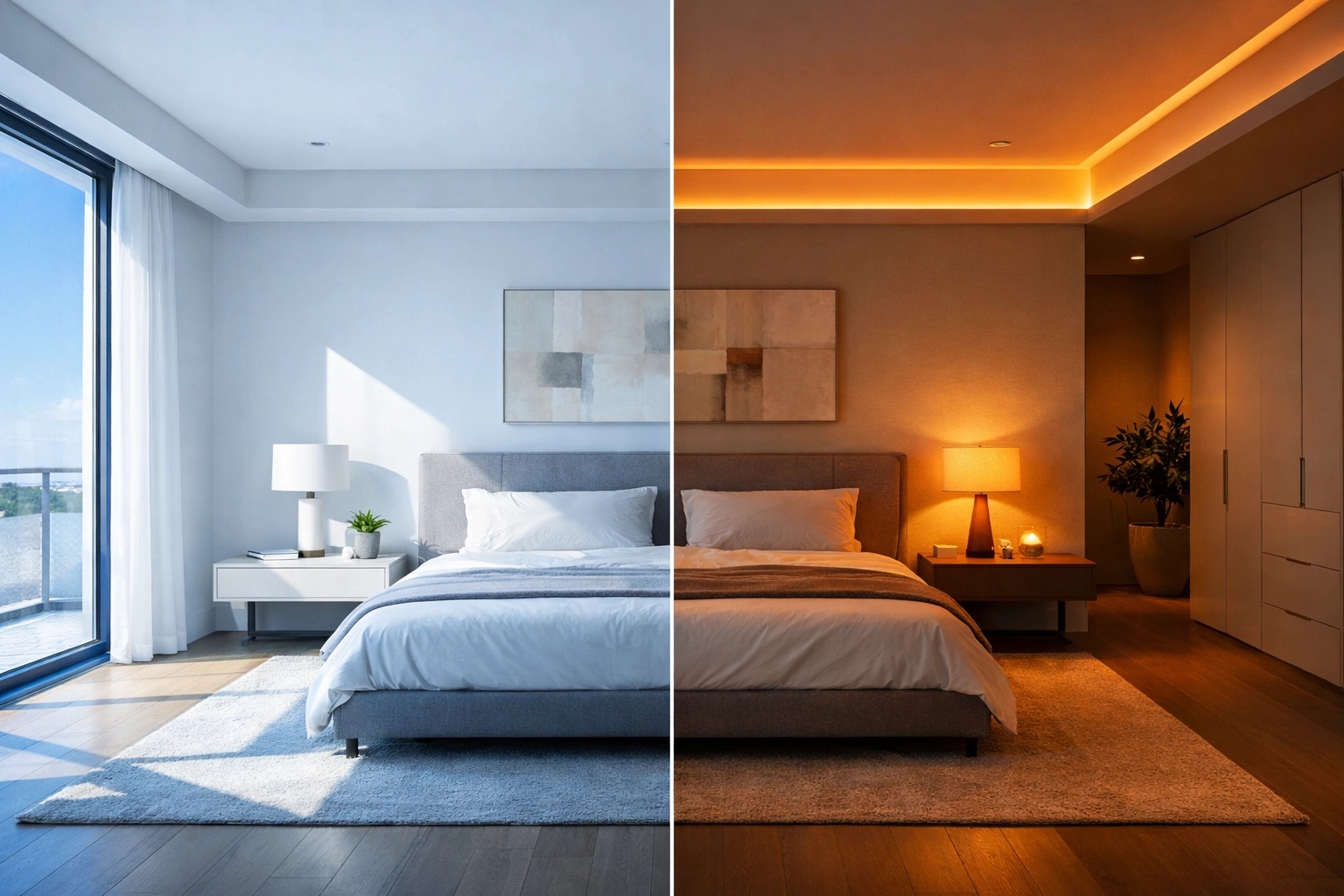
2. Circadian Lighting Systems
Our internal biological clock is regulated by the blue-light spectrum of the sun. Traditional LED lighting often disrupts this, leading to sleep disorders and hormonal imbalances.
Wellness homes use Tunable White Lighting. These systems mimic the sun’s progression: cool, bright blue light in the morning to suppress melatonin and boost cortisol, and warm, amber light in the evening to prepare the body for sleep.
3. Biophilic Design: The Nature Connection
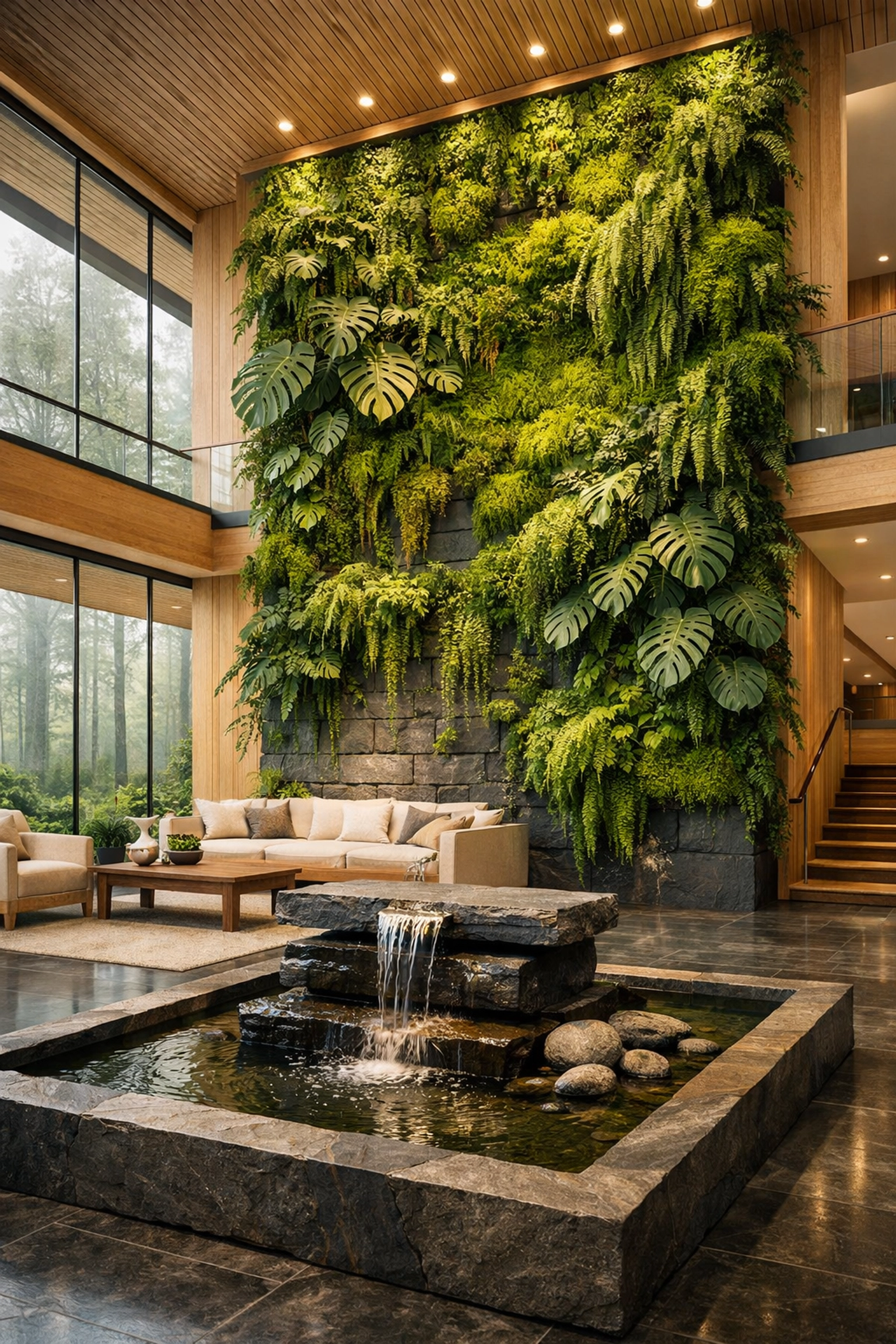
Biophilia is the innate human instinct to connect with nature. Incorporating natural elements isn't just about aesthetics; it’s about biology.
- Visual Connection: Floor-to-ceiling windows and "living walls."
- Non-Visual Connection: The sound of water, natural scents, and tactile textures like reclaimed wood and stone.
- Fractal Patterns: Studies show that looking at natural fractals (patterns found in leaves or clouds) reduces stress levels by up to 60%.
Structural Certification Standards: WELL vs. Fitwel
How do we quantify health in a building? Two primary certification systems have become the industry standard for wellness real estate.
The WELL Building Standard
Administered by the International WELL Building Institute (IWBI), this is the most rigorous certification. It measures 10 concepts: Air, Water, Nourishment, Light, Movement, Thermal Comfort, Sound, Materials, Mind, and Community.
- Technical Rigor: Requires on-site testing of air and water quality by a third-party assessor.
- Focus: Human biological systems (nervous, endocrine, immune).
Fitwel
Originally developed by the U.S. Centers for Disease Control and Prevention (CDC), Fitwel is more focused on behavioral health and site-level interventions.
- Criteria: Walkability, access to healthy food, and stairwell visibility to encourage physical activity.
- Scalability: Often used for existing buildings or multi-family developments looking for high-impact, lower-cost interventions.
The "Hard" Science of Home Design and Longevity
The impact of home design on health is measurable. Clinical research has identified several "home-health" correlations:
- Cardiovascular Health: Proper acoustic insulation reduces "noise pollution," which is linked to high blood pressure and increased risk of stroke.
- Respiratory Function: Advanced water filtration systems remove chlorine and heavy metals, reducing skin irritation and long-term toxic load.
- Mental Health: Access to private outdoor spaces (even small balconies with greenery) significantly reduces the incidence of depression and anxiety in urban dwellers.
Data Insight: The "Sick Building" Cost
According to the EPA, "Sick Building Syndrome" (SBS) costs U.S. businesses over $60 billion annually in medical costs and lost productivity. In a residential context, a "sick home" results in more sick days, lower cognitive performance for remote workers, and higher long-term healthcare expenditures.
Moving Beyond Luxury: The Future of Wellness Real Estate
The next frontier for wellness real estate is democratization. While the movement started in luxury condos in New York and London, it is shifting toward affordable housing and senior living.
Senior Living 2.0
Modern wellness design for seniors focuses on "Purpose-Built Communities." These designs prioritize social connectivity to combat the epidemic of loneliness, combined with biometric monitoring systems that allow for "aging in place."
Remote Work Integration
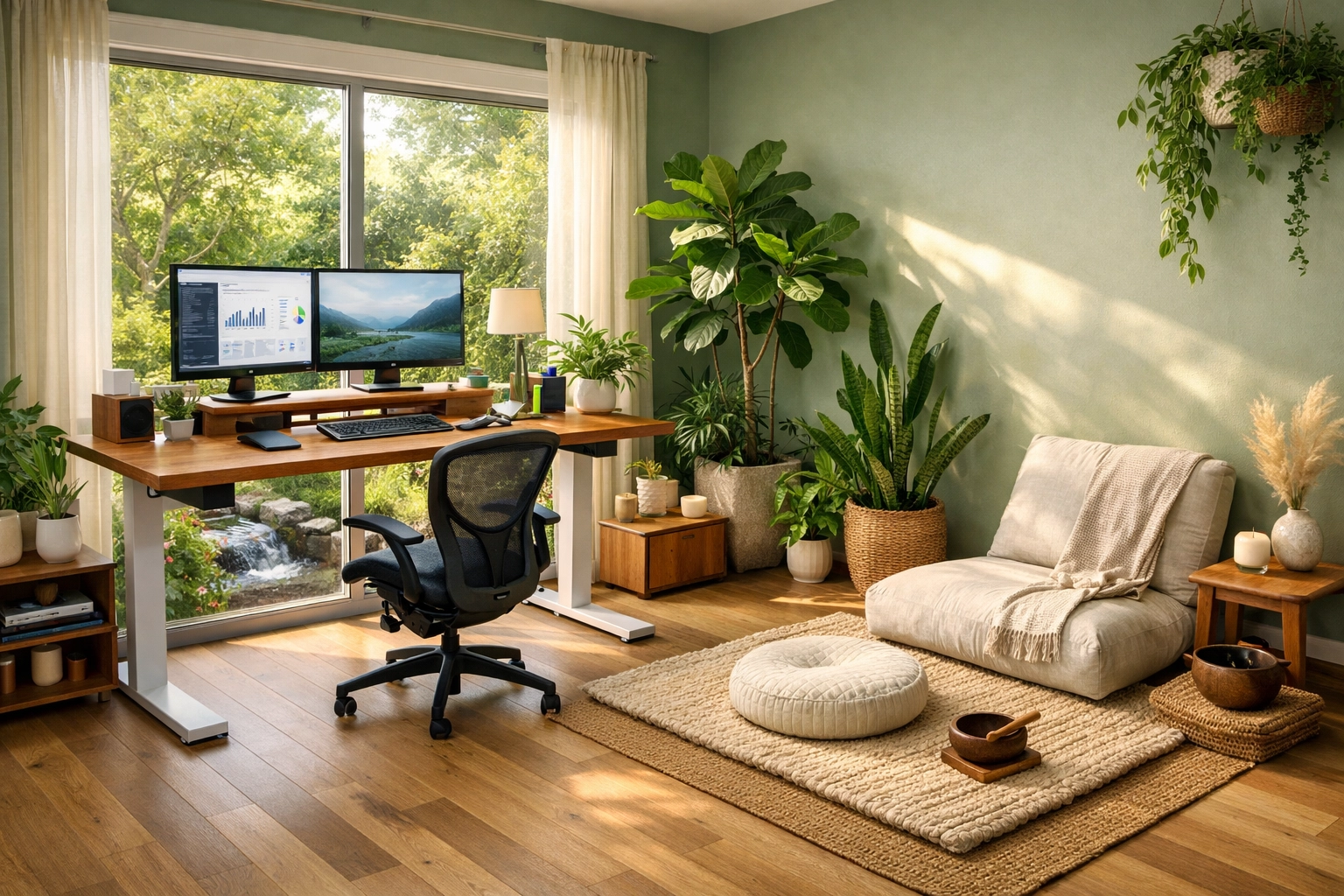
As of 2026, the home office is no longer a makeshift desk in a bedroom. Wellness real estate now treats the home office as a "high-performance zone," featuring:
- Ergonomic spatial planning.
- Acoustic dampening for deep work.
- Dedicated "recharge zones" for meditation or stretching.
Actionable Steps: How to Retrofit Your Current Home
You don't need to buy a $2 million "wellness certified" condo to benefit from these principles. Here are the high-ROI technical upgrades you can make today:
- Upgrade Your Air: Purchase a medical-grade HEPA air purifier with a CADR (Clean Air Delivery Rate) appropriate for your room size.
- Water Filtration: Install a multi-stage water filter at your kitchen sink and a dechlorinating filter on your shower head.
- Light Hygiene: Switch to "dim-to-warm" LED bulbs in bedrooms and avoid blue-light screens 60 minutes before bed.
- Nature Integration: Add at least three large indoor plants (like Snake Plants or Peace Lilies) to your main living area to assist with CO2 reduction and psychological grounding.
Conclusion
The rise of wellness real estate represents a fundamental shift in how we value our physical environment. We are realizing that our homes are not just financial assets; they are the most significant "biological interventions" in our lives. By choosing materials that breathe, lighting that aligns with our rhythm, and spaces that foster connection, we aren't just designing a house: we are designing our future health.
About the Author: Malibongwe Gcwabaza
Malibongwe Gcwabaza is the CEO of blog and youtube, a leading digital platform dedicated to the intersection of technology, lifestyle, and modern living. With over a decade of experience in strategic business leadership and a passion for data-driven wellness, Malibongwe focuses on how emerging trends in real estate and AI-driven health are reshaping the global economy. His work aims to make complex architectural and health concepts accessible to a broad audience, empowering readers to make informed decisions about their environment and well-being.
About the Author