Human biology is fundamentally rhythmic. We are governed by an internal 24-hour biological clock known as the circadian rhythm, which dictates everything from our metabolic rate to our cognitive performance. While many people attribute "brain fog" to a lack of caffeine or poor nutrition, the primary culprit in 2026 is often a "mismatch" between our internal timing and the external environment.
The most potent tool for recalibrating this system is not a supplement or a high-priced nootropic; it is the simple act of viewing morning sunlight. When photons from the sun strike the retina, they initiate a cascade of neurobiological events that essentially "turn on" the brain for the day. This guide dives deep into the science of why morning light is the ultimate lever for mental clarity.
The Neurobiological Mechanism: How Light Hits the Brain
To understand why morning light is essential, we have to look past the skin and into the eye. The eye isn't just for seeing; it is a powerful data-gathering organ for the brain's internal clock.
The Suprachiasmatic Nucleus (SCN)
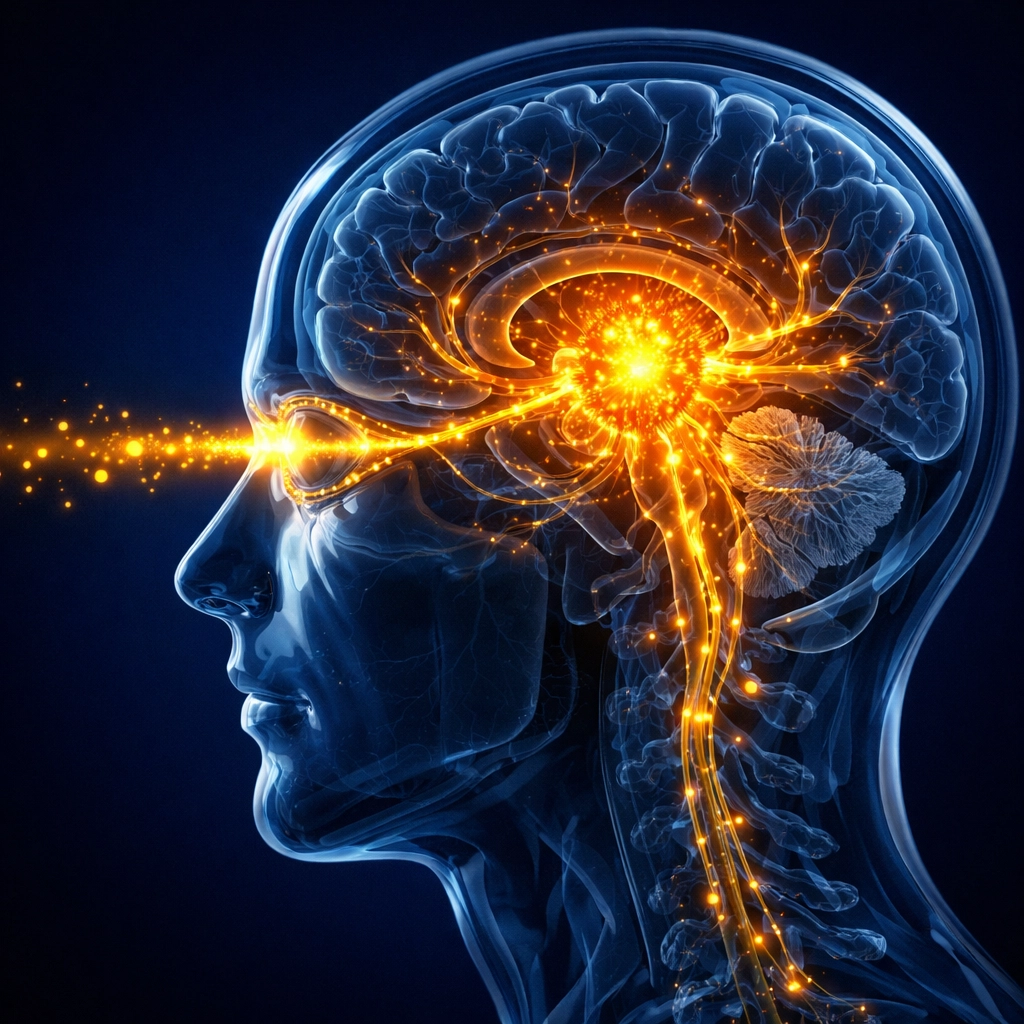
Deep within the hypothalamus lies the Suprachiasmatic Nucleus (SCN), a cluster of nerve cells that acts as the "Master Clock." The SCN receives direct input from the eyes via the retinohypothalamic tract.
Unlike the rods and cones we use for vision, the eyes contain specialized cells called melanopsin-containing retinal ganglion cells (ipRGCs). These cells are specifically tuned to detect the intensity and quality of blue-wavelength light found in the early morning sky. When these cells are activated, they send an immediate signal to the SCN that the "active phase" of the day has begun.
The Cortisol Awakening Response (CAR)
One of the first things the SCN does upon receiving morning light is trigger the Cortisol Awakening Response. While cortisol is often maligned as the "stress hormone," it is actually the hormone of alertness and movement. A sharp rise in cortisol in the first 30–45 minutes after waking is vital for:
- Clearing residual adenosine (the molecule that makes us feel sleepy).
- Increasing blood pressure and core body temperature.
- Priming the prefrontal cortex for executive function.
Without morning sunlight, this cortisol pulse can be delayed or "blunted," leading to that groggy, halfway-awake feeling that lasts until noon.
Neurotransmitters: The Chemistry of Focus
Morning sunlight doesn't just wake you up; it chemically prepares your brain for high-level work. Two major neurotransmitters are heavily regulated by morning light exposure: Serotonin and Dopamine.
Serotonin: The Mood and Clarity Stabilizer
Serotonin is the precursor to melatonin. Exposure to bright light in the morning stimulates the immediate production of serotonin. Higher levels of morning serotonin are directly correlated with improved mood, calm focus, and emotional resilience. Furthermore, the serotonin produced during the day is what the brain eventually converts into melatonin at night. If you don't get enough morning light, you lack the "raw materials" for deep sleep, which indirectly destroys your mental clarity the following day.
Dopamine: The Motivation Molecule
Early morning light has been shown to increase the density and sensitivity of dopamine receptors in the brain. Dopamine is the primary driver of motivation and "task persistence." By viewing sunlight early, you are essentially "lubricating" the neural pathways required to stay on task and resist distractions.
The Lux Gap: Why Indoor Light Isn't Enough
A common misconception is that sitting in a brightly lit office or by a window is "good enough." This is a biological fallacy. The intensity of light is measured in lux. To trigger the SCN and the ipRGCs effectively, the brain requires a specific threshold of light intensity.
| Light Source | Typical Lux Level | Impact on Circadian Rhythm |
|---|---|---|
| Direct Sunlight (Clear Day) | 100,000+ lux | Immediate circadian "reset" |
| Direct Sunlight (Overcast Day) | 10,000 – 25,000 lux | Strong circadian signal |
| Brightly Lit Office | 500 lux | Negligible for SCN activation |
| Home Living Room | 150 lux | Insufficient for mental clarity |
| Computer Screen | 100 – 300 lux | Disruptive (wrong timing/intensity) |
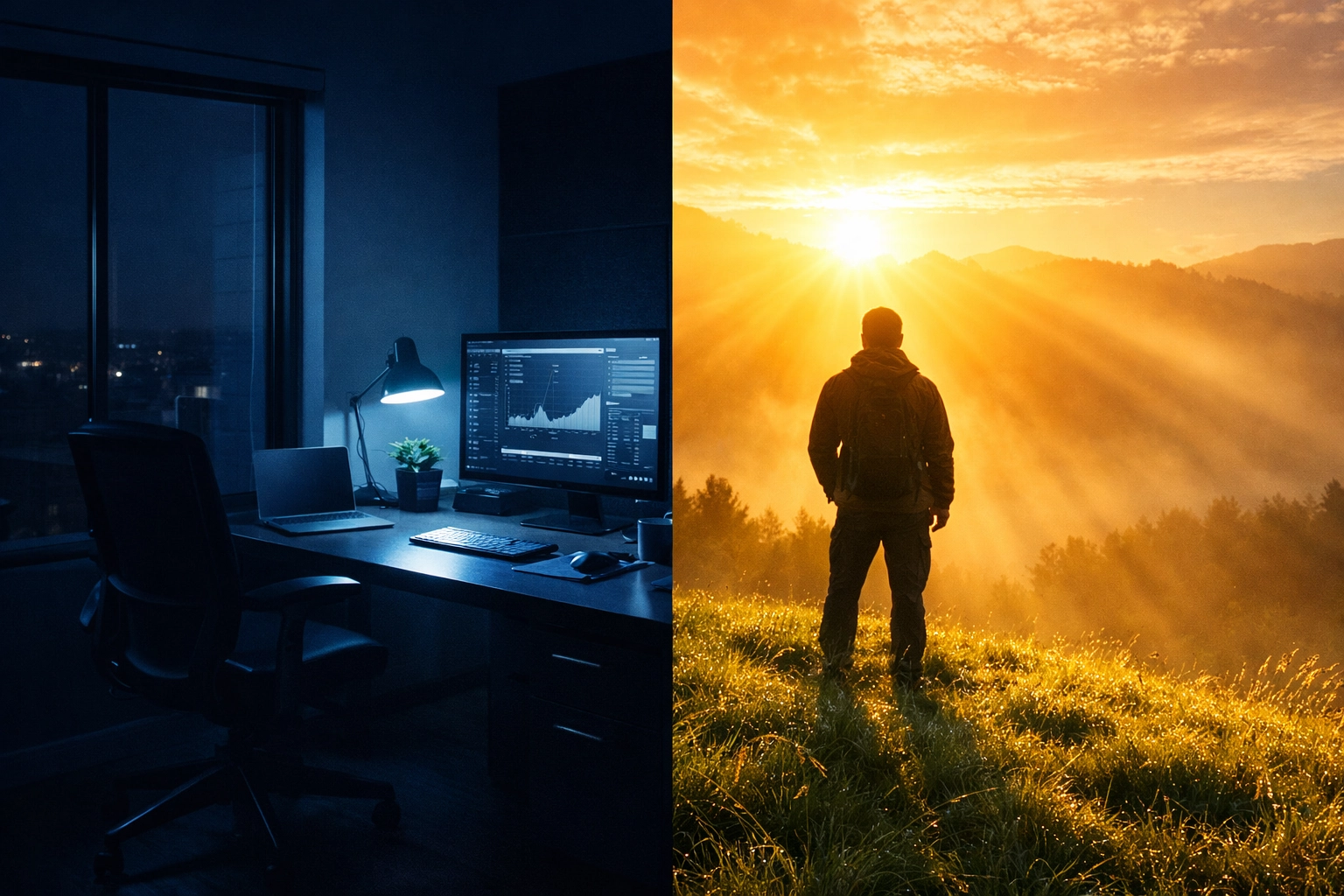
The Window Problem: Window glass is designed to filter out many of the wavelengths (specifically in the blue and UV spectrum) that are most effective at triggering the ipRGCs. Relying on light through a window can take 50 to 100 times longer to achieve the same biological effect as being outdoors. To achieve peak mental clarity, you must be outside, or at least have an open window with no glass between your eyes and the sky.
The Sleep-Clarity Feedback Loop
Mental clarity is a byproduct of high-quality sleep. The relationship between morning light and midnight sleep is a closed loop.
When you view sunlight within 60 minutes of waking, you set a biological "timer." This timer dictates that approximately 14–16 hours later, the pineal gland will begin secreting melatonin. If you view light at 7:00 AM, your brain is ready for sleep by 10:00 PM. If you don't get light until 11:00 AM, your brain doesn't begin its sleep countdown until late at night.
This leads to "Social Jetlag," where your body is physically in one time zone, but your brain's chemistry is lagging four hours behind. The result is chronic cognitive impairment, decreased reaction time, and poor memory consolidation.
Practical Implementation: The 2026 Morning Light Protocol
To optimize for mental clarity, follow this evidence-based protocol derived from the latest chronobiology research.
- Timing: Get outside within 30 to 60 minutes of waking. The sooner, the better.
- Duration:
- Clear, Sunny Days: 5–10 minutes.
- Overcast/Cloudy Days: 15–20 minutes.
- Very Dark/Rainy Days: 30 minutes.
- No Sunglasses: Do not wear sunglasses during this period. You need the photons to reach the retina. (Contact lenses and eyeglasses are fine, as they don't usually filter the necessary wavelengths).
- Don't Stare Directly at the Sun: You only need to look in the general direction of the light. Your eyes are sensitive enough to pick up the scattered photons even if you are looking at the horizon.
- Consistency is Key: Your brain builds a "history" of light exposure. Missing one day isn't a disaster, but missing three days in a row will lead to a measurable drop in morning cognitive speed.
Addressing 2026 Challenges: Seasonal Light and Bio-Hacking
For those living in high latitudes where the sun may not rise until 9:00 AM during winter, "natural" light isn't always an option. In these cases, technology must fill the gap.
- SAD Lamps: Use a 10,000 lux lightbox. Place it roughly 12–18 inches from your face for 20 minutes while you work or eat breakfast.
- Light-Emitting Glasses: Modern bio-hacking wearables now offer "blue-enriched" glasses that stimulate the ipRGCs without requiring you to sit in front of a stationary lamp.
- Smart Home Integration: Circadian lighting systems that mimic the sunrise can help "pre-wake" the brain by gradually increasing light intensity in the bedroom, making the transition to actual sunlight easier.
Summary: The Lowest Hanging Fruit in Wellness
If you want to improve your mental clarity, don't start with complex supplement stacks or expensive brain-training apps. Start with the sun. By aligning your internal chemistry with the solar cycle, you ensure that your brain is operating on the software it was designed for. Morning light exposure is free, fast, and backed by decades of hard science. It is the foundation upon which all other health and fitness habits are built.
About the Author: Malibongwe Gcwabaza
Malibongwe Gcwabaza is the CEO of blog and youtube, a forward-thinking media company dedicated to the intersection of high-performance living and longevity science. With a background in organizational leadership and a passion for bio-monitoring, Malibongwe focuses on translating complex physiological research into actionable habits for modern professionals. When he’s not analyzing the latest fitness tech, you’ll find him practicing what he preaches: usually with a 10-minute morning walk in the South African sun.
About the Author