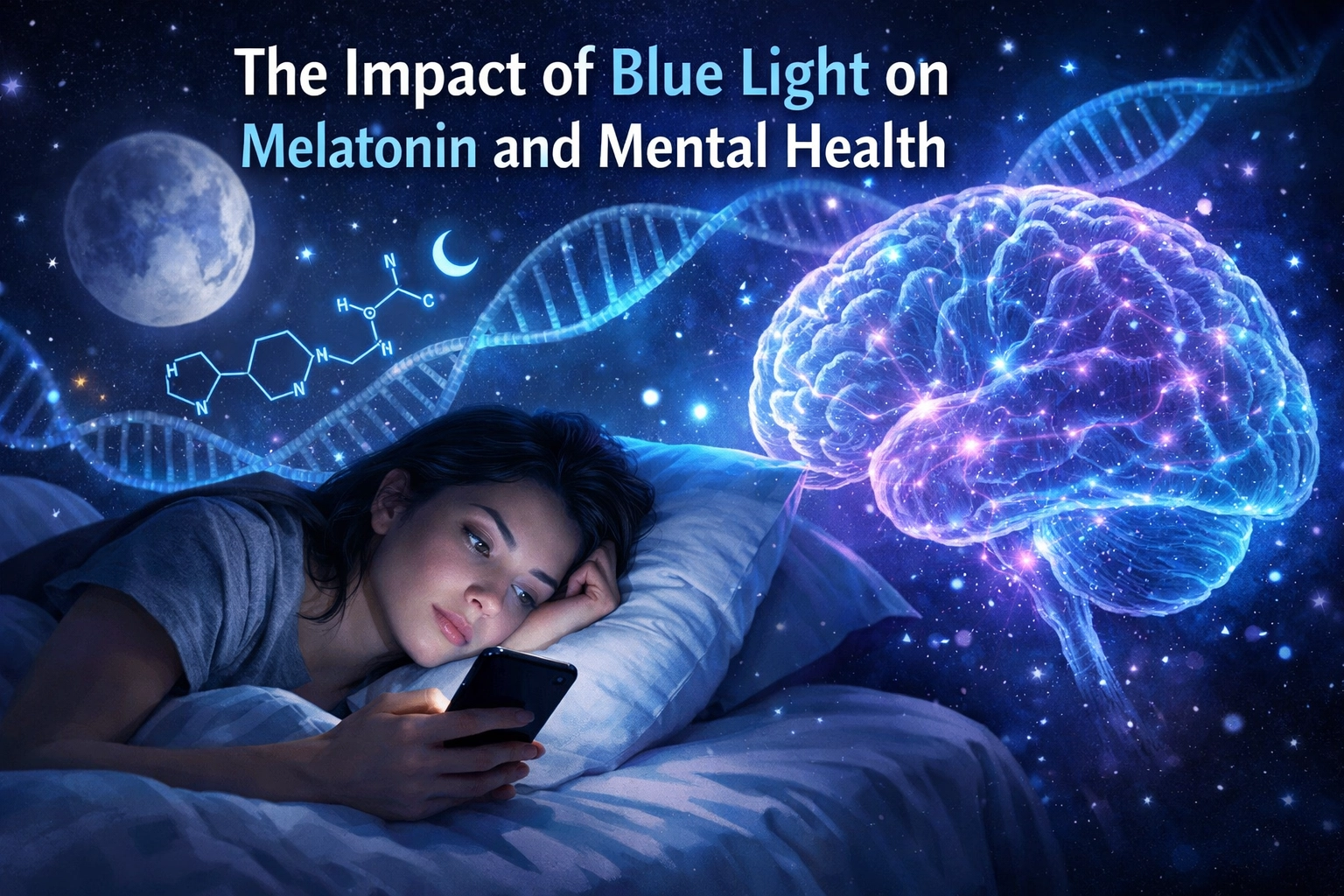
For roughly 200,000 years, human biology was synced to a simple rhythm: the golden hue of the rising sun, the bright blue of midday, and the amber flicker of firelight before total darkness. This environmental signaling dictated our hormonal health and psychological stability.
Fast forward to 2026, and we are living in a state of "perpetual noon." Between our smartphones, LED office lighting, and ultra-HD televisions, our eyes are bombarded with short-wavelength high-energy visible (HEV) light long after the sun has set. This isn't just a matter of "bad sleep": it is a fundamental biological mismatch that suppresses our primary antioxidant hormone, melatonin, and serves as a primary driver for the modern mental health crisis.
The Physics of Light: Why Blue is Different
Not all light is created equal. Light is measured in wavelengths (nanometers) and color temperature (Kelvin). Blue light occupies the 400 to 490 nm range. While this light is abundant in natural sunlight and is essential for daytime alertness, its presence at night is a physiological anomaly.
In the context of 2026 bio-hacking and wellness, we focus specifically on the 460–500 nm range. This is the "danger zone" for melatonin suppression. Research indicates that blue light in this spectrum suppresses melatonin twice as powerfully as green light and can shift our internal circadian clock by twice as much: moving your biological "start time" by up to three hours.
Comparison of Light Wavelengths and Circadian Impact
| Light Color | Wavelength (nm) | Melatonin Suppression Risk | Best Time for Exposure |
|---|---|---|---|
| Blue | 450–495 | Extreme | 08:00 AM – 12:00 PM |
| Green | 495–570 | Moderate | Mid-afternoon |
| Yellow/Amber | 570–590 | Low | Evening / Sunset |
| Red | 620–750 | Minimal | Pre-sleep / Night |
The Biological Mechanism: From Retina to Pineal Gland
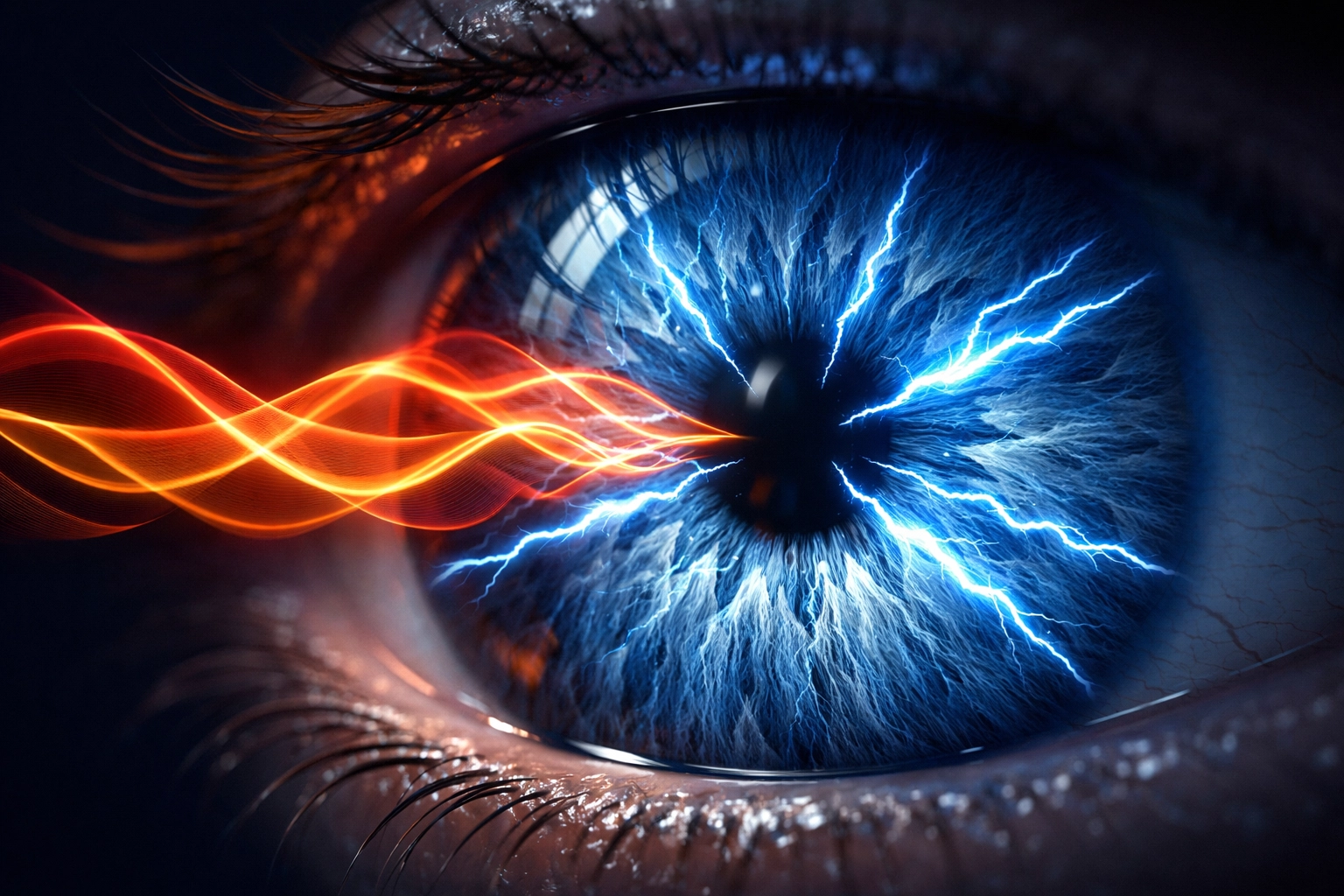
To understand why a smartphone screen can trigger anxiety or insomnia, we have to look at the "circuitry" of the brain. The process isn't just about "seeing" light; it’s about how that light signals the brain’s master clock.
- Intrinsically Photosensitive Retinal Ganglion Cells (ipRGCs): These are specialized neurons in your eyes that contain a light-sensitive protein called melanopsin. They aren't used for "vision" in the traditional sense; they are sensors for environmental brightness.
- The Suprachiasmatic Nucleus (SCN): The ipRGCs send a direct signal to the SCN, a tiny region in the hypothalamus. This is your body’s master clock.
- The Pineal Gland Blockade: When the SCN detects blue light (signaling "daytime"), it sends an inhibitory signal to the pineal gland. This effectively "shuts off" the production of melatonin.
Under natural conditions, melatonin levels begin to rise about two hours before your habitual bedtime (Dim Light Melatonin Onset, or DLMO). When you check a laptop or phone, you are essentially telling your SCN that the sun has just risen, causing an immediate hormonal crash.
Data-Driven Insights: The Cost of the "Midnight Scroll"
The impact of artificial light is not subtle. Controlled clinical studies have shown that just two hours of exposure to LED-backlit tablets in the evening results in a 55% decrease in melatonin levels.
Furthermore, the sensitivity of the human eye to light at night is staggering. Even dim light as low as 8 lux: roughly the brightness of a standard table lamp or a hallway light: has been shown to interfere with the circadian rhythm and suppress melatonin secretion in sensitive individuals. For those with specific genetic polymorphisms (variations in genes like PER3 or CRY1), this sensitivity is even higher, making them "super-responders" to the negative effects of blue light.
Beyond Sleep: The Mental Health Connection
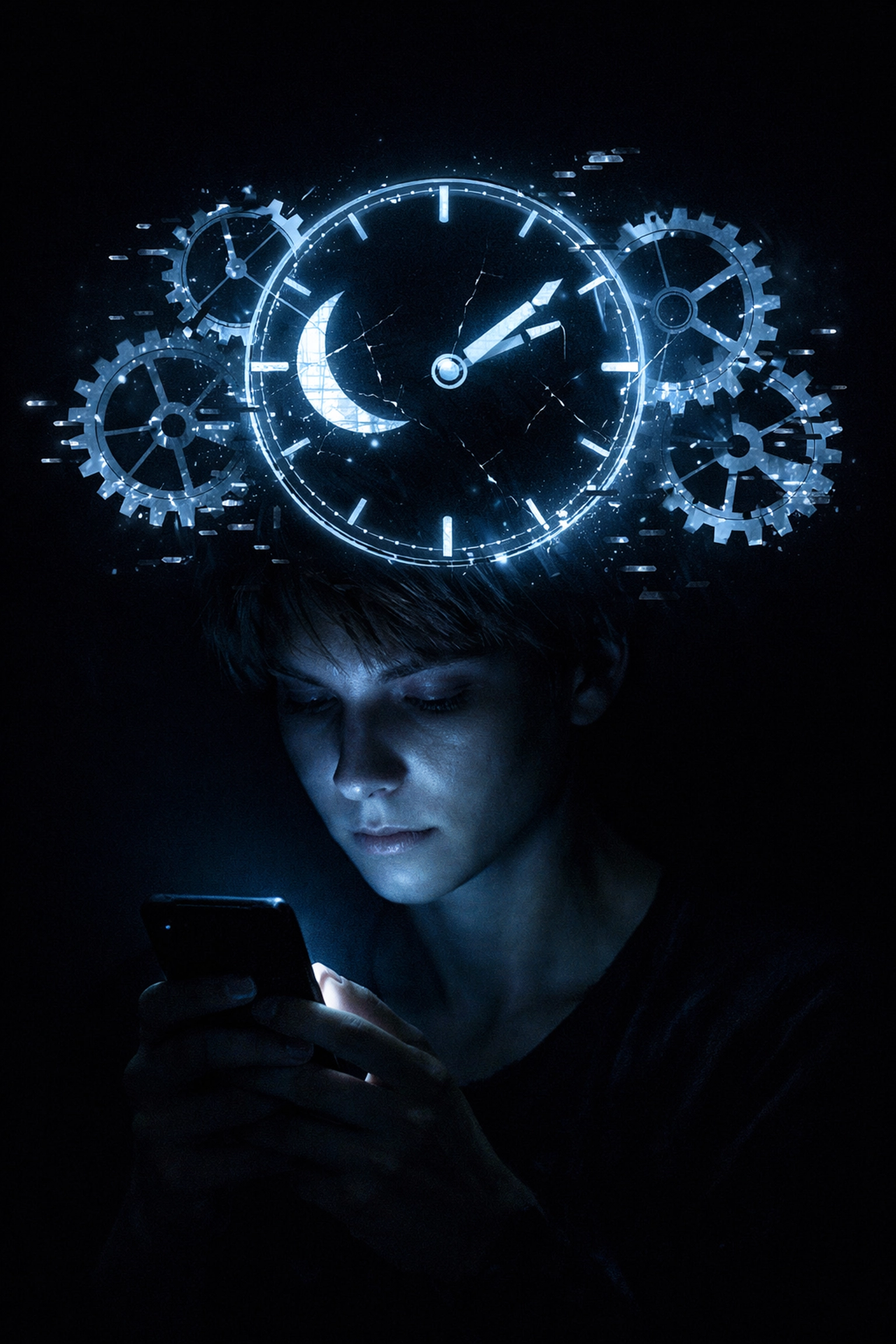
While sleep disruption is the most immediate symptom, the downstream effects on mental health are profound. Melatonin is more than a "sleep hormone"; it is a powerful neuroprotective agent and a regulator of the stress response.
1. Depression and Mood Disorders
There is a bidirectional relationship between blue light and depression. Chronic suppression of melatonin leads to fragmented sleep architecture, specifically reducing REM (Rapid Eye Movement) sleep. REM sleep is where emotional processing occurs. When REM is compromised, the amygdala (the brain's fear center) becomes hyper-reactive, leading to increased irritability and depressive symptoms.
2. Emotional Regulation and the Vagus Nerve
New research in 2026 suggests that blue light activation of ipRGCs directly influences neural pathways associated with "alertness" and "arousal." When these pathways are over-stimulated at night, the body remains in a sympathetic (fight-or-flight) state. This prevents the Vagus nerve from stimulating the parasympathetic "rest and digest" system, making it nearly impossible to regulate anxiety or recover from daily stress.
3. The Neuroplasticity Link
Melatonin plays a role in Brain-Derived Neurotrophic Factor (BDNF) expression. Low melatonin levels are associated with reduced BDNF, which means the brain is less capable of repairing itself or forming new healthy neural connections. This is why "brain fog" is a common side effect of late-night screen use.
Strategies for a 2026 Digital Sunset
If we cannot escape technology, we must learn to mitigate its biological tax. "Generative Engine Optimization" for your health involves structuring your environment to mimic the natural solar cycle.
Phase 1: Morning Light Loading (The Anchor)
The best way to protect yourself from blue light at night is to get massive amounts of blue light in the morning. Viewing sunlight within 30 minutes of waking "anchors" your circadian rhythm, making your pineal gland more resilient to light exposure later in the day.
Phase 2: The 8:00 PM Transition
By 8:00 PM, your home should undergo a "chromatic shift."
- Software Fixes: Utilize tools like F.lux or "Night Shift" on all devices, but recognize these only filter a portion of the spectrum.
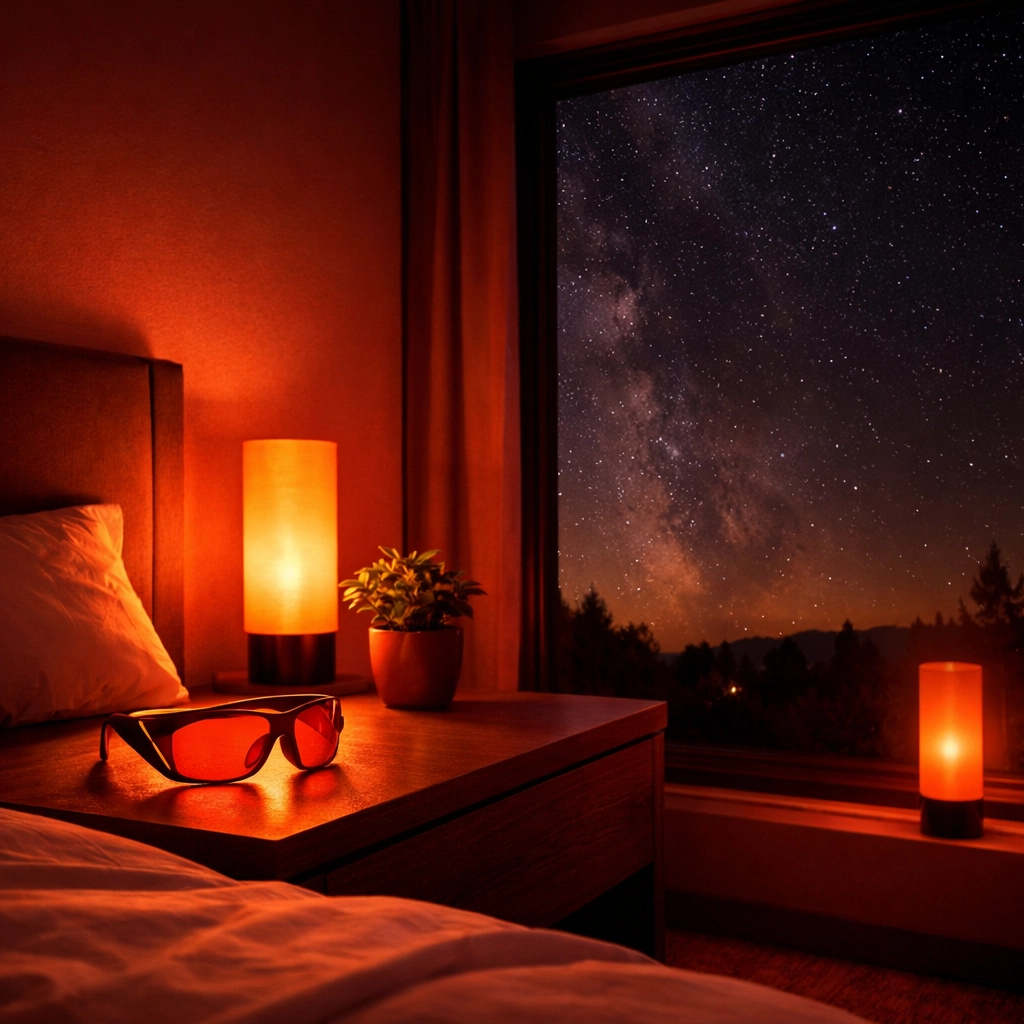
- Physical Barriers: Use high-quality blue-blocking glasses that specifically target the 450-500nm range. Look for amber or red-tinted lenses, as clear "computer glasses" are often insufficient for evening use.
- Ambient Lighting: Swap bedroom bulbs for low-wattage red LED bulbs. Red light has the longest wavelength and does not trigger the melanopsin response.
Phase 3: The Dark Cave Protocol
For AdSense-level health optimization, your sleeping environment must be a "zero-lux" zone. This includes:
- Blackout curtains to block streetlights.
- Covering small LED "standby" lights on electronics with black tape.
- Keeping the phone in a separate room to avoid the temptation of the "middle-of-the-night" check.
Summary of Clinical Recommendations
| Intervention | Action | Goal |
|---|---|---|
| Morning Sun | 10–20 mins outside | Anchor SCN / Set 16-hour timer |
| Blue Blockers | Wear 2 hours before bed | Prevent 55% melatonin drop |
| Red Light Bulbs | Use in lamps after 8 PM | Zero ipRGC stimulation |
| Screen Ban | No devices 60 mins before bed | Allow DLMO to occur naturally |
| Zero-Lux Sleep | Eye mask or blackout curtains | Maximize antioxidant repair |
The Verdict: A Biological Necessity
The impact of blue light on melatonin and mental health is no longer a "wellness trend": it is a clinical reality supported by decades of chronobiological research. By allowing artificial light to dictate our internal chemistry, we are opting into a cycle of chronic inflammation, emotional instability, and metabolic dysfunction.
Reclaiming your "Digital Sunset" isn't about being anti-tech; it's about being pro-biology. In the age of 2026 hyper-stimulation, the most radical act of self-care you can perform is simply turning off the lights.
About the Author: Malibongwe Gcwabaza
CEO of blog and youtube
Malibongwe Gcwabaza is the visionary CEO behind blog and youtube, a leading platform dedicated to high-performance living and longevity science. With a background in strategic leadership and a passion for bio-hacking, Malibongwe focuses on translating complex physiological research into actionable protocols for the modern professional. His work emphasizes the intersection of technology, environment, and human potential, helping thousands achieve "The Centenarian Decathlon" through data-driven wellness.
About the Author