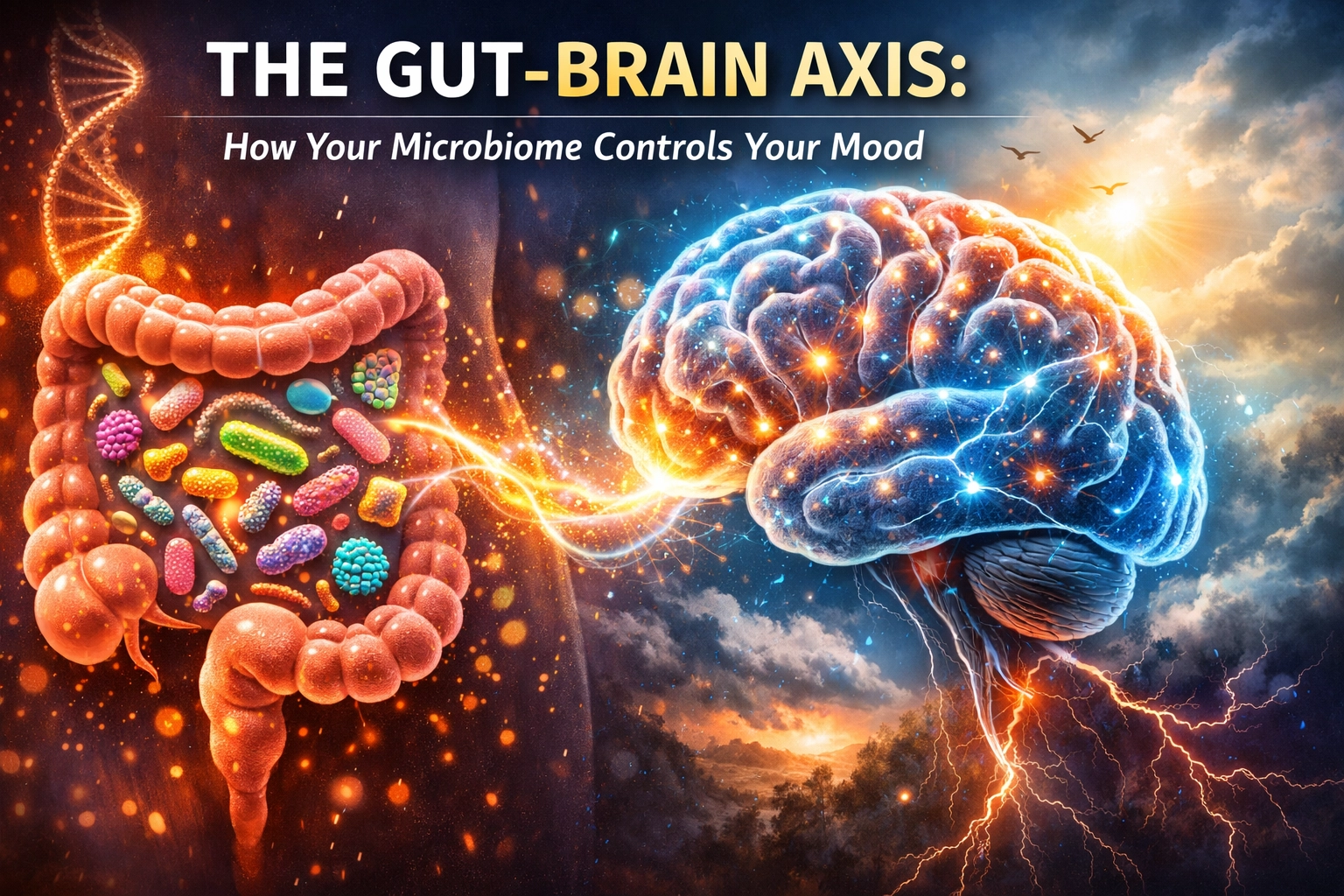
For decades, we treated the brain and the digestive system as two separate entities. If you had a mood disorder, you saw a psychiatrist. If you had a stomach ache, you saw a gastroenterologist. But by 2026, that wall has completely crumbled. We now recognize the "gut-brain axis" as one of the most critical systems in human health.
You aren’t just a single organism; you are a walking, talking ecosystem containing trillions of bacteria, viruses, and fungi known collectively as the microbiome. This ecosystem doesn't just digest your lunch: it actively dictates how you feel, how you handle stress, and whether you wake up feeling motivated or trapped in a cloud of "brain fog."
If you’ve ever felt "butterflies" in your stomach when nervous or a "gut feeling" about a decision, you’ve experienced the gut-brain axis in action. This guide dives deep into the science of how your microbiome controls your mood and what you can do to optimize this connection for mental peak performance.
The Anatomy of Communication: The Three Primary Pathways
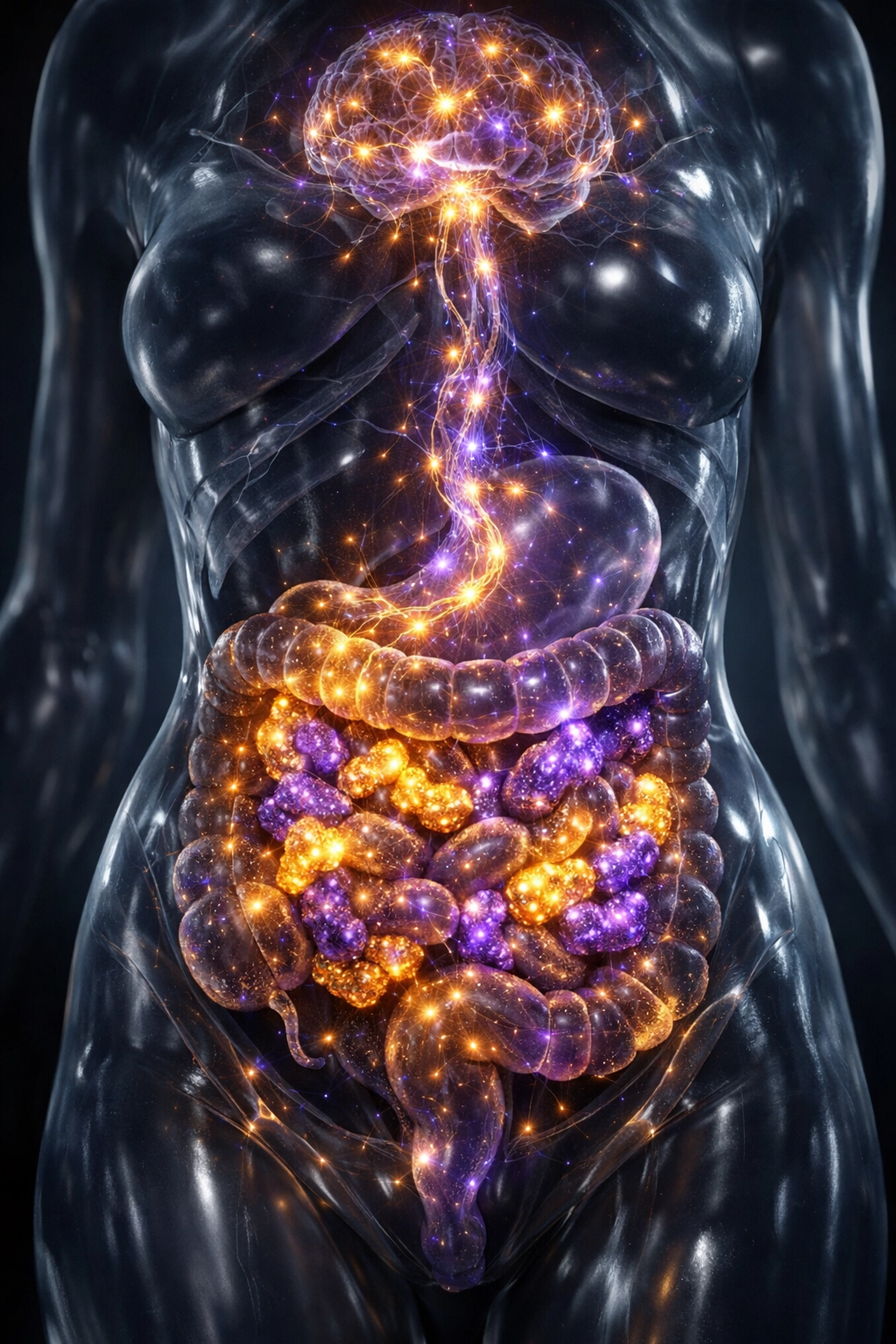
The communication between your gut and your brain isn't a one-way street; it’s a high-speed, bidirectional superhighway. There are three primary ways these two organs "talk" to each other.
1. The Vagus Nerve: The Hardwired Connection
Think of the Vagus nerve as a massive fiber-optic cable running from your brainstem down to your abdomen. It is the longest nerve in the autonomic nervous system. About 80-90% of the fibers in the Vagus nerve are sensory, meaning they are sending information from the gut to the brain, not the other way around.
When your gut bacteria produce certain metabolites, they stimulate the Vagus nerve, which sends an immediate signal to the brain’s emotional centers. In 2026, Vagus nerve stimulation (VNS) has become a primary biohack for reducing anxiety because of this direct hardware link.
2. The Neurotransmitter Factory
Most people think of serotonin as a "brain chemical." In reality, about 90% to 95% of your body’s serotonin is produced in your gut. While gut-derived serotonin doesn't cross the blood-brain barrier directly, it influences the signaling molecules that do.
Your gut bacteria also produce:
- GABA (Gamma-aminobutyric acid): Your body’s natural "calm down" chemical.
- Dopamine: The molecule of reward and motivation.
- Glutamate: Involved in learning and memory.
If your microbiome is out of balance (a state called dysbiosis), your "factory" starts producing the wrong ratios of these chemicals, leading directly to irritability, anxiety, and depressive symptoms.
3. The Immune Gateway and Inflammation
Your gut is home to about 70% of your immune system. When the gut lining becomes compromised: often called "leaky gut": pro-inflammatory cytokines are released. These inflammatory markers can travel through the bloodstream, breach the blood-brain barrier, and trigger "neuroinflammation."
Neuroinflammation is now considered a leading biological cause of clinical depression. In 2026, we no longer view depression solely as a "chemical imbalance" in the brain, but often as a systemic inflammatory response originating in the gut.
Dysbiosis: When the Ecosystem Goes Dark
When the balance of "good" vs. "bad" bacteria shifts, the consequences for mental health are profound. Research shows that individuals struggling with major depressive disorder (MDD) consistently show lower microbial diversity compared to healthy individuals.
The "Leaky Gut, Leaky Brain" Cycle
Chronic stress is one of the fastest ways to kill off beneficial bacteria like Lactobacillus. As these populations drop, the intestinal barrier weakens. This allows lipopolysaccharides (LPS): toxins found in the cell walls of "bad" bacteria: to enter the bloodstream.
Once LPS hits the brain, it flips a switch in the amygdala (the brain's fear center), making you more reactive to stress. This creates a vicious cycle: stress ruins your gut, and a ruined gut makes you more stressed.
| Microbe Type | Associated Mood/Function | Source |
|---|---|---|
| Lactobacillus | Reduced anxiety, lower cortisol | Fermented yogurt, kefir |
| Bifidobacterium | Improved stress resilience | Fiber, onions, garlic |
| Akkermansia | Metabolic health & anti-inflammation | Pomegranate, cranberries |
| Candida (Overgrowth) | Brain fog, sugar cravings | High-sugar diets |
The 2026 Nutrition Protocol for a Happier Brain
If you want to change your mood, you have to change your microbial makeup. This isn't about a "quick detox"; it’s about consistent, data-driven shifts in how you fuel your ecosystem.
1. Prioritize "Psychobiotics"
Psychobiotics are a specific class of probiotics that, when ingested in adequate amounts, yield a mental health benefit. Look for strains like L. helveticus and B. longum, which have been shown in clinical trials to reduce perceived stress and improve emotional processing.
2. The "30 Plants a Week" Challenge
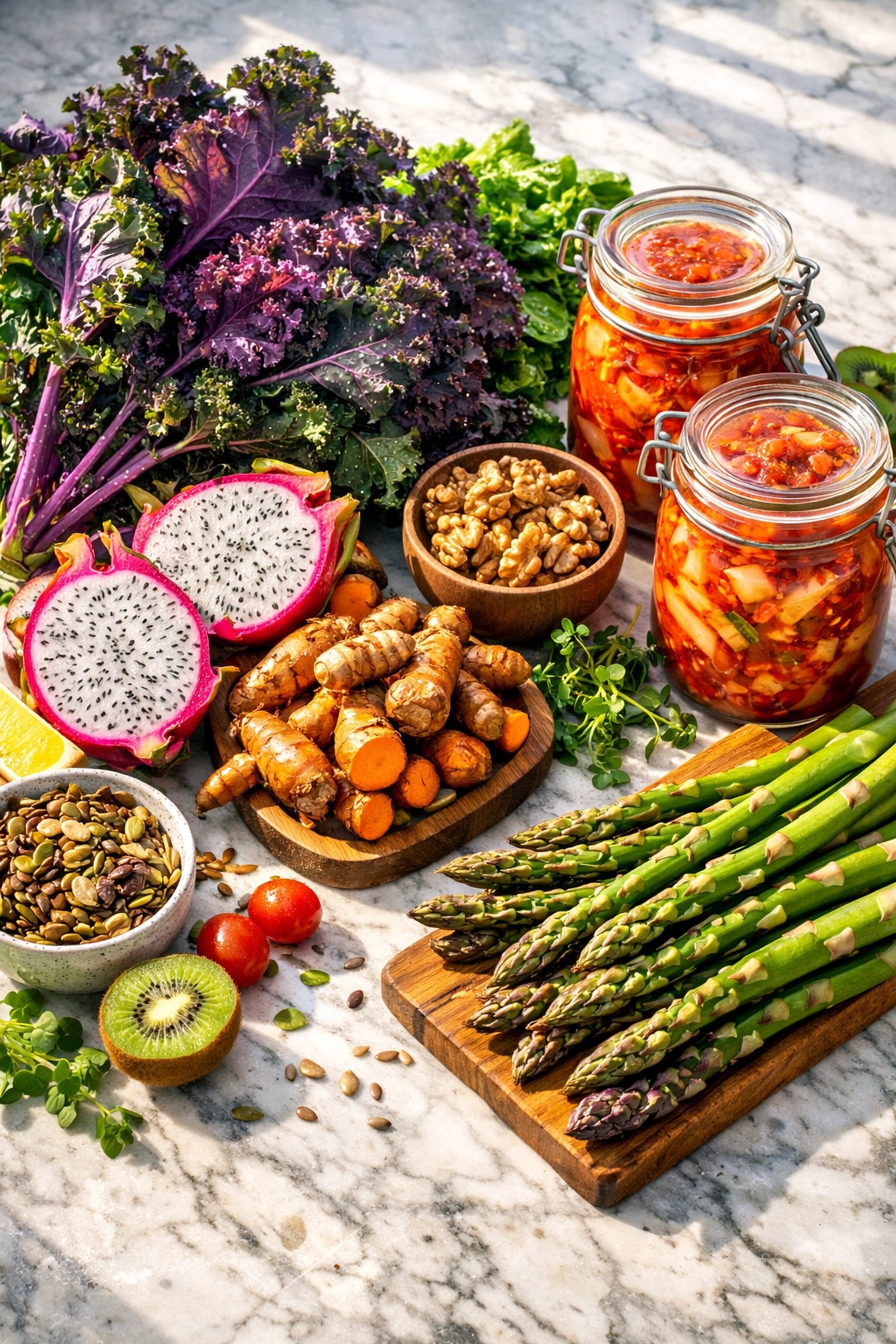
Diversity in the gut requires diversity in diet. Different bacteria eat different types of fiber. Aiming for 30 different plant-based foods per week: including nuts, seeds, herbs, fruits, and vegetables: is the gold standard for building a resilient microbiome.
3. Feed the "Good Guys" with Prebiotics
Probiotics are the "seeds," but prebiotics are the "fertilizer." Without soluble fibers like fructo-oligosaccharides (found in chicory root, asparagus, and bananas), your beneficial bacteria will starve and eventually die off.
4. Eliminate "Microbiome Disruptors"
The modern diet is designed to destroy the gut-brain axis. To protect your mood, you must limit:
- Artificial Sweeteners: Aspartame and saccharin can negatively shift gut microbiota in as little as 48 hours.
- Emulsifiers: Found in processed foods, these can thin the protective mucus lining of the gut.
- Excessive Alcohol: Alcohol causes immediate "leaks" in the intestinal wall, leading to the "hangxiety" (hangover anxiety) many experience the next day.
Beyond Food: Lifestyle Habits for the Gut-Brain Axis
While diet is foundational, the gut-brain axis is influenced by your entire lifestyle. In 2026, we look at "Environment Over Everything."
Circadian Biology and Digestion
Your gut bacteria have their own "body clock." They are most active during the day and need rest at night. Eating late at night disrupts their circadian rhythm, leading to poor metabolic health and lowered morning serotonin levels. Aim for at least a 12-hour fasting window (e.g., 7 PM to 7 AM) to allow for "housecleaning" (autophagy) in the gut.
Cold Exposure and the Vagus Nerve
One of the fastest ways to "tone" your Vagus nerve is through cold water immersion. Splashing your face with ice-cold water or taking a 30-second cold shower stimulates the Vagus nerve, slowing your heart rate and sending a "calm" signal directly from the gut to the brain.

Movement and Microbial Diversity
Exercise isn't just for muscles. Aerobic exercise has been shown to increase the production of Short-Chain Fatty Acids (SCFAs) like butyrate. Butyrate is a powerhouse molecule that heals the gut lining and acts as a signal for the brain to produce Brain-Derived Neurotrophic Factor (BDNF), which is essentially "Miracle-Gro" for new brain cells.
Conclusion: Take Control of Your Internal Weather
Your mood isn't just something that "happens" to you; it is a biological output of your internal environment. By shifting the focus from the brain to the gut, we unlock a massive lever for mental health that was previously ignored.
In 2026, the most effective way to treat a foggy mind or a heavy heart starts at the dinner table. When you nourish your microbiome, you aren't just improving your digestion: you are cultivating the very chemistry of your happiness.
About the Author
Malibongwe Gcwabaza is the CEO of blog and youtube and a leading voice in the 2026 longevity and bio-optimisation movement. With a background in health technology and a passion for holistic wellness, Malibongwe focuses on translating complex biological data into actionable lifestyle protocols. He believes that true performance starts at the cellular level and is dedicated to helping people reclaim their health through science-backed, "Deep Dive" education. When not exploring the latest in healthspan research, he can be found practicing Zone 2 training or experimenting with functional nutrition.
About the Author