By 2026, the medical landscape has fractured into two distinct worlds. On one side, you have traditional reactive medicine: the kind where you visit a doctor only when something is already broken. On the other side is the rapidly evolving world of Personalized Longevity Clinics. These aren't just high-end gyms or vitamin IV drips; they are data-driven command centers designed to optimize your "healthspan": the period of life spent in good health: rather than just extending your years.
If you are planning your first visit to a longevity clinic in 2026, you should expect a level of technical depth that far exceeds a standard physical. This guide breaks down the high-tech diagnostics, the personalized interventions, and the shift from "average" health to "optimal" performance.
The Paradigm Shift: Healthspan vs. Lifespan
Traditional medicine focuses on the "mean." If your blood work falls within a broad reference range, you are told you are "fine." Longevity clinics reject this. Being "fine" is not the goal; being biologically younger than your chronological age is.
In 2026, these clinics operate on a Multi-Omics framework. This means they look at your DNA (genomics), your protein levels (proteomics), your metabolic byproducts (metabolomics), and how your genes are actually expressing themselves (epigenetics).
Traditional Clinic vs. Longevity Clinic: A Comparison
| Feature | Traditional Medical Clinic | Personalized Longevity Clinic (2026) |
|---|---|---|
| Primary Goal | Disease treatment (Reactive) | Prevention & Optimization (Proactive) |
| Data Points | Standard CBC, BP, BMI | Whole-Genome, Epigenetic Age, Microbiome |
| Focus | Lifespan (Staying alive) | Healthspan (Staying functional) |
| Approach | One-size-fits-all guidelines | N-of-1 (Personalized biology) |
| Technology | Stethoscope, basic labs | AI Digital Twins, Liquid Biopsies, Wearable Integration |
Phase 1: The Deep Dive Diagnostics
A visit to a longevity clinic begins long before you step into the office. In 2026, you’ll likely receive a kit at home for baseline "omics" testing. Once you arrive, the physical assessment is exhaustive.
1. Epigenetic Age Testing
While your birthday says you are 45, your cells might say you are 38: or 52. Clinics now use advanced "clocks" like the DunedinPACE or the GrimAge test. These measure DNA methylation patterns to see how fast you are aging at a cellular level. This is the single most important metric for tracking if your lifestyle interventions are actually working.
2. Whole-Body MRI & Early Detection
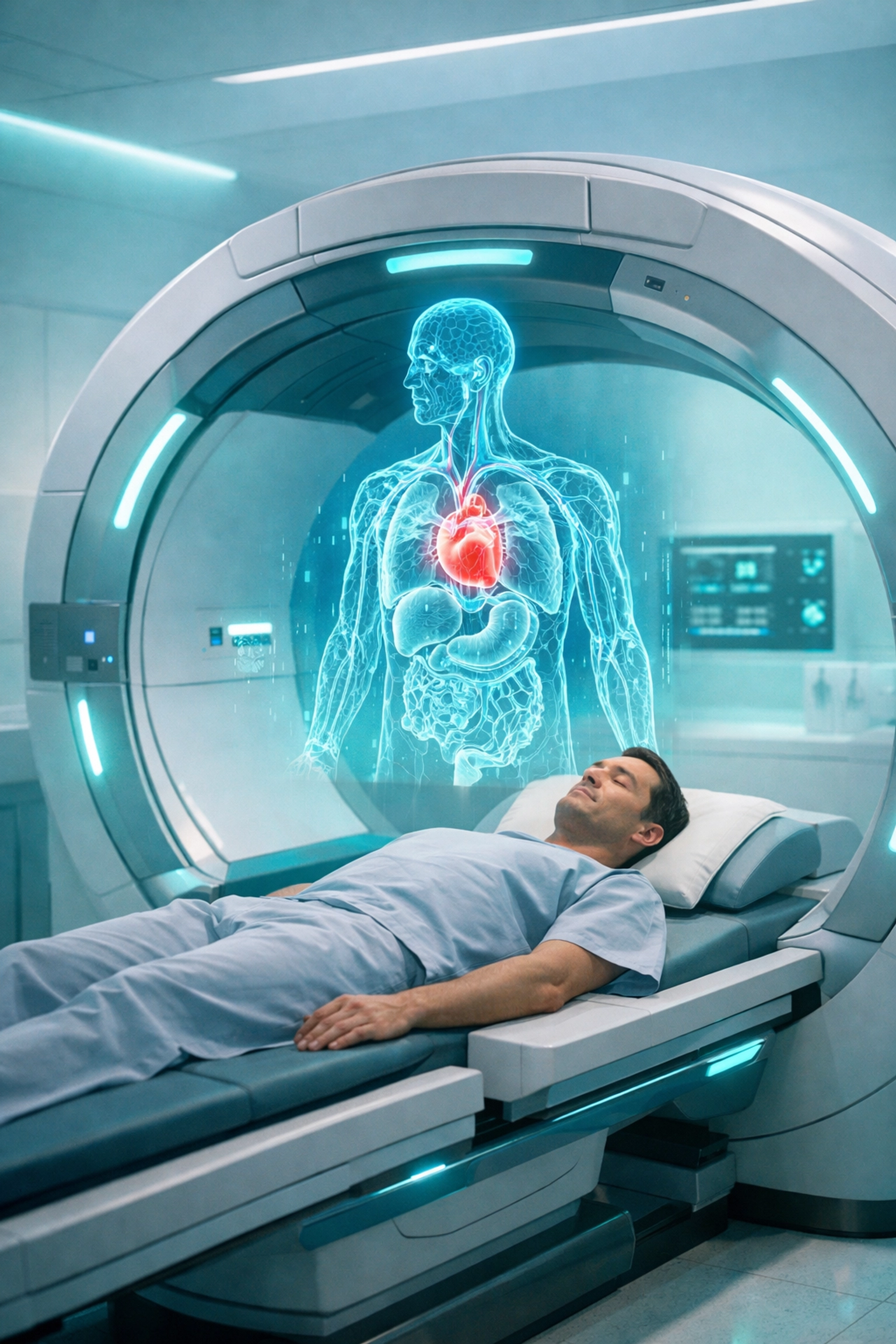
Early cancer detection has been revolutionized by AI-augmented MRI and liquid biopsies. Clinics use technologies like the Galleri test, which can detect over 50 types of cancer from a single blood draw by looking for cell-free DNA signals. A full-body MRI scans for visceral fat (the dangerous fat around organs), brain volume, and early-stage tumors or aneurysms.
3. Advanced Cardiovascular Screening
Forget simple cholesterol tests. 2026 clinics look at ApoB (Apolipoprotein B) and Lp(a), which are much more accurate predictors of heart disease. Many also utilize AI-driven Cleerly scans, which analyze CT scans of the heart to identify not just the presence of plaque, but the type of plaque (soft vs. calcified) to determine your actual risk of a cardiac event.
4. VO2 Max and Functional Strength
Your cardiorespiratory fitness (VO2 Max) and grip strength are the two strongest predictors of all-cause mortality. You will likely spend time on a metabolic cart to measure exactly how your body uses oxygen and at what point you switch from burning fat to burning carbohydrates (metabolic flexibility).
Phase 2: Building Your "Digital Twin"
One of the most futuristic aspects of a 2026 visit is the creation of your Digital Twin. All the data collected: from your genome to your Continuous Glucose Monitor (CGM) readings: is fed into an AI model.
This model allows clinicians to simulate how your body might react to specific interventions. For example, instead of guessing if a ketogenic diet or a high-carb/low-fat diet is better for you, the AI analyzes your insulin sensitivity markers and genetic predispositions to predict the outcome. This moves nutrition and exercise from "trial and error" to "precision engineering."

Phase 3: The Longevity "Stack" (Interventions)
Once the data is in, the clinic creates a personalized protocol. This isn't just a list of supplements; it’s a high-tech "stack" designed to repair cellular damage.
Peptide Therapy
Peptides are short chains of amino acids that act as signaling molecules. Clinics in 2026 use them for specific goals:
- BPC-157 & TB-500: For rapid joint and tissue repair.
- CJC-1295 / Ipamorelin: To naturally boost growth hormone and improve sleep/recovery.
- GHK-Cu: For skin rejuvenation and DNA repair.
Senolytics: Flushing Out "Zombie Cells"
As we age, some cells stop dividing but don't die. These "senescent cells" linger and secrete inflammatory signals that damage neighboring cells. Under strict medical supervision, longevity clinics use Senolytics (like Dasatinib or Quercetin) to selectively clear these "zombie cells," effectively lowering systemic inflammation (Inflammaging).
NAD+ Optimization
NAD+ is a coenzyme found in all living cells and is crucial for energy metabolism and DNA repair. Levels drop as we age. Clinics offer advanced NAD+ precursors (NMN or NR) or specialized IV infusions to restore mitochondrial function and boost energy levels.
Hormonal Optimization
Unlike traditional HRT, which often waits for a total collapse of hormone levels, longevity clinics focus on "optimization." This means maintaining hormone levels (Testosterone, Estrogen, DHEA, Thyroid) at the levels of a healthy 25-year-old to preserve bone density, muscle mass, and cognitive clarity.
Phase 4: Integrating the "N-of-1" Lifestyle
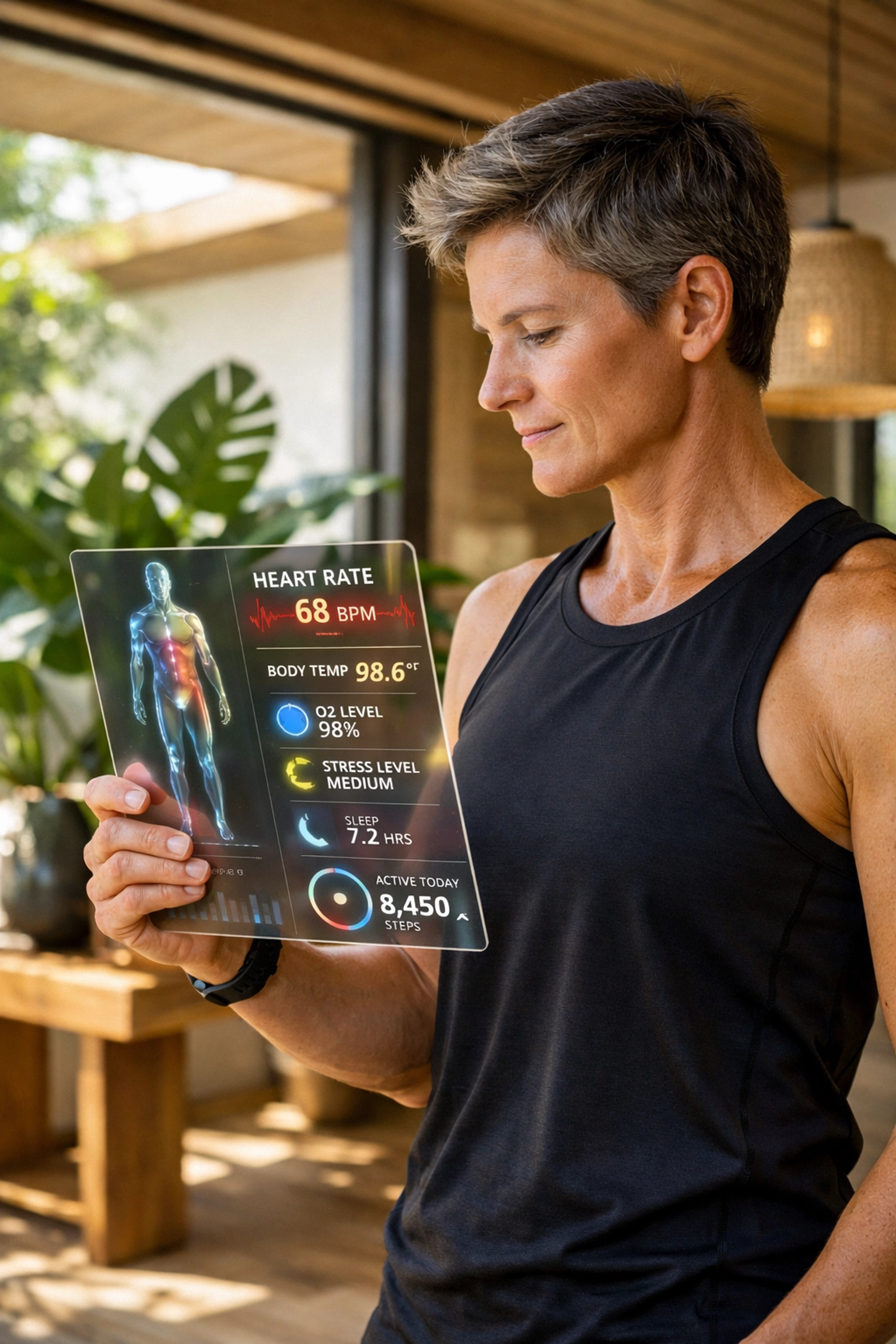
A visit to a longevity clinic is not a one-time event. It is an ongoing partnership. You will likely leave the clinic with a suite of connected devices.
- Continuous Glucose Monitor (CGM): To see how specific foods spike your blood sugar in real-time.
- Advanced Wearables: 2026-era Oura rings or Whoop straps that track Heart Rate Variability (HRV) and sleep architecture with clinical-grade accuracy.
- Personalized Nutrition: Based on your gut microbiome sequence, the clinic provides a list of "superfoods" unique to your bacteria profile.
The 2026 Longevity Protocol Checklist
If you're visiting a top-tier clinic, ensure your plan covers these five pillars:
- [ ] Cellular Health: Senolytics, NAD+ boosters, and autophagy induction.
- [ ] Hormonal Balance: Bio-identical optimization and stress (cortisol) management.
- [ ] Structural Integrity: Bone density (DEXA) and muscle mass preservation (Sarcopenia prevention).
- [ ] Metabolic Health: Glycemic control and metabolic flexibility.
- [ ] Cognitive Reserve: Neuro-protective supplements (Nootropics) and brain-training protocols.
Is the Future Accessible?
Currently, personalized longevity clinics represent the "Formula 1" of healthcare: expensive, cutting-edge, and highly specialized. However, much like anti-lock brakes eventually moved from race cars to every sedan on the road, these technologies are trickling down.
By 2026, many of the diagnostic tools (like epigenetic clocks and CGMs) have become significantly more affordable. While a full concierge clinic might cost thousands, the principles they use: focusing on VO2 max, strength, and metabolic health: can be applied by anyone with the right data.
Conclusion: Taking Ownership of Your Biology
The future of personalized longevity clinics is a shift from being a passive patient to being the CEO of your own health. By using 2026's most advanced diagnostics, you are no longer guessing about your health; you are measuring it. Whether it’s through clearing out senescent cells, optimizing your hormones, or simply using a digital twin to master your nutrition, the goal is clear: to die young, as late as possible.
About the Author: Malibongwe Gcwabaza
Malibongwe Gcwabaza is the CEO of blog and youtube and a leading voice in the intersection of health technology and human performance. With a background in strategic leadership and a passion for data-driven wellness, Malibongwe focuses on making complex medical advancements accessible to a global audience. When he isn't exploring the latest in biohacking and longevity, he is dedicated to scaling digital platforms that empower individuals to optimize their physical and mental potential.
About the Author