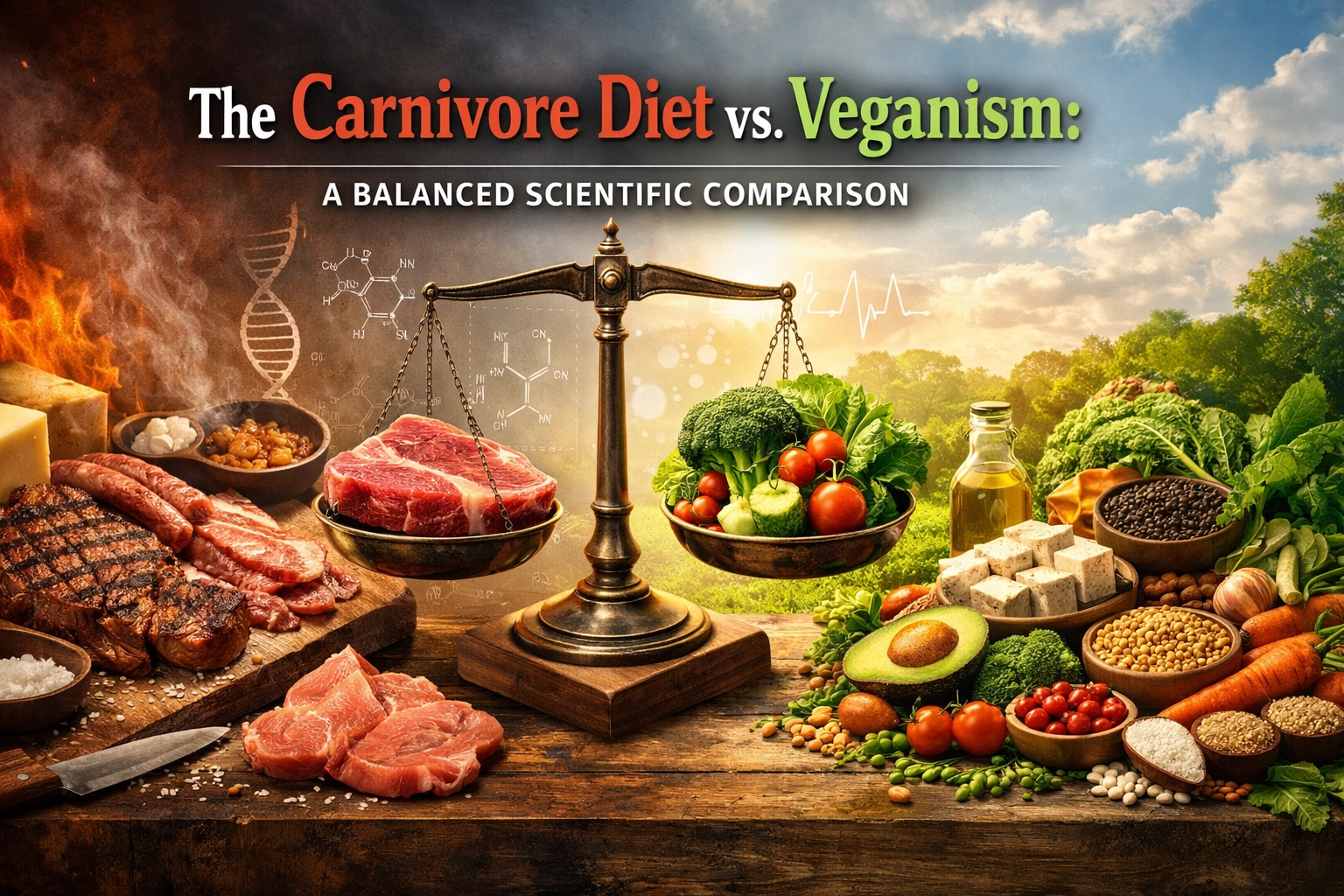
In the health and wellness landscape of 2026, the nutritional tug-of-war has moved beyond simple calorie counting. We are now in the era of "Metabolic Precision." On one side, we have the Carnivore Diet: an all-meat, zero-carb approach that claims to be the ultimate human reset. On the other, Veganism: a plant-exclusive lifestyle championed for its longevity benefits and ethical footprint.
Both diets represent extreme ends of the nutritional spectrum. While they seem like polar opposites, both share a common enemy: ultra-processed foods (UPFs). However, the physiological pathways they activate couldn't be more different. This guide dives deep into the clinical data, nutrient bioavailability, and long-term health outcomes of both strategies to help you decide which (if either) aligns with your 2026 longevity goals.
The Carnivore Diet: The Ultimate Elimination Protocol?
The Carnivore Diet involves consuming exclusively animal products: meat, fish, eggs, and occasionally high-fat dairy. It is essentially the most restrictive version of a ketogenic diet, pushing the body into a state of nutritional ketosis where it burns fat for fuel instead of glucose.
Nutrient Density and Bioavailability
Proponents argue that animal tissues contain all the nutrients humans need in their most bioavailable forms.
- Heme Iron: Found in red meat, it is absorbed at a rate of 15-35%, compared to the 2-20% absorption rate of non-heme iron found in plants.
- Vitamin B12: Essential for nerve function and DNA synthesis, B12 is naturally occurring only in animal products.
- Complete Proteins: Animal proteins have a higher Digestible Indispensable Amino Acid Score (DIAAS) than plant proteins, meaning the body can utilize the protein more efficiently for muscle protein synthesis (MPS).
The "Antinutrient" Argument
A core tenet of the carnivore philosophy is the avoidance of "antinutrients" like lectins, oxalates, and phytates. These are defense chemicals plants use to discourage herbivory. In sensitive individuals, these compounds can interfere with mineral absorption or trigger "leaky gut" (intestinal permeability). By removing all plant matter, many followers report a total resolution of autoimmune symptoms and chronic bloating.

Veganism: The Longevity and Fiber Powerhouse
Veganism excludes all animal-derived products, focusing on fruits, vegetables, legumes, grains, nuts, and seeds. In 2026, the scientific consensus continues to highlight the Mediterranean-style vegan diet as a gold standard for cardiovascular health.
The Microbiome and Fiber
The primary advantage of a plant-based diet is fiber. Fiber is the fuel for our gut microbiome. When we consume diverse plant fibers, our gut bacteria produce Short-Chain Fatty Acids (SCFAs) like butyrate, which have potent anti-inflammatory effects and protect the colon lining.
Phytochemicals and Hormesis
Plants are rich in polyphenols and antioxidants that aren't found in meat. These compounds induce a mild state of "hormesis": a beneficial stress that triggers the body’s own repair mechanisms. Sulforaphane (from broccoli) and resveratrol (from grapes) are classic examples of compounds that activate the Nrf2 pathway, enhancing the body’s detoxification system.
Disease Risk Reduction
Large-scale longitudinal studies, such as the EPIC-Oxford study and the Adventist Health Studies, consistently show that vegans have:
- 47% lower risk of developing Type 2 diabetes.
- Significantly lower levels of LDL cholesterol (the "bad" cholesterol).
- A lower incidence of certain cancers, particularly colorectal cancer.
Head-to-Head: The Data-Driven Comparison
To understand how these diets stack up, we need to look at the clinical markers.
| Feature | Carnivore Diet | Vegan Diet |
|---|---|---|
| Primary Fuel Source | Fats & Ketones | Glucose & Fiber |
| Key Nutrient Strengths | B12, Iron, Zinc, Creatine, K2 | Vitamin C, Fiber, Folate, Magnesium |
| Common Deficiencies | Vitamin C, Potassium, Fiber | Vitamin B12, Omega-3 (EPA/DHA), Vitamin D3 |
| Impact on Insulin | Very Low (Stabilizes Blood Sugar) | Moderate (Dependent on Carb Quality) |
| Impact on Inflammation | Variable (Lowers CRP for many) | Generally Low (High Antioxidant intake) |
| Hormonal Profile | Supports Testosterone & Satiety | Supports SHBG & Heart Health |
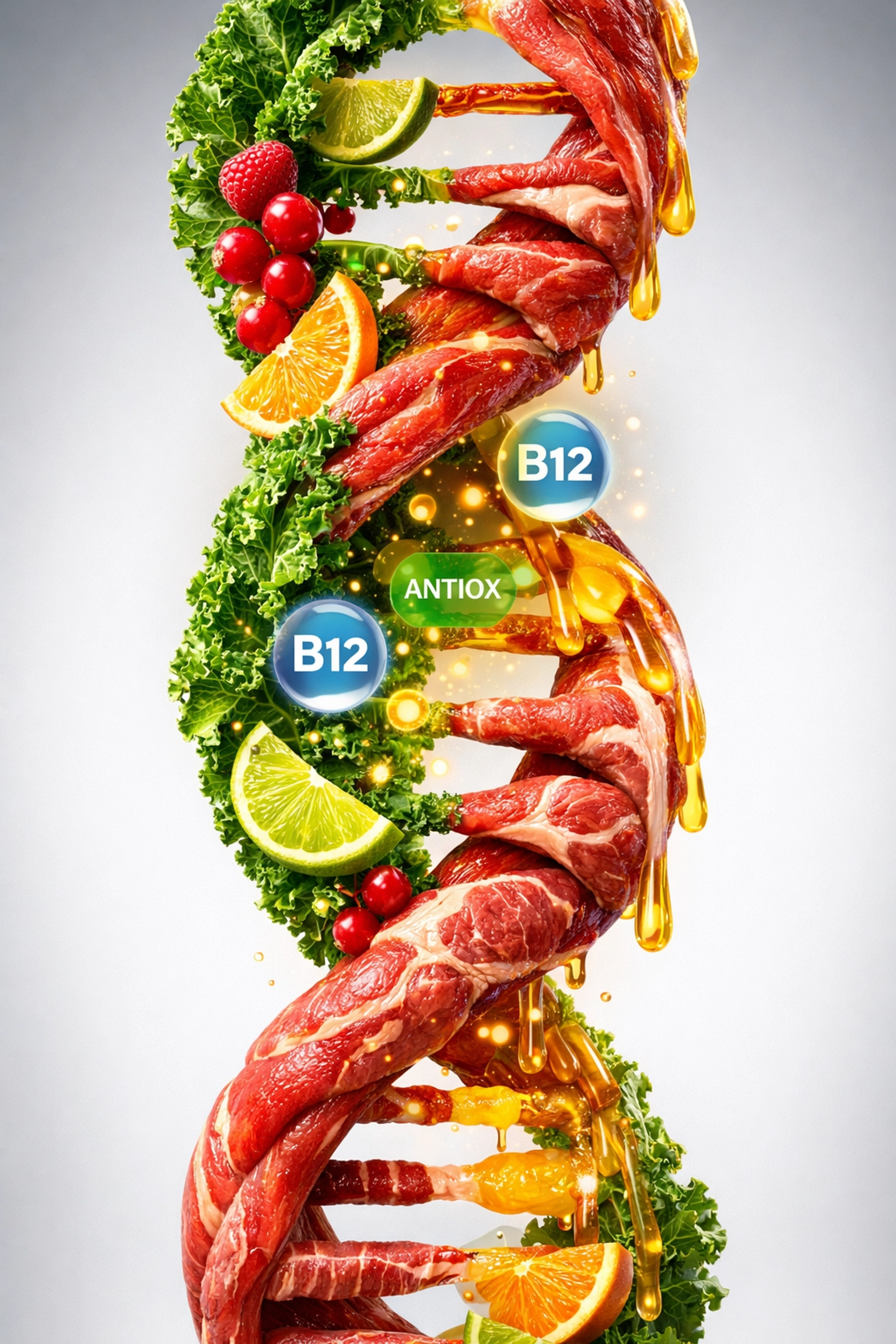
The Gut Health Paradox: Fiber vs. No Fiber
The most heated debate in 2026 is whether we actually need fiber.
- The Vegan Perspective: Fiber is essential for stool bulk and microbial diversity. A lack of fiber leads to a "starved" microbiome, which may begin to consume the gut's protective mucus layer.
- The Carnivore Perspective: For those with Small Intestinal Bacterial Overgrowth (SIBO) or Irritable Bowel Syndrome (IBS), fiber acts like "adding wood to a fire." Removing fiber can stop the fermentation process that causes pain and gas, giving the gut a chance to heal.
Clinical reality suggests that while a high-fiber diet is optimal for a healthy gut, a zero-fiber diet may be a powerful therapeutic tool for a damaged one.
The 2026 Perspective on Environmental Impact
We cannot discuss these diets without mentioning the planet.
- Veganism undeniably has a lower carbon and water footprint per calorie. It is the most efficient way to feed a growing global population using fewer land resources.
- Carnivore advocates point toward Regenerative Agriculture. They argue that well-managed ruminant animals (like cattle) can actually sequester carbon in the soil, restoring grasslands and ecosystems. However, "regenerative" meat is currently a niche market and not the source of most supermarket beef.
Metabolic Flexibility: The Middle Ground?
The most advanced health practitioners in 2026 are moving away from dogmatic "camps" and toward Metabolic Flexibility. This is the body’s ability to switch efficiently between burning carbs and burning fats.
Strict veganism can sometimes lead to "carb dependency" if not carefully managed with protein, while long-term carnivore diets can sometimes lead to decreased glucose tolerance (physiological insulin resistance).
The "Pegan" Approach or Animal-Based Diet
Many are finding success in a "hybrid" model:
- Animal-Based: High meat/organ consumption for nutrient density, but including "least toxic" plant foods like seasonal fruits, raw honey, and squashes.
- Peganism: A plant-rich diet supplemented with small amounts of high-quality, pasture-raised animal proteins.

Critical Deficiencies: What to Watch For
Regardless of the path you choose, certain supplements are non-negotiable in 2026:
- For Vegans: Vitamin B12 (methylcobalamin), Algae-based EPA/DHA, and potentially Creatine and Taurine (which are naturally occurring in meat).
- For Carnivores: Electrolytes (Sodium, Magnesium, Potassium) are vital during the transition, as the loss of glycogen causes the body to dump water and minerals. Some may also require Vitamin C if not consuming "nose-to-tail" (organs like liver).
Conclusion: Which Diet Wins?
There is no "one size fits all" in human nutrition.
- Choose Carnivore if: You suffer from severe autoimmune issues, chronic digestive distress, or out-of-control blood sugar, and you need a radical metabolic "reset."
- Choose Veganism if: Your primary goals are cardiovascular longevity, lowering systemic inflammation through phytochemicals, and reducing your environmental footprint.
The most important takeaway for 2026? The quality of the food matters more than the label. A "vegan" eating processed soy burgers and sugary cereal will likely be less healthy than a "carnivore" eating pasture-raised ribeye and wild salmon. Eliminate the junk, prioritize protein, and listen to your biomarkers.
About the Author: Malibongwe Gcwabaza
Malibongwe Gcwabaza is the CEO of blog and youtube and a dedicated advocate for longevity and high-performance living. With a background in executive leadership and a passion for data-driven wellness, Malibongwe focuses on bridging the gap between complex clinical research and actionable lifestyle habits. When not exploring the latest in bio-monitoring tech, he is likely testing new functional movement patterns or researching the future of regenerative agriculture. His mission is to empower individuals to take control of their biological age through informed, science-backed choices.
About the Author