In the high-stakes world of functional "superfoods," few items have undergone as much of a rebranding as bone broth. Once the humble base of grandmothers' soups across the globe, it has transitioned into a multi-billion dollar industry marketed as a panacea for everything from sagging skin to chronic joint pain.
But when you strip away the sleek packaging and the influencer testimonials, what does the biology actually say? This guide dives deep into the molecular structure of bone broth, examines recent clinical data on systemic inflammation, and separates the genuine metabolic benefits from the marketing hyperbole.
The Chemistry of Extraction: What Is Actually in the Cup?
To understand the benefits, we have to look at the extraction process. Bone broth is the result of simmering animal bones and connective tissue in water: usually with an acidic medium like apple cider vinegar: for anywhere from 12 to 48 hours. This prolonged thermal exposure breaks down complex proteins into their constituent parts.
The Amino Acid Profile
Unlike a standard protein shake, bone broth is not a complete protein source. However, it is exceptionally high in four specific amino acids that are often under-represented in the modern Western diet:
- Glycine: A precursor to glutathione (the body's master antioxidant) and a key neurotransmitter.
- Proline: Essential for collagen synthesis and structure.
- Glutamine: The primary fuel source for enterocytes (cells lining the digestive tract).
- Arginine: Necessary for immune function and nitric oxide production.
| Nutrient | Typical Amount (per 250ml) | Primary Biological Role |
|---|---|---|
| Protein | 9g – 12g | Tissue repair and enzyme production |
| Collagen | 5g – 8g | Structural integrity of connective tissue |
| Glycine | 1.5g – 2.5g | Neurotransmission and metabolic health |
| Sodium | 200mg – 400mg | Electrolyte balance and hydration |
Science-Backed Benefit #1: Systemic Anti-Inflammatory Effects
The most compelling research regarding bone broth focuses on its impact on inflammatory markers. Chronic inflammation is the precursor to most modern metabolic diseases, and the amino acid profile of bone broth appears to act as a natural modulator.
A landmark murine study focusing on ulcerative colitis found that bone broth consumption significantly reduced pro-inflammatory cytokines. The data showed a reduction in:
- IL-1β: Reduced by 61.12%
- IL-6: Reduced by 94.70%
- TNF-α: Reduced by 68.88%
These are not insignificant numbers. By lowering these specific markers, bone broth helps shift the body from a pro-inflammatory state to a restorative state. For individuals suffering from Autoimmune Protocol (AIP) conditions or general systemic inflammation, these findings provide a solid mechanical basis for including bone broth in a daily protocol.
Science-Backed Benefit #2: Gut Barrier Integrity
The phrase "leaky gut" is often dismissed as pseudo-science, but in clinical terms, it refers to intestinal permeability. When the tight junctions of the intestinal wall become compromised, undigested food particles and pathogens enter the bloodstream, triggering an immune response.
Bone broth contains high concentrations of Glutamine and Gelatin. Gelatin is a hydrophilic colloid; it attracts and holds liquids, including digestive juices, which supports healthy transit. More importantly, glutamine acts as a "patch" for the intestinal lining. Research published in 2021 suggests that bone broth can lessen the structural damage in the gastrointestinal tract by providing the raw materials necessary for the rapid turnover of gut cells.

Science-Backed Benefit #3: Sleep Quality and Glycine
While bone broth is often marketed for physical performance, its impact on the central nervous system is equally noteworthy. This is primarily due to Glycine.
Glycine acts as an inhibitory neurotransmitter, much like GABA. Clinical studies have shown that 3 grams of glycine taken before bed can improve sleep quality and reduce daytime sleepiness. While a single cup of bone broth may only provide 1.5g to 2g of glycine, it serves as a powerful dietary contributor to a "calm" nervous system, making it an ideal evening ritual for those struggling with cortisol spikes or insomnia.
Marketing Hype vs. Biological Reality
Despite the very real benefits listed above, the industry frequently overreaches. To maintain a science-based approach, we must address the claims that don't quite hold up under the microscope.
The Collagen Misconception
The Claim: Drinking bone broth directly increases the collagen in your skin and joints, erasing wrinkles and fixing cartilage.
The Reality: Your body does not transport collagen directly from your gut to your face. When you consume collagen, your digestive system breaks it down into individual amino acids. Your body then decides where to allocate those amino acids based on its highest priority needs (often internal organ repair or immune function) rather than aesthetic goals. While providing the building blocks is helpful, bone broth is not an "injectable filler" in liquid form.
The Joint Pain "Cure"
The Claim: Bone broth is a substitute for glucosamine supplements or medical intervention for arthritis.
The Reality: While bone broth contains glucosamine and chondroitin, the concentrations are often lower than therapeutic doses found in clinical supplements. It is an excellent preventative and supportive food, but calling it a "cure" for degenerative joint disease is a reach that the data doesn't currently support.
Optimizing the Extraction: A Technical Guide to Preparation
To achieve the nutrient density discussed in the clinical studies, the preparation method is critical. Store-bought "stock" is often high in sodium and MSG but low in actual gelatinous protein.
1. The Bone Selection (The Matrix)
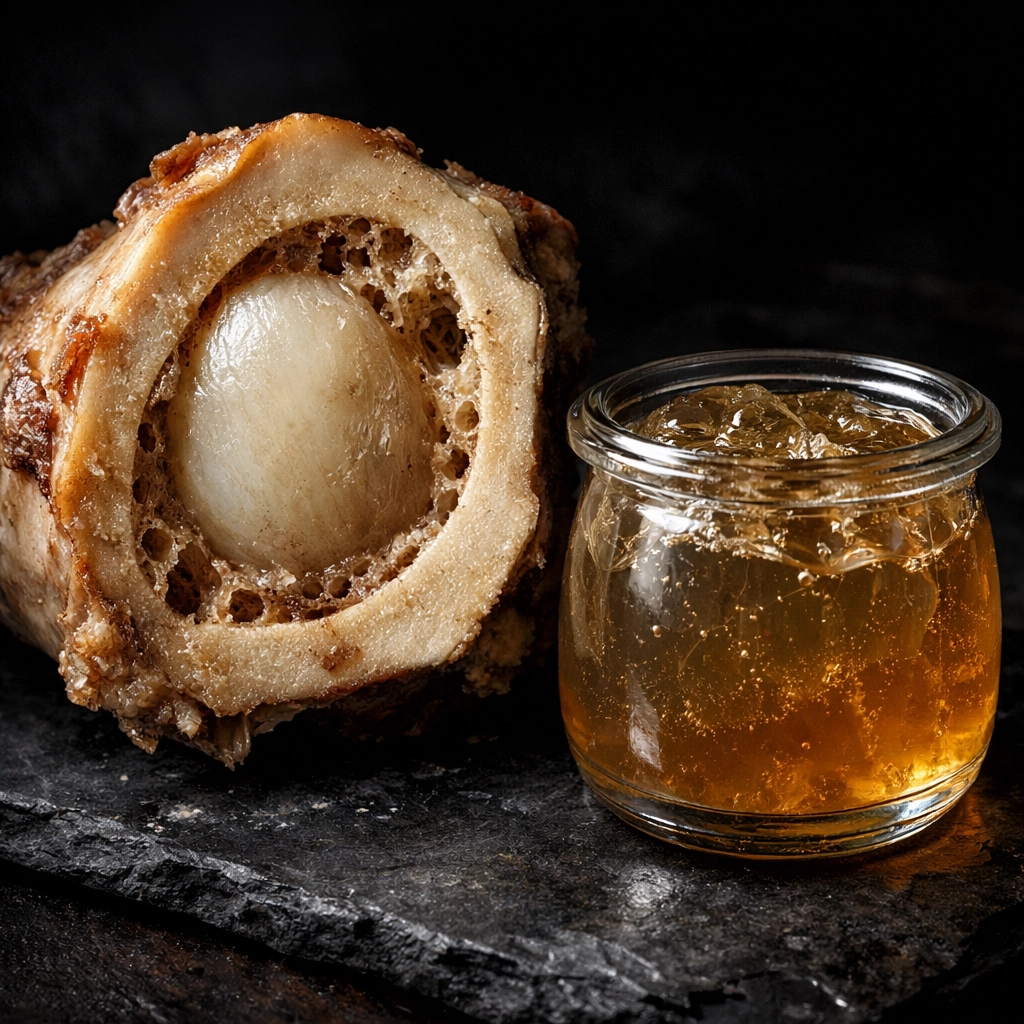
Use a mix of "meaty" bones (like oxtail or neck) for flavor and "joint" bones (like knuckles or feet) for maximum collagen yield. The joints contain the highest density of connective tissue which converts to gelatin during the simmer.
2. The Acidification Step
Adding an acid (Apple Cider Vinegar or Lemon) is not for flavor. It lowers the pH of the water, which helps demineralize the bones and pull calcium, magnesium, and phosphorus into the liquid.
3. The Thermal Variable
- Chicken bones: 12–24 hours.
- Beef/Bison bones: 24–48 hours.
- Pressure Cooking (Instant Pot): 2–4 hours.
While long simmers are traditional, recent testing suggests that pressure cooking can achieve similar amino acid profiles in a fraction of the time, with the added benefit of less histamine development: a crucial factor for those with histamine intolerance.

Conclusion: The Verdict on "Liquid Gold"
Is bone broth a miracle? No. Is it a highly bioavailable, nutrient-dense functional food that provides unique anti-inflammatory benefits? Absolutely.
The science confirms that bone broth is an elite tool for gut health and systemic inflammation management. However, it should be viewed as a foundational component of a healthy diet rather than a "supernatural" supplement. By focusing on the glycine content and the reduction of cytokines, we can appreciate bone broth for what it actually is: a scientifically validated recovery aid that bridges the gap between traditional wisdom and modern biochemistry.
About the Author: Malibongwe Gcwabaza
Malibongwe Gcwabaza is the CEO of blog and youtube, a platform dedicated to demystifying health science and providing actionable insights for the modern achiever. With a focus on data-driven wellness and metabolic health, Malibongwe bridges the gap between complex clinical research and everyday application. When not analyzing the latest nutritional studies, he focuses on scaling digital media brands that prioritize "Helpful Content" and transparency in the wellness space.

About the Author