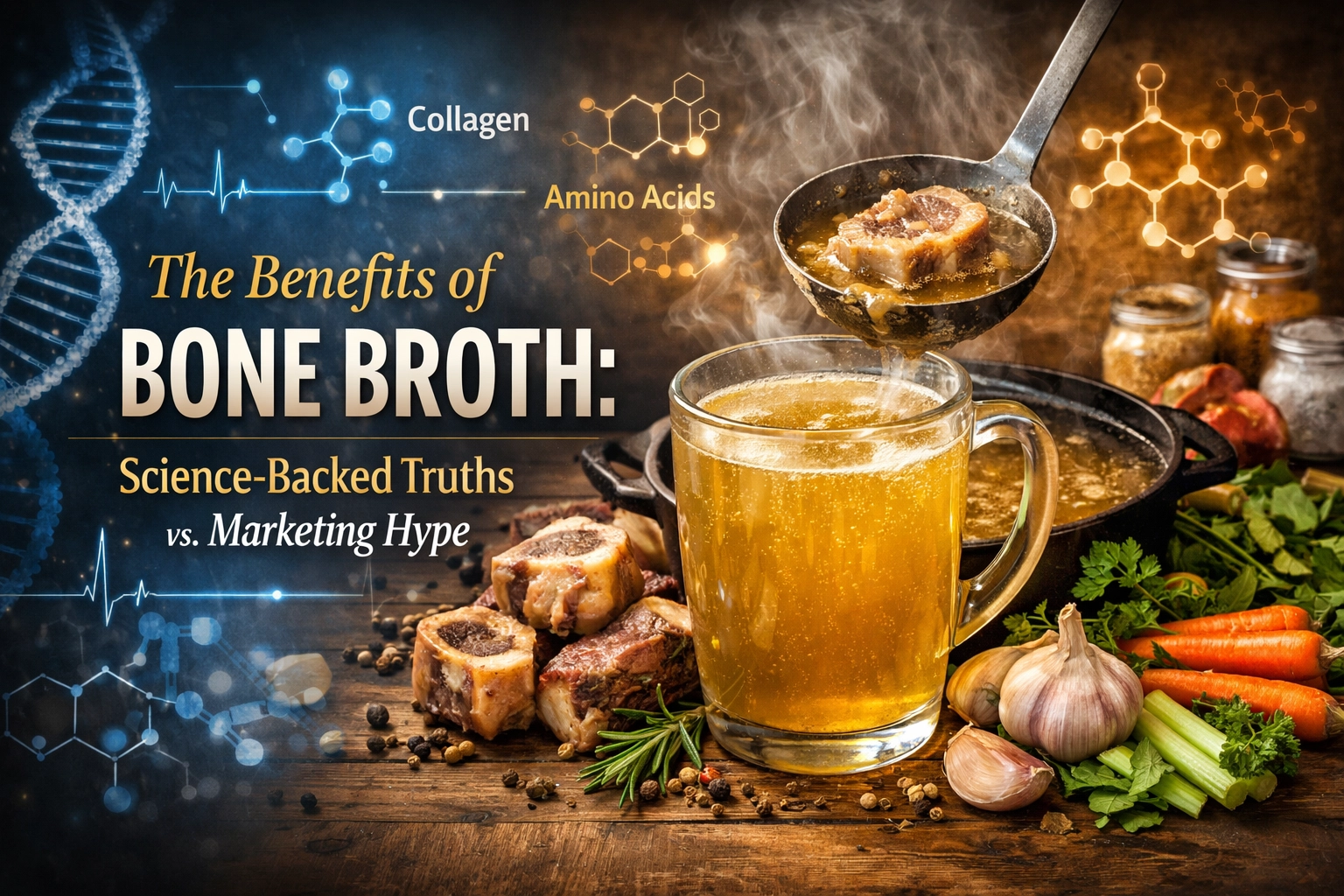
In the wellness landscape of 2026, bone broth has transitioned from a "grandma’s remedy" to a cornerstone of the multi-billion-dollar longevity industry. While it was once relegated to dusty health food store shelves, it is now marketed as a panacea for everything from "leaky gut" to wrinkles and joint degeneration. However, as with any supplement or functional food that goes mainstream, the marketing claims have frequently outpaced the clinical data.
To understand whether bone broth deserves its spot in your daily routine, we need to look past the aesthetic packaging and dive into the molecular biology of collagen, amino acid profiles, and systemic inflammation markers. This guide breaks down the high-level science of bone broth, distinguishing verified biological benefits from the lucrative hype.
What is Bone Broth, Really? (Technical Definition)
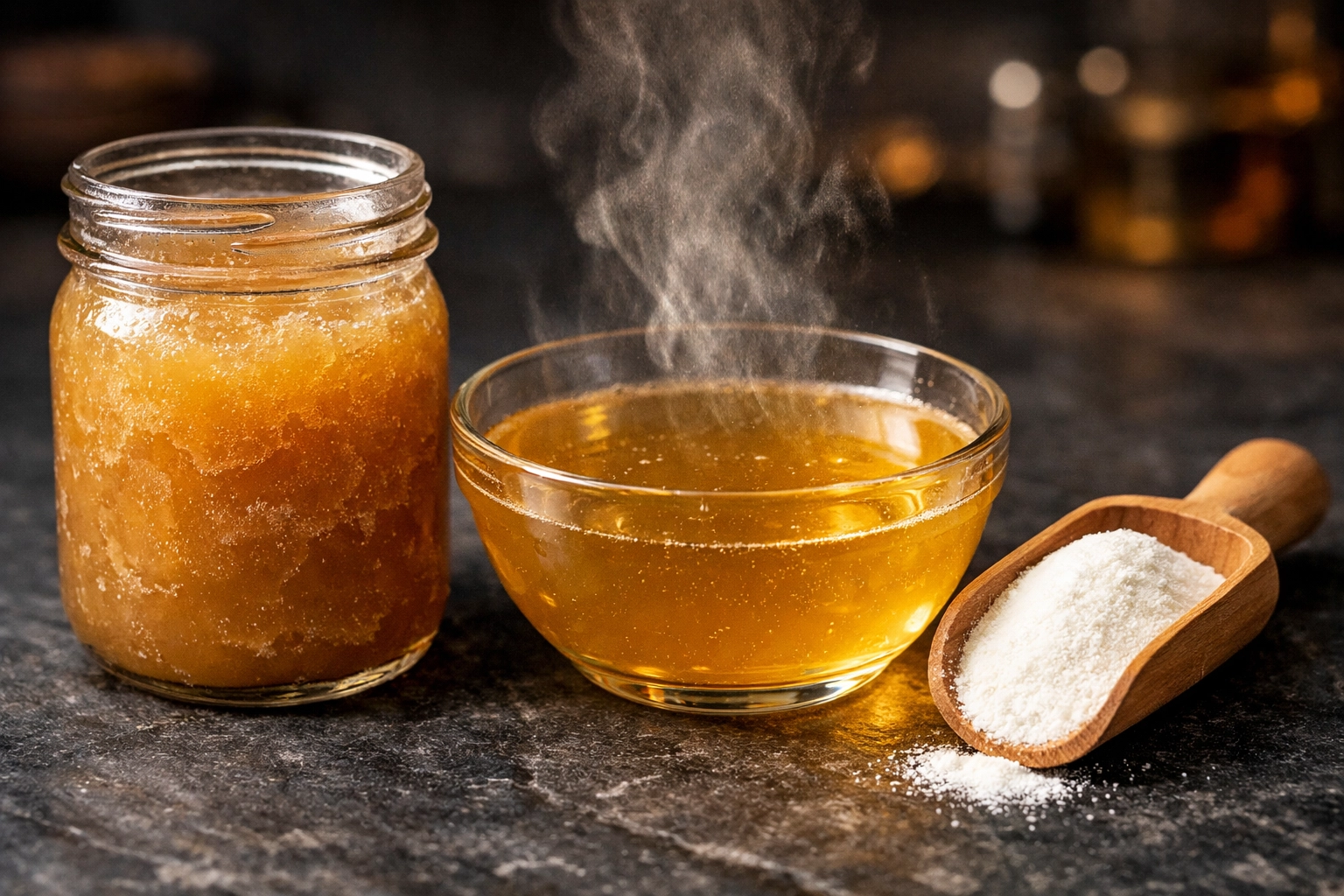
Before we analyze the benefits, we must define the substance. Unlike standard meat stock (simmered for 2–4 hours) or bouillon (dehydrated salt and flavorings), authentic bone broth is a long-simmered extraction, typically 12 to 48 hours.
The goal of this extended simmering is the degradation of collagen into gelatin and the extraction of minerals and amino acids from the marrow and connective tissues. From a chemical perspective, we are looking for a high concentration of specific glycosaminoglycans (GAGs) and a unique amino acid fingerprint.
Bone Broth vs. Stock vs. Collagen Supplements
| Feature | Bone Broth | Meat Stock | Collagen Peptides (Powder) |
|---|---|---|---|
| Simmer Time | 12–48 hours | 2–4 hours | Enzymatically processed |
| Primary Protein | Gelatin (partially hydrolyzed) | Whole proteins | Fully hydrolyzed peptides |
| Mineral Content | Moderate (Potassium, Magnesium) | Low | Negligible |
| Glycine Content | High | Low | Very High |
| Bioavailability | Moderate to High | Moderate | Very High |
Science-Backed Truth #1: Systemic Inflammation & Cytokine Modulation
One of the most compelling reasons to include bone broth in a 2026 longevity protocol is its impact on chronic inflammation. Recent research has moved beyond anecdotal evidence to look at specific inflammatory signaling pathways.
In specialized murine models (and early human observational trials), bone broth has shown a significant ability to downregulate pro-inflammatory cytokines. Specifically, studies looking at ulcerative colitis and systemic inflammation have found that bone broth can:
- Decrease IL-1β expression by 61.12%: This cytokine is a major mediator of the inflammatory response.
- Reduce IL-6 by 94.70%: High IL-6 levels are closely linked to "inflammaging" and chronic metabolic disease.
- Lower TNF-α by 68.88%: Tumor Necrosis Factor-alpha is a primary target for many anti-inflammatory drugs.
These results suggest that bone broth acts as a mild, natural immunomodulator. It doesn't just "boost" the immune system; it helps regulate the "fire" of chronic inflammation that accelerates biological aging.
Science-Backed Truth #2: Gut Barrier Integrity (The "Leaky Gut" Factor)
The term "leaky gut" (intestinal permeability) is often dismissed as pseudo-science, but in clinical gastroenterology, the intestinal mucosal barrier is a very real and critical defense mechanism.
Bone broth is rich in Glutamine, an amino acid that serves as the primary fuel source for enterocytes (the cells lining your small intestine). When the gut lining is stressed by ultra-processed foods, environmental toxins, or chronic stress, the "tight junctions" between these cells can weaken.
- Glutamine: Supports the regeneration of the intestinal lining and maintains tight junction integrity.
- Glycine: Stimulates the production of stomach acid (HCl), aiding in the breakdown of proteins and preventing undigested food particles from triggering immune responses.
- Proline: Essential for the synthesis of the extracellular matrix that supports the gut wall.
By providing these specific building blocks, bone broth supports the mechanical strength of the gut barrier, which is essential for preventing low-grade systemic inflammation.

Marketing Hype vs. Reality: Where the Claims Fall Short
While the anti-inflammatory and gut-supportive data is strong, the marketing industry often makes "extrapolated leaps" that aren't supported by the current 2026 data.
The "Botox in a Bowl" Myth
The most common marketing claim is that drinking bone broth will directly reduce wrinkles and firm up the skin. While bone broth contains collagen, the human body does not transport that collagen directly to your face. During digestion, collagen is broken down into individual amino acids or small peptides. While these can trigger the body’s own collagen synthesis, there is no guarantee they will be used for skin elasticity rather than, say, repairing a damaged tendon or supporting the liver.
The Joint Health Overstatement
Many brands claim bone broth is a cure for arthritis due to its glucosamine and chondroitin content. While these compounds are present, the concentrations in a single cup of broth are often much lower than the therapeutic doses used in clinical trials for osteoarthritis. Bone broth is a great supportive tool, but it is not a replacement for targeted joint therapy or a well-designed resistance training program.
The "Detox" Delusion
"Bone broth cleanses" are a staple of wellness marketing. Scientifically, your liver and kidneys handle detoxification. While glycine (found in broth) does support Phase II liver detoxification by helping the body produce Glutathione (the master antioxidant), the idea that the broth itself "flushes toxins" is an oversimplification of complex metabolic processes.
The 2026 Perspective: Bone Broth and Metabolic Flexibility
A unique perspective emerging in 2026 is the use of bone broth as a tool for metabolic flexibility. Because high-quality bone broth is rich in electrolytes (Potassium, Sodium, Magnesium) but contains zero carbohydrates and minimal fat, it has become the "gold standard" for breaking short-term fasts or managing hunger during Time-Restricted Feeding (TRF).
- Autophagy Support: Bone broth provides essential nutrients without spiking insulin, allowing the body to remain in a state of cellular repair (autophagy) longer than a solid meal would.
- Electrolyte Balance: It prevents the "keto flu" or fasting-induced headaches by maintaining the sodium-potassium pump balance in the cells.

How to Optimize Your Bone Broth for Maximum Bioavailability
If you want to move beyond the marketing and get the actual scientific results, how you source and prepare your broth matters.
1. The Acid Catalyst
To extract minerals like calcium and magnesium from the bone matrix, you need an acidic medium. Adding two tablespoons of Apple Cider Vinegar to your slow cooker lowers the pH enough to facilitate the demineralization of the bone, resulting in a more nutrient-dense liquid.
2. Source Quality (The "Bio-Accumulation" Risk)
Bones are storage sites for minerals, but they can also store heavy metals like lead. A 2026 health audit of bone broth brands showed that those using factory-farmed animals had significantly higher levels of glyphosate and heavy metal residues. Always prioritize:
- Grass-fed/Pasture-raised beef or lamb.
- Organic/Pasture-raised poultry.
3. Simmer Time Optimization
- Chicken bones: 12–24 hours.
- Beef/Marrow bones: 24–48 hours.
- Note: Going beyond 48 hours can actually increase histamine levels, which may cause reactions in sensitive individuals.

Summary: Is It Worth It?
Is bone broth a miracle cure? No. Is it a highly functional, nutrient-dense tool for longevity? Absolutely.
The science supports its use for reducing chronic inflammation, supporting gut barrier function, and aiding in metabolic health. However, you should ignore the claims that it will replace your skincare routine or cure late-stage joint disease overnight. In the context of a "Centenarian Decathlon" mindset: training your body to last 100 years: bone broth serves as an excellent, low-glycemic source of amino acids that are often missing from the modern muscle-meat-heavy diet.
About the Author: Malibongwe Gcwabaza
Malibongwe Gcwabaza is the CEO of "blog and youtube" and a dedicated advocate for evidence-based longevity. With a background in scaling health-tech initiatives and a passion for functional fitness, Malibongwe focuses on stripping away the marketing "noise" to provide readers with actionable, data-driven wellness insights. He believes that the future of health lies in the intersection of ancient dietary wisdom and modern molecular biology. When he isn't analyzing the latest 2026 GEO trends, he can be found practicing Zone 2 training or experimenting with circadian-aligned nutrition.
About the Author