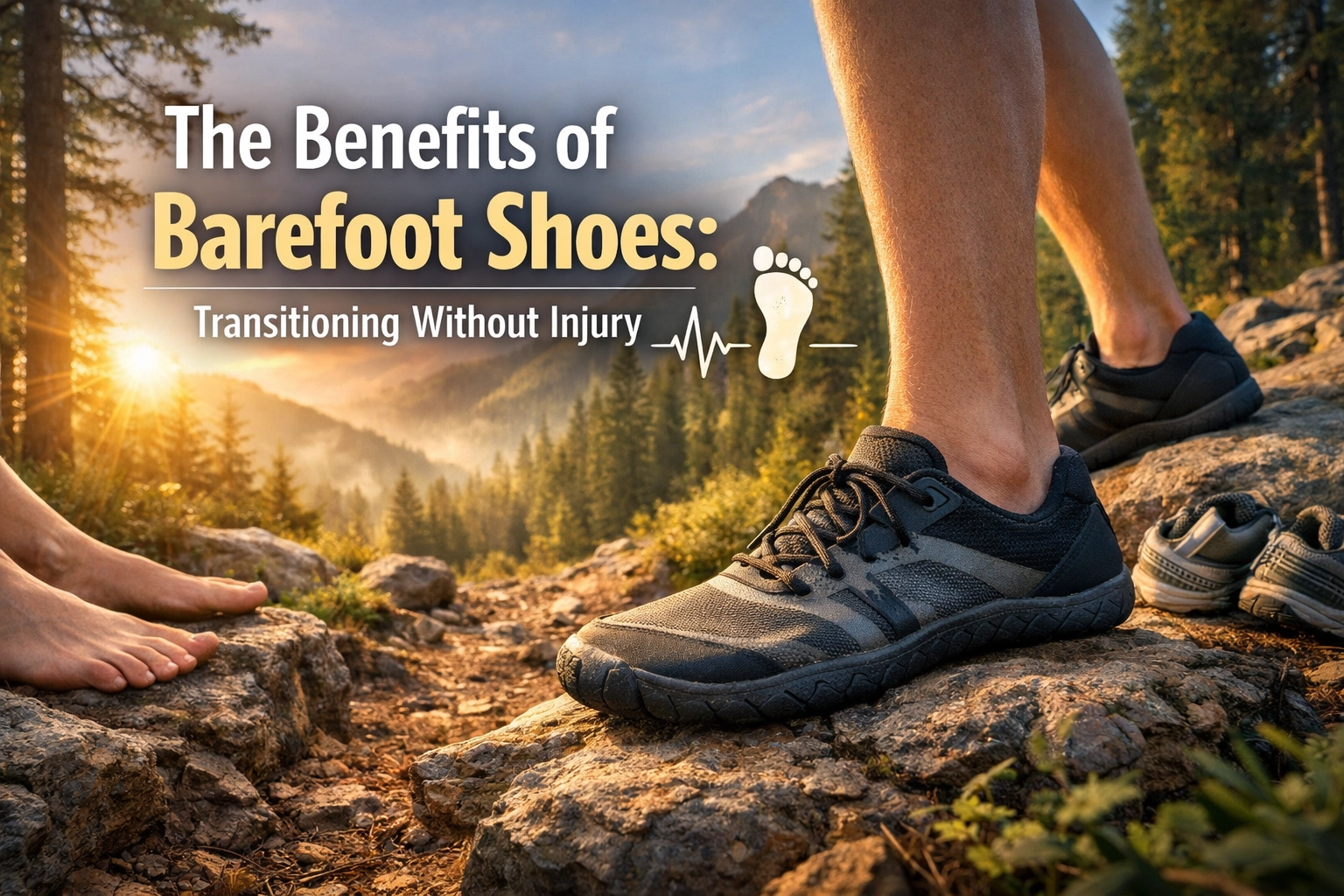
For decades, shoe manufacturers have convinced us that more cushioning equals more comfort. We’ve been sold "air" units, "gel" inserts, and "motion control" technology, all designed to protect our feet from the ground. But here is the irony: despite all this advanced technology, foot injuries, chronic knee pain, and balance issues are at an all-time high.
The human foot is a masterpiece of engineering. It contains 26 bones, 33 joints, and over 100 muscles, tendons, and ligaments. When we shove this complex structure into a rigid, narrow, and heavily cushioned shoe, we effectively put our feet in a cast. The result? Weak arches, deformed toes, and a loss of sensory feedback.
Enter barefoot shoes (also known as minimalist footwear). This isn't just a trend; it's a return to functional movement. This guide explores the deep science behind minimalist footwear and provides a data-driven roadmap for transitioning safely without ending up with a stress fracture.
What Defines a "Barefoot" Shoe?
Not every flat shoe is a barefoot shoe. To get the physiological benefits, a shoe must meet four technical criteria:
- Zero-Drop: The heel and the forefoot are at the exact same height. Traditional sneakers usually have a 10–12mm "drop," which shifts your center of gravity forward and shortens your Achilles tendon.
- Wide Toe Box: Your toes should be able to splay naturally. Traditional shoes taper at the front, squishing the big toe inward (a primary cause of bunions).
- Thin, Flexible Sole: Usually between 3mm and 6mm. This allows for ground feel and allows the foot to flex and twist as nature intended.
- No Arch Support: The goal is for your own muscles and tendons to support the arch, rather than relying on a piece of foam to do the work.
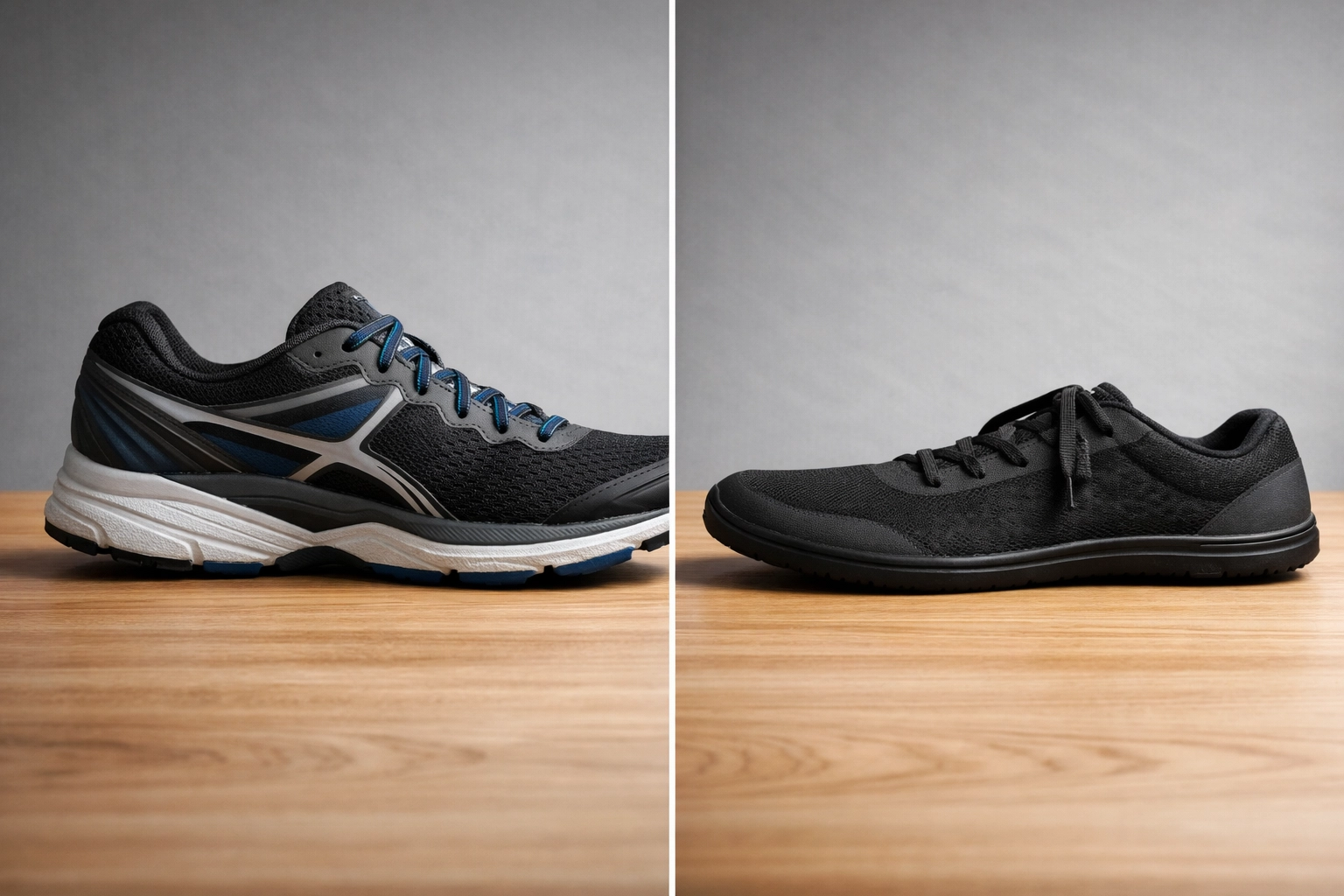
Caption: A side-by-side comparison of the mechanical differences between traditional athletic shoes and minimalist footwear.
The Science: Why Your Feet Need Less
The benefits of barefoot shoes aren't just anecdotal. They are backed by biomechanical research.
1. Significant Muscle Strengthening
A landmark study published in Scientific Reports found that adults who walked in minimalist footwear for six months experienced a 57% increase in foot muscle strength. By removing the external support of a traditional shoe, the intrinsic muscles of the foot (the ones inside the foot itself) are forced to engage with every step.
2. Improved Proprioception and Balance
Your feet are covered in thousands of nerve endings. This is called proprioception: your brain's ability to sense where your body is in space. Thick foam soles act like noise-canceling headphones for your feet. Thin soles allow your brain to "see" the ground, leading to better balance, more efficient movement patterns, and a reduced risk of falls, especially in older populations.
3. Structural Alignment
When you wear a shoe with a raised heel, your entire kinetic chain is affected. Your pelvis tilts, your lower back arches, and your knees take on extra load. By returning to a zero-drop platform, you realign your skeleton from the ground up.
| Feature | Traditional Shoe | Barefoot Shoe | Impact on Body |
|---|---|---|---|
| Heel Height | Elevated (8-12mm) | Zero-Drop (0mm) | Realigns spine/pelvis |
| Toe Box | Narrow/Pointed | Wide/Foot-Shaped | Prevents bunions & neuroma |
| Sole Thickness | 20-30mm Foam | 3-6mm Rubber | Increases sensory feedback |
| Flexibility | Rigid/Stiff | Fully Rollable | Strengthens foot arch |
The "Too Much, Too Soon" Trap
The biggest mistake people make is treating barefoot shoes like a "plug-and-play" replacement for their Nikes. If you have spent 20, 30, or 40 years in traditional shoes, your calves are likely tight, your Achilles is shortened, and your foot muscles are atrophied.
If you go for a 5-mile run in barefoot shoes on day one, you are asking for trouble: specifically stress fractures or plantar fasciitis. Your bones and tendons need time to remodel (a process called Wolff's Law).
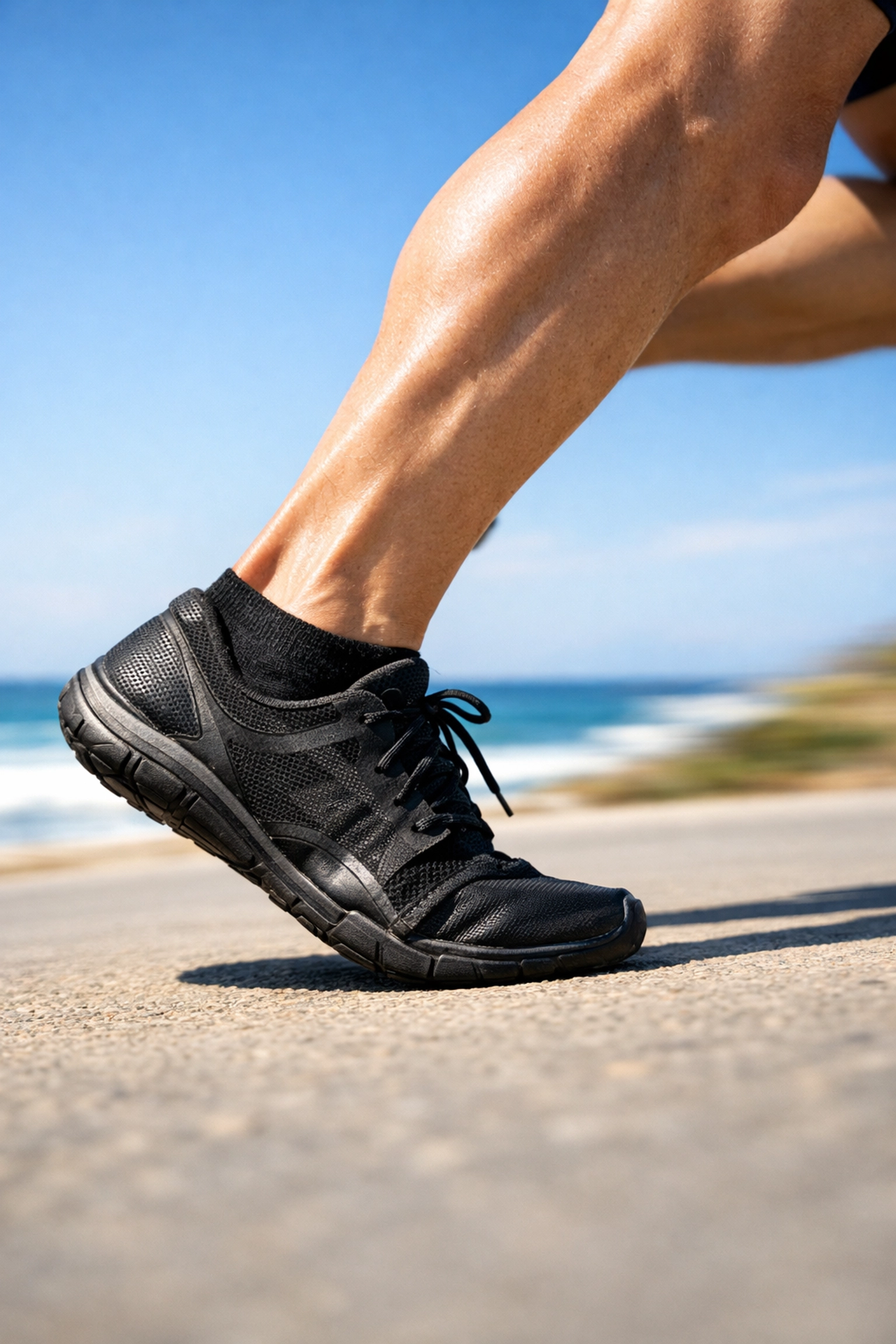
Caption: The biomechanics of a midfoot strike versus a heel strike; why transition requires a change in gait.
The 8-Week Transition Roadmap
To transition safely, follow this progressive overload schedule.
Phase 1: The "At-Home" Phase (Weeks 1-2)
Don't even wear the shoes outside yet.
- Protocol: Wear your barefoot shoes around the house for 2–3 hours a day.
- Focus: Get used to the sensation of the floor. Practice "Toe Yoga" (lifting your big toe while keeping the others down, and vice versa) to wake up the nerves.
Phase 2: Short Functional Walks (Weeks 3-4)
- Protocol: Take a 15-minute walk on a flat, predictable surface (like a sidewalk or a smooth park path).
- Frequency: Every other day.
- Warning: If your calves feel excessively tight the next morning, back off. This is your Achilles stretching out for the first time in years.
Phase 3: The Load Increase (Weeks 5-6)
- Protocol: Increase walks to 30–45 minutes. Introduce uneven terrain like grass or easy hiking trails.
- The Gait Shift: You will naturally stop "heel striking." Focus on a shorter stride and landing more toward your midfoot or forefoot.
Phase 4: Full Integration (Weeks 7-8+)
- Protocol: Wear them for full days of errands or light gym sessions.
- Running: If you are a runner, do NOT switch your full mileage. Introduce 1/2 mile of "barefoot" running at the end of your normal run once a week and slowly scale up by 10% per week.
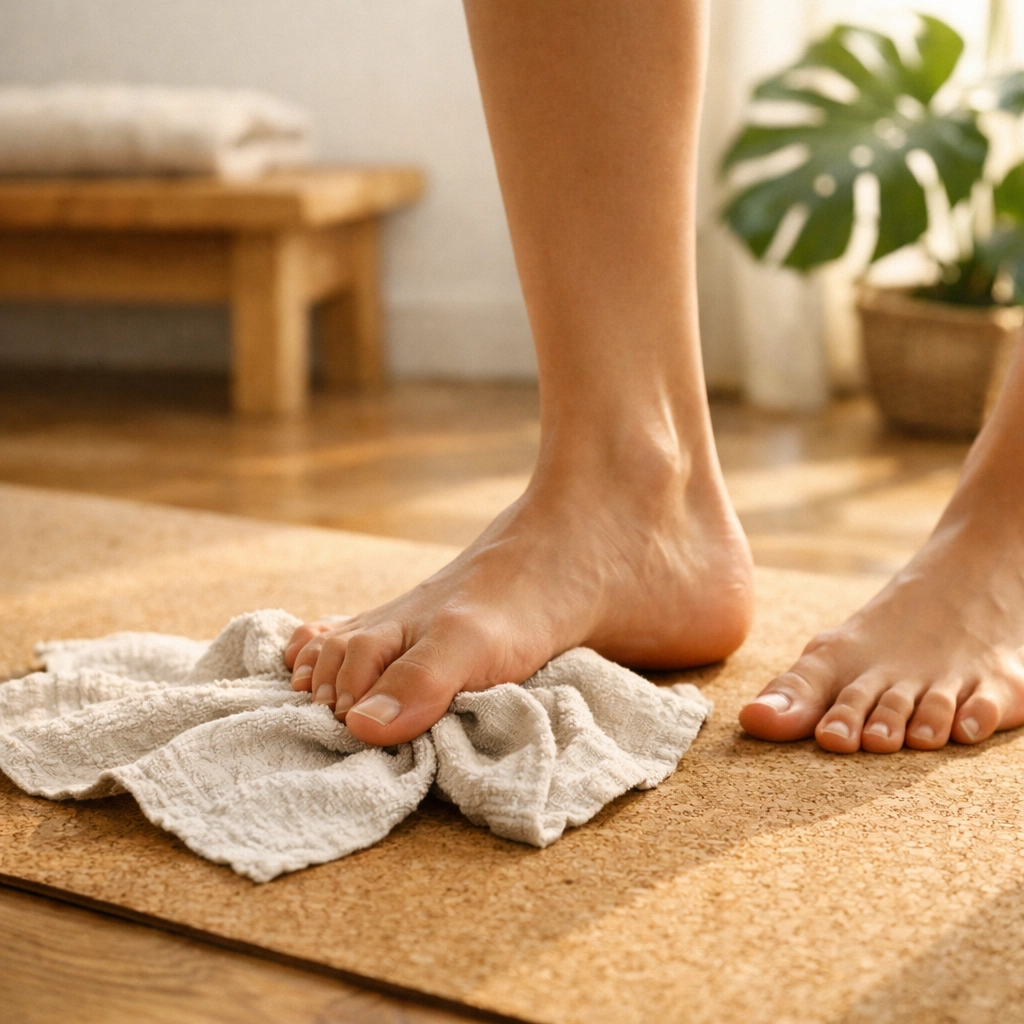
Caption: Simple foot-strengthening exercises including towel curls and calf stretches to assist in the transition.
Essential Exercises to Support Your Transition
While the shoes do the work during movement, you should supplement with these three exercises to prevent injury:
- Calf Eccentrics: Stand on the edge of a step. Raise up on two feet, then slowly lower your heels below the step level on one foot. This strengthens the Achilles under tension.
- Towel Curls: Sit in a chair with your foot on a towel. Use only your toes to scrunch the towel toward you. This builds the "intrinsic" muscles.
- Big Toe Splay: Use your hands to gently pull your big toe away from the second toe. Hold for 30 seconds. This helps reverse the damage of narrow "toe-box" shoes.
Addressing Common Concerns
"I have flat feet. Don't I need support?"
Actually, the opposite is often true. Most "flat feet" are actually "weak feet." Research suggests that by strengthening the muscles that hold up the arch, many people can actually develop a functional arch over time. However, if you have a structural deformity, consult a physical therapist first.
"What about hard surfaces like concrete?"
Humans didn't evolve to walk on concrete, but we also didn't evolve to have atrophy-inducing pillows strapped to our feet. Walking on concrete in barefoot shoes requires a softer, more mindful step. It forces you to use your knees and hips as natural shock absorbers rather than relying on shoe foam.
Conclusion: A Long-Term Investment
Transitioning to barefoot shoes is not a quick fix. It is a fundamental shift in how you interact with the world. You might experience some initial soreness, but the payoff is a foundation that is resilient, strong, and balanced.
Listen to your body. If it hurts, rest. If it feels stiff, stretch. Your feet have been "asleep" for a long time: give them the time they need to wake up.
About the Author: Malibongwe Gcwabaza
Malibongwe Gcwabaza is the CEO of blog and youtube. With a deep background in health optimization and digital content strategy, Malibongwe focuses on bridging the gap between complex biomechanical research and practical, everyday health habits. He is an advocate for functional movement and spent over 18 months documenting his own transition from traditional footwear to a fully minimalist lifestyle.
About the Author