
We’ve all been told that stress is "all in your head." But if you’ve ever felt a literal weight on your shoulders, a knot in your stomach that won't go away, or a jaw so tight it clicks, you know that isn’t true. In 2026, the frontier of wellness has moved past the "mind over matter" mantra. We now understand that the body: or the soma: is the primary storage unit for our emotional history.
Somatic healing is the practice of checking in with your body’s internal sensations to release the physical manifestations of past stress and trauma. Instead of just talking about your problems, you’re working with the nervous system to "unstick" the survival energy that’s been trapped in your muscles and fascia for years.
The Science of "Biological Debt": Why the Body Remembers
When you encounter a stressor: whether it’s a car swerving into your lane or a passive-aggressive email: your body initiates the HPA (Hypothalamic-Pituitary-Adrenal) axis. This triggers a flood of cortisol and adrenaline, prepping your muscles to fight or flee.
In the wild, an animal completes this cycle. A gazelle escapes a lion, shakes its body vigorously to discharge the energy, and goes back to grazing. Humans, however, have evolved to suppress these physical responses. We sit still in our office chairs while our heart rates skyrocket. We "suck it up" and keep working.
This incomplete stress response creates what researchers call a "biological debt." The energy that was meant for movement stays locked in the body, manifesting as chronic tension.
The Role of Fascia and the Psoas
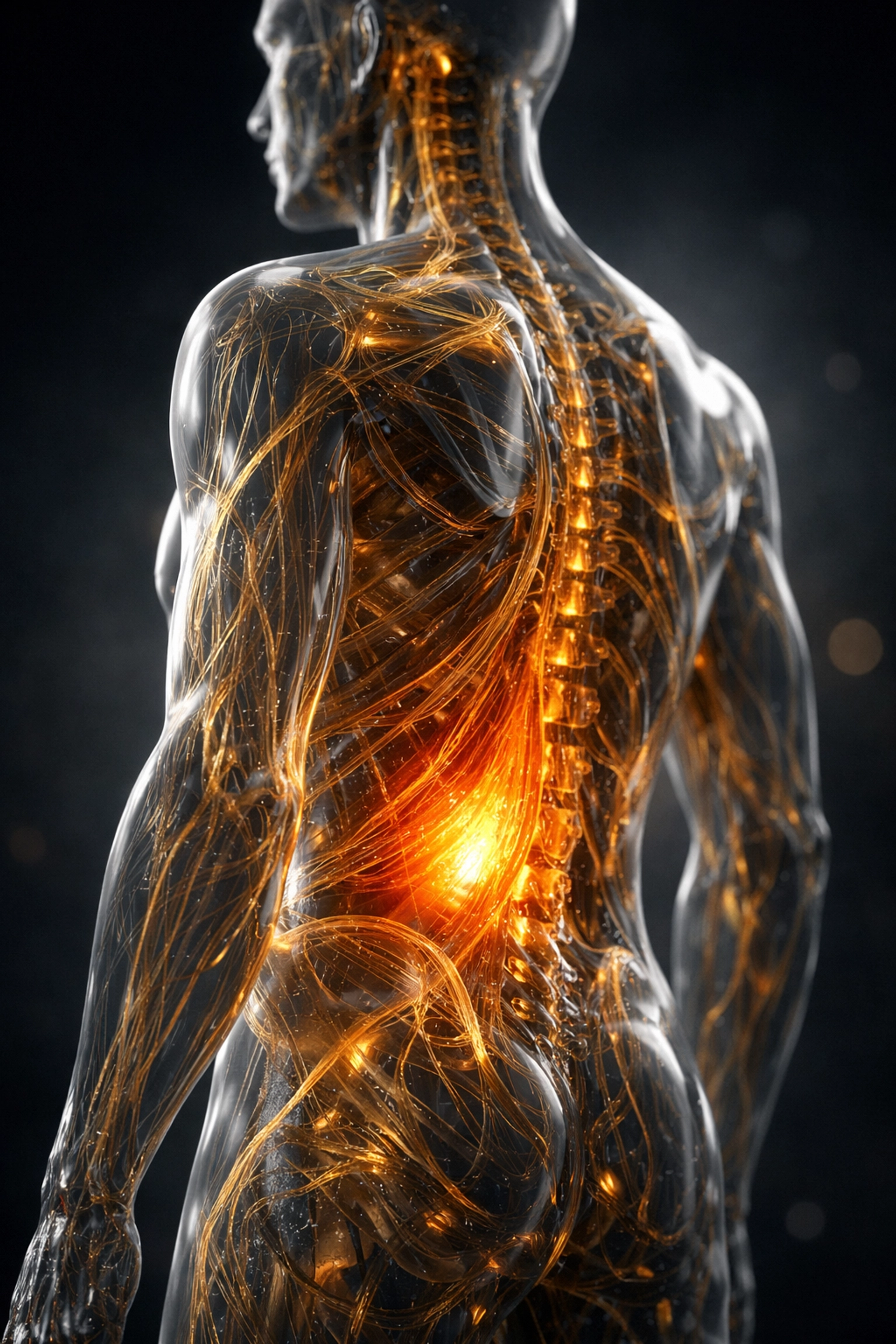
Two major players in somatic storage are the fascia and the psoas muscle.
- Fascia: A specialized system of connective tissue that wraps around every muscle, bone, and organ. Chronic stress causes fascia to thicken and tighten, leading to restricted movement and pain.
- The Psoas: Often called the "muscle of the soul," this deep-seated core muscle connects the lumbar spine to the femur. It is the primary "fight or flight" muscle. If you are chronically stressed, your psoas is likely in a state of constant contraction.
Understanding the Polyvagal Theory
To master somatic healing, you need to understand the Polyvagal Theory, developed by Dr. Stephen Porges. This theory describes how our autonomic nervous system (ANS) searches for safety and responds to danger.
| State | Nervous System Branch | Physical Feeling | Psychological State |
|---|---|---|---|
| Ventral Vagal | Parasympathetic | Relaxed, steady heart rate | Connected, social, safe |
| Sympathetic | Sympathetic | High energy, tight chest, heat | Anxious, angry, frustrated |
| Dorsal Vagal | Parasympathetic (Ancient) | Numb, heavy limbs, low HR | Depressed, "frozen," checked out |
Somatic healing focuses on moving you out of the "Sympathetic" (fight/flight) or "Dorsal" (freeze) states and back into the "Ventral Vagal" state where healing actually happens.
Common Areas Where We Store Stress
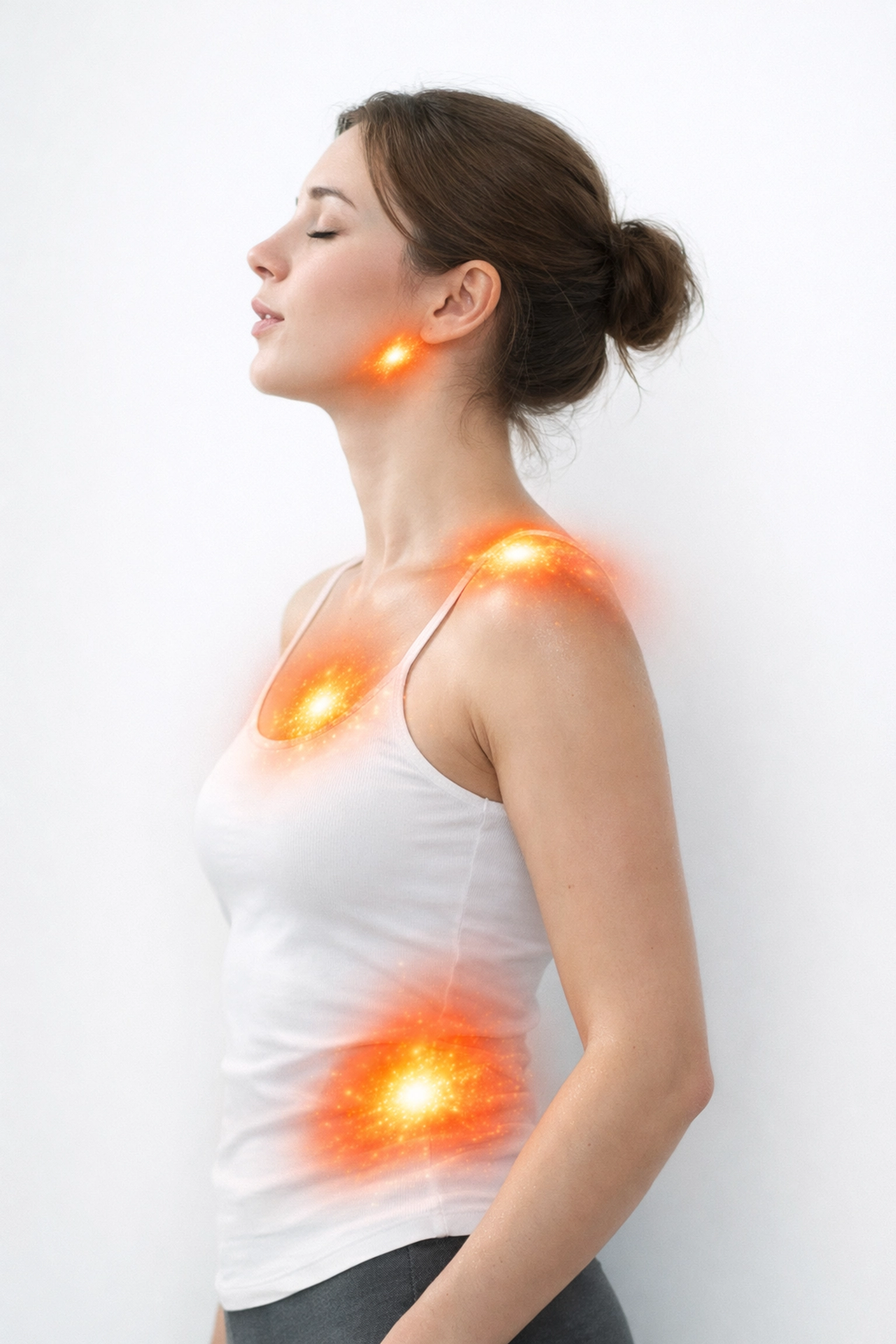
Research into interoception: the sense of the internal state of the body: shows that specific emotions often correlate with specific physical locations.
- Jaw and Neck: Often associated with suppressed anger or the need to "speak up."
- Shoulders and Upper Back: The "weight of the world." Usually linked to over-responsibility and social pressure.
- Chest and Diaphragm: Linked to grief and anxiety. When we are scared, we take shallow breaths, tightening the muscles around the ribs.
- Gut and Stomach: The "second brain." High levels of cortisol disrupt digestion, leading to "butterflies" or chronic IBS-like symptoms.
- Hips: This is where many people store deep-seated trauma and "freeze" responses, as the psoas is located here.
5 Deep-Dive Somatic Techniques for Release
If you want to move beyond basic stretching and start true somatic healing, these five evidence-based techniques are the gold standard in 2026.
1. Therapeutic Tremoring (TRE)
Developed by Dr. David Berceli, Tension & Trauma Releasing Exercises (TRE) involve inducing a controlled "shake" in the body. This mimics the natural shaking seen in animals after a stressful event.
- How it works: By fatiguing the leg muscles through specific exercises, you trigger a natural neurogenic tremor that originates in the psoas and vibrates through the spine, literally shaking the "freeze" out of the nervous system.
2. Pandiculation (The "Big Cat" Stretch)
Standard static stretching can actually trigger the "stretch reflex," causing muscles to tighten further. Pandiculation is what cats and dogs do when they wake up.
- The Move: You voluntarily contract a muscle even tighter, then very slowly and mindfully lengthen it while feeling the sensation, and finally relax it completely. This "resets" the muscle's resting length via the brain-to-muscle loop.
3. Somatic Orientation
When we are stuck in a trauma loop, our brain thinks the danger is still present. Orientation uses the senses to tell the brain, "I am here, and I am safe."
- The Move: Slowly scan the room. Find three things that are blue. Notice the texture of the chair beneath you. Listen for the furthest sound you can hear. This anchors the nervous system in the present moment.
4. Vagus Nerve Stimulation (The Physiological Sigh)
The Vagus nerve is the "highway" of the parasympathetic nervous system. You can stimulate it physically to force a "rest and digest" state.
- The Move: Take a deep breath in through the nose, then at the very top, take a second tiny "sip" of air to fully inflate the alveoli in the lungs. Then, exhale slowly through the mouth with a long "sigh" or "humming" sound. Repeat 3 times.
5. Grounding and "Resourcing"
Resourcing is the act of finding a place in your body that feels neutral or good.
- The Move: If your chest feels tight, scan your body until you find a spot that feels "fine": maybe your big toe or your left earlobe. Focus all your attention on that neutral sensation. This teaches the brain that pain/tension isn't the only thing happening in the body.

Implementing a 7-Day Somatic Reset Plan
To see real results in your nervous system regulation, consistency is key. Here is a sample protocol to integrate into your daily routine.
- Day 1: Body Scanning. Spend 10 minutes lying down, scanning from toe to head. Don't try to change anything; just notice where the "noise" is.
- Day 2: Vagal Toning. Practice the "Physiological Sigh" three times, three times a day (Morning, Noon, Night).
- Day 3: Shaking and Movement. Put on a high-energy song and literally shake your limbs for 3 minutes. Focus on the "jiggle" in your muscles.
- Day 4: Boundary Work. Physically push against a wall with all your might for 30 seconds. Feel the strength in your legs and arms. This builds "somatic agency."
- Day 5: Pandiculation. Perform 5 minutes of slow-release movements for your neck and jaw.
- Day 6: Orientation Walk. Go for a walk without headphones. Every 2 minutes, stop and name one thing you smell, see, and feel (the wind, the sun).
- Day 7: Integration. Rest. Somatic work can be tiring for the nervous system. Take a warm Epsom salt bath and notice the sensation of the water on your skin.
The Future of Somatics: Bio-Monitoring in 2026
We are seeing a massive shift toward "Bio-Somatic" integration. Modern wearables now track Heart Rate Variability (HRV): the gold standard metric for nervous system health. A high HRV means your body is resilient and can switch between stress and rest easily.
In 2026, we use these metrics to time our somatic sessions. If your HRV is low, it’s a sign that your body is currently "holding" too much, and it’s time for a 10-minute vagal reset rather than a high-intensity workout.
Conclusion
Somatic healing isn't just a trend; it's a necessary evolution in how we handle the complexities of modern life. By acknowledging that our bodies are the "scorekeepers" of our experiences, we stop fighting ourselves and start working with our biology.
Remember: the goal isn't to never feel stressed. The goal is to become a "well-regulated" human who can experience stress, process it, and let it go: rather than carrying it in their hips for the next decade.
About the Author: Malibongwe Gcwabaza
Malibongwe Gcwabaza is the CEO of blog and youtube and a leading voice in the 2026 longevity and bio-optimization space. With a background in organizational leadership and a passion for functional fitness, Malibongwe focuses on bridging the gap between high-performance business strategies and deep cellular wellness. When he isn't researching the latest in peptide therapy or somatic release, he can be found exploring the intersection of AI and human health.
About the Author