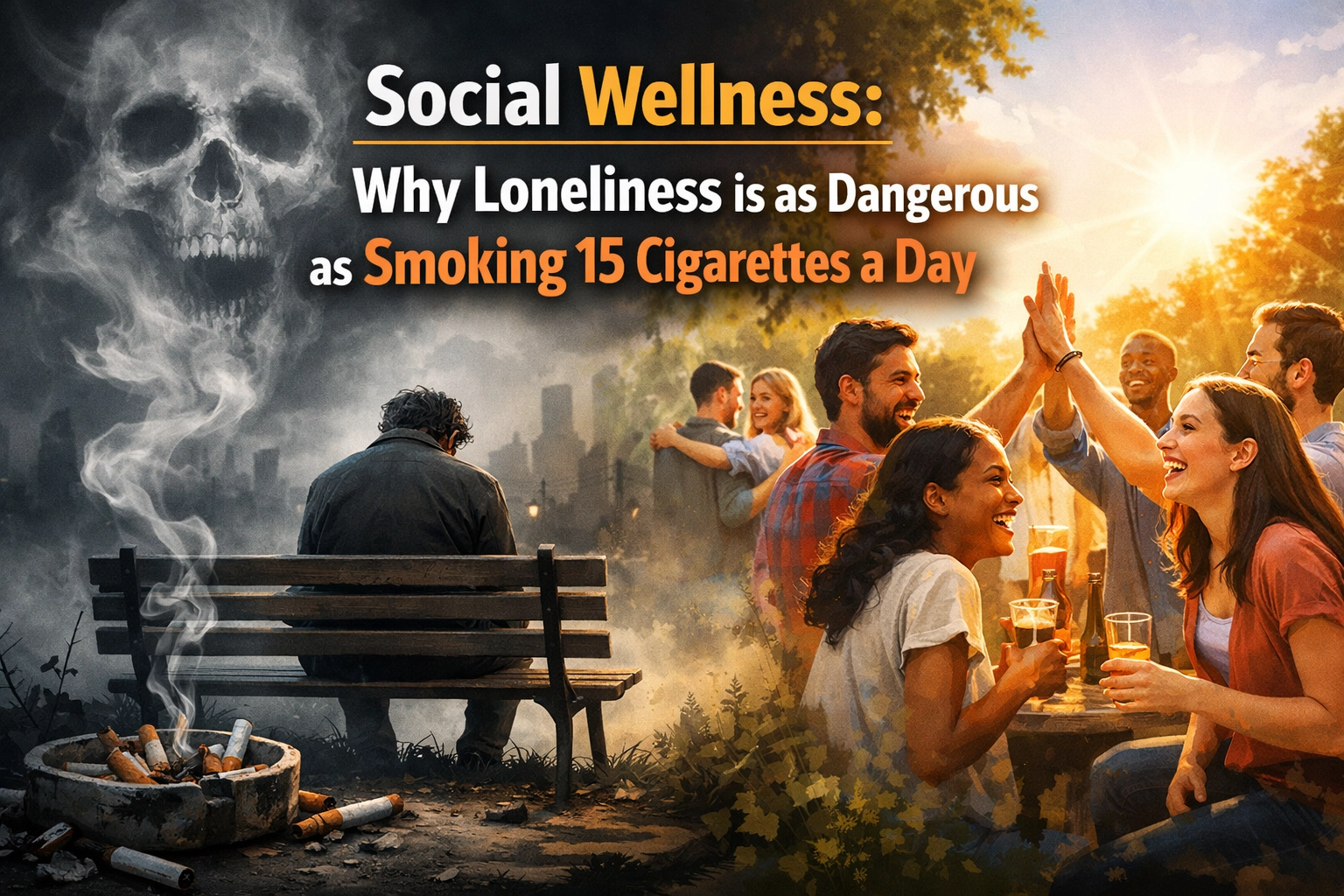
When we talk about longevity in 2026, the conversation usually revolves around VO2 max, Rapamycin, or the latest wearable tech that tracks your blood glucose in real-time. We treat health like a math problem, input nutrients, output movement, calculate sleep cycles. But there is a silent variable in the equation that most people are ignoring: social wellness.
In 2010, a landmark meta-analysis by Dr. Julianne Holt-Lunstad at Brigham Young University sent shockwaves through the medical community. The data revealed that a lack of social connection is as damaging to your lifespan as smoking 15 cigarettes a day. It’s more lethal than obesity and more predictive of early death than physical inactivity.
Despite this, we live in an era of "hyper-disconnection." We are more digitally connected than ever, yet the prevalence of chronic loneliness has nearly doubled since the 1980s. To truly optimize for healthspan, we have to stop viewing "hanging out with friends" as a luxury and start viewing it as a core biological necessity.
The Biological Price of Being Alone
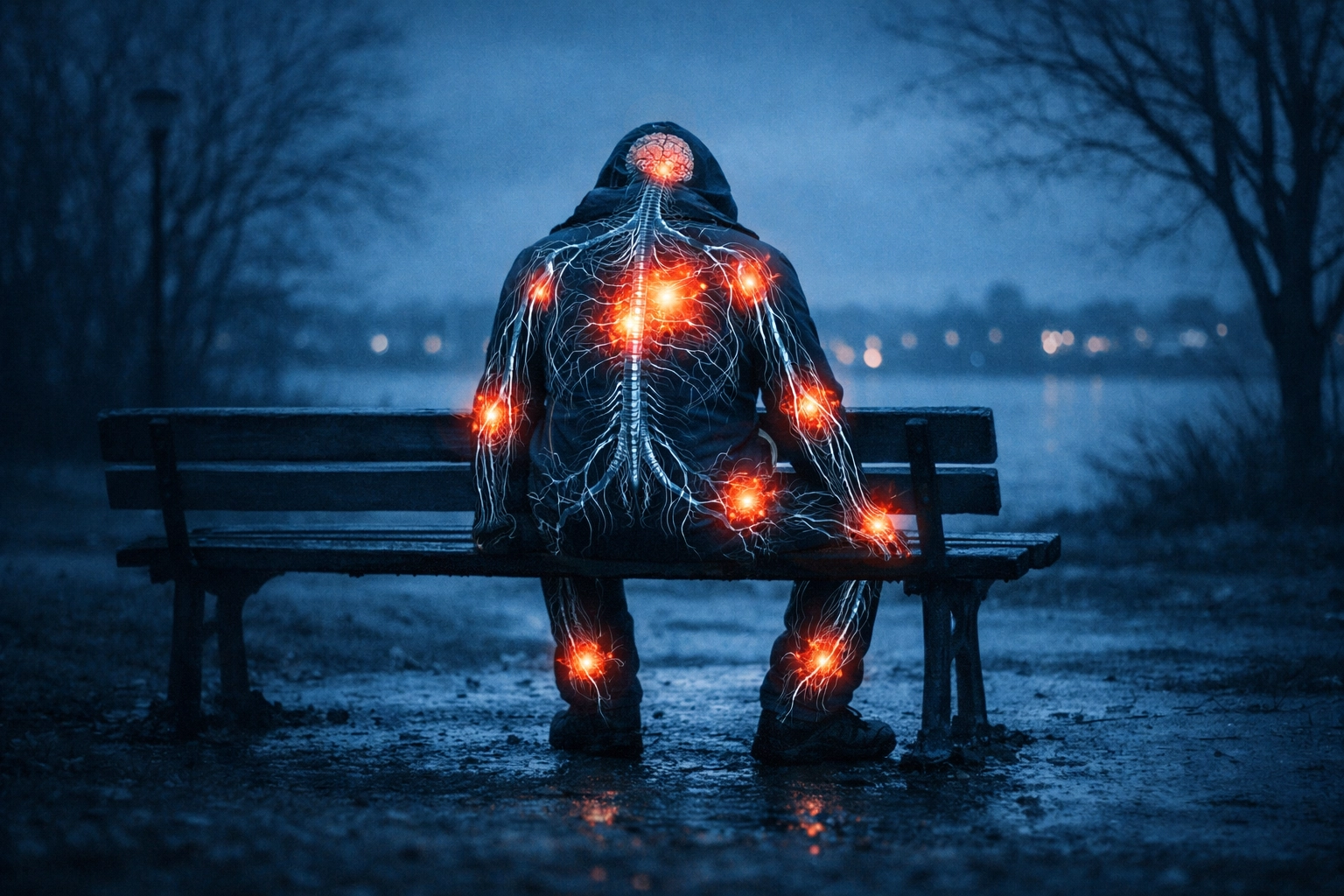
Loneliness isn't just a sad feeling; it is a physiological alarm bell. Evolutionarily, being cast out from the tribe meant certain death. Because of this, our brains developed a "social safety" system. When we are isolated, our body enters a state of high alert, often referred to as the Conserved Transcriptional Response to Adversity (CTRA).
How Loneliness Rewires Your Body
- Systemic Inflammation: When the brain perceives social isolation, it triggers the release of pro-inflammatory cytokines. In a short-term survival scenario, this is good (it prepares the body to heal from wounds). In the long term, chronic inflammation fuels everything from Alzheimer’s to heart disease.
- Cortisol Dysregulation: Loneliness puts your HPA axis (the stress response system) on a loop. This leads to elevated evening cortisol levels, which wrecks your sleep quality and prevents deep cellular repair.
- Immune Suppression: The CTRA shift actually downregulates genes involved in antiviral responses. Essentially, being lonely makes you significantly more susceptible to viruses and slows down your ability to fight off infections.
Decoding the "15 Cigarettes" Metric: The Data
To understand why loneliness is compared to smoking, we have to look at the hazard ratios. A hazard ratio measures how much a specific factor increases the risk of death. In the Holt-Lunstad study, which followed over 300,000 participants, the "strength" of social relationships had a 50% increased likelihood of survival.
Comparison of Mortality Risk Factors
| Risk Factor | Increased Risk of Early Death |
|---|---|
| Social Isolation / Loneliness | ~50% |
| Smoking (15 cigarettes/day) | ~50% |
| Excessive Alcohol Consumption | ~30% |
| Physical Inactivity | ~20% |
| Obesity (BMI > 30) | ~20% |
| Air Pollution | ~5% |
The data is clear: You can have a perfect diet and a 60 mL/kg/min VO2 max, but if you are chronically lonely, your "biological age" is likely far higher than your chronological age.
The Difference Between Loneliness and Solitude
It’s vital to distinguish between being alone and being lonely.
- Solitude is a state of being alone without being lonely. It is often restorative and necessary for mental clarity.
- Loneliness is the subjective feeling of a gap between the social connections you have and the social connections you want.
You can be in a crowded room or a long-term marriage and still be biologically "lonely." Conversely, you can live alone in the mountains and be socially healthy if your infrequent connections are deep and meaningful.
Social Fitness: The New Training Protocol
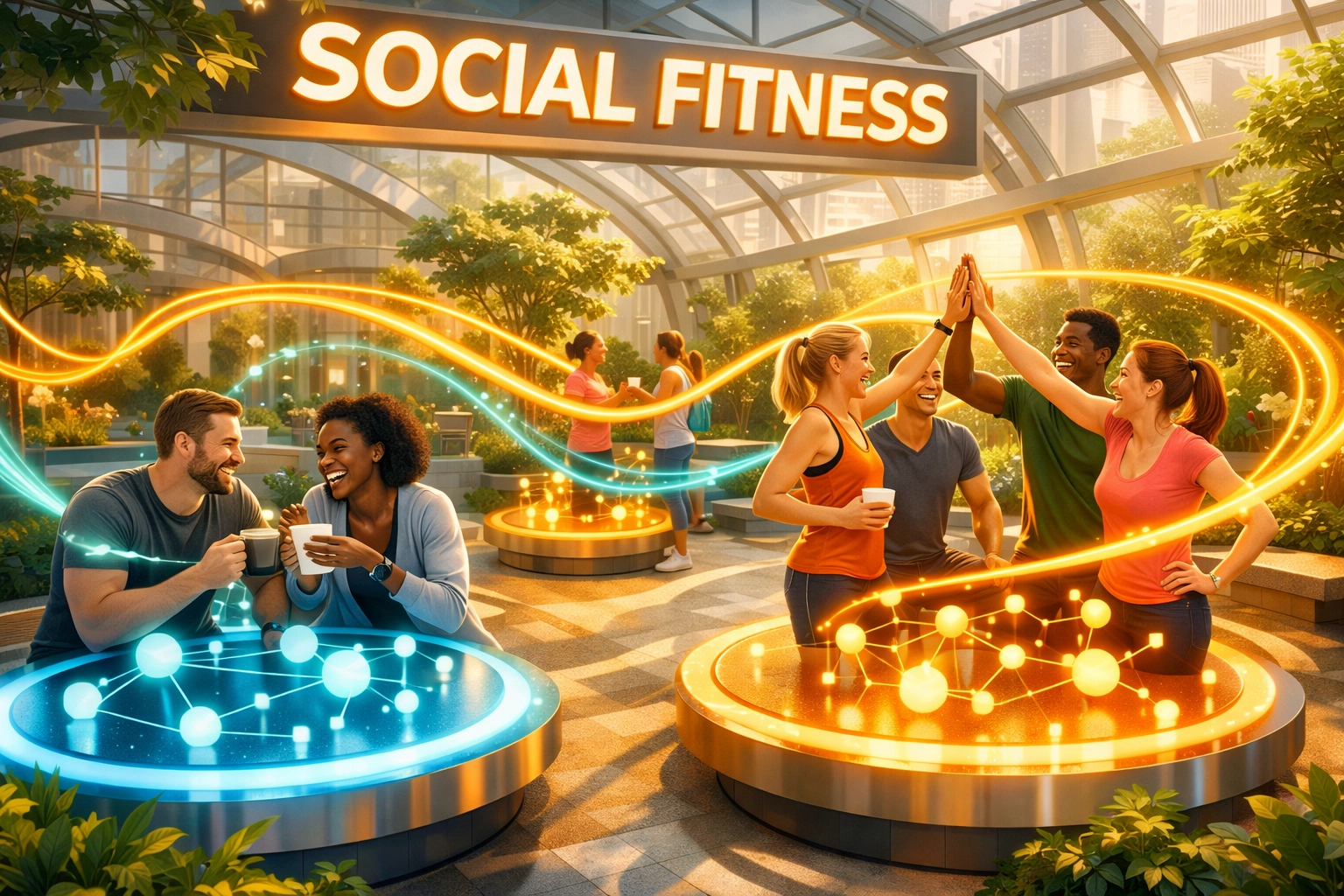
Just as we train our muscles (Physical Fitness) and our focus (Mental Fitness), we must train our Social Fitness. In 2026, this is becoming a recognized pillar in personalized longevity clinics.
1. The "Micro-Interaction" Strategy
Research from the University of British Columbia shows that even "weak ties", the brief interactions with the barista, the librarian, or a neighbor, significantly boost mood and lower cortisol. These micro-interactions signal to your primitive brain that you are part of a safe, functioning community.
2. High-Stakes Vulnerability
To combat the "epidemic of superficiality" found on social media, we need deep dives. This means moving past "How is work?" to "What’s been weighing on you lately?" Vulnerability triggers the release of oxytocin, which acts as a natural buffer against the cardiovascular damage caused by stress.
3. The 3-2-1 Social Rule
For optimal social wellness, aim for:
- 3 Micro-interactions per day: (Saying hi to a stranger, chatting with a coworker).
- 2 Deep connections per week: (A 1-hour undistracted phone call or coffee with a close friend).
- 1 Community event per month: (A volunteer group, a local sports league, or a hobby club).
The Impact of Digital Disconnection
We cannot talk about social wellness in 2026 without addressing the elephant in the room: the "Digital Paradox." While we are connected to thousands via Generative AI social feeds and VR spaces, these often lack the "biochemical handshake" of physical presence.
The Mirror Neuron Problem: When we are physically with someone, our mirror neurons fire, allowing us to "feel" their emotions. This creates a state of neural resonance. Video calls provide about 50% of this effect. Texting provides almost 0%. To lower the "15 cigarettes" risk, physical presence or, at the very least, real-time voice/video is non-negotiable.

Actionable Steps to Audit Your Social Health
If you’re realizing your social wellness has taken a backseat to your career or your gym routine, here is how to perform a "Social Audit":
- Identify Your "Safety People": Who are the 3 people you could call at 3:00 AM if your life fell apart? If you can’t name three, your priority for the next six months should be relationship deepening, not bicep curling.
- Schedule it Like a Workout: If it isn’t on the calendar, it doesn’t happen. Block out "Social Hours" in your digital planner.
- Join a "Third Place": A third place is somewhere that isn't home (the first place) and isn't work (the second place). Think run clubs, chess associations, or community gardens. These are the traditional engines of longevity.
Conclusion: Connection as Medicine
We are biological creatures living in a technological world. Our DNA still expects a tribe. By neglecting our social wellness, we are essentially walking around with a biological "check engine" light on.
If you want to live to 100, yes, keep eating your greens and lifting heavy weights. But don't forget that a dinner party with people you love might actually do more for your heart health than an hour on the treadmill. It’s time to stop treating social connection as an afterthought and start treating it as the life-saving medicine it truly is.
About the Author: Malibongwe Gcwabaza
Malibongwe Gcwabaza is the CEO of blog and youtube, a leading digital platform dedicated to the intersection of high-performance living and longevity science. With a background in organizational leadership and a passion for holistic health, Malibongwe focuses on translating complex biological research into actionable lifestyle protocols. He is a firm believer that the future of wellness lies in the balance between cutting-edge technology and fundamental human connection. When not exploring the latest in bio-monitoring, he can be found practicing "social fitness" in his local community in South Africa.
About the Author