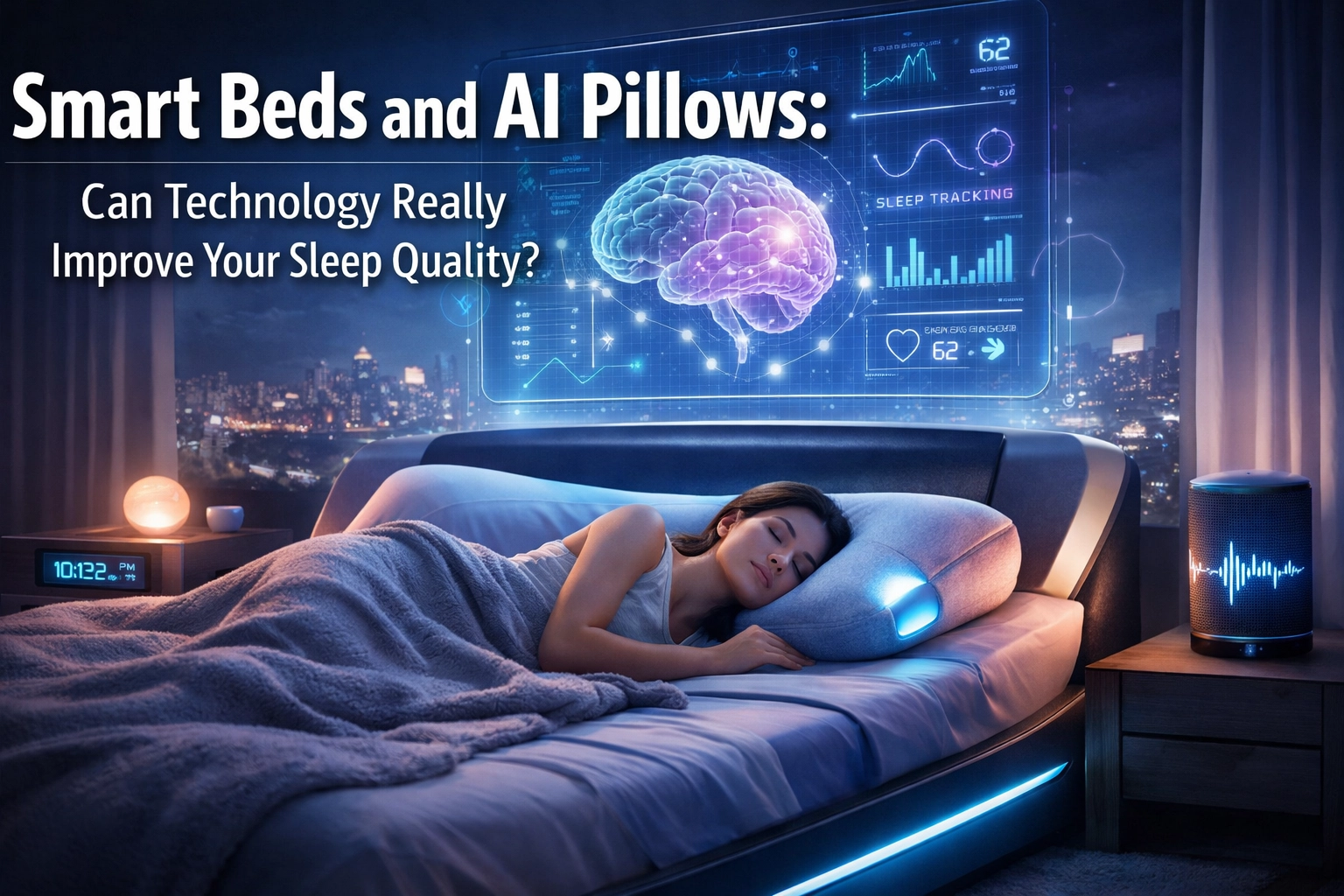
The "sleep economy" is currently valued at over $500 billion globally. As sleep deprivation becomes a modern epidemic, the furniture industry has pivoted from traditional springs and foam to complex digital ecosystems. We are no longer just buying mattresses; we are buying sleep-optimization platforms.
Smart beds and AI-integrated pillows promise to solve everything from chronic insomnia to partner-disturbing snoring. But when you strip away the sleek apps and marketing buzzwords, does the hardware actually deliver physiological benefits, or is it just high-priced data collection? This guide deconstructs the mechanics of sleep technology to determine what truly moves the needle on recovery.
The Hardware of Modern Slumber: How Smart Beds Function
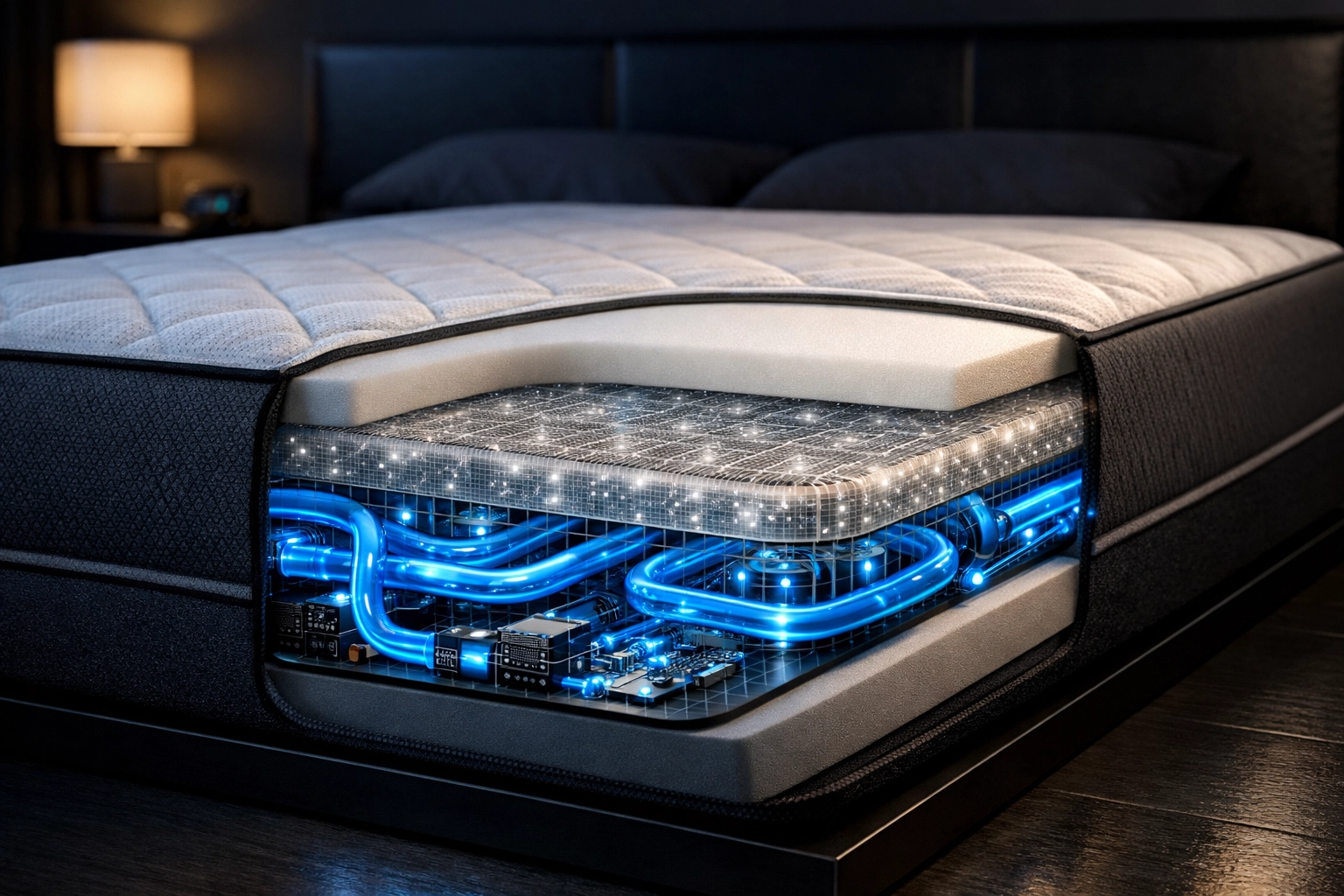
A "smart" bed is defined by its ability to sense, process, and react. Unlike a traditional mattress that provides static support, a smart bed utilizes a suite of sensors: primarily ballistocardiography (BCG) and piezoelectric sensors: to monitor your body without direct contact.
Sensor Technology
Most top-tier smart beds use pressure-sensitive mats or tubes embedded within the comfort layers. These sensors detect:
- Heart Rate (HR) and Heart Rate Variability (HRV): By measuring the tiny mechanical movements of the heart beating against the mattress.
- Respiratory Rate: Monitoring the expansion and contraction of the chest.
- Motion and Presence: Using pressure changes to track sleep stages (REM, Light, Deep) and how often you toss and turn.
Active vs. Passive Response
The "Smart" aspect comes from the response. This is usually achieved through two mechanisms:
- Adjustable Air Chambers: If the bed detects you are sleeping on your side, it might soften the shoulder area to reduce pressure points. If you start snoring, it can elevate the head of the bed by 10 degrees to open the airway.
- Thermoelectric Cooling/Heating: Systems like the Eight Sleep Pod use a water-based "active" cooling system to manipulate core body temperature, which is a critical lever for deep sleep induction.
Temperature Control: The Science of Thermoregulation
If there is one feature of smart beds that has a direct, scientifically backed impact on sleep quality, it is temperature regulation. Human biology dictates that our core body temperature must drop by about 2 to 3 degrees Fahrenheit to initiate sleep and stay asleep.
Traditional foam mattresses are notorious for "sleeping hot" because they trap body heat. Smart beds solve this through two methods:
| Method | Technology | Effectiveness |
|---|---|---|
| Active Liquid Cooling | Water-filled tubes circulated by a hub (e.g., Eight Sleep). | High; can drop surface temperature to 55°F. |
| Airflow/Phase Change | High-CFM fans or cooling gels (e.g., Sleep Number). | Moderate; helps dissipate heat but doesn't "chill." |
| Dual-Zone Control | Separate settings for each side of the bed. | High for couples with different metabolic rates. |
Research shows that maintaining an optimal "thermal neutral" environment can reduce nighttime awakenings by up to 40%. For people suffering from night sweats or hormonal fluctuations, active temperature tech isn't just a luxury: it’s a medical-grade intervention.
AI Pillows: Solving the Snoring Epidemic?
While smart beds handle the body, "AI pillows" are designed to tackle the head, neck, and respiratory system. The most advanced models use integrated microphones and machine learning algorithms to identify the specific frequency of a user’s snore.
How AI Pillows React
When a snore is detected, the pillow doesn't just wake you up. Instead, internal air chambers quietly inflate or deflate to gently shift the position of your head. This lateral movement encourages the sleeper to change positions or realigns the jaw to prevent the soft tissues in the throat from collapsing: the primary cause of snoring.
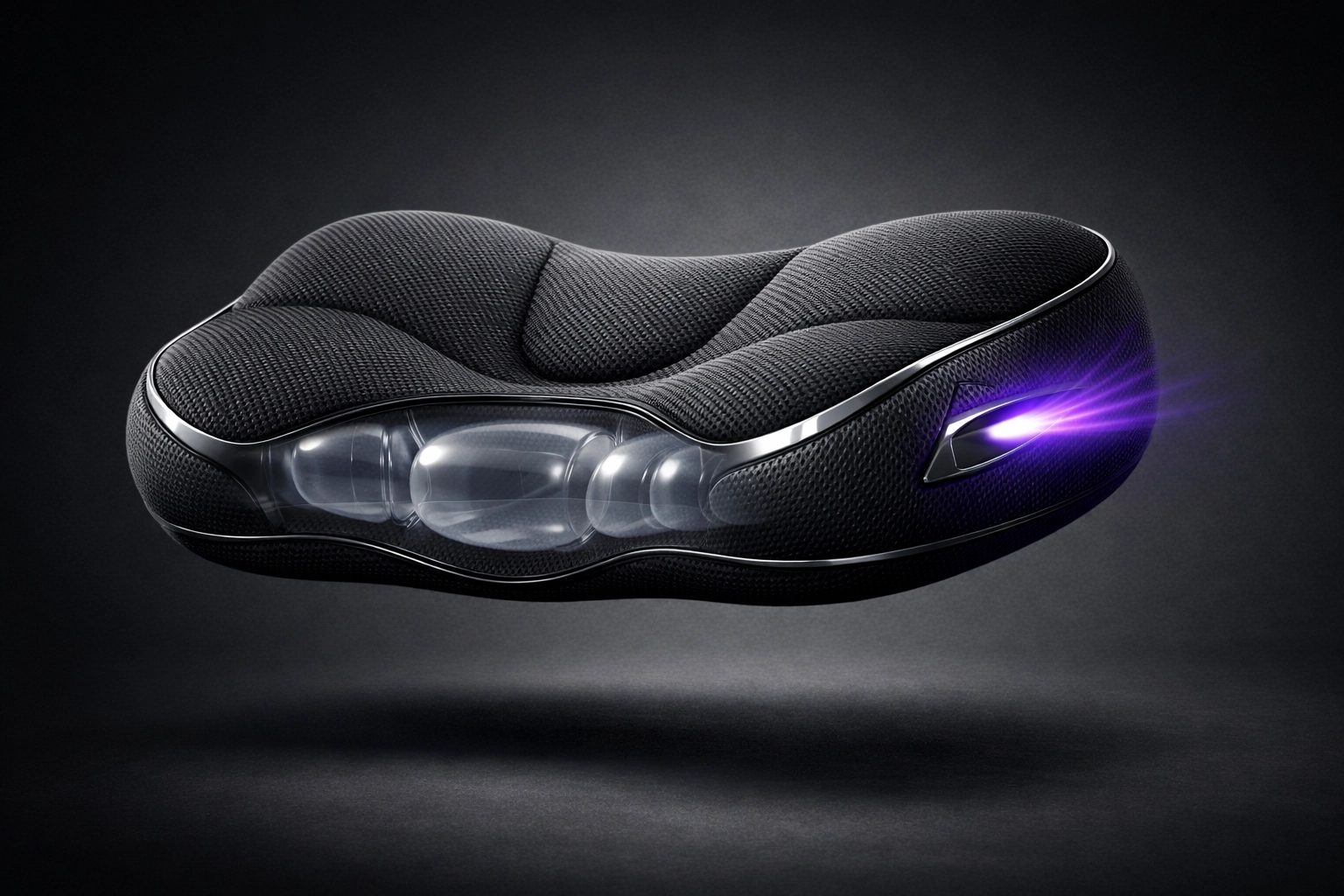
Beyond snoring, these pillows often include:
- Cervical Spine Tracking: Sensors that ensure your neck is aligned with your spine, adjusting height in real-time if you switch from back-sleeping to side-sleeping.
- Bone Conduction Audio: Allowing you to listen to white noise or "smart alarms" that vibrate the inner ear without disturbing a partner.
Biometrics and Machine Learning: Interpreting Your Sleep Score
The most controversial aspect of sleep tech is the "Sleep Score." Every brand has its own proprietary algorithm that converts raw sensor data into a number from 1 to 100.
The Accuracy Gap
It is important to distinguish between Consumer-Grade Tracking and Polysomnography (PSG): the clinical gold standard. PSG uses EEG to monitor brain waves, which is the only 100% accurate way to identify sleep stages. Smart beds rely on movement and heart rate, which are "proxy" measurements.
However, recent studies have shown that high-end smart beds (like those from Sleep Number or Eight Sleep) have a 70-85% correlation with PSG for detecting total sleep time and wake cycles. While they may struggle to perfectly distinguish between REM and Light sleep, they are incredibly effective at identifying long-term trends.
Data-Driven Insights
The real power of AI in sleep isn't the nightly score; it's the correlation. An AI-backed app can tell you: "Your HRV dropped by 15% on nights when the room temperature was above 72°F," or "Your restlessness increases on days you log a late-evening workout." This allows for personalized "sleep hygiene" tweaks based on your specific biology.
Is the Investment Worth It? The ROI of Sleep Tech
Smart beds are expensive, often ranging from $2,500 to $6,000+. To determine the value, you have to look at the "Return on Investment" regarding health and productivity.
Who Benefits Most:
- The "Hot Sleeper": If you wake up drenched in sweat, active cooling tech is life-changing.
- The Chronic Snorer: If your snoring affects your partner's health or leads to mild sleep apnea, an adjustable smart base/pillow is a non-invasive first step.
- The Data-Driven Athlete: HRV tracking is the best way to measure physical recovery. Having this built into your bed removes the "friction" of wearing a watch or ring to sleep.
- Chronic Pain Patients: Real-time pressure adjustment can prevent the morning stiffness associated with traditional mattresses.
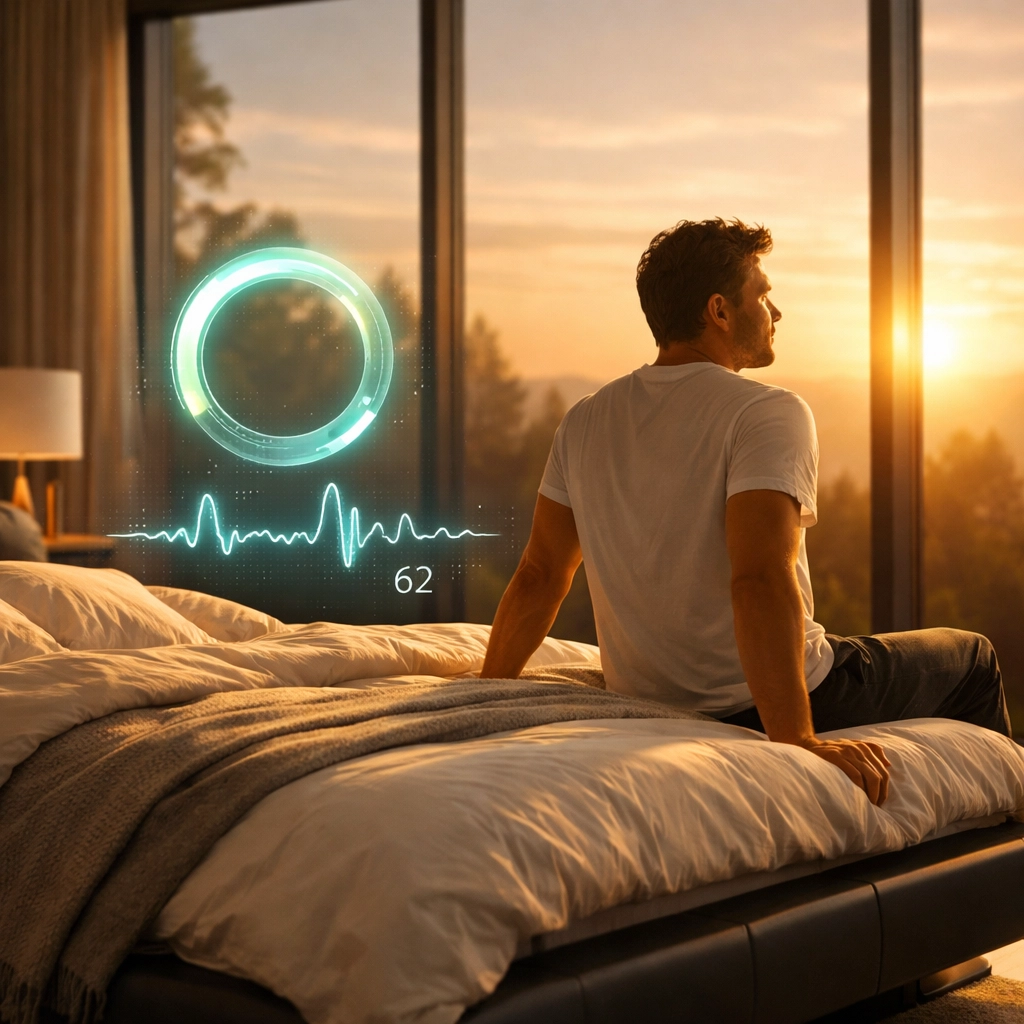
Critical Limitations: Why Tech Can't Fix Bad Habits
No amount of technology can override poor sleep hygiene. A $5,000 smart bed will not save you if:
- You consume caffeine at 4:00 PM.
- You spend two hours scrolling on a blue-light-emitting smartphone before bed.
- Your bedroom is not sufficiently dark or quiet.
Think of a smart bed like a high-end treadmill. It is a tool that makes the process more efficient, but you still have to put in the work (consistency) to see the results.
Summary Checklist for Choosing Sleep Tech
If you are ready to upgrade, look for these technical specifications:
- Dual-Zone Capabilities: Essential if you share a bed.
- Integration: Does it sync with Apple Health, Google Fit, or your Oura Ring?
- Hose-Free Design: In pillows, ensure the air pumps are quiet (below 35dB) so the adjustment doesn't wake you.
- Trial Period: Most reputable smart bed companies offer a 100-night trial. Because the sensors take time to "learn" your patterns, you cannot judge effectiveness in a single night.
Technology has finally reached a point where it can do more than just count your steps. By manipulating temperature and physical orientation in real-time, smart beds and AI pillows provide a proactive environment that encourages the body to stay in deep recovery states longer. It's not magic: it's high-fidelity environmental control.
About the Author: Malibongwe Gcwabaza
CEO of blog and youtube
Malibongwe Gcwabaza is a visionary leader at the intersection of media and technology. With a focus on distilling complex technical innovations into actionable insights, Malibongwe leads the "blog and youtube" team in exploring how the digital revolution impacts our daily lives: from the way we work to the way we sleep. His approach is grounded in data-driven analysis and a commitment to radical simplicity in communication.
About the Author