For the average 9-to-5 worker, sleep is a biological given that aligns with the rotation of the earth. For the millions of nurses, security personnel, factory workers, and first responders working the "graveyard" shift, sleep is a tactical challenge. Humans are fundamentally diurnal creatures. Our physiology: from hormone secretion to core body temperature: is governed by the Suprachiasmatic Nucleus (SCN), a tiny region in the hypothalamus that acts as the body’s master clock.
When you work at night, you aren't just "fighting sleepiness"; you are fighting hundreds of millions of years of biological evolution. This guide breaks down the high-level technical strategies required to override your internal clock, optimize your environment, and maintain peak cognitive performance despite a non-traditional schedule.
The Science of Circadian Misalignment
To solve sleep issues, you must first understand the mechanism of the Suprachiasmatic Nucleus. The SCN responds to environmental cues, primarily light. When photons hit the melanopsin-containing ganglion cells in your retina, they send a signal to the SCN to suppress melatonin production and increase cortisol.
For a shift worker, the goal is to create a "false night." Failure to do so leads to Shift Work Sleep Disorder (SWSD), a condition characterized by excessive sleepiness during the wake phase and insomnia during the sleep phase. Chronic SWSD is linked to metabolic syndrome, cardiovascular disease, and cognitive decline. Success in shift work requires a rigorous, data-driven approach to environmental control and chemical management.
1. Environmental Engineering: The Dark Room Protocol
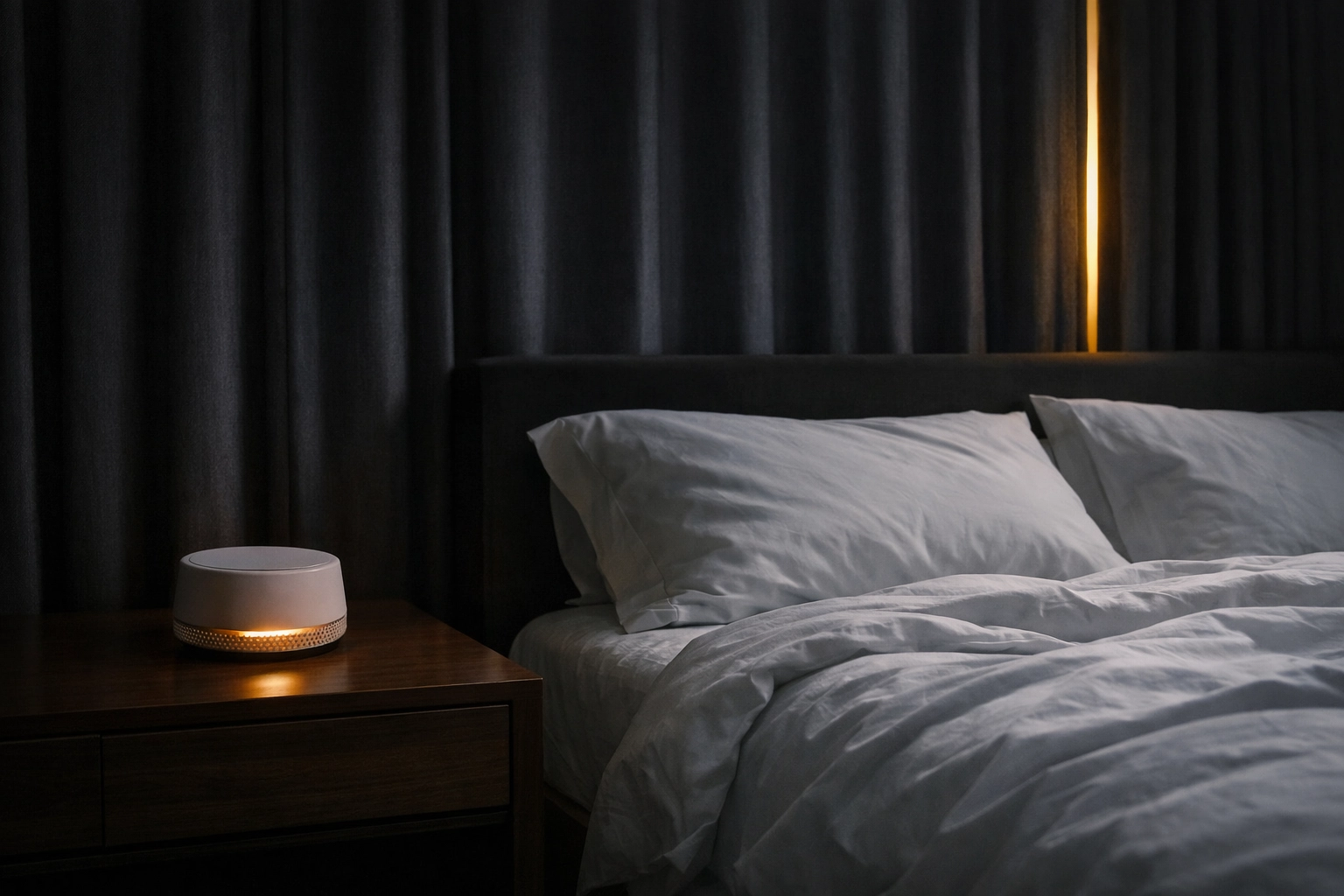
Your bedroom must be treated like a laboratory. The goal is total sensory deprivation. Even a small amount of light can penetrate the eyelids and disrupt the transition from Stage 2 sleep to Deep Sleep (SWS).
The Light Variable
Standard curtains are insufficient. You require 100% blackout solutions. This often involves a dual-layer approach: blackout cellular shades combined with heavy, floor-to-ceiling blackout drapes. If light still leaks through the edges, high-quality contoured sleep masks (the kind that don't press against the eyelids) are mandatory.
The Acoustic Variable
The world is loudest when the sun is up. Traffic, construction, and daytime foot traffic create irregular noise spikes that trigger "micro-arousals." While you might not fully wake up, your brain moves from deep sleep back to light sleep, destroying sleep quality.
- White Noise Machines: Use a dedicated device or a high-fidelity fan. The goal is a consistent decibel level that masks sudden peaks in external sound.
- Earplugs: High-NRR (Noise Reduction Rating) foam earplugs (typically 32-33 dB) provide the most effective barrier if you can tolerate the sensation.
The Thermal Variable
Human core body temperature must drop by about 1–3 degrees Fahrenheit to initiate and maintain deep sleep. During the day, ambient temperatures rise, making this physiological drop difficult.
- Target Temperature: Maintain your room between 16-20°C (60-68°F).
- Technical Gear: Consider cooling mattress toppers or moisture-wicking bamboo sheets to prevent heat traps.
2. Strategic Light Management: The Commute Home
The most critical mistake shift workers make happens before they even get into bed. The drive home at 7:00 AM or 8:00 AM is the moment your body receives the strongest signal to wake up.
When you exit your workplace and step into the morning sun, the high-intensity blue light (around 480nm wavelength) immediately suppresses any residual melatonin and resets your SCN for a daytime rhythm.
The Sunglasses Protocol: To combat this, you must wear high-quality, wraparound polarized sunglasses the moment you leave the building. Some extreme-shift athletes even use orange-tinted "blue-blocker" glasses. The goal is to minimize blue light exposure during your commute so that your brain remains in a "pre-sleep" state.
3. The Nutritional Matrix: Caffeine and Alcohol
Managing your chemistry is just as important as managing your environment.
The Caffeine Half-Life
Caffeine has a half-life of approximately 5 to 6 hours. If you consume a large coffee at 3:00 AM to power through the end of your shift, half of that caffeine is still circulating in your system at 9:00 AM when you are trying to sleep.
- The Cut-off Rule: Stop all caffeine intake at least 6 hours before your intended bedtime.
- Strategic Use: Use caffeine early in the shift for the "upward" phase of your alertness, rather than as a rescue tool at the end.
The Alcohol Fallacy
Many shift workers use alcohol as a sedative to "knock themselves out" after a long night. While alcohol is a sedative, it is a potent disruptor of REM (Rapid Eye Movement) sleep. As the body metabolizes alcohol, it creates a "rebound effect," leading to fragmented sleep and early waking. For a shift worker already struggling with sleep duration, alcohol is a net negative.
4. Scheduling Strategies: Anchor Sleep vs. Split Sleep
There are two primary schools of thought for shift work scheduling. Your choice depends on your biological resilience and your family situation.
| Strategy | Description | Best For |
|---|---|---|
| Consolidated Sleep | Attempting 7-9 hours in one block immediately after work. | Workers with a quiet home environment and consistent night shifts. |
| Split-Sleep Pattern | Sleeping for 4-5 hours in the morning and a 90-minute "top-off" nap before the shift. | Workers with family obligations or those who struggle to stay asleep for 8 hours in daylight. |
| Anchor Sleep | Keeping the same sleep times on both work days and days off. | Long-term night workers aiming for maximum health stability. |
The "No-Change" Rule on Days Off
One of the most damaging things a shift worker can do is revert to a "normal" 10 PM to 6 AM sleep schedule on their days off. This creates "social jetlag." By the time you head back to work on Monday night, your body is effectively starting the adaptation process from scratch. If possible, keep your sleep/wake times within a 2-hour window of your work schedule, even on weekends.
5. Napping Science: The 20/90 Rule
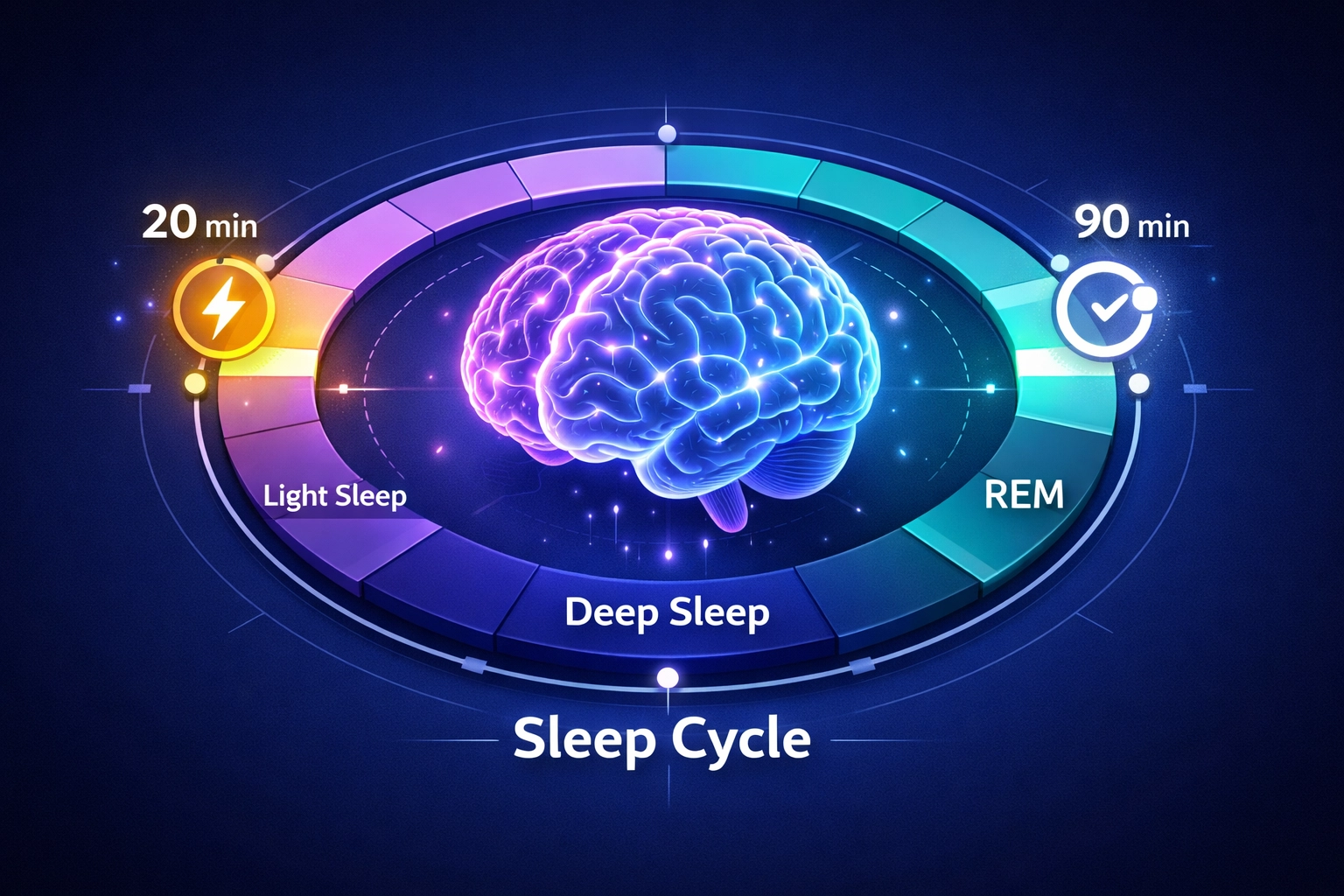
Napping is a tactical tool, not a sign of weakness. To avoid "sleep inertia": that groggy, disoriented feeling upon waking: you must understand sleep cycles.
- The Power Nap (20 Minutes): This provides a boost in alertness and motor learning without entering deep sleep. It is perfect for a "mid-shift" break.
- The Full Cycle (90 Minutes): This allows for one complete cycle of light, deep, and REM sleep. If you have a longer break, 90 minutes is the gold standard.
Avoid napping for 30–60 minutes, as this is when you are likely in the middle of slow-wave sleep; waking up during this phase results in heavy cognitive impairment that can last for an hour.
6. Social and Psychological Boundaries
One of the hardest parts of sleeping when the sun is up is the lack of societal respect for daytime sleep. People who wouldn't dream of calling you at 3:00 AM have no problem calling you at 11:00 AM.
- Communication: Explicitly inform friends and family of your "blackout hours."
- Digital Hygiene: Set your phone to "Do Not Disturb" or "Sleep Mode," allowing only emergency contacts to bypass the filter.
- Signage: A "Day Sleeper: Do Not Knock" sign on the front door is a simple but effective tool for managing delivery drivers and solicitors.
7. Supplementation and Medical Intervention
While lifestyle and environment are the foundation, some shift workers require additional support.
- Melatonin: Taking low-dose melatonin (0.5mg to 3mg) about 30–60 minutes before your planned daytime sleep can help "nudge" the SCN into a sleep phase. However, consult a physician, as timing is critical; taking it at the wrong time can further shift your clock in the wrong direction.
- Vitamin D: Because shift workers rarely see the sun, Vitamin D deficiency is rampant. This deficiency itself is linked to poor sleep quality. Regular testing and supplementation are often necessary.

Summary: The Shift Worker’s Checklist
To master the art of sleeping when the sun is up, you must be disciplined.
- Commute: Wear polarized sunglasses.
- Environment: 100% blackout, 18°C temperature, white noise at 60dB.
- Nutrition: Zero caffeine in the last 6 hours of the shift; zero alcohol before bed.
- Consistency: Keep the schedule as similar as possible on days off.
About the Author: Malibongwe Gcwabaza
Malibongwe Gcwabaza is the CEO of blog and youtube, a platform dedicated to demystifying complex health and lifestyle data for the modern professional. With a background in organizational leadership and a passion for human optimization, Malibongwe focuses on providing actionable, science-backed strategies for high-performance living. His work bridges the gap between technical research and everyday application, helping readers navigate the challenges of the modern workforce.
About the Author