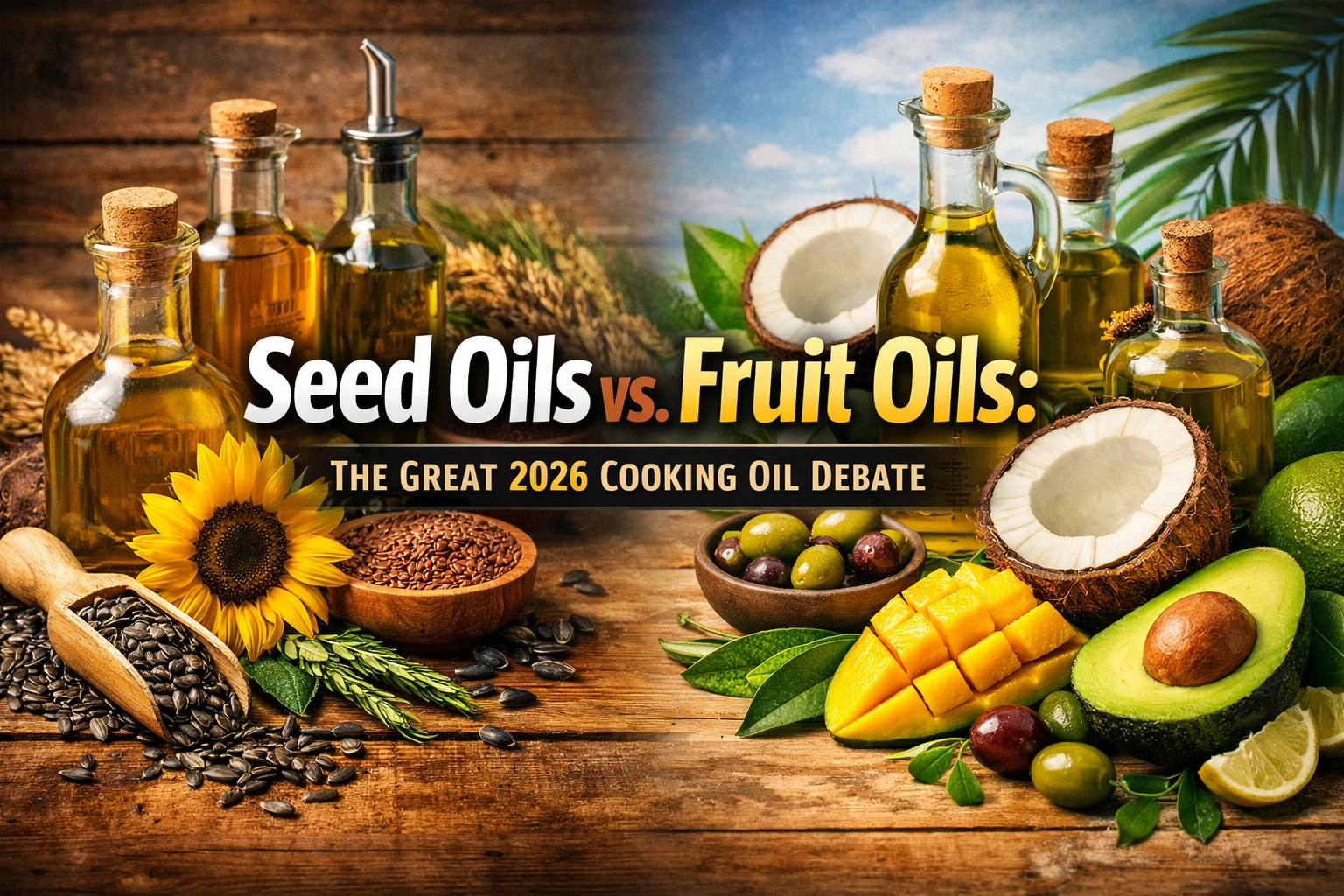
By 2026, the "Oil Wars" have reached a fever pitch. If you spend any time on health forums or biohacking subreddits, you’ve seen the battle lines. On one side, the "Seed Oil Disrespectors" claim that industrial seed oils are the primary cause of modern chronic disease. On the other, traditional nutritionists point to decades of heart-health data supporting polyunsaturated fats.
This isn’t just a kitchen preference anymore; it’s a debate about molecular biology, oxidative stress, and how we fuel our cellular membranes. To settle the score, we need to move past the memes and look at the technical data regarding lipid stability, inflammatory signaling, and metabolic outcomes.
Defining the Contenders: Seeds vs. Fruits
In the world of lipids, not all fats are extracted the same way. The primary difference between these two categories lies in where the fat is stored in the plant and the intensity of the processing required to get it into a bottle.
The Seed Oils (The "Hateful Eight")
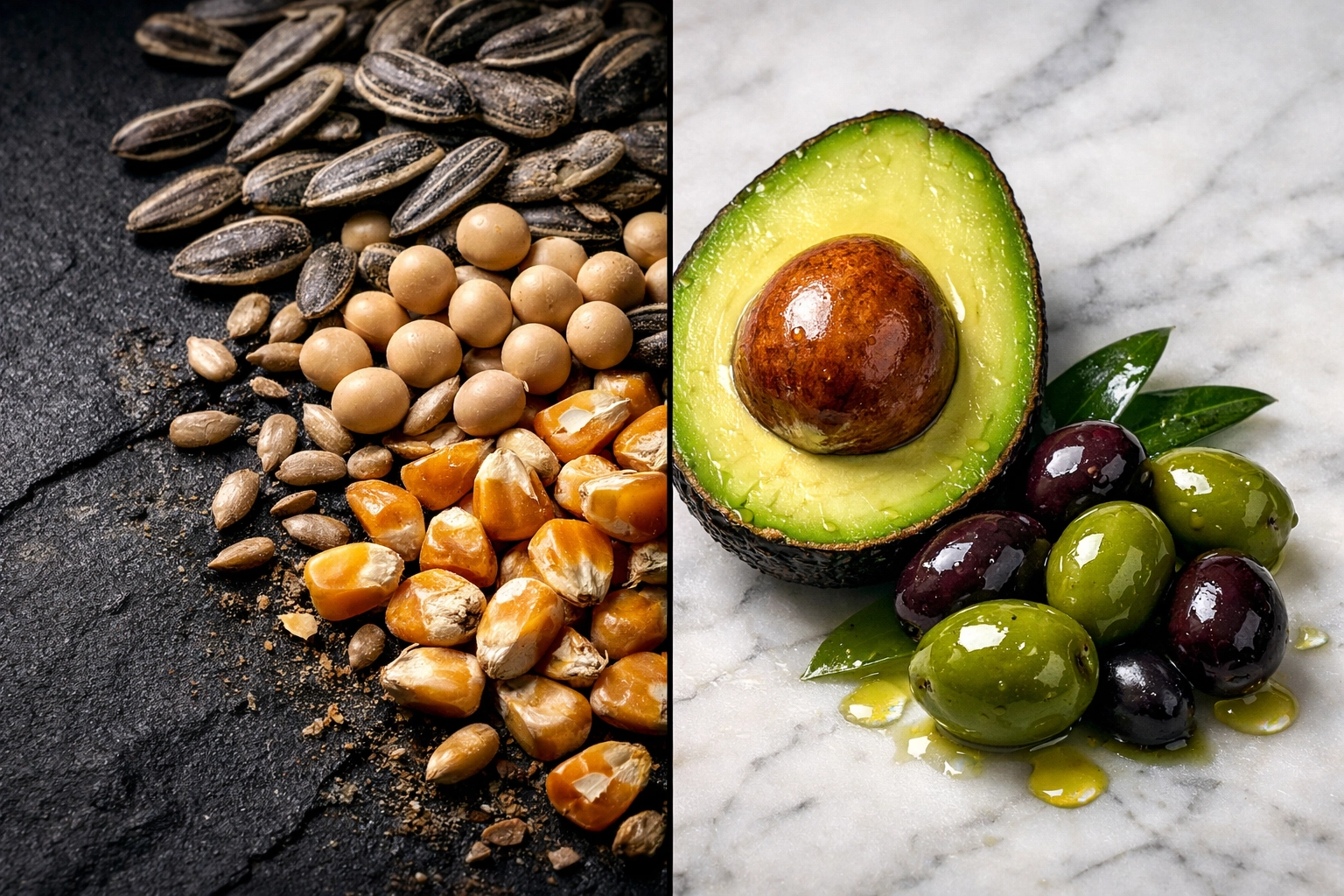
Most seed oils are derived from the seeds of crops that were not traditionally used for oil until the advent of industrial refining. These include:
- Soybean Oil
- Corn Oil
- Canola (Rapeseed) Oil
- Cottonseed Oil
- Sunflower Oil
- Safflower Oil
- Grapeseed Oil
- Rice Bran Oil
These oils are high in Polyunsaturated Fatty Acids (PUFAs), specifically Omega-6 linoleic acid. Because seeds are hard and low-fat, extracting the oil often requires high heat, chemical solvents (like hexane), and deodorization processes to make the final product palatable.
The Fruit Oils
Fruit oils are pressed from the fleshy pulp of the fruit itself. These include:
- Olive Oil (Extra Virgin)
- Avocado Oil
- Coconut Oil
- Palm Oil
These are predominantly Monounsaturated Fatty Acids (MUFAs) or Saturated Fats. Because the fruit pulp is naturally oily, these can often be "cold-pressed," meaning the oil is mechanically squeezed out without the need for high heat or chemicals, preserving delicate antioxidants.
The Omega-6 Controversy: Inflammation or Innovation?
The crux of the seed oil debate centers on Linoleic Acid (LA). In 2026, our understanding of LA has shifted from "essential nutrient" to a "nuanced signaling molecule."
The argument against seed oils is that a diet high in Omega-6, without a balancing amount of Omega-3, leads to a pro-inflammatory state. Critics argue that LA breaks down into arachidonic acid, which then produces pro-inflammatory eicosanoids.
However, current clinical data from 2025 and early 2026 suggests a more complex reality:
- Systemic Inflammation: Randomized controlled trials consistently show that increasing dietary linoleic acid does not significantly increase inflammatory markers like C-reactive protein (CRP) in healthy humans.
- Cardiovascular Health: Large-scale meta-analyses continue to show that replacing saturated fats with PUFAs (including seed oils) lowers LDL cholesterol and reduces the risk of coronary heart disease.
The "poison" may not be the Omega-6 itself, but rather the oxidative state of the oil when it reaches your cells.
Thermal Stability and Lipid Peroxidation
This is where the technical "deep dive" matters most. When you cook with oil, you expose it to heat, light, and oxygen. Some oils hold up; others fall apart.
The Role of Double Bonds
Fatty acids are chains of carbon atoms.
- Saturated fats have no double bonds. They are straight and stable.
- Monounsaturated fats (MUFAs) have one double bond. They are relatively stable.
- Polyunsaturated fats (PUFAs) have multiple double bonds.
Each double bond is a point of vulnerability. Under high heat, these double bonds can break, leading to the formation of Polar Compounds and Lipid Peroxides. In 2026, researchers are paying close attention to HNE (4-hydroxynonenal), a toxic byproduct of oxidized seed oils that can damage DNA and impair mitochondrial function.
| Oil Type | Predominant Fat | Smoke Point (Refined) | Oxidative Stability |
|---|---|---|---|
| Avocado Oil | MUFA | 520°F (270°C) | Very High |
| Extra Virgin Olive Oil | MUFA | 375°F (190°C) | High (due to polyphenols) |
| Coconut Oil | Saturated | 350°F (177°C) | Very High |
| Refined Sunflower Oil | PUFA | 450°F (232°C) | Moderate/Low |
| Soybean Oil | PUFA | 450°F (232°C) | Low |

The Polyphenol Advantage in Fruit Oils
While seed oils are often "stripped" during refining, high-quality fruit oils: especially Extra Virgin Olive Oil (EVOO): act as a delivery system for antioxidants.
EVOO contains oleocanthal and oleuropein. These polyphenols do two things:
- Protect the oil: They act as a shield, preventing the fat from oxidizing even when heated.
- Protect you: They have been shown to inhibit the COX enzyme, the same pathway targeted by Ibuprofen, providing a natural anti-inflammatory effect.
Refined seed oils generally lack these protective compounds, leaving the PUFAs vulnerable to the high-heat environment of a frying pan or an industrial deep fryer.
The Confounding Variable: Ultra-Processed Foods
The most important takeaway for 2026 is the distinction between oil and food.
The vast majority of seed oil consumption comes from ultra-processed foods: chips, commercial baked goods, and fast food. When people "quit seed oils" and see massive health improvements, they aren't just removing soybean oil. They are removing:
- Refined carbohydrates and sugar.
- High levels of sodium.
- Artificial preservatives and emulsifiers.
The metabolic magic often attributed to "removing seed oils" is frequently just the result of returning to a Whole Foods Diet. Using a tablespoon of organic sunflower oil to sauté vegetables at home is biologically different from eating fries cooked in 50-gallon vats of oil that have been heated and cooled for seven days straight.
2026 Practical Guide: What Should You Use?
To optimize your health and AdSense-worthy kitchen setup, follow these data-driven usage guidelines:
1. For High-Heat Searing (Steaks, Stir-fry)
Use Avocado Oil or Ghee. Avocado oil has the highest smoke point of the fruit oils and remains stable at temperatures where seed oils begin to polymerize (turn into a varnish-like substance on your pan).
2. For Everyday Cooking and Sautéing
Extra Virgin Olive Oil is the gold standard. Contrary to the old myth that you can't cook with it, the polyphenols in EVOO make it remarkably resistant to oxidation at normal stove-top temperatures.
3. For Baking
If you need a neutral flavor, Refined Coconut Oil or High-Oleic Sunflower Oil are your best bets. "High-Oleic" versions of seed oils have been bred to contain more MUFAs and fewer PUFAs, making them much more stable than standard versions.
4. For Salad Dressings and Finishing
Stick to the "Cold-Pressed" kings. EVOO, Walnut Oil, or Flaxseed Oil provide the best flavor and the most intact micronutrients. Never heat flax or walnut oil; their high PUFA content makes them extremely fragile.
The Final Verdict
In the great 2026 debate, the evidence suggests that fruit oils are superior for home use due to their extraction methods, antioxidant content, and oxidative stability.
Seed oils are not the "molecular poison" some influencers claim: especially when consumed as part of a whole-food diet (like eating actual sunflower seeds). However, the industrial refining process and the tendency for PUFAs to oxidize under heat make them a less-than-ideal choice for the health-conscious cook.
If you want to live better and longer, prioritize oils that were squeezed, not chemically extracted. Your mitochondria will thank you.
Author Bio: Malibongwe Gcwabaza
CEO of Blog and Youtube
Malibongwe Gcwabaza is a visionary leader and health optimization strategist dedicated to deconstructing complex wellness trends. With a background in executive leadership and a passion for data-driven longevity, Malibongwe focuses on bridging the gap between high-level science and everyday lifestyle choices. When he isn't steering the ship at "blog and youtube," he’s likely experimenting with the latest biohacking tech or perfecting his Zone 2 endurance base. His mission is simple: provide the clarity needed to navigate the noisy world of modern health.
About the Author