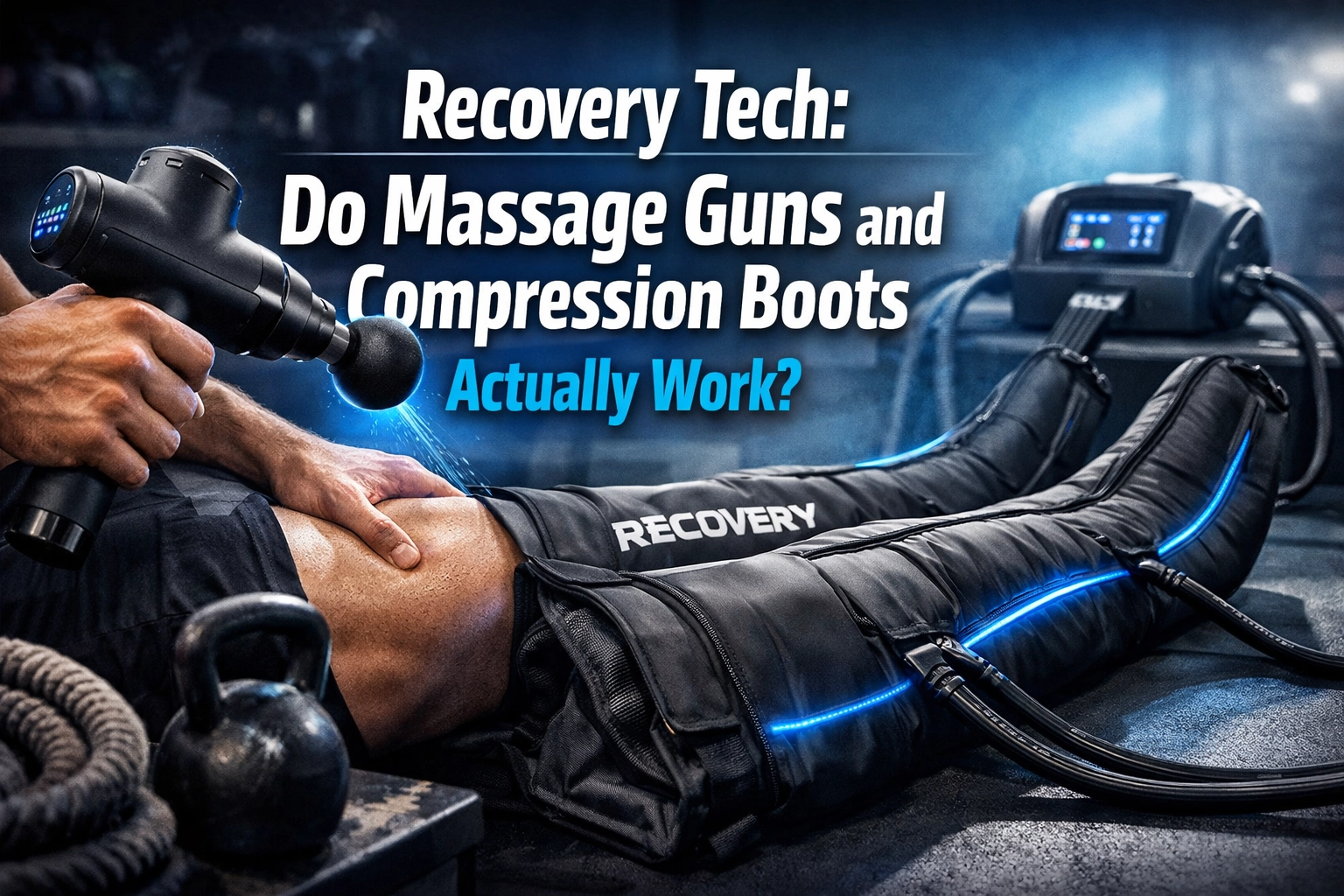
In the fitness landscape of 2026, the "no pain, no gain" mantra has been replaced by a more sophisticated obsession: recovery. We’ve moved far beyond the humble foam roller and the occasional ice bath. Today, walking into a high-end gym or a professional athlete’s home looks more like a scene from a sci-fi movie. Handheld percussive devices hum in every corner, and people sit encased in giant, inflating robotic sleeves.
But as the price tags for these gadgets climb into the thousands, a critical question remains: Are we actually speeding up physiological repair, or are we just paying for an expensive high-tech massage? To find the answer, we have to look past the marketing "vibe" and into the peer-reviewed data regarding Percussive Massage Therapy (PMT) and Intermittent Pneumatic Compression (IPC).
The Science of the Massage Gun: Percussive Therapy Explained
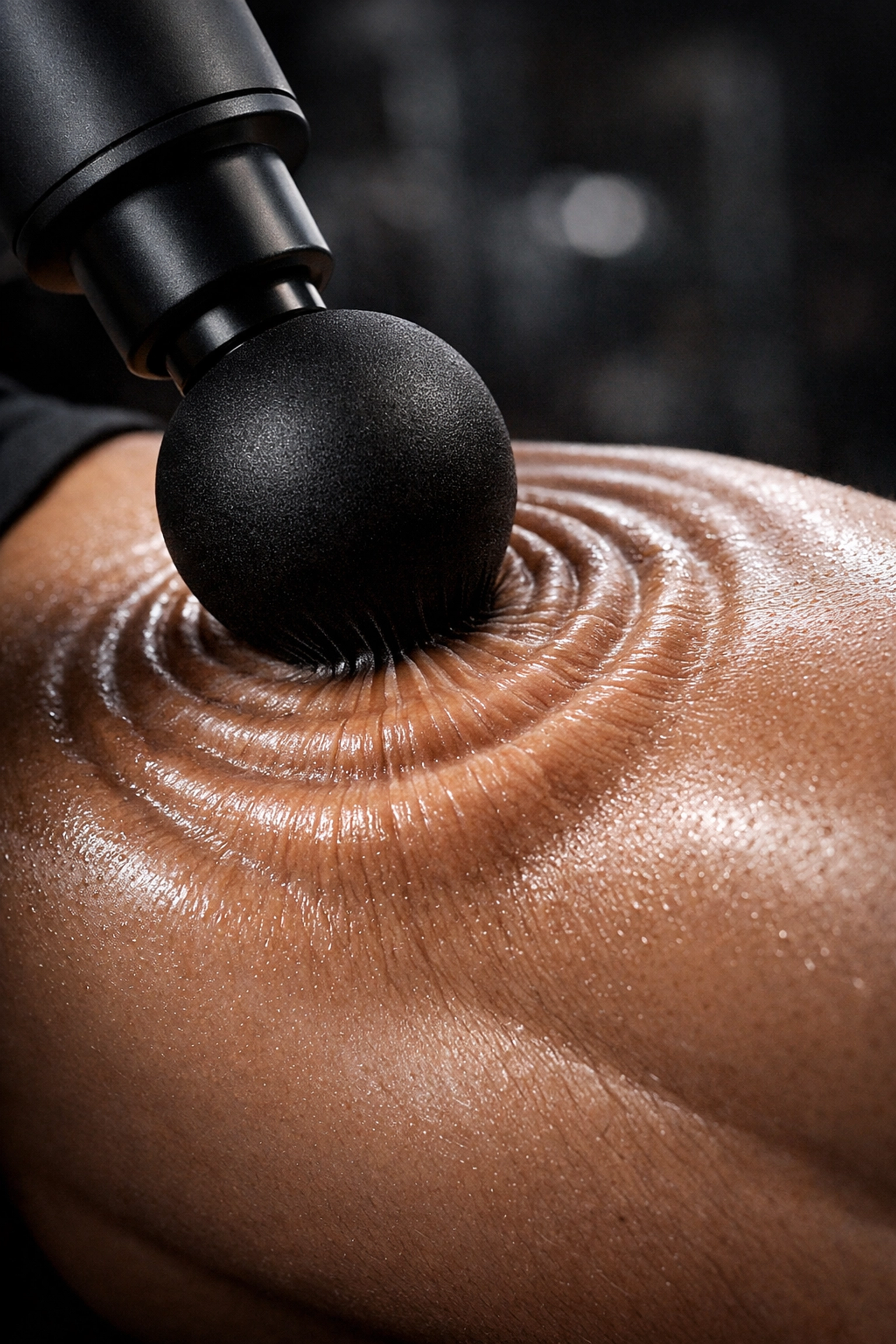
Massage guns, or percussive therapy devices, work by delivering rapid, concentrated pulses of pressure deep into the muscle tissue. This isn't just vibration; it’s a mechanical hammering that reaches the neuromuscular system.
How It Works: The Gate Control Theory
The primary reason you feel better after using a massage gun is likely due to the Gate Control Theory of Pain. This theory suggests that non-painful input (the vibration and percussion) closes the "gates" to painful input, preventing pain signals from traveling to the central nervous system. Essentially, you are distracting your brain from the muscle soreness.
What the 2026 Research Actually Shows
Recent meta-analyses and studies conducted over the last few years have narrowed down exactly what these devices can and cannot do.
- Flexibility and Range of Motion (ROM): This is the "big win" for massage guns. Studies have shown an average improvement of 18% in range of motion after a consistent 5-minute protocol. Unlike static stretching, which can sometimes temporarily decrease muscle power, PMT increases flexibility without compromising the muscle's ability to contract.
- Pain Management: For acute stiffness, users report a significant reduction in discomfort. In controlled trials focusing on lower back pain, a 16% reduction in self-reported pain was noted after two weeks of regular use.
- The Frequency Sweet Spot: Data suggests that more isn't always better. Devices operating at lower vibration frequencies (around 29 Hz) have actually shown better results for muscle relaxation and recovery than high-intensity settings (53 Hz+), which can sometimes trigger a protective muscle contraction rather than a release.
Where Massage Guns Fail
If you’re looking to get faster, stronger, or jump higher specifically because of your massage gun, the data has bad news. Research consistently shows that PMT is ineffective for improving strength, power, speed, or agility. In some trials, aggressive use immediately before a sprint or a heavy lift actually led to a slight decrease in explosive performance because it over-relaxed the "stiffness" required for power production.
Compression Boots: The Robotic Squeezer
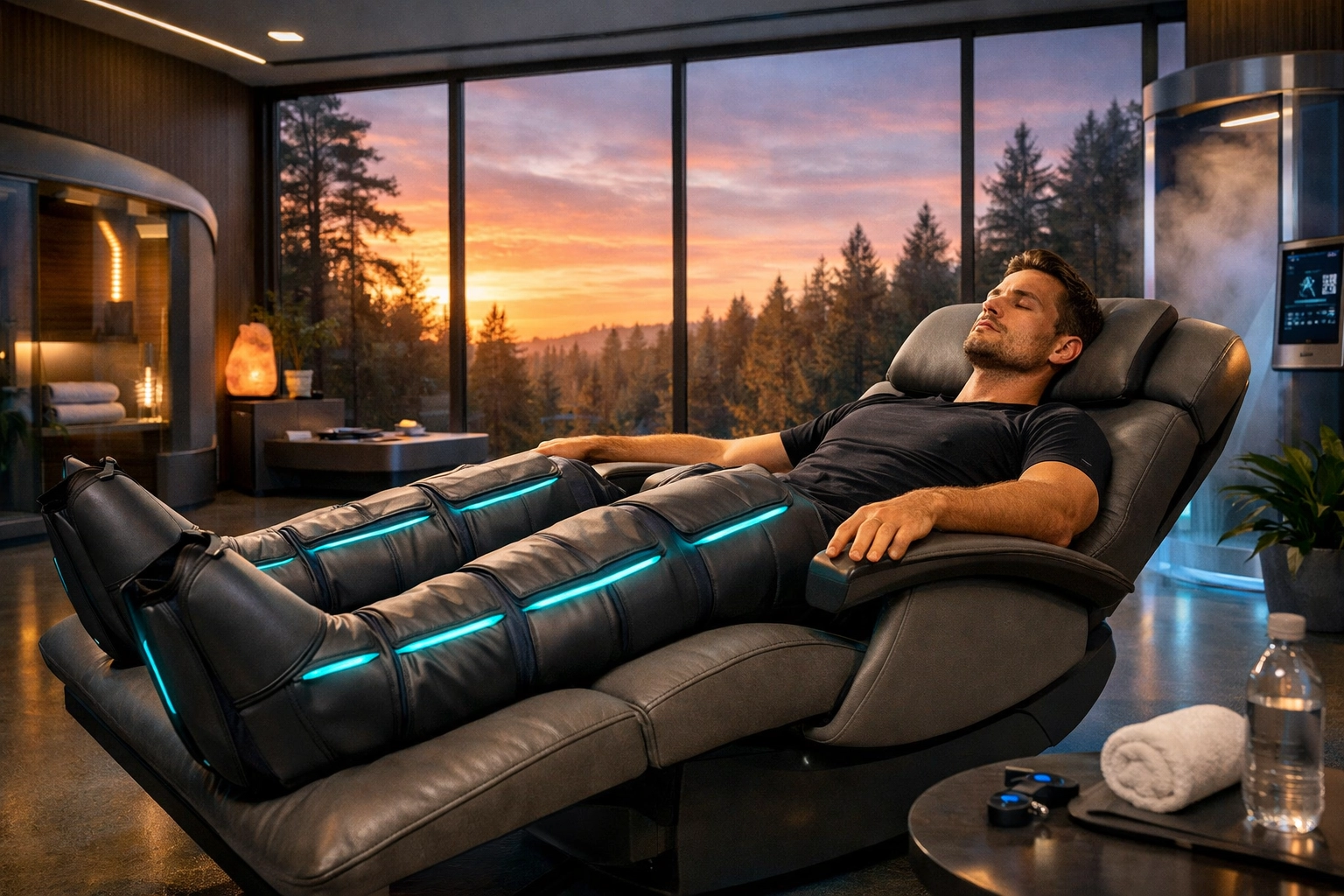
Intermittent Pneumatic Compression (IPC) boots: those giant sleeves that zip up your legs: were originally designed for medical use to prevent deep vein thrombosis (DVT). Now, they are the gold standard for "passive recovery."
The Mechanism: Enhancing the Venous Pump
Unlike a massage gun, which targets a specific trigger point, compression boots work on the entire limb. They use sequential pressure: starting at the foot and moving toward the hip: to mimic the body's natural "skeletal muscle pump." This process assists the veins and lymphatic system in moving fluid back toward the heart.
Key Benefits of IPC
- Metabolic Waste Clearance: While the "lactic acid" myth (that lactate stays in your muscles for days) has been debunked, other metabolic byproducts and inflammatory markers do accumulate. IPC helps circulate these out of the limb faster than sitting still.
- Reduced Edema (Swelling): For athletes who spend a lot of time on their feet, the "heavy leg" feeling is often caused by fluid accumulation. IPC is highly effective at reducing this peripheral swelling.
- Perceived Recovery: This is where the boots shine. Athletes consistently report feeling "fresher" and more ready to train after 30 minutes in the boots compared to passive rest.
Head-to-Head: Massage Guns vs. Compression Boots
When deciding where to invest your recovery budget, it helps to see how these technologies stack up against each other across different metrics.
| Feature | Massage Guns (PMT) | Compression Boots (IPC) |
|---|---|---|
| Primary Goal | Targeted trigger point & ROM | Systemic lymphatic drainage |
| Effort Required | Active (you have to hold it) | Passive (sit and relax) |
| Portability | High (fits in a gym bag) | Low (requires a large carry case) |
| Scientific Strength | Strong for ROM/Flexibility | Strong for Swelling/Perceived Soreness |
| Best Use Case | Pre-workout warmup / Specific knots | Post-long run / Evening wind-down |
| Avg. Cost (2026) | $150 – $400 | $600 – $1,200 |
The "Placebo" Factor: Is it All in Your Head?
In the world of high-performance sports, the placebo effect is a feature, not a bug. If an athlete believes they are recovering faster, their nervous system often follows suit, moving from a "fight or flight" (sympathetic) state to a "rest and digest" (parasympathetic) state.
Both massage guns and compression boots are excellent tools for signaling to your body that the "work" is over and the "healing" has begun. The ritual of recovery: sitting down, focusing on the body, and using these tools: might be just as important as the mechanical pressure they provide.

2026 Implementation Guide: How to Actually Use Them
To get the most out of your tech, you need a protocol. Just "winging it" usually leads to diminishing returns.
The Massage Gun Protocol (For ROM & Knots)
- Identify the Target: Find the muscle belly, avoid bones and joints.
- Float the Device: Don't jam the head into the muscle. Let it "chatter" across the surface.
- The 2-Minute Rule: Spend no more than 2 minutes per muscle group. Overdoing it can cause bruising or internal "micro-trauma."
- Frequency: Set the device to roughly 30Hz for the best balance of comfort and myofascial release.
The Compression Boot Protocol (For Systemic Recovery)
- Timing: Use within 2 hours of a high-intensity session or a long endurance event.
- Pressure Settings: Higher is not better. You aren't trying to crush your legs. Aim for a pressure that feels like a firm handshake (usually between 50-80 mmHg).
- Duration: 20 to 30 minutes is the "sweet spot." Beyond 45 minutes, the incremental benefits drop off sharply.
- Elevation: If possible, use the boots while slightly reclining to assist the upward flow of fluid.
The Bottom Line: Worth the Hype?
If you are a casual gym-goer who works out three times a week, these tools are luxury items. Your money would be better spent on high-quality food and a better mattress. However, if you are a "Hybrid Athlete," a marathoner, or someone training 5-6 days a week, the data supports these tools as valid components of a recovery stack.
Massage guns are your "scalpel": perfect for attacking a specific tight calf or an immobile shoulder before a workout. Compression boots are your "sledgehammer": ideal for flushing out the legs after a 20-mile run so you can walk normally the next day.
Neither tool can replace the "Big Three" of recovery: Sleep, Hydration, and Caloric Intake. But as a 5-10% "top-off" for your performance, the science says they do exactly what they claim to do: as long as your expectations are rooted in physiology, not marketing magic.
Author Bio: Malibongwe Gcwabaza
Malibongwe Gcwabaza is the CEO of blog and youtube and a leading voice in the 2026 wellness space. With a background in performance optimization and a passion for data-driven health, Malibongwe spends his time deconstructing fitness trends to find what actually moves the needle. When he isn't analyzing the latest bio-hacking tech, you can find him practicing what he preaches in the weight room or experimenting with longevity protocols. His mission is to make high-level health science accessible and actionable for everyone.
About the Author