
For decades, the "pelvic floor" was a term whispered in postnatal yoga classes or found in the fine print of bladder control advertisements. If you were an athlete: a marathoner, a powerlifter, or a CrossFit enthusiast: you likely associated pelvic health with everyone except yourself.
By 2026, the narrative has shifted. High-performance sports science now recognizes the pelvic floor not just as a "continence mechanism," but as the foundational base of the human power plant. Whether you are chasing a sub-3-hour marathon or a 500lb deadlift, your pelvic floor is the silent partner in every breath, brace, and stride.
This guide dives deep into the technical physiological demands placed on the pelvic floor during athletic movement and why ignoring this muscle group is the fastest way to hit a performance plateau or invite chronic injury.
The Anatomy of the "Core Canister"
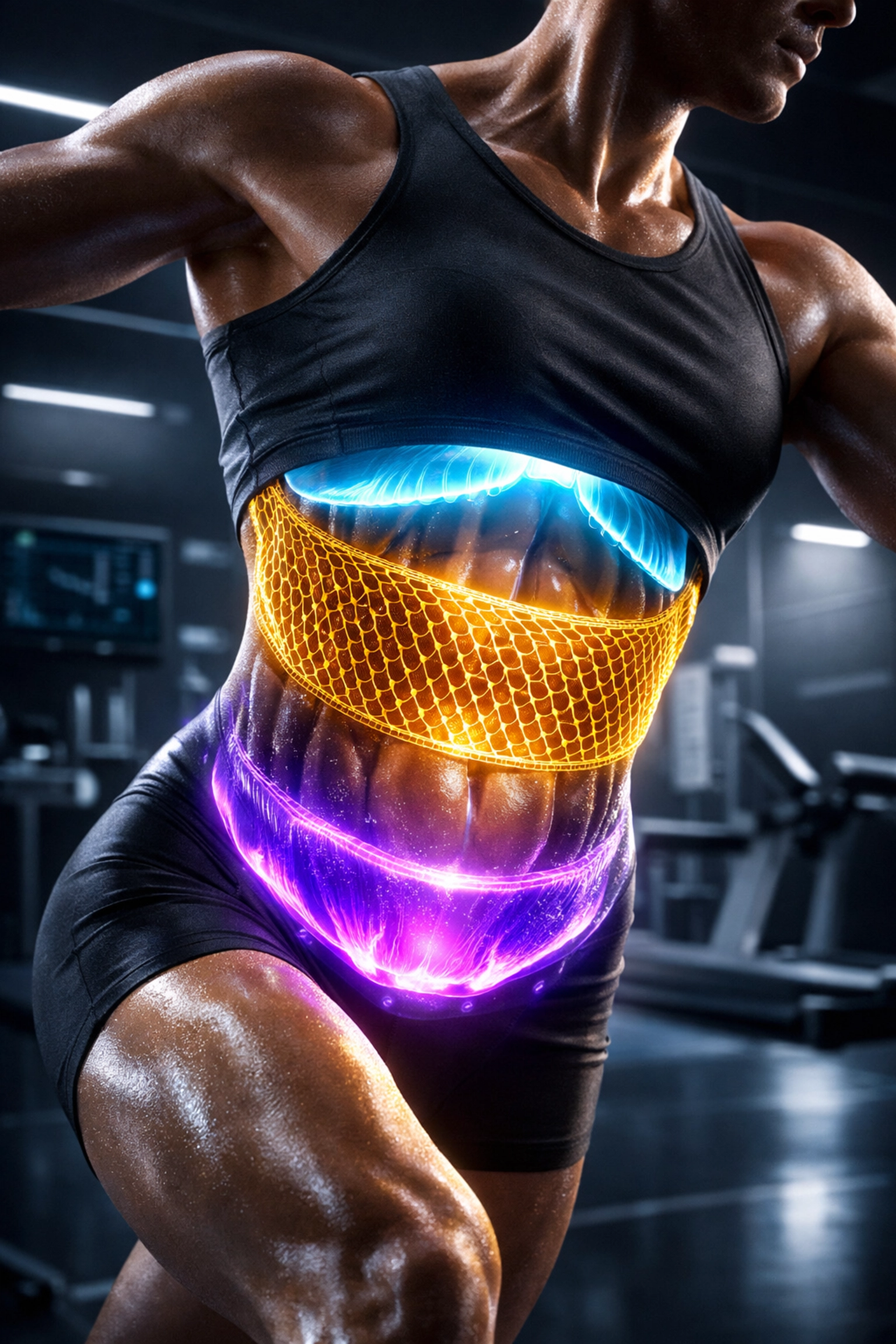
To understand why the pelvic floor matters, we have to stop looking at it in isolation. In functional biomechanics, we refer to the "Core Canister." Think of your torso as a pressurized cylinder:
- The Top: The Diaphragm (your primary breathing muscle).
- The Sides: The Transverse Abdominis (TvA) and internal obliques.
- The Back: The Multifidus (deep spinal stabilizers).
- The Bottom: The Pelvic Floor (a bowl-shaped group of muscles including the levator ani and coccygeus).
When you inhale, the diaphragm drops, increasing intra-abdominal pressure (IAP). To maintain stability, the pelvic floor must eccentrically lengthen and then contract to manage that pressure. If the "bottom of the canister" is weak or: conversely: too tight to move, the entire pressure system fails. This leads to energy leaks, reduced power output, and physical symptoms like Stress Urinary Incontinence (SUI).
Why Female Athletes Face Unique Risks
Research in 2025 and early 2026 has highlighted a staggering statistic: female athletes are nearly three times more likely to experience pelvic floor dysfunction compared to sedentary women. In high-impact sports like trampoline gymnastics or elite-level CrossFit, the prevalence of SUI can reach as high as 80%.
The Impact of Intra-Abdominal Pressure (IAP)
During a heavy squat or a high-impact landing, IAP spikes. For female athletes, the pelvic floor must counteract this downward force. If the force of the jump exceeds the structural integrity of the pelvic floor, leakage occurs. However, the problem isn't always "weakness." Many female athletes suffer from a hypertonic (overactive) pelvic floor. Because they are constantly "bracing" their core, the muscles never relax, leading to fatigue and eventual failure during peak exertion.
| Sport Category | Prevalence of Leakage (SUI) | Primary Mechanism |
|---|---|---|
| High Impact (Gymnastics, HIIT) | 60% – 80% | Rapid IAP spikes |
| Endurance (Marathon, Triathlon) | 30% – 40% | Muscle fatigue over time |
| Low Impact (Cycling, Swimming) | 10% – 15% | Positional compression |
Men and the Pelvic Floor: The Missing Link in Power
It is a common myth that men don't need to worry about their pelvic floor. In reality, the male pelvic floor is critical for stabilizing the pelvis during unilateral movements (like sprinting) and protecting against inguinal hernias.
Athletic Pubalgia and "Sports Hernias"
In male athletes, pelvic floor dysfunction often manifests as Athletic Pubalgia. This is not a traditional hernia but a tear or strain of the soft tissues in the lower abdomen or groin. A weak pelvic floor fails to stabilize the pubic symphysis, placing excessive strain on the adductors and abdominals.
Furthermore, male lifters who utilize the Valsalva maneuver (holding breath during a lift) without proper pelvic floor engagement risk developing pelvic pain or "Hard Flaccid" syndrome: a condition where the pelvic muscles stay in a chronic state of contraction, affecting both performance and sexual health.
The Performance Edge: VO2 Max and Stability
Beyond preventing "accidents," a functional pelvic floor actually makes you faster and stronger.
1. Improved Breathing Mechanics
The pelvic floor and the diaphragm move in a coordinated rhythm. If your pelvic floor is "stuck," your diaphragm cannot descend fully. This limits your lung capacity and reduces the efficiency of oxygen exchange. By optimizing pelvic floor mobility, athletes can improve their breathing economy, directly impacting endurance and VO2 max.
2. Enhanced Power Transfer
Force is generated from the ground up. If your pelvis is unstable, you lose energy through "micro-wobbles" in the hips. A strong pelvic floor provides a stable base for the hip rotators (like the obturator internus). This allows for more efficient force transfer during explosive movements like Olympic lifts or sprinting starts.

Identifying the Red Flags
How do you know if your pelvic floor is the "weak link" in your training? Look for these technical indicators:
- Leaking: Any amount of urine leakage during jumping, running, or lifting is a sign of dysfunction, not a "badge of honor" for hard training.
- The "Dome" or "Bulge": If you see your midline bulging out (coning) during sit-ups or planks, your IAP is not being managed correctly.
- Chronic Low Back Pain: If your back pain persists despite a strong core, the "bottom" of your canister might be failing to support the spine.
- Pelvic Heaviness: A feeling of pressure or "falling out" in the pelvic region after a long run.
- Hip Tightness: Chronic tightness in the hip flexors or adductors that doesn't respond to stretching often indicates the pelvic floor is overcompensating for instability.
The 2026 Protocol: Training the Pelvic Floor for Performance
Gone are the days of just doing "Kegels." For an athlete, the pelvic floor needs to be trained through its full range of motion and integrated into functional movement.
Phase 1: Awareness and Down-Training
Most athletes are "over-braced." They need to learn to relax the pelvic floor.
- The Drill: 360-degree breathing. Inhale and feel the pelvic floor "blossom" or drop toward your heels.
Phase 2: Functional Integration
Incorporate pelvic floor engagement into your warm-up.
- The Drill: During a bird-dog or dead-bug exercise, exhale and gently "lift" the pelvic floor before moving your limbs. This pre-activates the deep stabilizers.
Phase 3: Progressive Overload
The pelvic floor is composed of both fast-twitch and slow-twitch fibers.
- Slow-Twitch: Practice 10-second holds (endurance).
- Fast-Twitch: Practice "Power Squeezes": rapid contractions to mimic the response needed during a sneeze or a heavy snatch.
The Role of Technology: Biofeedback in 2026
We are seeing a surge in "Smart Apparel" and internal biofeedback sensors that sync with fitness trackers. These devices allow athletes to see their pelvic floor contractions in real-time on their watches. While not necessary for everyone, for elite athletes, this data allows for "fine-tuning" the brace, ensuring they aren't over-recruiting (wasting energy) or under-recruiting (risking injury).

Summary: A New Standard for "Core Strength"
In 2026, we no longer define core strength by a six-pack. True core strength is the ability to manage pressure from the diaphragm to the pelvic floor. Whether you’re a male powerlifter or a female marathoner, your pelvic health is the literal foundation of your athletic career.
If you’re experiencing symptoms, don't just "push through it." Consult a Pelvic Health Physical Therapist who specializes in athletes. They can use ultrasound imaging to show you exactly how your muscles are firing and help you reintegrate that power back into your sport.
Author Bio: Malibongwe Gcwabaza
Malibongwe Gcwabaza is the CEO of blog and youtube, a leading digital hub for cutting-edge health and fitness insights. With over a decade of experience in high-performance coaching and a passion for data-driven wellness, Malibongwe focuses on bridging the gap between clinical research and everyday athletic performance. His mission is to empower athletes of all genders to achieve longevity through a "depth over breadth" approach to physical education. When he’s not analyzing the latest in biohacking, you can find him practicing what he preaches in the weight room or exploring the latest in functional movement.
About the Author