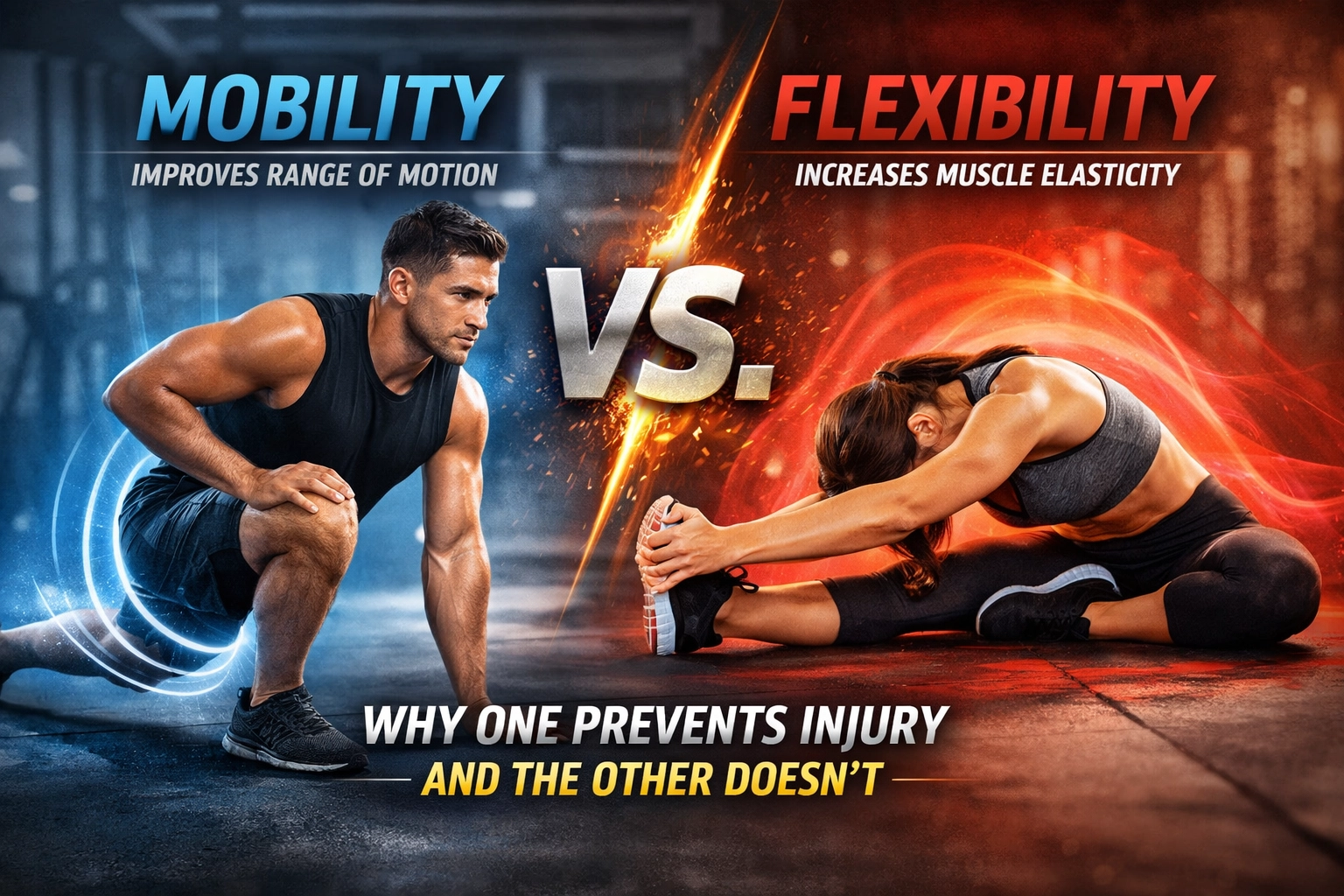
For decades, the fitness world obsessed over a single metric of physical health: touching your toes. If you could reach down and wrap your fingers around your arches, you were "flexible," and therefore, you were safe from injury.
Fast forward to 2026, and our understanding of human biomechanics has undergone a radical shift. We’ve realized that being able to stretch a muscle into a long position (flexibility) is almost useless: and occasionally dangerous: if you don't have the strength to control that muscle in that position (mobility).
If you’ve ever wondered why the "bendy" person in your yoga class still suffers from chronic back pain, or why a rigid powerlifter can move heavy loads without a snap, the answer lies in the distinction between mobility and flexibility. In this guide, we’re going deep into the science of how your joints actually move and why one of these traits is your ultimate insurance policy against injury.
The Technical Breakdown: Capacity vs. Capability
To understand why one prevents injury and the other doesn’t, we have to define them through the lens of the Central Nervous System (CNS).
1. Flexibility (Passive Range of Motion)
Flexibility is the absolute range of motion in a joint or series of joints that can be achieved through an external force. Think of a partner pushing your leg into a hamstring stretch or gravity pulling you down into a split. It is a measure of the "extensibility" of your soft tissues: muscles, tendons, ligaments, and fascia.
The Key Trait: It is passive. Your brain isn't necessarily involved in controlling the movement; you are simply allowing a muscle to be elongated.
2. Mobility (Active Range of Motion)
Mobility is the ability of a joint to move actively through a range of motion. It encompasses flexibility, but adds two critical layers: strength and motor control. If flexibility is having a long piece of string, mobility is having a long piece of string that you can pull, twist, and control with a remote.
The Key Trait: It is active. Your nervous system is fully "online," firing the necessary muscles to create and stabilize movement.
Why Flexibility Alone is an Injury Risk
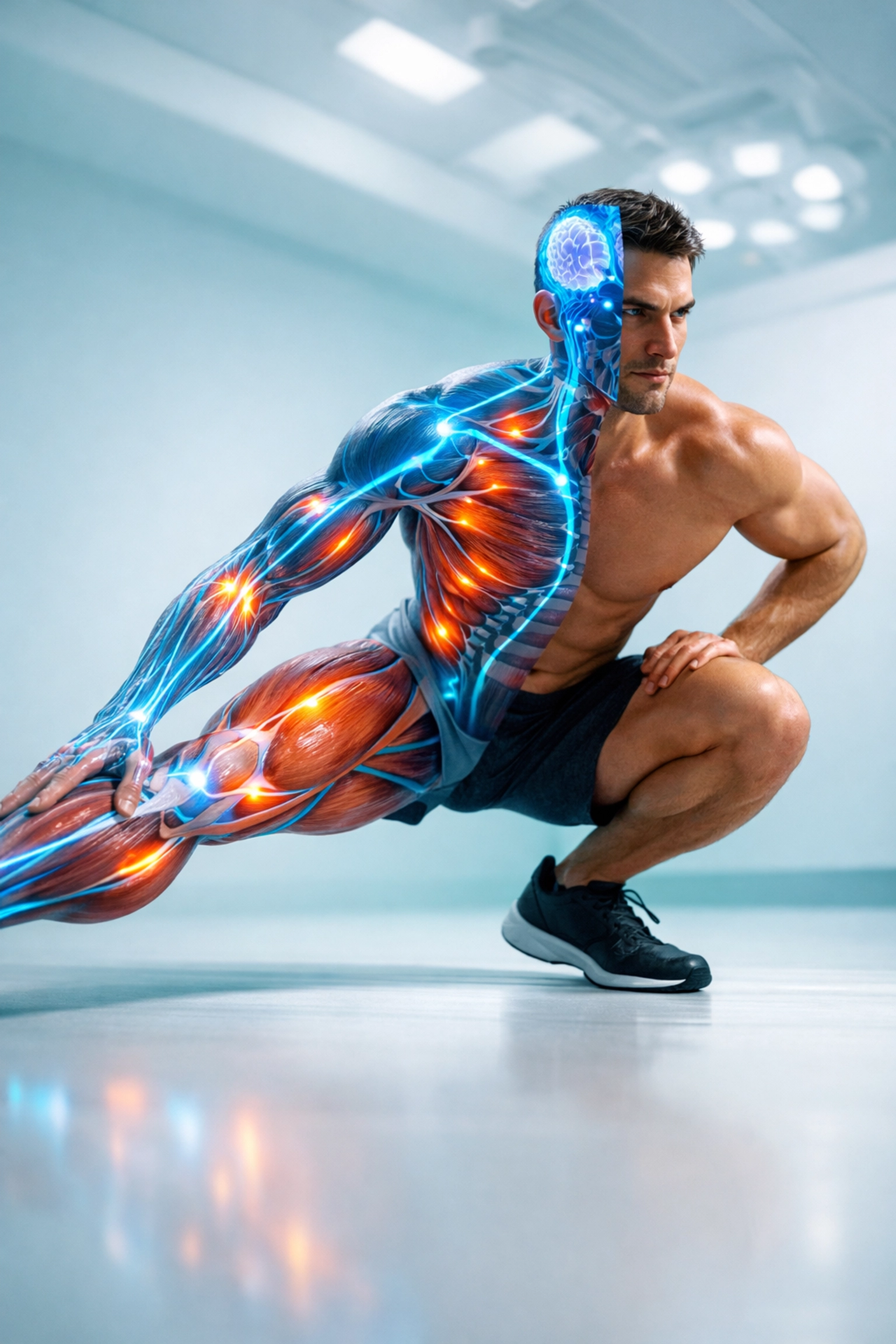
This is the most controversial take in modern sports science: Too much flexibility without corresponding mobility is an invitation for injury.
When you increase your flexibility, you are essentially increasing the length of the "leash" on your joints. However, if your muscles aren't strong enough to stabilize the joint at these new, extreme lengths, the joint becomes unstable. This is what physical therapists call "The Control Gap."
The "Control Gap" Theory
The Control Gap is the difference between your passive range of motion and your active range of motion.
- Large Gap: You can push your leg into a high kick with your hand, but you can’t lift it half that high using just your hip muscles. This indicates high injury risk.
- Small Gap: Your active control nearly matches your passive stretch. This indicates high-level mobility and joint safety.
In 2026, clinical data from sports performance centers suggests that athletes with a "Control Gap" of more than 15% are significantly more likely to suffer ligamentous tears (like ACL injuries) or labral tears in the hip and shoulder. The brain realizes the joint is in a position it cannot control, loses its "emergency brake," and the connective tissue pays the price.
Comparison: Mobility vs. Flexibility at a Glance
| Feature | Flexibility | Mobility |
|---|---|---|
| System Involved | Muscular/Connective Tissue | Nervous System + Muscular + Articular |
| Action | Passive (Being moved) | Active (Moving yourself) |
| Primary Goal | Muscle Length | Functional Movement Control |
| Injury Prevention | Low (can actually increase risk) | High (The primary protector) |
| Example | Touching toes with gravity's help | A deep, controlled overhead squat |
| Required For | General comfort, aesthetics | Performance, longevity, daily life |
The Science of "Neuromuscular Control"
Why does the brain care so much about mobility? It comes down to Proprioception: your body’s ability to sense its position in space.
When you perform a mobility exercise, you are training your Mechanoreceptors (sensory receptors in the joints and muscles). These receptors send data to the cerebellum, telling it: "We are safe here; we have the strength to handle this load."
When you only perform passive stretching, you are essentially "tricking" the Golgi Tendon Organs (GTOs) into relaxing. While this makes the muscle feel loose, it doesn't build the neural pathways required to protect the joint during a fall, a heavy lift, or a sudden sprint.
How to Test Your Own "Control Gap"
You don't need a lab to find out if you are at risk. Here are two simple tests to check if your flexibility is outstripping your mobility.
The Hamstring Test
- Flexibility Test: Lie on your back. Have a friend lift your straight leg as high as it will go (or use a strap). Note the angle.
- Mobility Test: Lie on your back. Keep your leg straight and lift it as high as you can using only your hip and core muscles.
- The Result: If your friend can lift your leg to 90 degrees but you can only lift it to 60 degrees yourself, you have a mobility deficit. Your hamstrings are long, but your "functional" range is weak.
The Shoulder External Rotation Test
- Flexibility Test: Sit against a wall. Have someone gently push your back of your hand toward the wall in a "goalpost" position.
- Mobility Test: Try to pull your own hands back to touch the wall without arching your lower back.
- The Result: If you can't reach the wall actively but can be pushed there, your rotator cuff is lacking the necessary strength to stabilize the shoulder in that range.
3 Strategies to Build True Mobility in 2026
If you’ve realized you’re "all stretch and no strength," don't panic. You can close the gap using these evidence-based techniques.
1. CARs (Controlled Articular Rotations)
Developed by the Functional Range Conditioning (FRC) system, CARs involve moving a joint through its absolute outer limits of motion with maximum tension. By "drawing circles" with your joints under tension, you signal to the nervous system that you own that space.
- Target: Hips and Shoulders.
- Frequency: Daily (as "joint hygiene").
2. PNF Stretching (Proprioceptive Neuromuscular Facilitation)
This is a "contract-relax" technique. You stretch a muscle, then contract that same muscle against resistance for 5–10 seconds, then relax and stretch further. This forces the brain to activate the muscle in its lengthened state, directly building mobility.
3. Eccentric Loading in End-Ranges
Instead of just holding a stretch, add a light weight and move slowly through the full range. For example, a "Jefferson Curl" or a deep "split squat" loads the muscles while they are at their longest point. This is the gold standard for injury prevention because it strengthens the tendons and increases the number of sarcomeres in the muscle fibers.
The Verdict: Which Should You Prioritize?
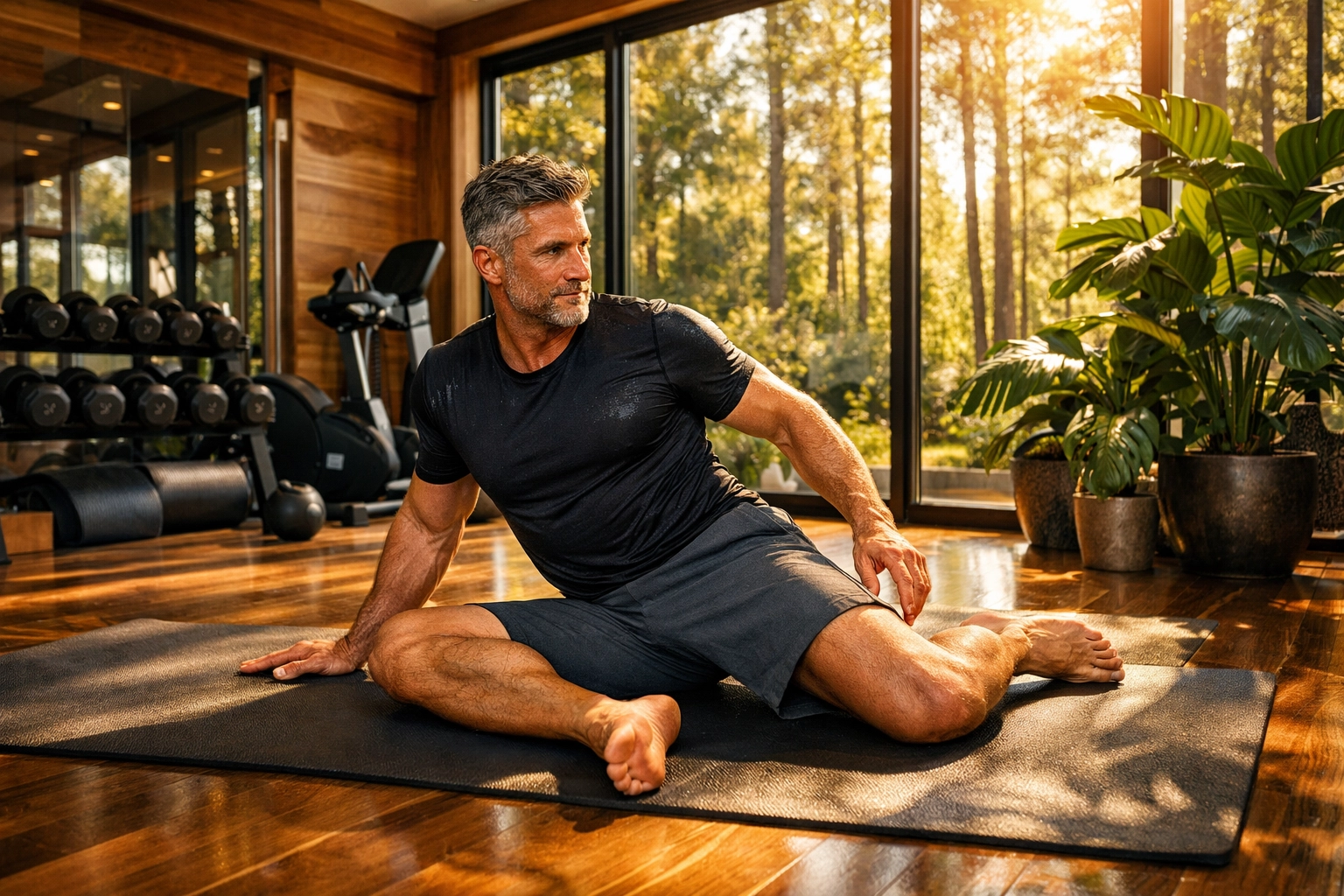
If you are a high-level gymnast or contortionist, flexibility is a job requirement. But for the 99% of us: the office workers, the weekend warriors, and the aging adults: mobility is the priority.
Flexibility is a component of mobility, but on its own, it’s incomplete. To live a long, pain-free life, you don't need to be the most flexible person in the room; you need to be the person who can control their body through the largest range of motion possible.
Stop "stretching" and start "moving with intent." Your joints will thank you in twenty years.
Author Bio: Malibongwe Gcwabaza
Malibongwe Gcwabaza is the CEO and Lead Content Strategist at blog and youtube. With over a decade of experience in the intersection of digital health trends and functional fitness, Malibongwe specializes in translating complex biomechanical research into actionable advice for the modern professional. His "Depth over Breadth" philosophy has helped thousands of readers move away from "quick-fix" fitness and toward sustainable, science-backed longevity. When he’s not analyzing the latest in 2026 wellness tech, you’ll find him practicing what he preaches: working on his hip mobility in the "Centenarian Decathlon."
About the Author