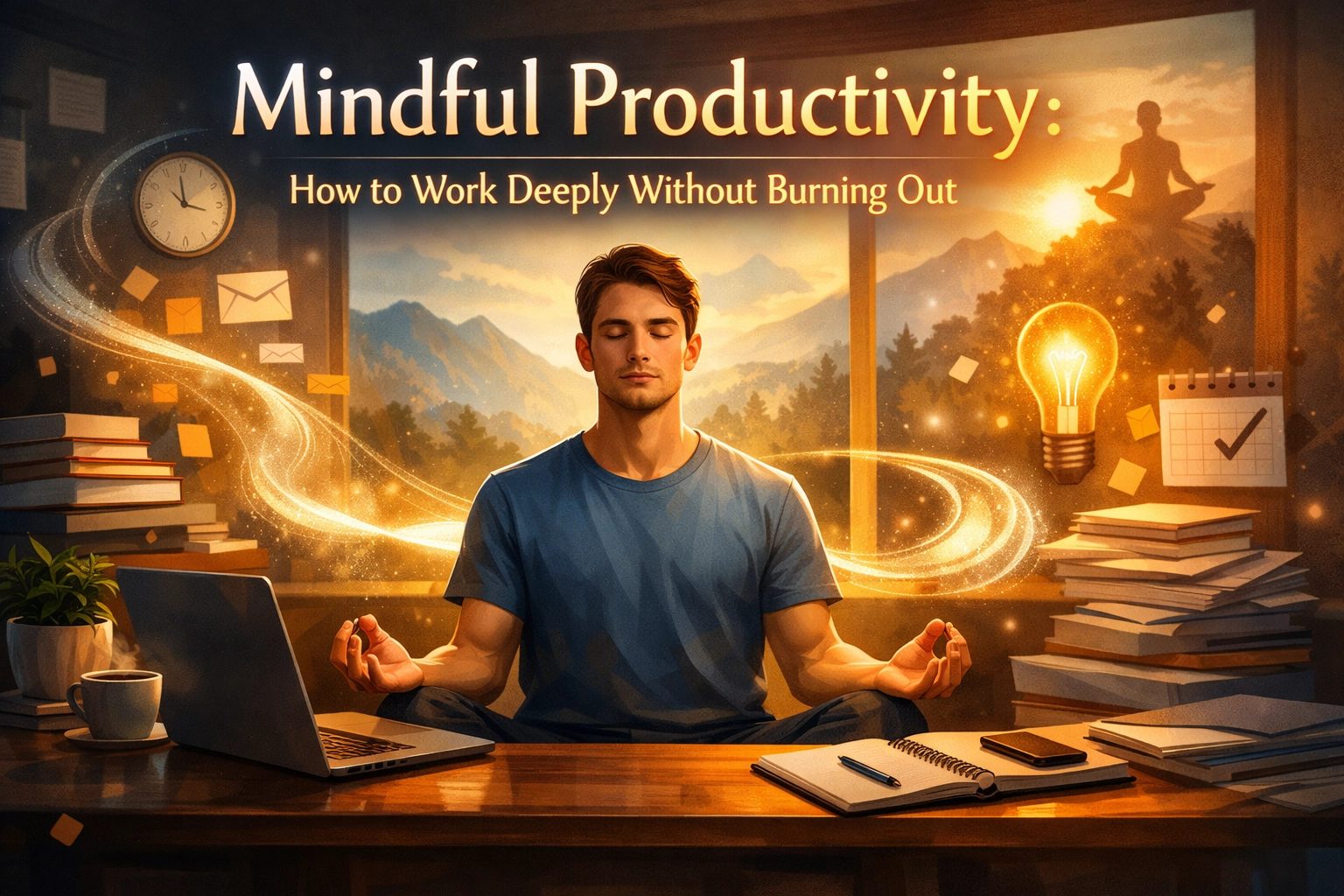
In the high-performance landscape of 2026, the definition of productivity has undergone a radical shift. We have moved past the "hustle culture" of the early 2020s, which prioritized raw hours and caffeine-fueled marathons, into an era defined by neural efficiency and hormonal regulation. The goal is no longer just to get things done; it is to achieve a state of "Mindful Productivity": the ability to perform cognitively demanding tasks while maintaining a regulated nervous system.
The cost of ignoring this shift is staggering. Research into "Attention Residue" suggests that every time we switch tasks: checking a Slack notification or glancing at a phone: it takes an average of 23 minutes and 15 seconds to return to full focus. In a typical eight-hour workday, most professionals never actually reach a state of "Deep Work," remaining instead in a state of semi-distracted "shallow work" that spikes cortisol and accelerates burnout.
The Neurobiology of the Focused Mind
To master mindful productivity, we have to understand the hardware we are working with: the human brain. Deep work is primarily managed by the Prefrontal Cortex (PFC), the area responsible for executive function, logic, and impulse control. However, the PFC is metabolically expensive. It consumes massive amounts of glucose and tires easily.
When we force ourselves to work through fatigue or multitask, we trigger the Amygdala: the brain's fear center. This shift from the PFC to the Amygdala results in "frantic productivity," where we feel busy but produce little of actual value.
The Flow State vs. The Frenzy State
Mindful productivity is essentially the art of entering a "Flow State" on command. Flow occurs when the challenge of a task perfectly matches your skill level, leading to a loss of self-consciousness and a distorted sense of time.
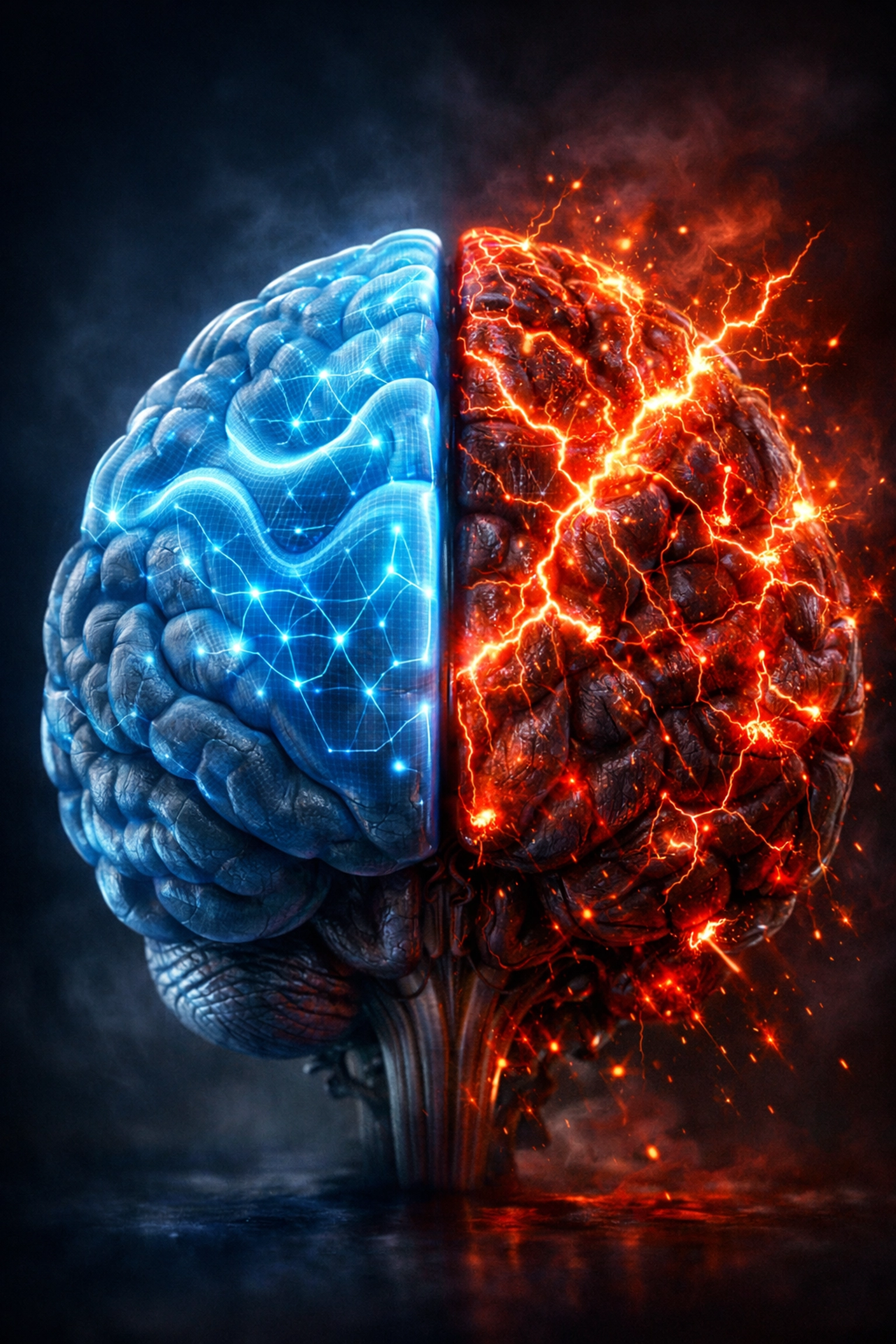
| Feature | Flow State (Mindful) | Frenzy State (Unregulated) |
|---|---|---|
| Primary Hormone | Dopamine & Anandamide | Cortisol & Adrenaline |
| Brain Wave State | Alpha/Theta Border | High Beta |
| Attention | Singular & Deep | Fragmented & Shallow |
| Energy Usage | Efficient/Sustainable | Exhaustive/Depleting |
| Output Quality | High Originality/Technical | High Volume/Low Depth |
The Pillars of Deep Work Without Burnout
Achieving 1,000+ words of high-quality output or solving complex engineering problems requires a structured approach. You cannot simply "will" yourself into focus. You must design an environment and a schedule that supports it.
1. Respecting Ultradian Rhythms
The human body does not operate on a linear energy curve. We function in "Ultradian Rhythms": 90-minute cycles of high-frequency brain activity followed by a 15-to-20-minute period of lower activity.
Mindful productivity dictates that we work with these cycles rather than fighting them. Pushing through the 90-minute mark without a break triggers the "Stress Response System," leading to the brain fog and irritability associated with burnout.
2. Eliminating Attention Residue
As mentioned, task-switching is the enemy of depth. To minimize attention residue:
- Batching: Group all "shallow" tasks (emails, administrative work, messages) into two 30-minute windows per day.
- The "Closed Loop" System: Before ending a deep work session, write down exactly where you left off and the first step you will take when you return. This "closes the loop" in your brain, preventing your subconscious from ruminating on the unfinished task.
3. Somatic Regulation
You cannot have a productive mind in a panicked body. Mindful productivity utilizes somatic (body-based) tools to keep the nervous system in the "Green Zone" (Ventral Vagal state).
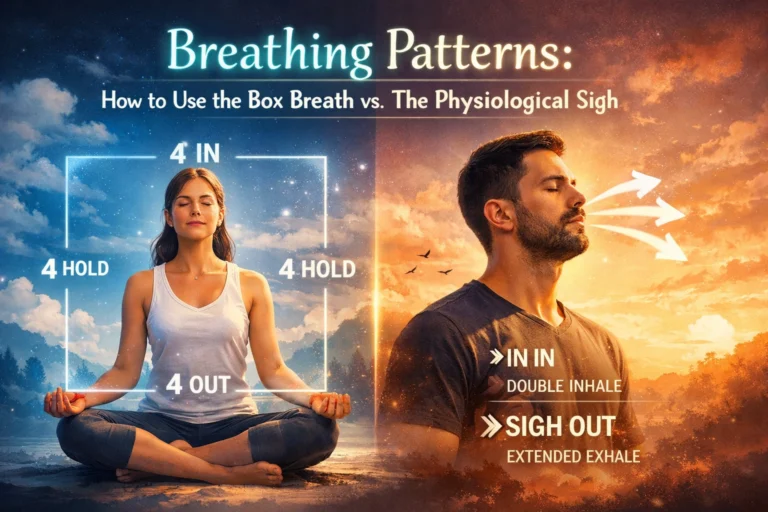
- Box Breathing: Inhale for 4, hold for 4, exhale for 4, hold for 4. This simple mechanical action signals to the Vagus nerve that you are safe, lowering your heart rate and allowing the PFC to stay online.
- Physiological Sigh: Two quick inhales through the nose followed by a long exhale through the mouth. This is the fastest biological way to offload carbon dioxide and reduce immediate stress.
Implementing the 2026 Mindful Workflow
To transition from generic "time management" to mindful productivity, follow this structured protocol designed for high-stakes cognitive work.
Phase 1: The Prime (15 Minutes)
Before touching a keyboard, regulate your internal state. This isn't about "meditation" in a spiritual sense; it's about neuro-priming.
- Hydration & Light: 500ml of water with electrolytes and 5-10 minutes of direct sunlight to set your circadian clock.
- The Single Goal: Identify the one task that would make the day a success. Ignore the "to-do list" for now.
Phase 2: The Deep Dive (90 Minutes)
This is your "Gold Time."
- Phone Lockdown: Place your phone in another room. Research shows that even the presence of a smartphone on a desk reduces cognitive capacity.
- Environmental Anchors: Use a specific playlist (binaural beats or brown noise) and perhaps a specific scent or lighting setup. This creates a Pavlovian trigger for focus.
- Monotasking: Work exclusively on your single goal. If a tangential thought pops up, write it on a "distraction pad" to be dealt with later.
Phase 3: The Strategic Reset (20 Minutes)
This is the most skipped step, yet it is the secret to avoiding 3 PM burnout.
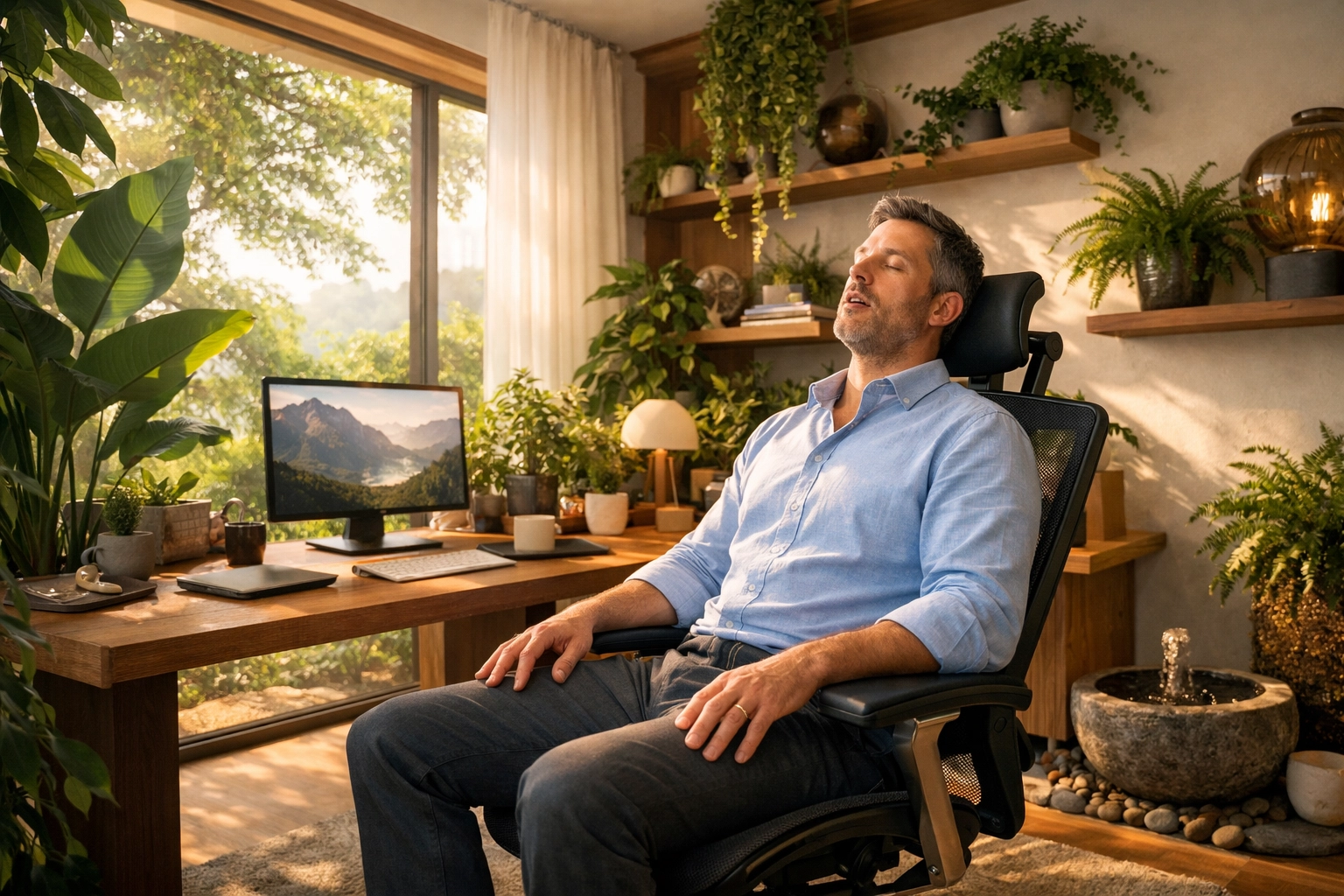
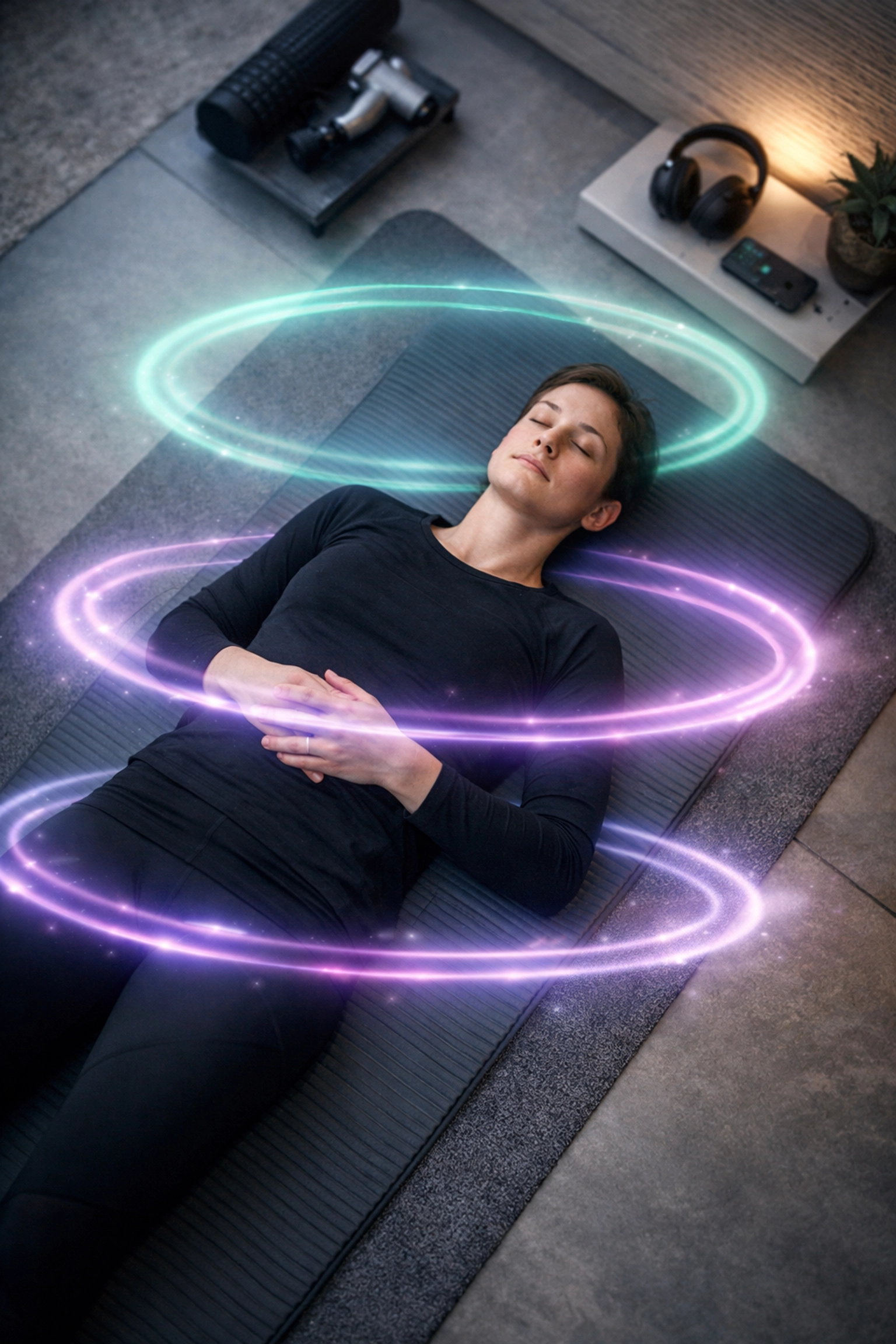
- Non-Sleep Deep Rest (NSDR): Also known as Yoga Nidra. A 10-minute NSDR session can replenish dopamine levels in the basal ganglia, effectively "resetting" your focus reserves.
- Movement: A brisk walk without a podcast. Allow your "Default Mode Network" (the brain's creative background processor) to take over.
The Role of Tech in Mindful Productivity
In 2026, we have access to tools that can monitor our internal state in real-time. Mindful productivity now involves "Bio-Feedback" integration.
- Heart Rate Variability (HRV) Monitoring: If your HRV is low in the morning, it indicates your nervous system is stressed. On these days, a "Deep Dive" session might be counter-productive. Mindful productivity means pivoting to low-intensity tasks to allow for recovery.
- Continuous Glucose Monitors (CGM): For non-diabetics, CGMs are used to identify "sugar crashes" that masquerade as mental fatigue. Stability in blood glucose is a prerequisite for sustained deep work.
Overcoming the "Hustle" Guilt
The biggest barrier to mindful productivity is psychological. We have been conditioned to believe that if we aren't "grinding," we are falling behind. However, the data on cognitive output suggests the opposite.
Professional athletes do not train for 12 hours straight; they train intensely and then recover intensely. Cognitive athletes: writers, developers, executives: must adopt the same mindset.
Mindfulness is not about doing things slowly; it is about doing things with 100% of your available RAM.
When you are working, be entirely there. When you are resting, be entirely gone. The "gray zone" (checking emails while watching a movie or thinking about work during a workout) is where burnout is born.

Summary Checklist for Mindful Depth
To audit your current workflow, use the following criteria. If you can't check off at least four of these, you are likely heading toward a burnout cycle.
- Do I have at least one 90-minute block of uninterrupted time daily?
- Am I taking a "brain break" (no screens) every two hours?
- Is my workspace designed to minimize visual and auditory triggers?
- Do I use physiological tools (breathing/NSDR) to manage stress proactively?
- Am I prioritizing "Output Quality" over "Inbox Zero"?
Mindful productivity is a skill that must be practiced. It is the ultimate competitive advantage in an AI-driven world. While machines can generate content, only a regulated, focused human mind can provide the unique perspective, deep empathy, and complex problem-solving that defines true value in 2026.
Author Bio: Malibongwe Gcwabaza
CEO & Longevity Strategist
Malibongwe Gcwabaza is the CEO of blog and youtube, a leading platform dedicated to the intersection of high-performance habits and biological longevity. With over a decade of experience in organizational leadership and a deep passion for bio-hacking, Malibongwe focuses on helping professionals optimize their "Healthspan" through evidence-based productivity protocols. His work emphasizes the necessity of nervous system regulation in achieving sustainable career success. When not steering the company's vision, he is an advocate for Zone 2 training and functional nutrition.
About the Author