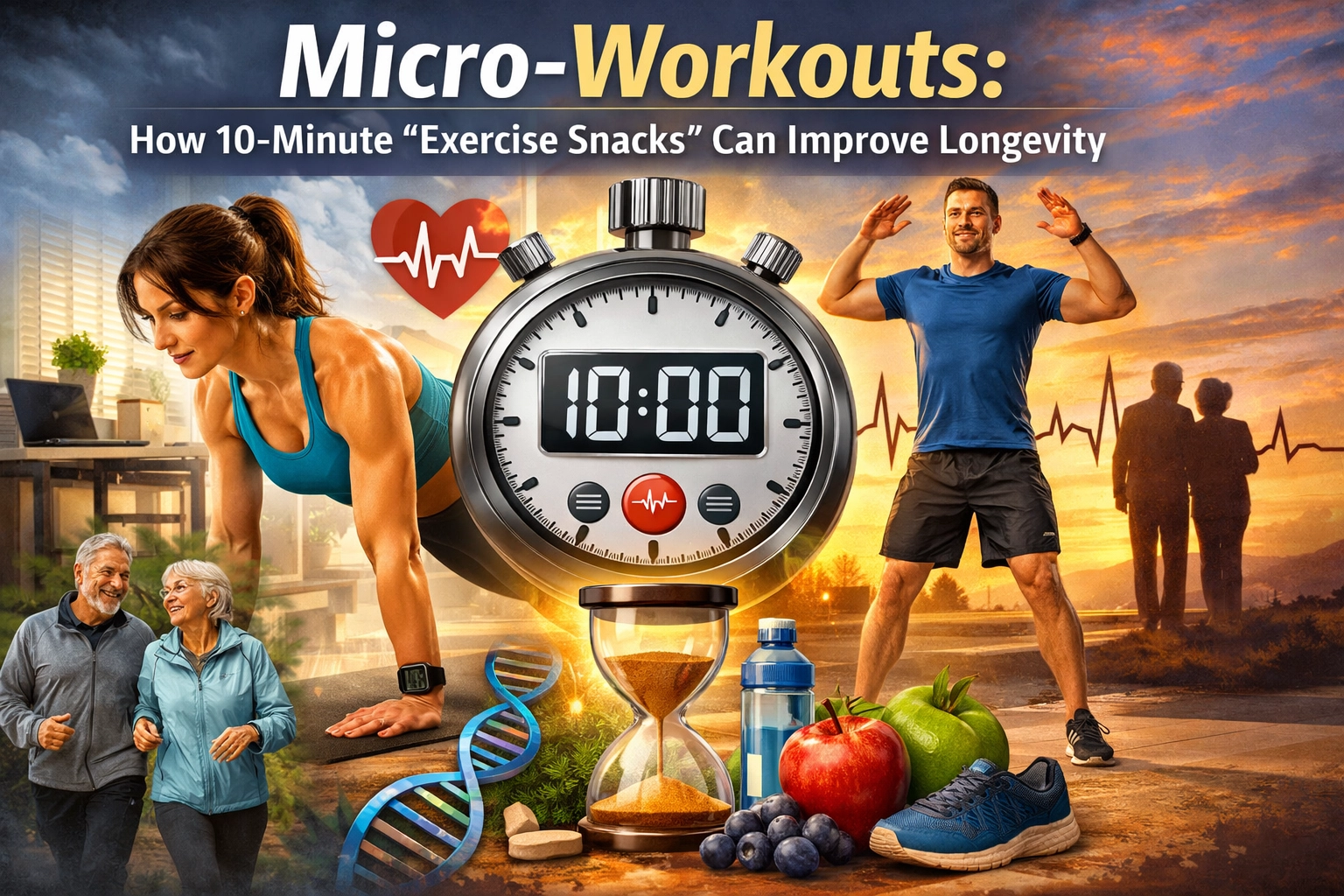
For decades, the fitness industry sold us a specific lie: if you aren't spending at least an hour in the gym, sweating through a coordinated outfit, you’re wasting your time. But as we head into 2026, the science of longevity has pulled a complete U-turn. We are no longer measuring health by the hours spent on a treadmill, but by the frequency and intensity of our "movement snacks."
The reality of 2026 is that we are more time-poor than ever. Between the demands of a digital-first economy and the mental load of modern life, a 60-minute workout often feels like a luxury we can’t afford. Enter Micro-Workouts: brief, high-intensity bursts of physical activity that last anywhere from one to ten minutes. These aren't just "better than nothing" options; according to the latest clinical research, they might actually be the most efficient way to hack your biological clock.
The Science of VILPA: Why Seconds Count
The technical term gaining traction in medical journals is VILPA (Vigorous Intermittent Lifestyle Physical Activity). This refers to brief periods of vigorous activity that happen during daily living, like sprinting to catch a train or carrying heavy groceries up three flights of stairs.
A landmark study published in The Lancet and corroborated by data from the UK Biobank (tracking over 100,000 individuals) revealed a staggering statistic: just three to four one-minute sessions of VILPA per day can decrease the risk of premature death by up to 40%. Even more impressive is the impact on cardiovascular health, where the risk of death from heart-related issues dropped by nearly 49%.
The Mitochondrial "Shock" Effect
Why does such a short burst work? It comes down to cellular adaptation. When you subject your body to a sudden, intense demand for energy, you trigger a process called mitochondrial biogenesis. Your cells essentially realize they aren't equipped for the sudden stress and respond by creating more (and more efficient) mitochondria: the powerhouses of your cells.
Traditional steady-state cardio (like jogging for 45 minutes) improves endurance, but micro-workouts "shock" the system in a way that forces rapid metabolic shifts. This is why a 2017 McMaster University study found that one minute of all-out effort within a 10-minute window produced the same metabolic and heart health benefits as 45 minutes of moderate-intensity exercise.

VO2 Max: The Ultimate Predictor of Lifespan
In the longevity community, we talk about VO2 Max more than almost any other metric. It measures the maximum amount of oxygen your body can utilize during exercise. It is arguably the single strongest predictor of how long you will live and, more importantly, your "healthspan" (the years you live in good health).
Micro-workouts are uniquely suited to boosting VO2 Max. To move the needle on this metric, you need to reach a high percentage of your maximum heart rate. It is much easier (and safer for many) to hit 90% of their max heart rate for 60 seconds than it is to maintain a high intensity for 30 minutes. By integrating "exercise snacks" like stair climbing or high-knees into your day, you are constantly "sipping" on VO2 Max improvements rather than trying to chug them all at once on a Saturday morning.
Metabolic Flexibility and the Glucose "Shunt"
One of the biggest killers in the modern world is metabolic dysfunction: insulin resistance, Type 2 diabetes, and chronic inflammation. Every time you sit for more than 30 minutes, your metabolism begins to downshift. Your muscles become "quiet," and your body’s ability to clear glucose from the bloodstream slows down.
Micro-workouts act as a physiological "reset button." When you engage in a 2-minute burst of air squats or push-ups, your muscles demand immediate fuel. They pull glucose from the blood through a process that doesn't even require insulin (via the GLUT4 transporter).
Comparison: Traditional vs. Micro-Workouts
| Feature | Traditional Workout (45-60 min) | Micro-Workout (1-10 min) |
|---|---|---|
| Primary Goal | Endurance & Hypertrophy | Longevity & Metabolic Reset |
| Hormonal Impact | Can increase Cortisol if overdone | Lowers Cortisol / Spikes Endorphins |
| Consistency | Hard to maintain (42% drop-off) | High (90%+ adherence) |
| Recovery | Needs 24-48 hours | Immediate recovery |
| Equipment | Gym/Weights required | Bodyweight / Environment |
Practical "Exercise Snacks" for 2026
To get the longevity benefits, the activity must be vigorous. You should be out of breath by the end of the snack. If you can hold a conversation, you aren't doing a micro-workout; you're just moving. Here are the most effective protocols currently being used in personalized longevity clinics:
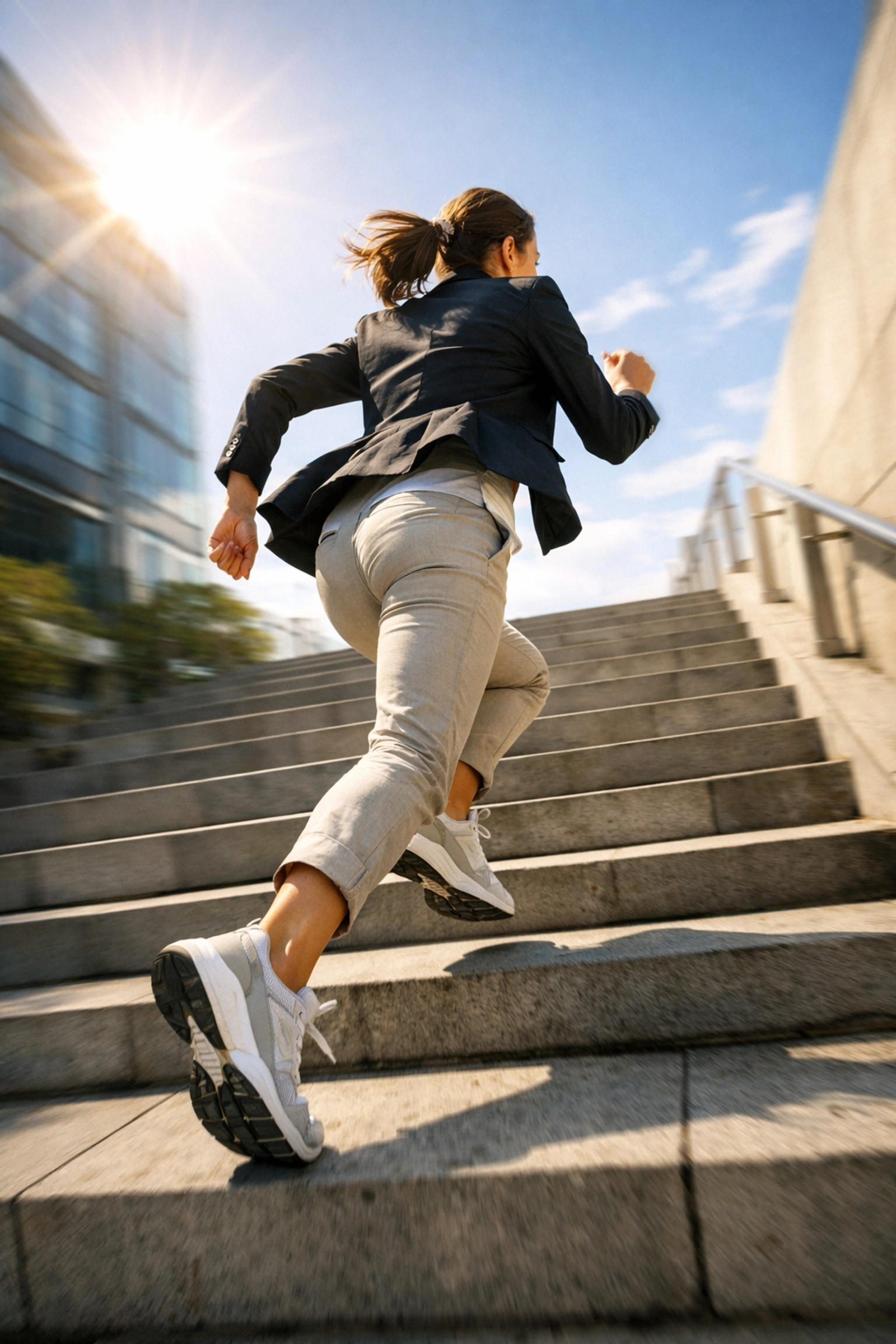
- The Stair Sprint: Find a flight of stairs. Run up as fast as possible for 60 seconds. Walk down. Repeat twice. Total time: 5 minutes.
- The Isometric Hold: A favorite for joint health and blood pressure. Hold a wall-sit or a plank for as long as possible (aiming for 2 minutes). Research shows isometrics are incredibly effective at lowering resting blood pressure.
- The "Tabata" Snack: 20 seconds of burpees, 10 seconds of rest, repeated 8 times. Total time: 4 minutes.
- The Commuter Sprint: If you walk to work or the store, pick a landmark 200 meters away and sprint toward it.
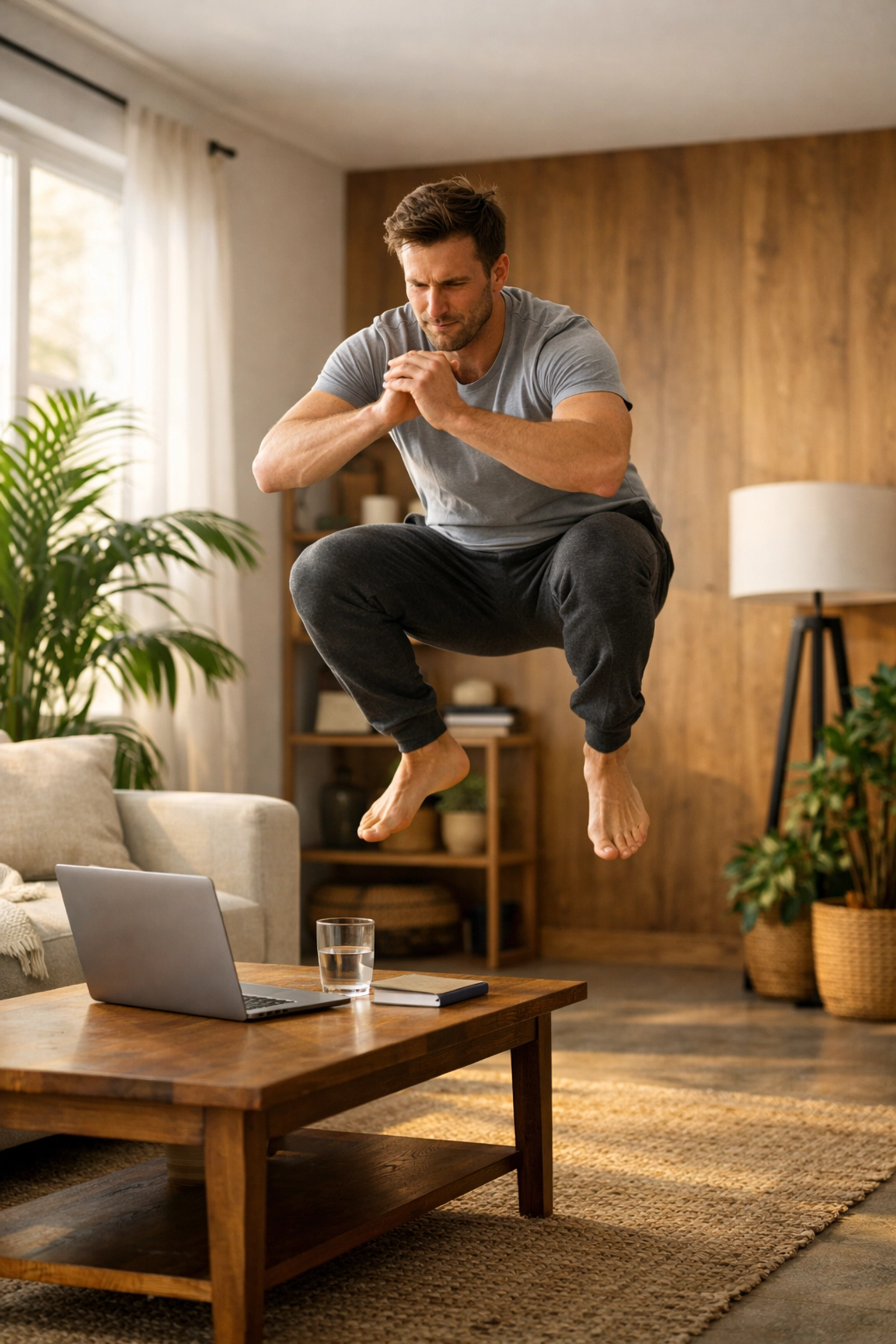
- The Desk Reset: Every hour, perform 15 explosive air squats or "desk push-ups."
Counteracting the "Sitting Disease"
In 2026, we understand that "The Active Couch Potato" is a real phenomenon. This is someone who works out for an hour in the morning but sits for the remaining 10 hours of the day. Surprisingly, the hour-long workout does not fully negate the damage caused by prolonged sitting.
Micro-workouts solve this by breaking up sedentary time. They keep the lymphatic system moving, prevent blood pooling in the legs, and maintain the "ticking" of your metabolic clock. If you want to live to 100, your goal shouldn't be to "finish" your exercise in the morning; it should be to never let your body stay stagnant for more than 90 minutes.
Psychological Wins: Overcoming Gymtimidation
One of the most underrated benefits of micro-workouts is the psychological shift. Many people avoid fitness because the "barrier to entry" feels too high. The idea of driving to a gym, changing, working out, showering, and driving back (a 2-hour ordeal) is a massive friction point.
A 10-minute micro-workout has zero friction. You can do it in your pajamas, in your office, or in a park. This builds a "competence loop." When you successfully complete a 5-minute snack every day for a week, your brain begins to identify as someone who is "active." This identity shift is more important for long-term health than any individual workout.
Summary: Your Longevity Checklist
To implement an effective micro-workout strategy, keep these data-driven points in mind:
- Frequency: Aim for at least 3 "snacks" per day.
- Intensity: You should reach a 7 or 8 out of 10 on the exertion scale.
- Variety: Mix resistance (push-ups/squats) with cardiovascular (sprints/stairs) to hit both muscle health and heart health.
- Consistency: Use "habit stacking": do your micro-workout while the coffee brews or right after a Zoom call.
We are entering an era where fitness is democratized. You don't need a $3,000 smart-bike or a boutique membership to extend your life. You just need 10 minutes and the willingness to get a little breathless. Your future 90-year-old self will thank you for the "snacks" you took today.
Author Bio: Malibongwe Gcwabaza
CEO of blog and youtube
Malibongwe Gcwabaza is a wellness visionary and the CEO of blog and youtube, a leading platform dedicated to cutting-edge health, fitness, and longevity science. With a background in executive leadership and a passion for functional fitness, Malibongwe focuses on making complex biological research accessible to the everyday high-performer. He advocates for a "minimum effective dose" approach to health, helping thousands of professionals optimize their physical and mental performance without burning out. When he’s not leading the company, you’ll find him practicing what he preaches: usually through hill sprints or cold plunges in the heart of South Africa.
About the Author