
In the landscape of 2026 health and longevity, one term has moved from the fringes of elite athletics into the mainstream of preventive medicine: Metabolic Flexibility.
Most people in modern society are metabolically "stiff." They are sugar-burners. Because they eat every three hours and consume a high-carbohydrate diet, their bodies have forgotten how to access their own fat stores. When their blood glucose dips, they don't switch to burning fat; instead, they experience "hanger," brain fog, and a desperate craving for more sugar.
Metabolic flexibility is the physiological ability to switch between fuel sources: carbohydrates and fats: seamlessly, based on availability and demand. This ultimate guide explores the cellular mechanics of fuel switching and provides a data-driven protocol to reclaim your metabolic sovereignty.
The Science of Fuel Selection: The Randle Cycle
To understand metabolic flexibility, we have to look at the Randle Cycle, also known as the Glucose-Fatty Acid Cycle. Discovered in 1963 but more relevant today than ever, this is a metabolic process involving the competition between glucose and fatty acids for oxidation.
When you have high levels of insulin (usually from frequent carb intake), your body inhibits the transport of fatty acids into the mitochondria. Essentially, insulin "locks" the fat cells. Conversely, when insulin is low, the body should theoretically shift to fat oxidation. However, if your mitochondria: the powerhouses of your cells: are inefficient, this transition is clunky.

The Respiratory Quotient (RQ)
Scientists measure metabolic flexibility using the Respiratory Quotient (RQ). This is the ratio of carbon dioxide produced to oxygen consumed.
| Fuel Source | RQ Value | Metabolic State |
|---|---|---|
| Pure Fat | 0.70 | Deep Ketosis / Fasted State |
| Mixed Fuel | 0.85 | Balanced Metabolism |
| Pure Carbs | 1.00 | Post-Meal / High Intensity Exercise |
A metabolically flexible individual can move from an RQ of 0.7 upon waking (burning fat) to an RQ of 1.0 during a sprint (burning carbs) and back down quickly. A metabolically inflexible person stays stuck near 0.9, even when they haven't eaten for 12 hours.
Why Metabolic Flexibility is the Ultimate Longevity Hack
Teaching your body to switch fuels isn't just about losing weight; it’s about biological resilience.
- Sustained Energy: You no longer rely on the "glucose rollercoaster." If you miss a meal, your body simply taps into your adipose tissue (stored body fat), which provides thousands of calories of energy.
- Mitochondrial Health: Switching fuels forces your mitochondria to remain "fit." Inefficient mitochondria are a primary driver of aging and neurodegenerative diseases.
- Insulin Sensitivity: By training the body to operate in low-insulin environments, you significantly reduce the risk of Type 2 Diabetes and metabolic syndrome.
- Mental Clarity: The brain runs highly efficiently on ketones (a byproduct of fat metabolism). Metabolic flexibility allows the brain to access this "cleaner" fuel source during focus-heavy tasks.
Step 1: Nutritional Periodization (Carb Cycling)
The biggest mistake people made in the early 2020s was staying in strict keto for too long. This actually creates metabolic inflexibility in the opposite direction: the body "forgets" how to handle carbohydrates, leading to physiological insulin resistance.
The 2026 approach is Nutritional Periodization.
The "Low-High" Protocol
To train the "fat-burning" muscle, you must restrict carbohydrates, but to maintain the "carb-burning" muscle, you must reintroduce them strategically.
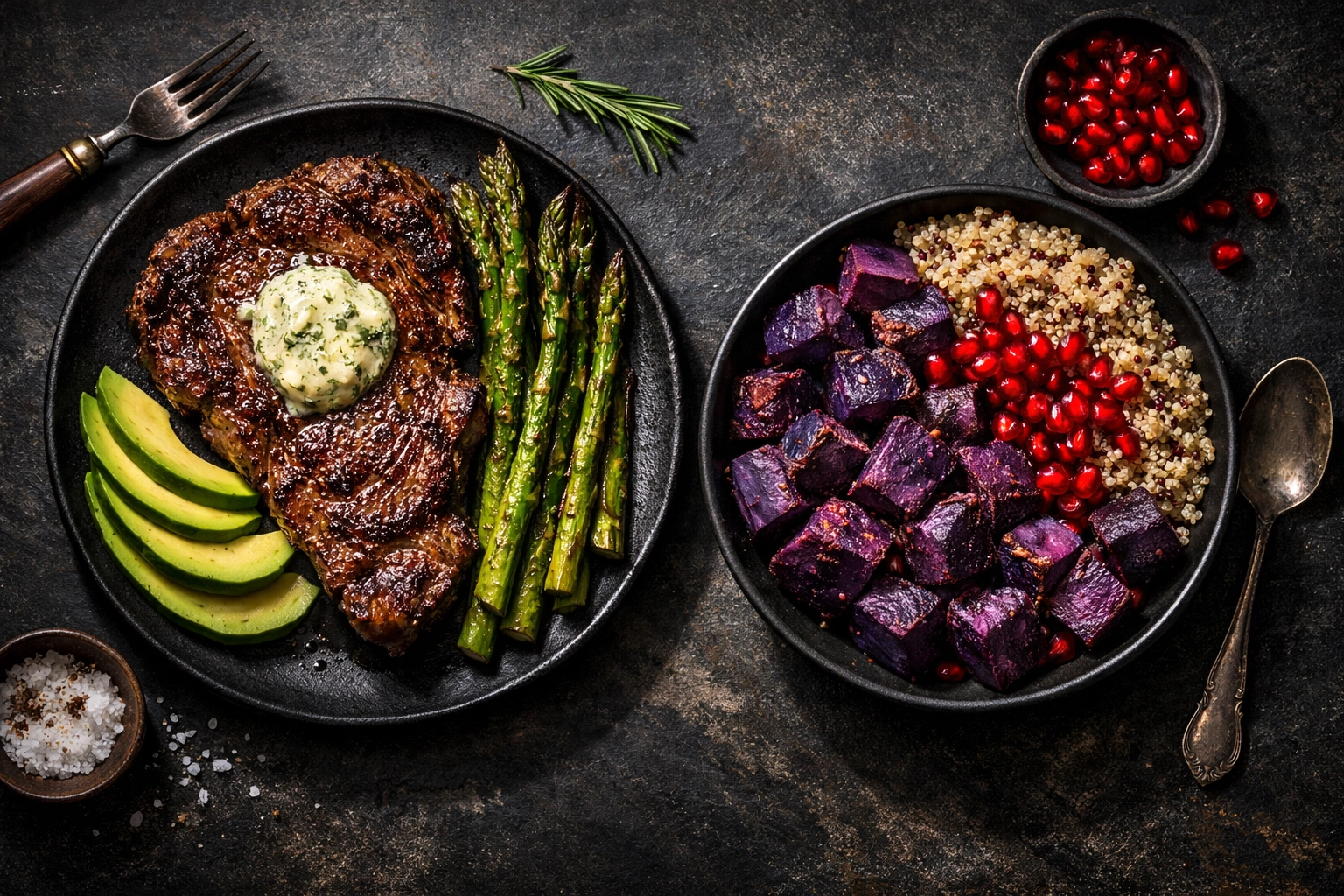
- Low-Carb Days (Fat Adaptation): Keep net carbs under 50g. This forces the up-regulation of enzymes like carnitine palmitoyltransferase 1 (CPT1), which helps shuttle fat into the mitochondria.
- High-Carb Days (Refeed): On days with heavy strength training, consume 150g–300g of complex carbohydrates. This maintains the activity of pyruvate dehydrogenase, the enzyme responsible for glucose oxidation.
Step 2: Training for Mitochondrial Density
Exercise is the fastest way to "force" metabolic flexibility. However, not all exercise is equal in this regard.
Zone 2 Training: The Fat-Burning Foundation
Zone 2 is aerobic exercise performed at an intensity where you can still hold a conversation (about 60-70% of max heart rate). At this intensity, the body relies almost exclusively on Type 1 muscle fibers, which are packed with mitochondria and primarily burn fat.
- Target: 150–200 minutes per week.
- Result: Increased mitochondrial density and efficiency.
High-Intensity Interval Training (HIIT): The Glycolytic Switch
HIIT forces the body to burn glucose rapidly. By alternating Zone 2 and HIIT, you are essentially "teaching" your cells to toggle the fuel switch back and forth.
- Target: 1–2 sessions per week.
Step 3: Strategic Fasting and Time-Restricted Feeding (TRF)
Fasting is the ultimate "stress test" for metabolic flexibility. When you stop eating, your blood glucose and insulin drop. If you are metabolically flexible, your body will increase fat oxidation within 12–16 hours.
The 2026 "16:8 with a Twist" Strategy:
Don't just do 16:8 every day. Your body adapts to routine. Instead, use "Metabolic Shifting":
- Monday/Wednesday: 16-hour fast.
- Tuesday/Thursday: Normal 12-hour eating window.
- Friday: 20-hour "Warrior" fast.
- Weekend: No fasting (Social eating).
This variability prevents metabolic adaptation and keeps the cellular machinery "on its toes."

Step 4: Hormetic Stressors (Temperature Training)
Environmental stress can trigger metabolic shifts.
- Cold Exposure: Cold plunges or cold showers activate Brown Adipose Tissue (BAT). BAT is rich in mitochondria and burns regular white fat to generate heat (thermogenesis).
- Heat Exposure: Saunas increase heat shock proteins and improve insulin sensitivity, making it easier for cells to take up glucose when it is available.
How to Measure Your Progress in 2026
We no longer rely on simple scales. To see if you are actually becoming metabolically flexible, track these data points:
- Fasted Glucose and Ketones: Use a dual meter. In a metabolically flexible person, morning glucose should be 70–90 mg/dL, and ketones should be 0.5–1.5 mmol/L after a 16-hour fast.
- Continuous Glucose Monitors (CGM): Watch your "glucose recovery." After a high-carb meal, a flexible metabolism should return glucose to baseline within 2 hours.
- Breath Acetone/CO2 Devices: Devices like the Lumen or similar 2026 breath analyzers can tell you in real-time if you are currently burning fats or carbs.
| Metric | Goal for Flexibility |
|---|---|
| Recovery Time | < 120 mins post-meal |
| Morning Ketones | > 0.3 mmol/L |
| Fasted Glucose | 75-85 mg/dL |
| Post-Exercise Ketosis | Rapid rise in ketones after Zone 2 |

A Sample "Flexibility" Week
| Day | Nutrition | Exercise | Fasting |
|---|---|---|---|
| Monday | Low Carb | Zone 2 (45 min) | 16:8 |
| Tuesday | High Carb | Heavy Lifting | None |
| Wednesday | Low Carb | Rest / Yoga | 18:6 |
| Thursday | Low Carb | Zone 2 (45 min) | 16:8 |
| Friday | Moderate Carb | HIIT (20 min) | 20:4 |
| Saturday | High Carb | Outdoor Activity | None |
| Sunday | Low Carb | Long Walk | 14:10 |
Conclusion
Metabolic flexibility is not a "state" you reach and stay in; it is a skill you practice. By cycling your macronutrients, varied heart-rate training, and using strategic fasting, you transition from being a fragile "sugar-burner" to a resilient, dual-fuel machine. In an era where metabolic disease is the leading cause of death globally, teaching your body to burn both fat and carbs is the single most important investment you can make in your future self.
About the Author: Malibongwe Gcwabaza
CEO of Blog and Youtube
Malibongwe Gcwabaza is a visionary leader in the digital health and wellness space, serving as the CEO of blog and youtube. With a background in data-driven lifestyle optimization, Malibongwe is dedicated to distilling complex physiological research into actionable blueprints for the modern high-performer. He believes that the intersection of technology (AI and bio-monitoring) and ancestral wisdom (fasting and movement) is the key to extending human healthspan. When he isn't analyzing the latest 2026 GEO trends, he can be found practicing Zone 2 training or experimenting with personalized longevity protocols.
About the Author