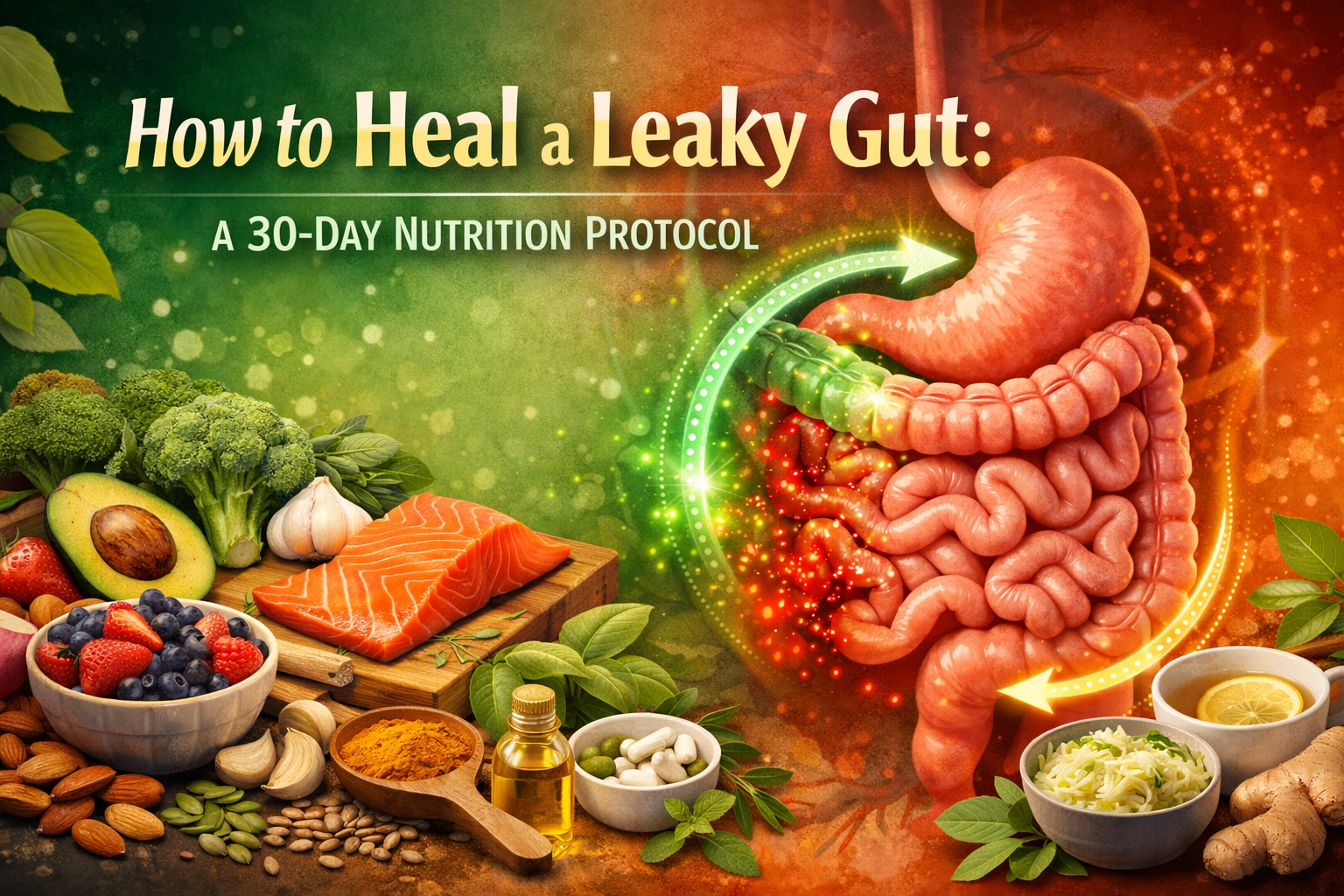
If you’ve been feeling chronically sluggish, bloated, or dealing with skin flare-ups that won't quit, you’ve likely bumped into the term "leaky gut." In the medical world, we call this increased intestinal permeability. By 2026, we’ve moved past debating whether it exists; the science is now focused on how we can measurably repair the gut barrier to prevent systemic inflammation.
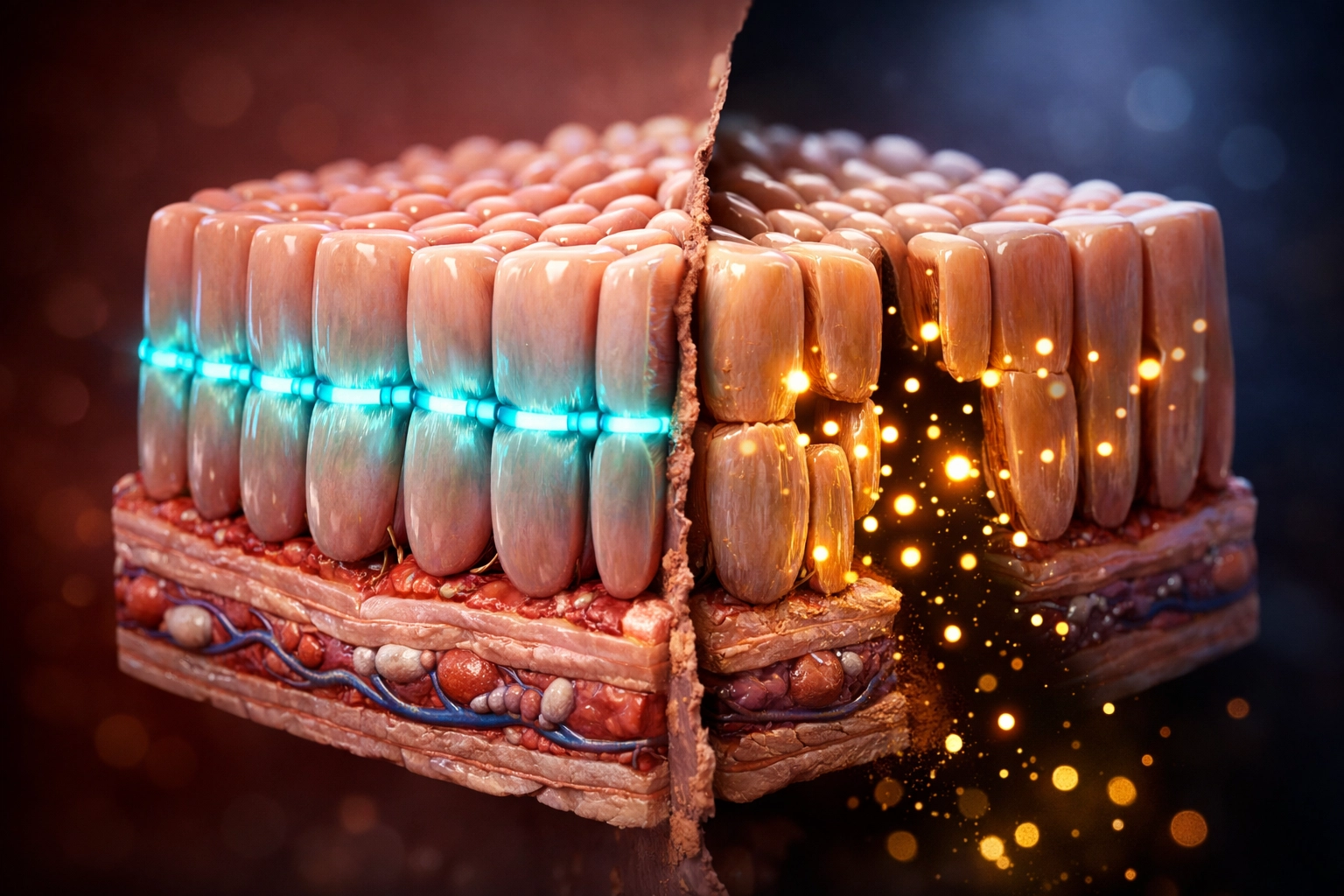
Your gut lining is a massive, complex gatekeeper. It’s a single layer of epithelial cells linked by "tight junctions." When these junctions fail, undigested food particles, toxins, and bacteria (like lipopolysaccharides or LPS) leak into your bloodstream. This triggers an immune response that doesn't just stay in your stomach: it travels to your brain, your joints, and your skin.
This guide isn't about a "quick fix" juice cleanse. It’s a technical, 30-day biological reset designed to patch the holes in your internal armor.
The Science of the Barrier: Why 30 Days?
Enterocytes (gut cells) regenerate roughly every 3 to 5 days. However, healing the underlying mucosal layer and calming the immune system’s "red alert" status takes longer. A 30-day window allows for roughly six full cycles of cellular turnover, providing enough time to remove irritants and build a resilient new foundation.
The Four Pillars of Gut Repair
To fix the leak, we follow a specific physiological framework:
- Remove: Eliminate the triggers causing zonulin (the protein that opens gut junctions) to spike.
- Replace: Add back digestive enzymes and bile acids to ensure food is broken down fully.
- Repair: Provide the specific amino acids and compounds required to rebuild the physical lining.
- Rebalance: Reintroduce beneficial bacteria to maintain the new environment.
The "No-Fly" List: Eliminating the Agitators
You cannot heal a wound if you keep picking at the scab. For the next 30 days, these items are non-negotiable "nays."
| Category | Foods to Avoid | The Biological "Why" |
|---|---|---|
| Grains | Wheat, Rye, Barley (Gluten) | Gluten triggers zonulin release in everyone, not just celiacs. |
| Industrial Oils | Soybean, Corn, Canola, Cottonseed | High Omega-6 content drives systemic inflammation and oxidative stress. |
| Refined Sugar | High Fructose Corn Syrup, Cane Sugar | Feeds pathogenic bacteria and yeast (Candida), leading to dysbiosis. |
| A1 Dairy | Conventional Cow's Milk, Soft Cheeses | Casein A1 can be highly inflammatory for the compromised gut lining. |
| Alcohol | All forms | Alcohol is a direct solvent to the gut lining, increasing permeability instantly. |
Phase 1: The Foundation Reset (Days 1–7)
The first week is about lowering the "bio-burden" on your digestive tract. We focus on liquid nutrition and pre-digested (cooked) foods.
The Strategy:
- Bone Broth Fast (Optional but Recommended): Consider a 24–48 hour bone broth fast to start. Bone broth is rich in proline and glycine: amino acids that act as "spackle" for your gut lining.
- Steam Everything: Raw vegetables contain cellulose and anti-nutrients like lectins that can be hard on a damaged gut. During Week 1, steam or slow-cook all vegetables until they are soft.
- Hydration: Drink 2–3 liters of filtered water daily. Avoid tap water, as chlorine can negatively impact your microbiome diversity.
Phase 2: Intensive Repair (Days 8–21)
Now that the fire is dying down, we start the actual construction work. This phase focuses on high-density nutrition and specific "gut-healing" compounds.
The Gut-Healing Superstars
- L-Glutamine: This is the primary fuel source for the cells lining your small intestine. Aim for 5g–10g of powder daily.
- Collagen Peptides: Provides the structural building blocks for the mucosal barrier.
- Zinc Carnosine: Unlike standard zinc, this specific chelate survives stomach acid to reach the intestinal lining, where it has been shown to stabilize tight junctions.
- Omega-3 Fatty Acids: High-dose (2,000mg+) EPA/DHA to dampen the inflammatory cascade.
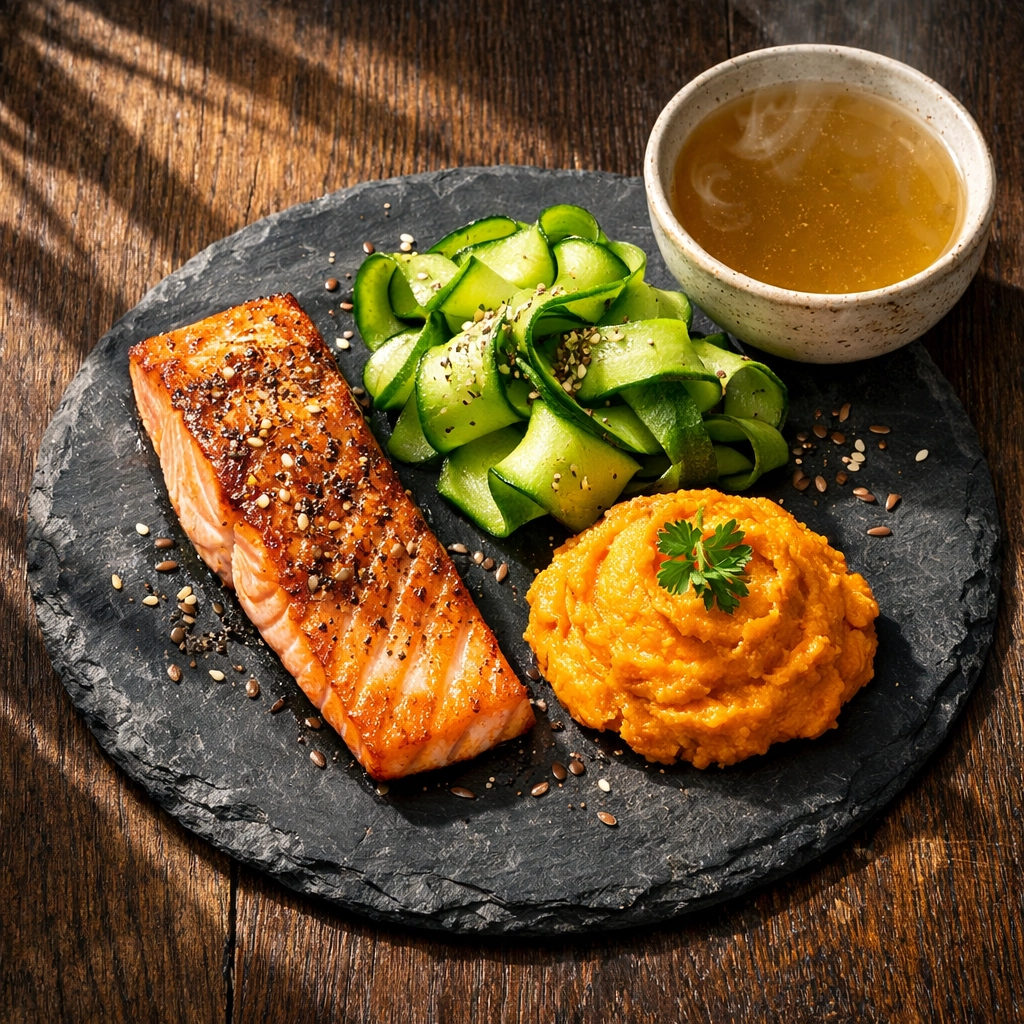
A Typical Day in Phase 2:
- Breakfast: A smoothie with collagen, blueberries (high in polyphenols), coconut milk, and a handful of spinach.
- Lunch: Wild-caught salmon with steamed zucchini and mashed sweet potato.
- Dinner: Grass-fed beef stew with carrots, celery, and bone broth base.
- Snack: Half an avocado with sea salt.
Phase 3: Reintroduction & Rebalance (Days 22–30)
In the final week, we shift focus from the lining to the tenants: the microbiome.
Introducing Probiotics:
Don't rush into high-dose probiotics in Week 1; it can cause a "die-off" reaction (Herxheimer response). In Week 3, start introducing:
- Spore-Based Probiotics: These are hardier than traditional lactobacillus strains and are better at surviving the stomach's acidic environment.
- Fermented Foods: Start with 1 tablespoon of sauerkraut or kimchi juice daily. If you don't experience bloating, move to the actual solids.
- Prebiotic Fibers: Introduce small amounts of garlic, onions, or cooked/cooled potatoes (resistant starch) to feed your new beneficial bacteria.

The 2026 Supplement Stack for Gut Integrity
If you want to maximize the 30-day protocol, data suggests these targeted supplements offer the highest ROI for gut health.
| Supplement | Recommended Dosage | Primary Benefit |
|---|---|---|
| L-Glutamine | 5-10g Daily | Repairs the "Tight Junctions." |
| Zinc Carnosine | 75mg Twice Daily | Clinical-grade mucosal support. |
| Quercetin | 500mg Daily | Acts as a natural antihistamine and stabilizes mast cells. |
| Slippery Elm / Marshmallow Root | 400mg | Provides a "mucilaginous" layer to soothe the GI tract. |
| Spore Probiotics | 1-2 Capsules | Recolonizes the gut with resilient strains. |
Lifestyle Factors: The Hidden Gut Wreckers
You can eat all the bone broth in the world, but if your lifestyle is chaotic, your gut won't heal.
1. The Cortisol Connection
High stress triggers the release of Corticotropin-Releasing Hormone (CRH), which directly increases gut permeability. If you are in "fight or flight" mode, your body diverts blood flow away from digestion and toward your limbs.
- The Fix: 10 minutes of box breathing before your largest meal to activate the Vagus nerve.
2. Sleep and the Microbiome
Your gut bacteria have a circadian rhythm. Sleep deprivation shifts the microbiome toward a profile associated with obesity and inflammation.
- The Fix: Aim for 7–9 hours of sleep. Use blue-light blocking glasses after 8:00 PM to protect your melatonin production.
3. NSAID Overuse
Ibuprofen and other non-steroidal anti-inflammatory drugs are like grenades for the gut lining. They inhibit prostaglandins that protect the stomach and intestinal mucosa.
- The Fix: Use natural alternatives like Curcumin (Turmeric extract) or Boswellia for pain management during your 30-day reset.
How to Test Your Progress
How do you know if it's working? Beyond just "feeling better," look for these clinical and subjective markers:
- The "Mirror Test": Clearer skin, reduced puffiness in the face, and the disappearance of "brain fog."
- Bristol Stool Chart: You should be aiming for a "Type 4" (smooth and soft) consistently.
- Blood Markers: If you can get labs done, look for a decrease in C-Reactive Protein (CRP) and a decrease in Zonulin levels.
Moving Forward: Life After Day 30
Healing a leaky gut isn't a destination; it’s a maintenance program. Once the 30 days are up, don't go back to a diet of processed flour and seed oils. Use the 80/20 rule: 80% of the time, stick to the gut-friendly principles outlined here. Use the other 20% to enjoy life, knowing your gut barrier is strong enough to handle the occasional deviation.
Your gut is the seat of your immune system and the factory for your neurotransmitters (95% of serotonin is made in the gut). Fix the leak, and you fix your life.
Author Bio
Malibongwe Gcwabaza is the CEO of blog and youtube and a leading voice in the 2026 longevity and bio-hacking movement. With a background in health optimization and a passion for data-driven wellness, Malibongwe focuses on translating complex physiological research into actionable protocols for high-performers. When not deep-diving into the latest microbiome studies, he can be found practicing Zone 2 training or experimenting with functional nutrition in the kitchen.
About the Author