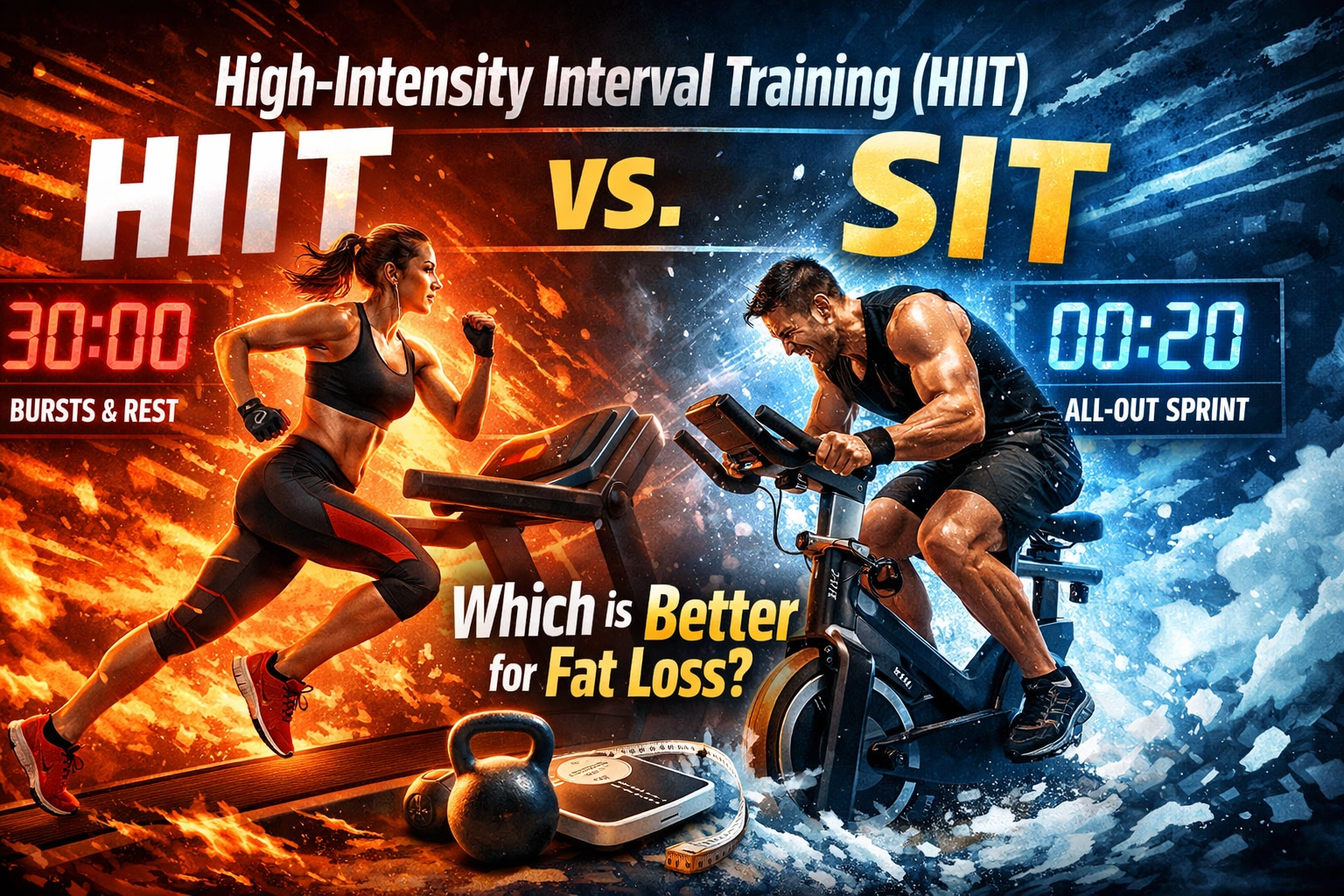
In the world of metabolic conditioning, the debate used to be "Steady State vs. Intervals." By 2026, the science has moved much deeper. We are no longer just asking if intervals work: we know they do. The real question for high-performance fat loss is the distinction between High-Intensity Interval Training (HIIT) and its more aggressive sibling, Sprint Interval Training (SIT).
While both modalities share the goal of maximizing caloric burn and improving cardiovascular health, they operate on different physiological pathways. One relies on sustained high effort, while the other demands absolute, supramaximal power. If your goal is to shed adipose tissue while preserving lean muscle mass, understanding the nuance between 90% effort and 110% effort is the key to your results.
Defining the Contenders: HIIT vs. SIT
Before we look at the data, we have to clear up the terminology. In most commercial gyms, anything that involves a timer is called "HIIT." This is a technical error that leads to sub-optimal programming.
What is HIIT?
High-Intensity Interval Training typically involves repeated bouts of exercise performed at "near maximal" intensity. Technically, this means reaching 80% to 95% of your maximum heart rate (HR Max). The work intervals are usually longer: ranging from 60 seconds to 4 minutes: followed by periods of active recovery or rest.
What is SIT?
Sprint Interval Training is "supramaximal." It requires an all-out, 100% effort that exceeds your VO2 max. These are short, violent bursts of energy (typically 5 to 30 seconds) followed by long recovery periods to allow for full ATP-CP (adenosine triphosphate-creatine phosphate) resynthesis. Think of a Wingate test on a cycle ergometer or a 100-meter dash.

The Metabolic Breakdown: How They Compare
To determine which is "better" for fat loss, we have to look at how these methods impact the body’s ability to oxidize fat both during and after the workout.
| Feature | HIIT (High-Intensity Interval Training) | SIT (Sprint Interval Training) |
|---|---|---|
| Intensity Level | 80–95% HR Max | >100% VO2 Max (All-out) |
| Work Duration | 1 to 4 minutes | 5 to 30 seconds |
| Recovery Ratio | 1:1 or 1:2 (e.g., 1 min work, 1 min rest) | 1:5 to 1:10 (e.g., 20s work, 3 min rest) |
| Primary Energy System | Glycolytic (Anaerobic + Aerobic) | Phosphagen & Fast Glycolytic |
| Total Session Time | 20–45 minutes | 10–20 minutes |
| Ideal Frequency | 3–4 times per week | 1–2 times per week |
The Time-Efficiency Meta-Analysis (2025-2026 Data)
Recent research has highlighted a "efficiency paradox." A comprehensive meta-analysis conducted in late 2025 found that while both methods significantly reduce body fat percentage, SIT delivers comparable fat loss results to HIIT in approximately 50% less total training time.
For a busy professional, this is a game-changer. SIT achieves through "intensity" what HIIT achieves through "volume." However, the physiological cost of that intensity is significantly higher, requiring more recovery time between sessions.
The Science of Fat Loss: Why SIT Wins for the Trained Athlete
If you are already in relatively good shape, the data leans heavily toward SIT. Research indicates that for individuals with a higher baseline of fitness, the hormonal response to supramaximal sprinting is far more potent than traditional HIIT.
1. Catecholamine Surge
SIT triggers a massive release of catecholamines (epinephrine and norepinephrine). These hormones are responsible for "unlocking" fat from adipose tissue (lipolysis), specifically from stubborn visceral fat stores. Because SIT requires 100% motor unit recruitment, the endocrine system responds with a much sharper spike in these fat-burning hormones compared to the 80% effort of HIIT.
2. PGC-1α and Mitochondrial Biogenesis
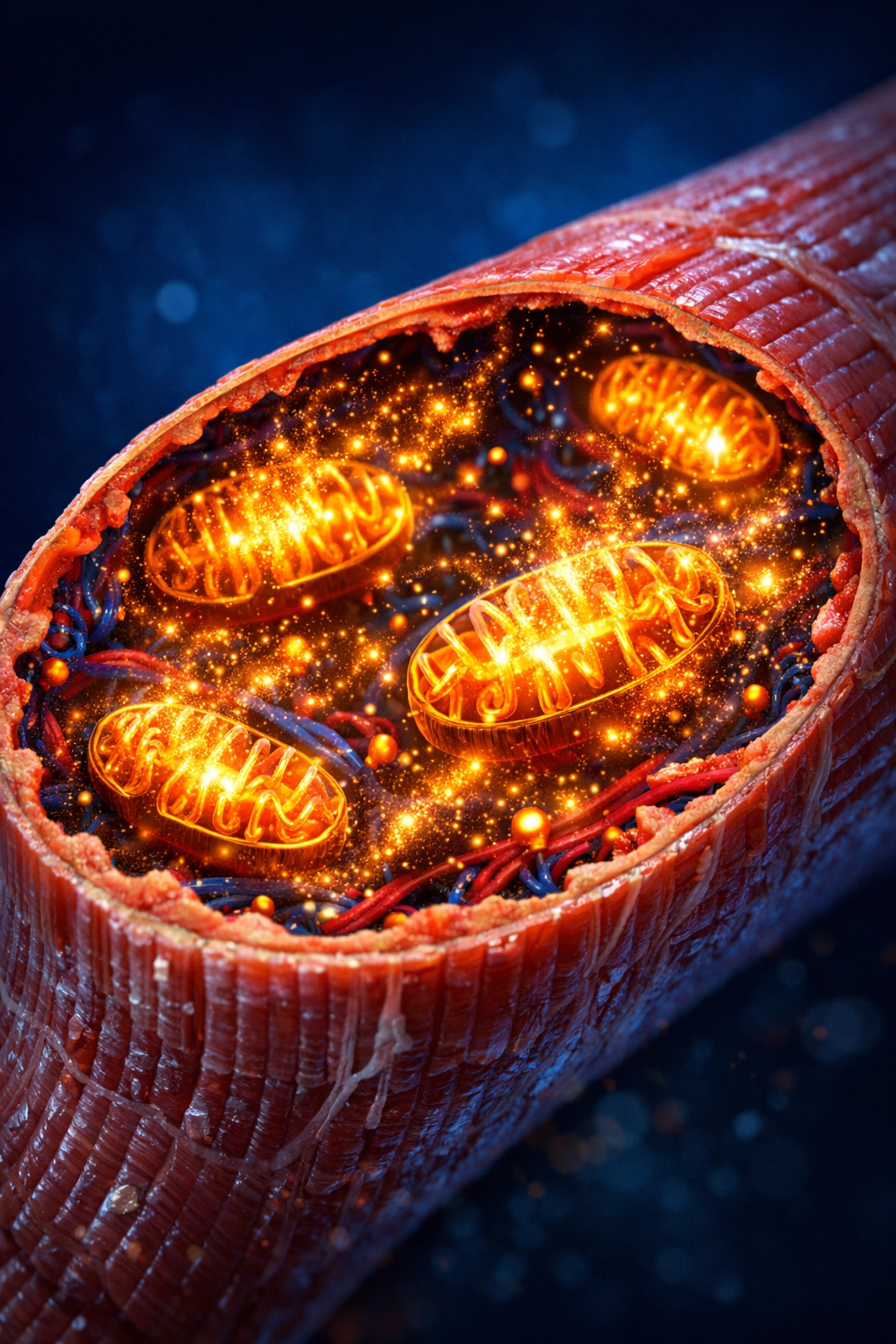
Mitochondria are the "furnaces" where fat is burned. SIT has been shown to be an incredible stimulator of PGC-1α, the master regulator of mitochondrial biogenesis. By sprinting, you are essentially building more furnaces in your muscle cells, increasing your resting metabolic rate (BMR) over the long term.
3. EPOC (The Afterburn Effect)
Excess Post-exercise Oxygen Consumption (EPOC) is the energy your body uses to return to its resting state. Because SIT creates a massive "oxygen debt" and disrupts homeostasis more violently than HIIT, the metabolic fire continues to burn for up to 24-48 hours post-workout.
HIIT: The Accessibility King for Weight Loss
While SIT sounds superior on paper, it isn't for everyone. For individuals categorized as overweight or obese, or those returning from a long hiatus, HIIT is often the more effective tool for two primary reasons: Adherence and Cardiorespiratory Development.
Improving VO2 Max
Data shows that HIIT is slightly more effective at improving cardiorespiratory fitness (VO2 max) in untrained populations. Because the work intervals are longer, the heart stays at an elevated rate for a sustained period, forcing the cardiovascular system to adapt more efficiently than the short, "stop-and-start" nature of SIT.
Lower Injury Risk
Sprinting at 100% effort places immense strain on the hamstrings, Achilles tendons, and the Central Nervous System (CNS). For someone carrying extra weight, the mechanical load of a 100% sprint can lead to injury. HIIT allows for a "controlled" high intensity: think fast walking on a steep incline or moderate-intensity rowing: which provides the metabolic benefits with a fraction of the orthopedic risk.
The "Fat Loss" Verdict: Which Should You Choose?
The "better" choice depends entirely on your current biological age and fitness level.
- Choose SIT if: You have a solid strength base, you are short on time, and you want to break through a fat-loss plateau. It is the most time-efficient way to strip fat while maintaining explosive power.
- Choose HIIT if: You are currently focused on building a "base" level of fitness, you enjoy longer sessions, or you are working with a higher body fat percentage where joint impact is a concern.

How to Program HIIT and SIT in 2026
To maximize fat loss without burning out your nervous system, use the following protocols based on the latest exercise physiology.
The SIT Protocol (The "Power" Sprint)
- Modality: Stationary Bike or Hill Sprints (to reduce impact).
- Interval: 20 seconds "All-Out" (100%+ effort).
- Rest: 3 minutes of total rest (slow walking).
- Repeats: 4 to 6 times.
- Frequency: No more than 2 times per week.
The HIIT Protocol (The "4×4" Classic)
- Modality: Rowing machine, Elliptical, or Incline Treadmill.
- Interval: 4 minutes at 90% HR Max (breathing should be very heavy, talking impossible).
- Rest: 3 minutes of active recovery (light movement).
- Repeats: 4 times.
- Frequency: 3 times per week.
Summary: Integration is the Ultimate Strategy
In 2026, we are seeing a shift toward "Hybrid Training." The most successful body recomposition programs don't choose one; they integrate both. You might perform one SIT session on Tuesday to spike your hormones and metabolic rate, followed by a HIIT session on Friday to build cardiovascular endurance and total caloric burn.
Fat loss is not just about moving more; it’s about signaling to your body that it needs to be more efficient. Whether you choose the long burn of HIIT or the explosive fire of SIT, the key is the intensity. If you aren't uncomfortable, you aren't changing.

Author Bio: Malibongwe Gcwabaza
Malibongwe Gcwabaza is the CEO of blog and youtube and a dedicated advocate for evidence-based fitness and longevity. With over a decade of experience tracking the intersection of technology and human performance, Malibongwe specializes in making complex physiological data accessible to the everyday athlete. When he isn't analyzing the latest 2026 health trends, he can be found testing his own VO2 max on the trails or experimenting with metabolic flexibility protocols. His mission is to help people live better, stronger, and longer through the power of informed movement.
About the Author