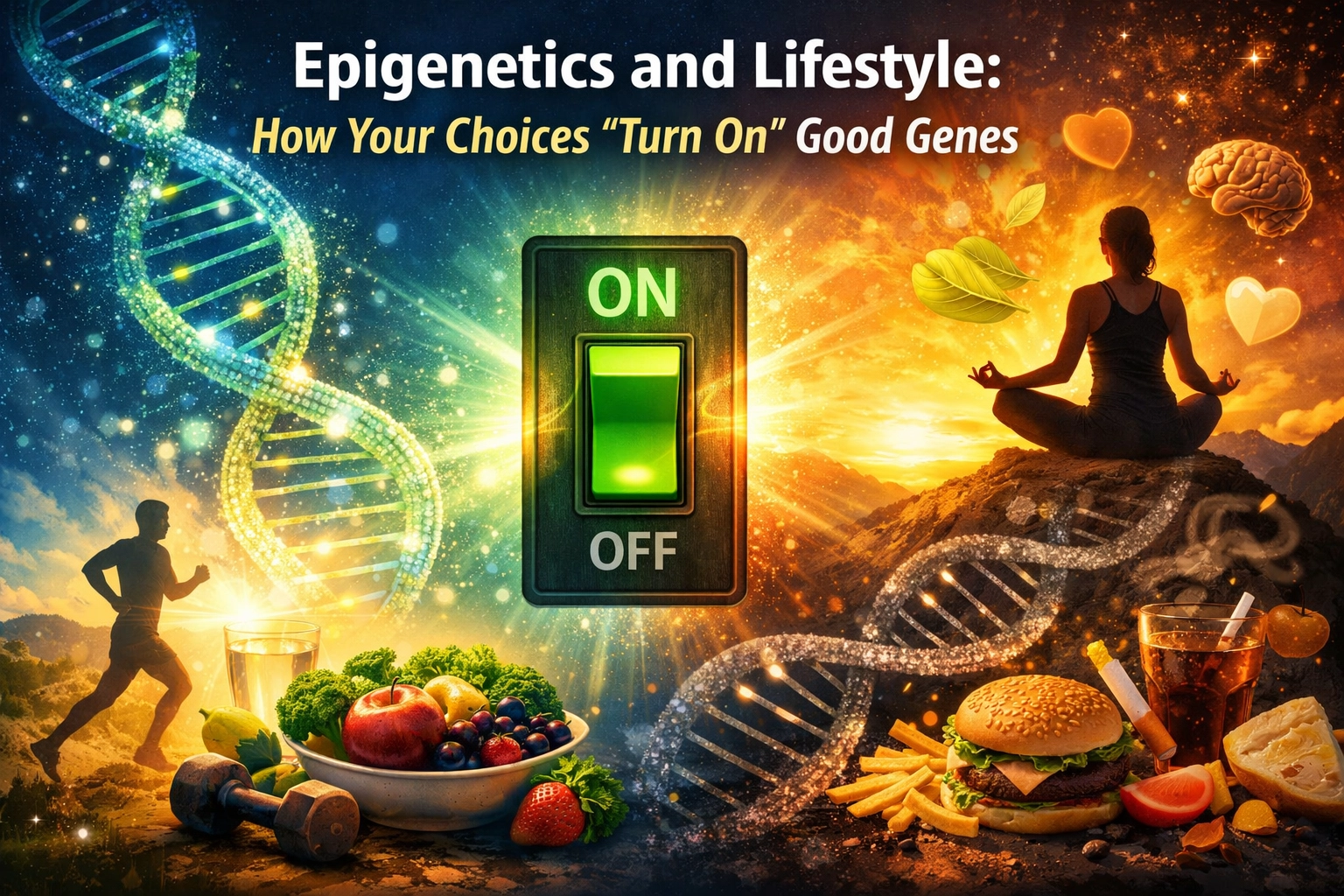
For decades, we were taught that our DNA was a fixed blueprint: a biological "destiny" handed down by our parents that dictated our health, lifespan, and susceptibility to disease. However, the field of epigenetics has completely upended this narrative. As of 2026, we now understand that while your DNA sequence (the hardware) remains largely the same throughout your life, your epigenome (the software) is constantly being rewritten by your environment and lifestyle choices.
Epigenetics is the study of how your behaviors and environment can cause changes that affect the way your genes work. Unlike genetic changes, epigenetic changes do not change your DNA sequence and they are reversible. This guide explores the highly technical mechanisms of gene expression and provides a data-driven framework for "turning on" the genes that promote longevity, cognitive function, and metabolic health.
The Molecular Machinery: How Genes "Flip"
To optimize your health, you must first understand the two primary mechanisms that regulate gene expression: DNA methylation and histone modification.
1. DNA Methylation: The "Mute" Button
DNA methylation involves the attachment of a methyl group (a carbon atom bound to three hydrogen atoms) to the DNA molecule. When these methyl groups attach to a specific gene promoter, they typically "silence" that gene, preventing it from being read by the cell.
Hypermethylation of tumor-suppressor genes is a hallmark of cancer, while hypomethylation (too little methylation) of inflammatory genes can lead to chronic systemic inflammation. The goal of an optimized lifestyle is to maintain "Goldilocks" methylation: just enough to keep the bad genes quiet and the good genes active.
2. Histone Modification: The "Volume" Control
DNA is wrapped around proteins called histones. If the DNA is wrapped tightly, the "reading" machinery of the cell cannot access the genes, effectively turning them off. If the histones are relaxed (often through a process called acetylation), the genes become accessible.
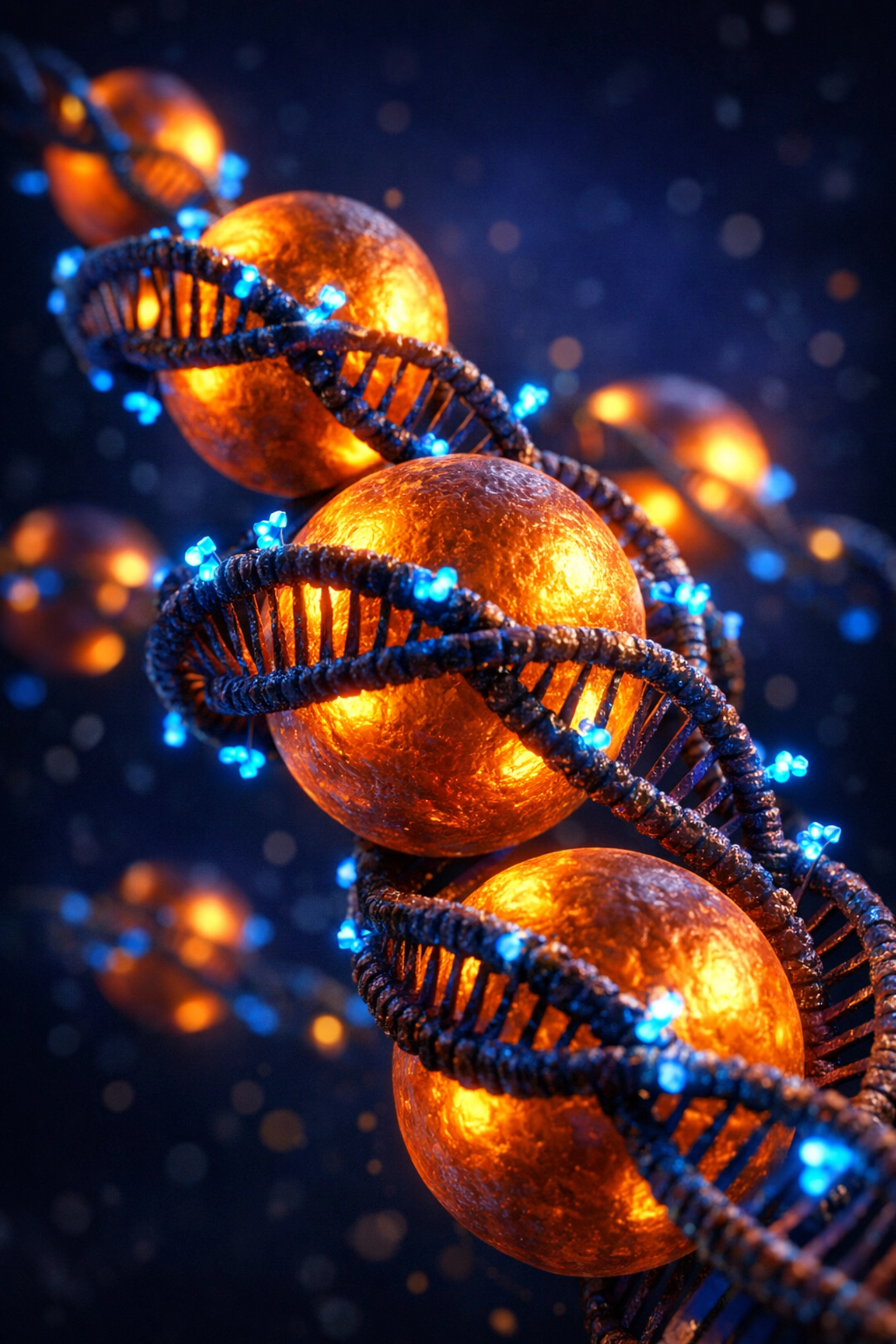
Comparison of Epigenetic Mechanisms
| Mechanism | Action | Analogy | Primary Influence |
|---|---|---|---|
| DNA Methylation | Adding methyl groups to DNA | The "Off" Switch | Diet (B-Vitamins), Toxins |
| Histone Acetylation | Relaxing DNA wrapping | The "Volume" Knob | Exercise, Fasting (Butyrate) |
| Non-coding RNA | Interfering with gene translation | The "Filter" | Stress, Sleep |
The Nutritional Epigenome: Eating for Gene Expression
Your diet is perhaps the most potent epigenetic modulator available. Specific nutrients act as "methyl donors," providing the raw materials needed for DNA methylation.
The Role of Methyl Donors
To maintain healthy methylation patterns, your body requires a steady supply of folate (B9), Vitamin B12, betaine, and choline. Without these, your epigenetic "software" begins to glitch, leading to the expression of pro-aging genes.
- Folate (L-5-MTHF): Found in dark leafy greens. It is critical for the production of S-adenosylmethionine (SAMe), the body's universal methyl donor.
- Choline: Found in egg yolks and beef liver. Choline is a precursor to betaine, which supports the homocysteine-to-methionine cycle.
- Sulforaphane: Found in cruciferous vegetables like broccoli sprouts. Sulforaphane is a potent HDAC inhibitor, meaning it helps keep DNA in a "relaxed," accessible state for protective gene expression.
Polyphenols and SIRT1 Activation
Resveratrol (from grapes), EGCG (from green tea), and Quercetin (from onions) are more than just antioxidants. They are signaling molecules. These polyphenols activate Sirtuins (specifically SIRT1), which are known as "longevity genes." SIRT1 regulates glucose metabolism, DNA repair, and circadian rhythms by deacetylating histones and non-histone proteins.
Exercise: The Epigenetic "Reset" for Muscle and Metabolism
Physical activity induces rapid epigenetic changes in skeletal muscle and adipose tissue. Research in 2025 and 2026 has shown that even a single bout of high-intensity exercise can alter the methylation status of genes involved in energy metabolism.
Zone 2 Training and Mitochondrial Biogenesis
Low-intensity, steady-state exercise (Zone 2) specifically targets the PGC-1alpha gene. When this gene is "turned on" through hypomethylation, it triggers mitochondrial biogenesis: the creation of new, healthy mitochondria. This is the cornerstone of metabolic flexibility and preventing type 2 diabetes.
Resistance Training and Myostatin
Strength training works on a different epigenetic pathway. It helps suppress the MSTN gene, which produces myostatin (a protein that limits muscle growth). By epigenetically downregulating myostatin, your body becomes more efficient at building and maintaining "longevity currency": muscle mass.

Stress, Cortisol, and Transgenerational Epigenetics
One of the most profound discoveries in modern epigenetics is that the effects of stress can be "remembered" by your genes and even passed down to offspring.
When you experience chronic stress, your body stays flooded with cortisol. High cortisol levels influence the NR3C1 gene, which encodes the glucocorticoid receptor. Chronic stress causes this gene to become hypermethylated, making your body less sensitive to cortisol's feedback loop. This results in a "stuck" stress response, leading to anxiety, poor sleep, and systemic inflammaging.
Somatic Practices as Epigenetic Tools
Techniques such as Box Breathing, Cold Exposure, and Heart Rate Variability (HRV) training are not just "wellness" trends; they are epigenetic interventions. By consciously lowering the sympathetic nervous system's output, you can signal to your cells that the environment is safe, allowing for the methylation of pro-inflammatory cytokines like IL-6 and TNF-alpha.
The 2026 Guide to Epigenetic Testing: Biological vs. Chronological Age
In 2026, we no longer rely solely on birth dates to determine health status. Epigenetic clocks (like the Horvath Clock or GrimAge) analyze specific methylation sites on your DNA to calculate your Biological Age.
If your biological age is higher than your chronological age, it indicates that your current lifestyle is "accelerating" your epigenetic aging.
Key Bio-Markers to Monitor:
- Homocysteine Levels: High levels suggest poor methylation capacity.
- hs-CRP: A marker of systemic inflammation that correlates with epigenetic aging.
- DNAm PhenoAge: A specific algorithm that predicts multi-organ dysfunction based on methylation patterns.

A Weekly Protocol for Gene Optimization
To transition from theory to practice, follow this science-backed protocol designed to maximize "good" gene expression:
- Monday/Wednesday/Friday (Strength): Focus on compound movements to downregulate myostatin and improve bone density (via the RANKL pathway).
- Tuesday/Thursday/Saturday (Zone 2): 45 minutes of aerobic work to stimulate PGC-1alpha and mitochondrial health.
- Daily Nutritional Requirements: Consuming at least 3 cups of sulfur-rich vegetables and 1 serving of high-quality choline (eggs/liver).
- Nightly (Circadian Alignment): Blocking blue light 2 hours before bed to protect the methylation of CLOCK and BMAL1 genes, which regulate your internal cellular timer.
Conclusion: You Are the Architect
The myth of the "bad gene" is fading. While you cannot change the sequence of the nucleotides A, T, C, and G that you were born with, you hold the pen when it comes to how those genes are expressed. Through strategic nutrition, targeted movement, and rigorous stress management, you can effectively silence the genes of disease and amplify the genes of vitality.
Epigenetics is the ultimate empowerment. It suggests that your health in five years is not a roll of the dice, but a direct reflection of the molecular signals you send your body every single day.
Author Bio: Dr. Aris Thorne
Dr. Aris Thorne is a clinical geneticist and lead researcher specializing in metabolic epigenetics. With over 15 years of experience in longevity medicine, Dr. Thorne focuses on how precision nutrition and "hormetic" stressors (like heat and cold) can be used to reverse biological aging. He currently consults for top-tier longevity clinics and contributes to peer-reviewed journals on the intersection of AI-driven diagnostics and cellular repair. Dr. Thorne believes that "DNA is not your destiny; it is simply your starting line."
About the Author