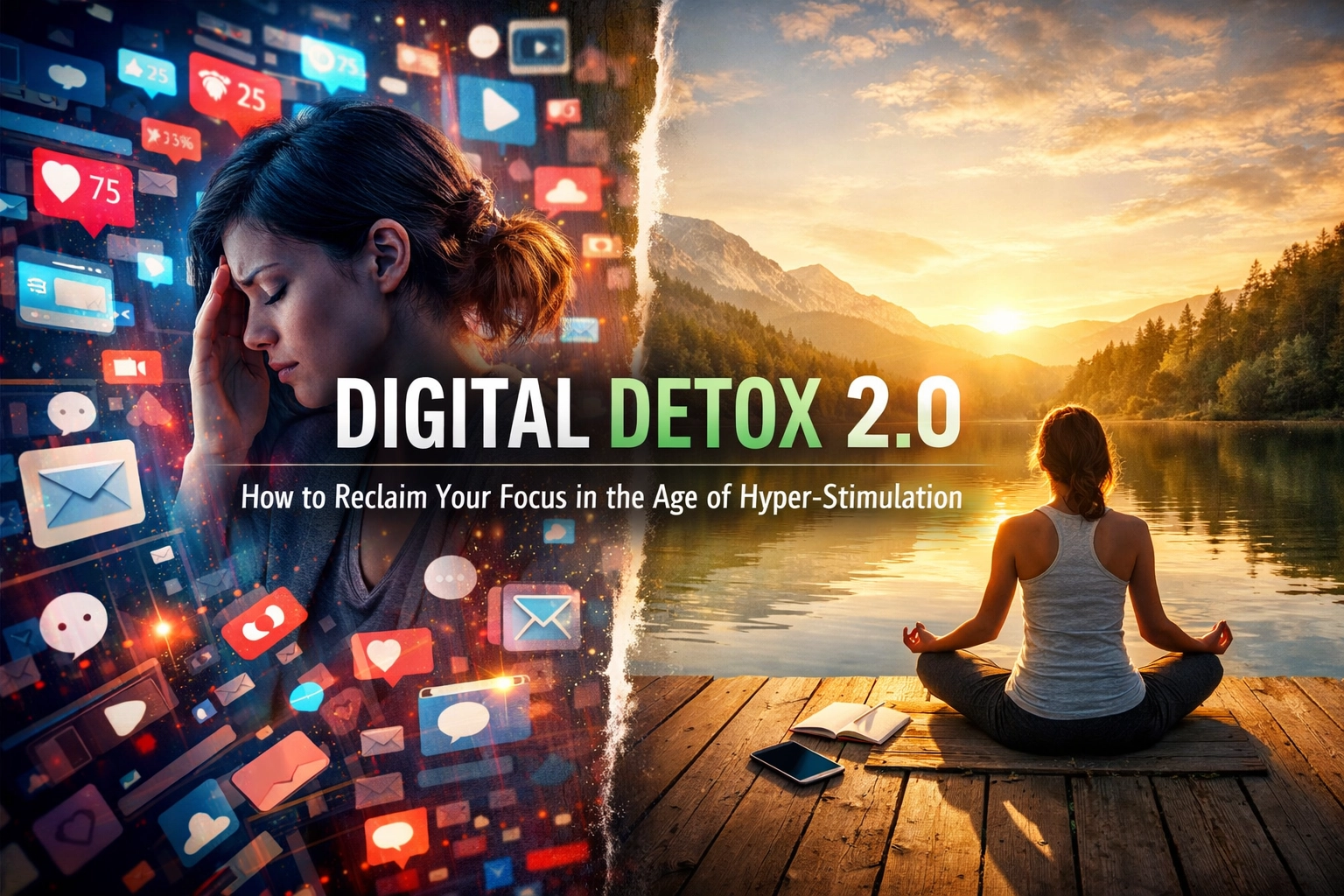
By 2026, the "Attention Economy" has evolved into something far more aggressive than the simple notification pings of a decade ago. We are now living in an era of hyper-stimulation, where AI-driven algorithms predict our boredom before we even feel it, serving up personalized content designed to keep our dopamine receptors firing at maximum capacity.
Traditional "Digital Detox" advice: like "just put your phone in another room": is no longer enough. We need Digital Detox 2.0: a systematic, data-driven approach to reclaiming our cognitive sovereignty. This guide moves beyond surface-level tips to explore the neurobiology of focus and provides a technical framework for rebuilding your relationship with technology.
The Neurobiology of the Infinite Scroll
To fix your focus, you have to understand why it’s broken. Our brains evolved in an environment of scarcity. Information was rare and potentially life-saving. In 2026, information is infinite and often biologically "loud."
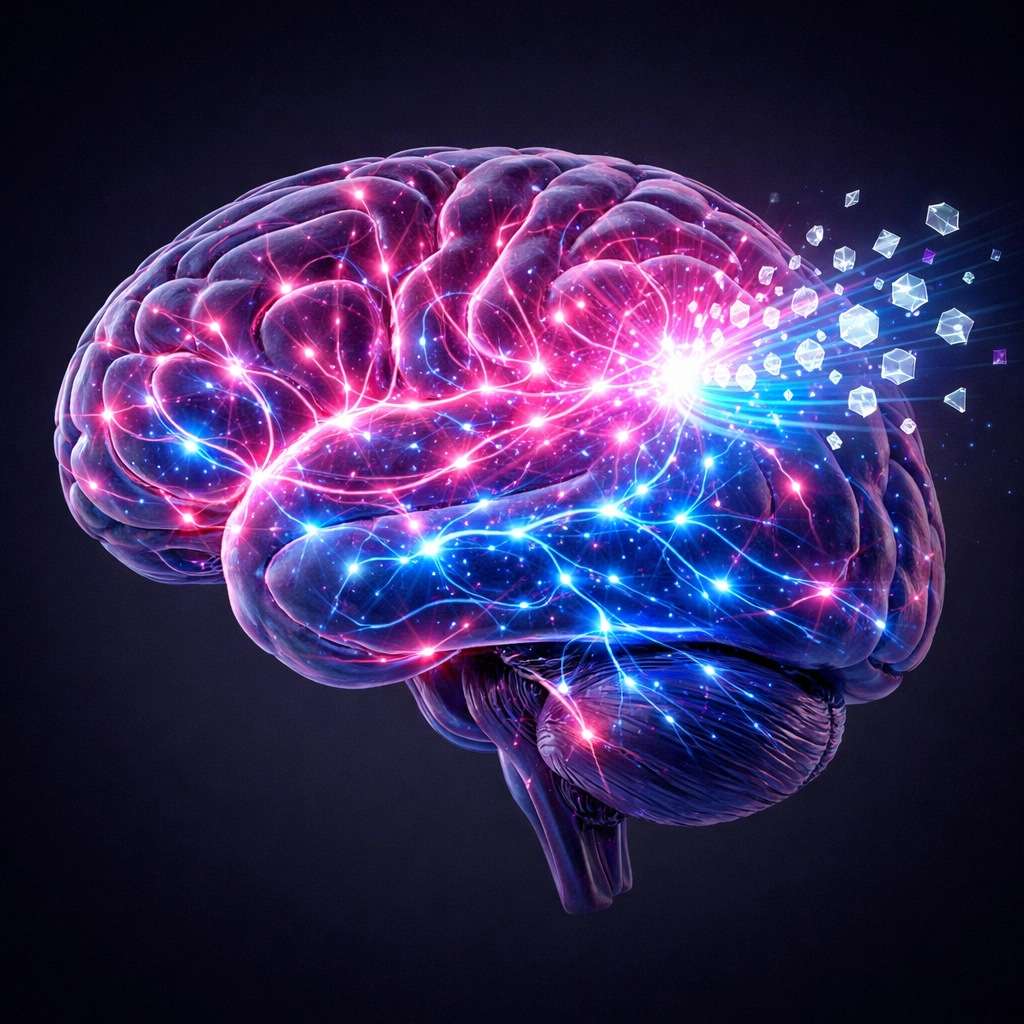
When you check a notification or scroll through a feed, your brain releases dopamine. Contrary to popular belief, dopamine isn't about pleasure; it’s about anticipation. It’s the "seeking" hormone. The unpredictable nature of social media: where one post is boring and the next is a viral hit: creates a "Variable Ratio Reinforcement Schedule." This is the same psychological mechanism that makes slot machines so addictive.
Dopamine Receptor Downregulation
Constant hyper-stimulation leads to a physiological change called downregulation. When your brain is flooded with unnaturally high levels of dopamine, it protects itself by reducing the number of available receptors.
The Result: Normal, low-stimulation activities: like reading a technical manual, meditating, or having a deep conversation: feel painfully boring. You aren't "lazy"; your brain has simply lost its sensitivity to lower, healthier levels of stimulation.
Phase 1: The Digital Audit (Quantitative Data)
Digital Detox 2.0 starts with data, not guesswork. You cannot manage what you do not measure. Use built-in tools like Screen Time (iOS) or Digital Wellbeing (Android), but look deeper than just total hours.
Categorizing Your Digital Consumption
Not all screen time is created equal. To reclaim your focus, categorize your usage into three distinct buckets:
| Category | Definition | Impact on Focus | Strategy |
|---|---|---|---|
| Tools | Maps, Banking, Calendar, Notes | Neutral/Positive | Optimize for speed |
| Consumption | Long-form articles, Educational videos | Moderate | Schedule specific windows |
| Slot Machines | Infinite scrolls (TikTok, Reels, X), News Aggregators | Highly Negative | Strict limits or elimination |
The 2026 Metric: "Pickup-to-Value" Ratio
Calculate how many times you pick up your phone versus how many times that pickup resulted in a completed, intentional task. If you have 100 pickups a day but only 10 were intentional, your focus is being hijacked by external triggers.
Phase 2: Environmental Engineering (The Friction Framework)
Willpower is a finite resource. Digital Detox 2.0 relies on Environmental Engineering: designing your physical and digital space to make focus the default state.
1. The Grayscale Hack
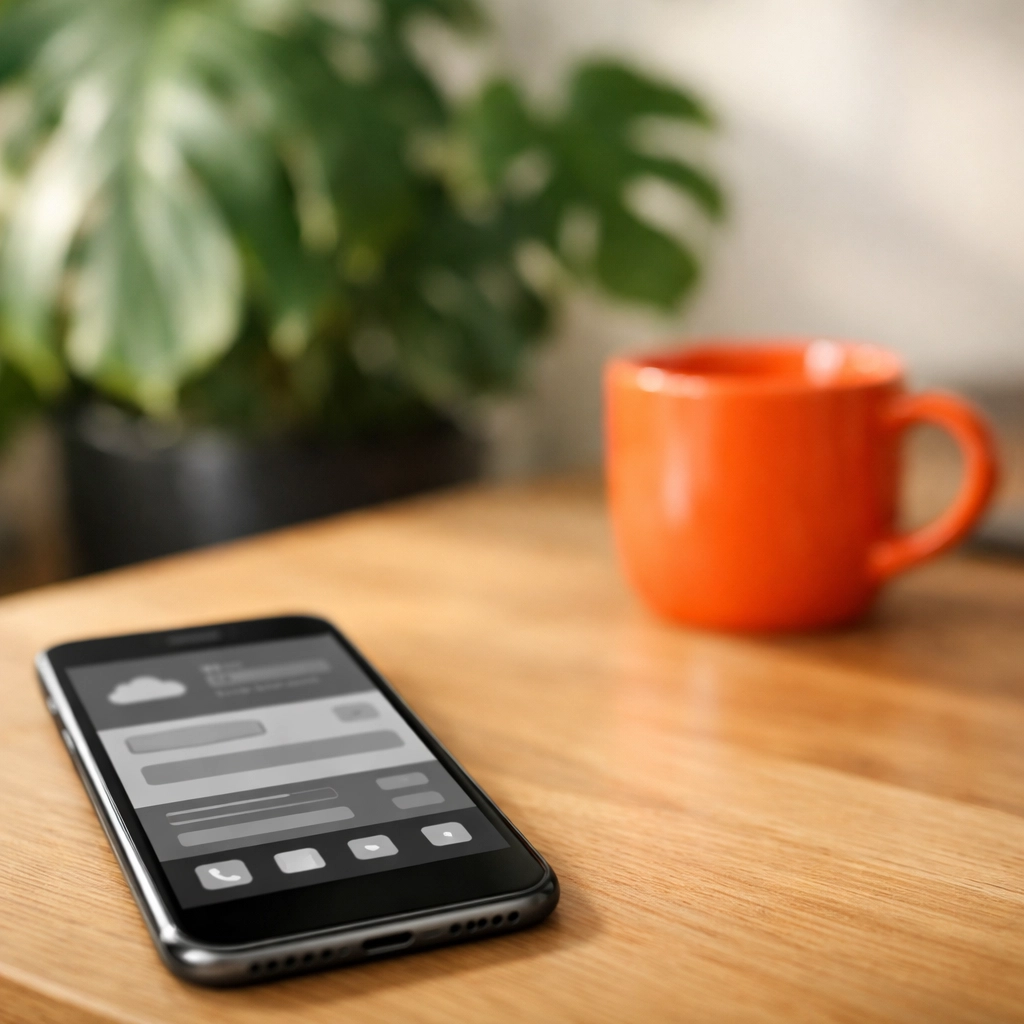
Color is a powerful psychological trigger. App designers use "hot" colors (red, orange, bright blue) to grab your attention. By shifting your phone to Grayscale mode (found in Accessibility settings), you strip the "reward" from the visual experience. Instagram becomes a dull grid of gray boxes; the slot machine loses its luster.
2. The "Point of Friction" Rule
The goal is to add steps between your impulse and the action.
- Level 1: Move distracting apps off the home screen.
- Level 2: Delete the apps and access them only via a mobile browser (which is clunkier and less rewarding).
- Level 3: Set a 20-character password for your phone that you have to type every time (disabling FaceID/TouchID).
Phase 3: Reclaiming the Circadian Rhythm of Focus
Your ability to focus is tethered to your biology. Hyper-stimulation disrupts two critical systems: your Circadian Rhythm and your Autonomic Nervous System.
The Blue Light and Cortisol Connection
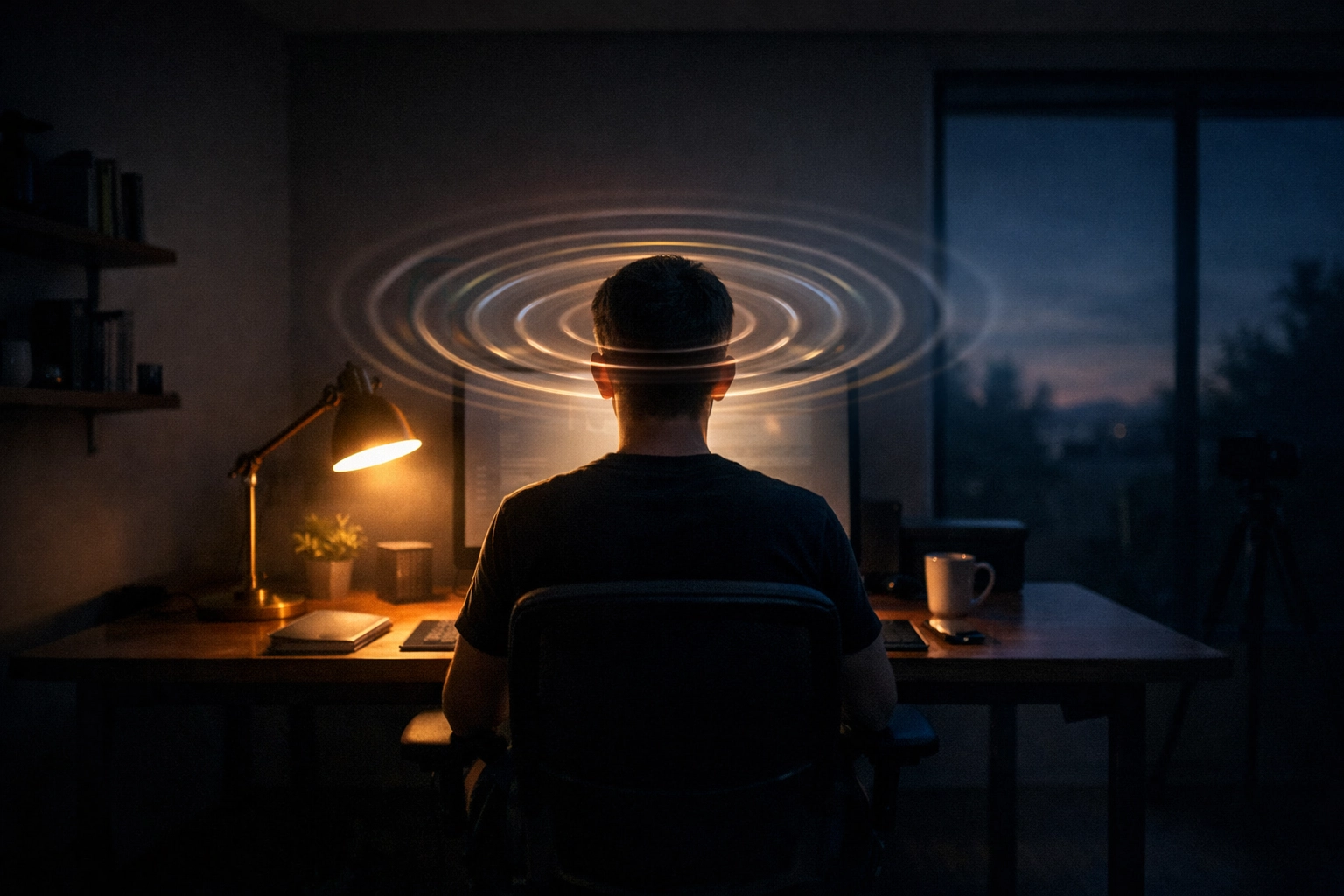
Screens emit high-energy visible (HEV) blue light. In the morning, this is great: it suppresses melatonin and wakes you up. However, 2026 research shows that late-night exposure doesn't just ruin sleep; it causes a "Cortisol Spike" that keeps your brain in a state of high-alert anxiety the following morning.
The Protocol:
- No Screens 60 Minutes Before Bed: Replace the phone with a physical book or a Kindle (e-ink).
- The 30-Minute Morning Buffer: Do not check your phone for the first 30 minutes of the day. Checking your phone immediately upon waking forces your brain into a reactive "Beta wave" state, rather than the calm "Alpha" state needed for deep work.
Phase 4: Training for "Deep Work"
Focus is a muscle. If you have spent years in a state of hyper-stimulation, your "focus muscle" has likely atrophied. You need a progressive loading program to get it back.
The Pomodoro 2.0 Method
Traditional Pomodoro (25 minutes on, 5 minutes off) is often too short for complex, technical tasks. In Digital Detox 2.0, we use Extended Cycles:
- Work Block: 50 minutes of single-tasking (no phone, one browser tab).
- Recovery Block: 10 minutes of "Non-Digital Rest." This means no checking emails. Walk, stretch, or stare out a window.
- The Result: This allows your brain to enter a "Flow State," which typically takes 15–20 minutes to achieve.
Phase 5: Managing the "Digital Withdrawal"
When you begin a Digital Detox 2.0 protocol, you will experience "Phantom Vibration Syndrome" or a feeling of intense FOMO (Fear Of Missing Out). This is a sign that your brain is re-adjusting its dopamine baseline.
Somatic Re-regulation
When you feel the urge to check your phone, your body is likely in a state of mild sympathetic (fight or flight) arousal. Use the Physiological Sigh to reset:
- Inhale deeply through the nose.
- Take a second, shorter inhale on top to fully expand the lungs.
- Exhale slowly through the mouth.
This signals to your brain that you are safe and do not need the "hit" of information to survive.
Summary Checklist for 2026 Digital Sovereignty
To move from hyper-stimulation back to high-performance focus, implement these steps immediately:
- Audit: Use Screen Time data to identify your "Slot Machine" apps.
- Inhibit: Switch your phone to Grayscale to reduce visual reward.
- Buffer: No screens 30 minutes after waking and 60 minutes before sleep.
- Friction: Delete social media apps; use the browser version if necessary.
- Restore: Practice 50-minute Deep Work blocks daily to rebuild your attention span.

The goal of Digital Detox 2.0 isn't to live in a cave or throw your iPhone in the ocean. It’s to ensure that you are the one using the tool, rather than the tool using you. By understanding the neurobiology of attention and implementing technical safeguards, you can reclaim your focus and thrive in an increasingly distracted world.
About the Author: Malibongwe Gcwabaza
CEO of blog and youtube
Malibongwe Gcwabaza is a forward-thinking leader in the digital health and wellness space, specializing in the intersection of technology and human performance. With a background in organizational leadership and a passion for bio-optimization, Malibongwe focuses on helping high-performers navigate the complexities of the 2026 attention economy. His philosophy centers on "Digital Sovereignty": the belief that cognitive focus is the most valuable currency of the modern era. When he isn't researching neuro-productivity, Malibongwe is an advocate for "Forest Bathing" and functional fitness.
About the Author