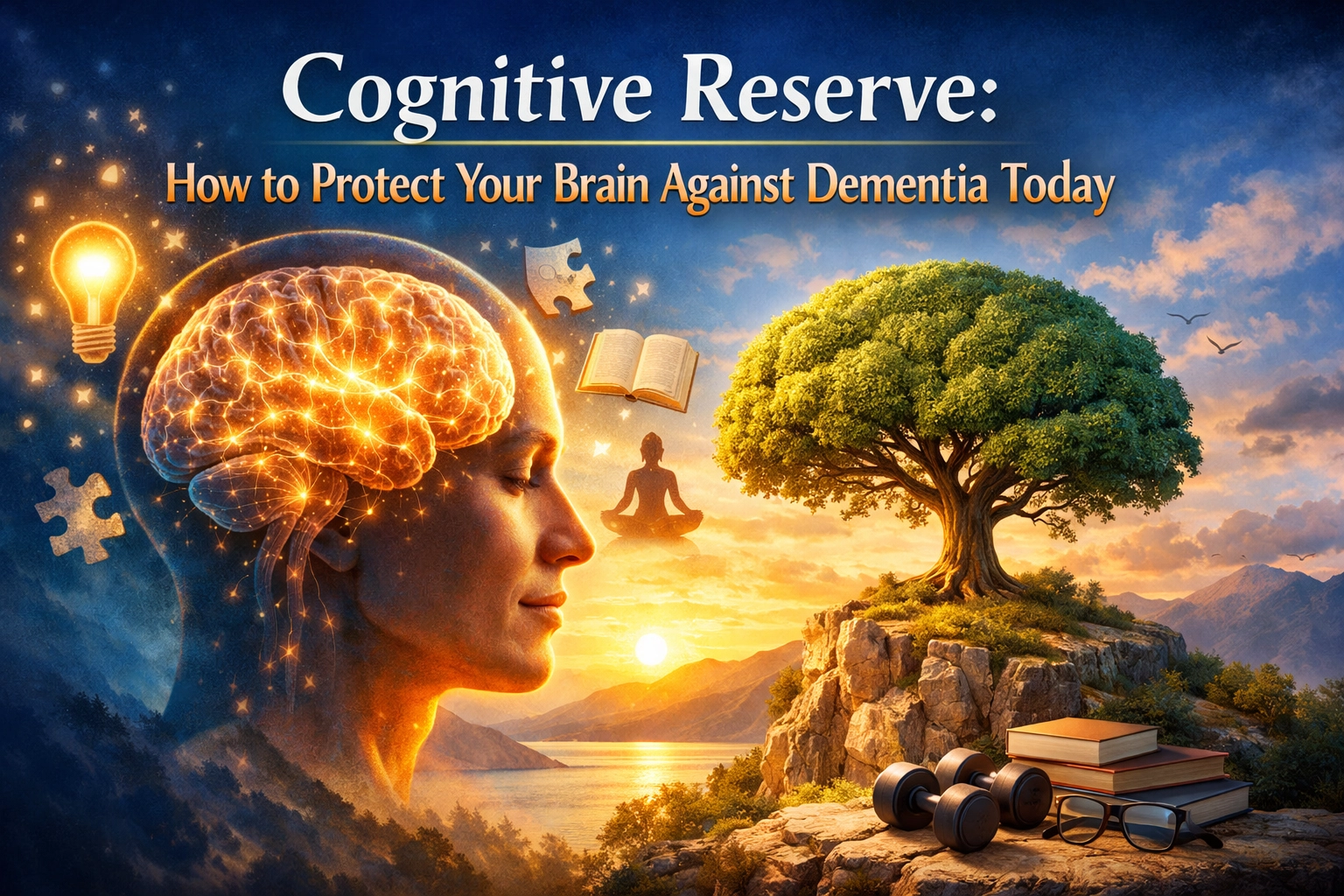
By the year 2026, we’ve made incredible strides in tracking our steps, our macros, and even our sleep stages. But there is one metric that doesn't show up on your smartwatch yet, and it’s arguably the most important one for your long-term quality of life: Cognitive Reserve (CR).
Think of your brain like a battery. As we age, or if we face neurological "insults" like a concussion or inflammation, that battery drains. Cognitive Reserve is the capacity of that battery to hold a charge and, more importantly, the brain's ability to find alternative power sources when the main circuits start to fail. It is the "buffer" that explains why two people can have the exact same amount of Alzheimer’s-related plaques in their brains, yet one is struggling to remember their kids' names while the other is still winning at bridge and living independently.
In this deep dive, we are going to move past generic "do a crossword" advice. We’re looking at the hard science of building a resilient brain in 2026, the data-driven habits that actually move the needle, and the physiological "paradox" you need to understand to manage your health properly.
What is Cognitive Reserve? The "Hardware" vs. "Software" Perspective
To understand Cognitive Reserve, we have to distinguish it from Brain Reserve.
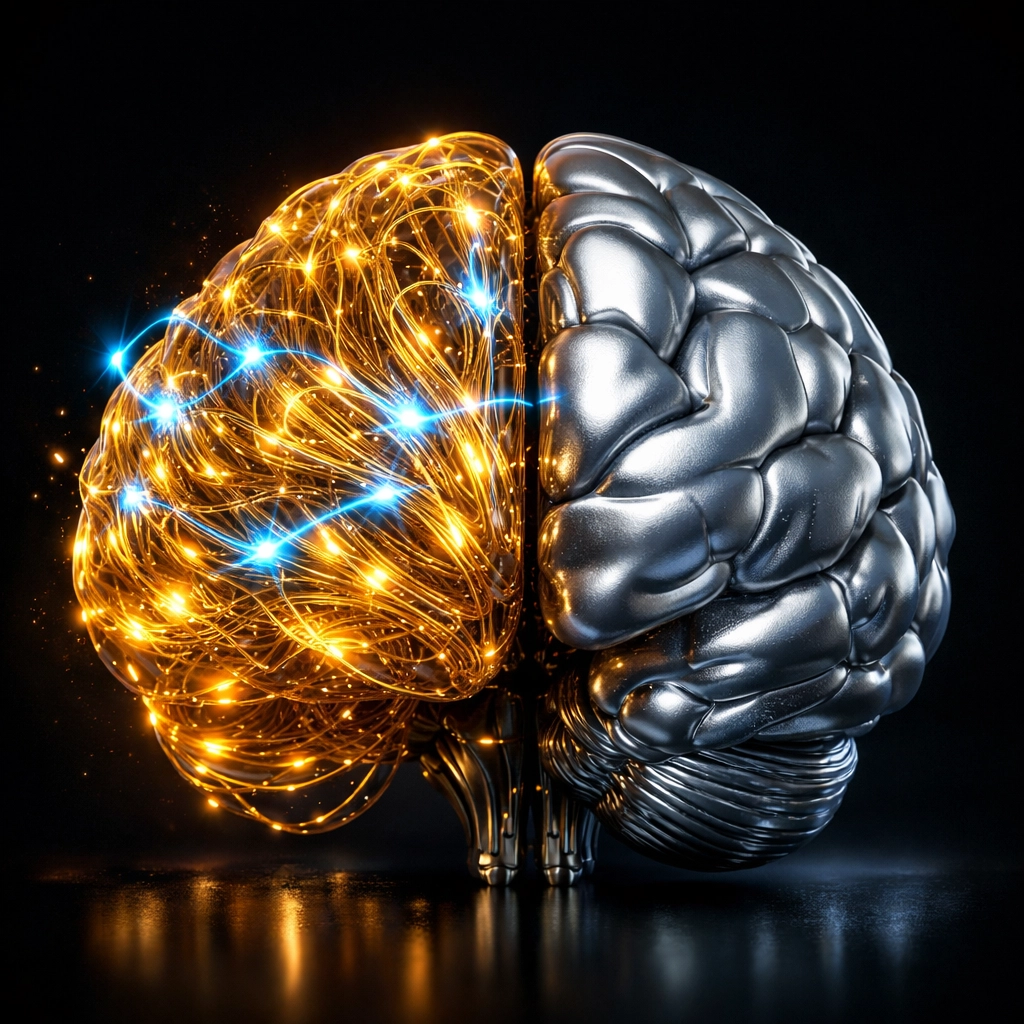
- Brain Reserve (The Hardware): This refers to physical structures: how many neurons you have, the size of your brain, and the density of your synapses. This is largely fixed by genetics and early development, though it can be preserved through lifestyle.
- Cognitive Reserve (The Software): This is the functional aspect. It’s how efficiently your brain uses the hardware it has. It’s the ability to recruit "back-up" neural pathways when the primary ones are damaged.
If a highway (a neural pathway) is blocked by a car accident (amyloid plaques), a brain with high Cognitive Reserve immediately knows three different back-road detours to get to the destination. A brain with low reserve just sits in traffic, unable to process the information.
The 2026 Data: Why This Matters Now
Recent longitudinal studies have shown that high levels of cognitive activity are associated with a 50% reduction in the risk of developing clinical dementia over a five-year period. Furthermore, for every additional year of formal or complex education, the likelihood of an Alzheimer’s diagnosis drops by 13% to 18%.
We aren't just talking about being "smart." We are talking about building a biological fortress that can withstand the inevitable wear and tear of time.
Pillar 1: Cognitive Complexity and "The Novelty Rule"
The old advice was to do Sudoku. The 2026 advice is to struggle.
Cognitive Reserve is built through neuroplasticity, and neuroplasticity is triggered by frustration. If you are doing something you are already good at, you aren't building reserve; you’re just executing a pattern. To build "new roads" in the brain, you need cognitive complexity and novelty.
The Best Activities for Neural Scaffolding:
- Learning a Language (Bilingualism): Research consistently shows that lifelong bilinguals develop dementia symptoms an average of 4–5 years later than monolinguals. This is because the brain is constantly managing two competing systems, which strengthens the executive control network.
- Musical Instruments: Playing an instrument requires simultaneous tactile, visual, and auditory processing. It’s a full-body workout for the brain.
- Complex Occupation: Your job matters. Occupations that involve "mentally stimulating" tasks: managing people, solving complex non-routine problems, or high-level negotiation: are massive contributors to your mid-life reserve.
The Strategy:
Don't just read books; write summaries. Don't just watch a documentary; debate the topic with someone. Move from passive consumption to active production.
Pillar 2: The Physical Foundation (VO2 Max and Gray Matter)
You cannot separate the neck from the rest of the body. Physical fitness is the primary driver of "Brain Reserve" (the hardware).
Aerobic exercise, specifically training that improves your VO2 Max, has been shown to preserve gray matter volume in the hippocampus: the area of the brain responsible for memory. When you exercise, your muscles release a protein called BDNF (Brain-Derived Neurotrophic Factor). Scientists often call this "Miracle-Gro for the brain."
| Activity Type | Mechanism for Brain Health | Recommended Dose |
|---|---|---|
| Zone 2 Cardio | Increases mitochondrial density in neurons. | 150-200 mins / week |
| Vigorous Intensity (HIIT) | Massive spike in BDNF and improved cerebral blood flow. | 1-2 sessions / week |
| Resistance Training | Linked to reduced white matter hyperintensities (lesions). | 2-3 sessions / week |
| Complex Movement | (Dance, Rock Climbing) Combines physical effort with spatial problem-solving. | As often as possible |

Pillar 3: The Glymphatic System and the "Cleaning Cycle"
In 2026, we understand that Cognitive Reserve isn't just about building new stuff; it’s about clearing out the trash. The glymphatic system is the brain’s waste-clearance pathway. It becomes ten times more active during deep sleep.
If you aren't sleeping 7–9 hours, you are essentially leaving the "trash" (metabolic waste like beta-amyloid) to sit in your brain. Over time, this "trash" creates inflammation, which erodes the very neural pathways you are trying to build.
Pro-Tip for 2026: Side-sleeping has been shown in some models to be more efficient for glymphatic clearance than sleeping on your back or stomach.
Pillar 4: Social Connectivity and the "Loneliness Tax"
Social isolation is now recognized as one of the top modifiable risk factors for dementia. Why? Because human interaction is incredibly cognitively demanding.
When you talk to someone, you have to:
- Process their verbal tone.
- Read their body language.
- Access your own memories.
- Predict their reaction.
- Formulate a response in real-time.
This is a massive cognitive load. People with strong social networks have higher Cognitive Reserve because they are constantly "training" their brains in the social arena.

The Cognitive Reserve Paradox: The "Cliff" You Need to Know
This is the most technical and vital part of the deep dive. There is a "paradox" to high Cognitive Reserve.
Because a high-CR brain is so good at compensating for damage, the person will appear perfectly normal for a long time, even as disease progresses. However, once the damage becomes so widespread that the brain can no longer "detour" around it, the decline happens much faster than it does in someone with low reserve.
Think of it like this:
- Low Reserve person: They start forgetting keys at age 70. They slowly decline over 15 years.
- High Reserve person: They are sharp as a tack until age 82. Then, they decline rapidly over 2 years.
The Win: The high-CR person spent 12 more years living a high-quality, functional life. They "compressed" their morbidity into a shorter window at the end of life. This is the ultimate goal of longevity science: Live better, not just longer.
Your 2026 Brain Resilience Checklist
To start building your reserve today, prioritize these high-leverage actions:
- Seek Frustration: Spend at least 30 minutes a week doing something you are "bad" at (a new language, a difficult logic puzzle, or a new physical skill).
- Protect Your VO2 Max: Your brain needs oxygenated blood. If your heart is weak, your brain is at risk.
- Audit Your Social Life: Are you having meaningful, complex conversations, or are you just scrolling?
- Manage "Inflammaging": Chronic inflammation from poor diet (ultra-processed foods) and stress acts like "acid" on your neural connections.
- Get a Baseline: In 2026, digital cognitive assessments are available. Take a baseline test to track your executive function over the years.

The Bottom Line
Cognitive Reserve is your "mental pension." You wouldn't wait until the day you retire to start saving money; you shouldn't wait until you notice memory lapses to start building neural resilience. By combining high-intensity cognitive challenges with physical cardiovascular health and restorative sleep, you aren't just preventing a disease: you are optimizing your brain for the best years of your life.
The brain is the only organ that can actually get better and more efficient with use, provided you give it the right environment. Start building your reserve today.
About the Author: Malibongwe Gcwabaza
CEO of blog and youtube
Malibongwe Gcwabaza is a visionary leader in the 2026 wellness and longevity space. With a background in strategic systems and a passion for human optimization, he focuses on bridging the gap between complex clinical research and actionable lifestyle protocols. Under his leadership, blog and youtube has become a primary resource for high-performance individuals looking to extend their healthspan through data-driven fitness, neurological resilience, and holistic well-being. Malibongwe believes that "muscle is our longevity currency, but the brain is our ultimate asset."
About the Author