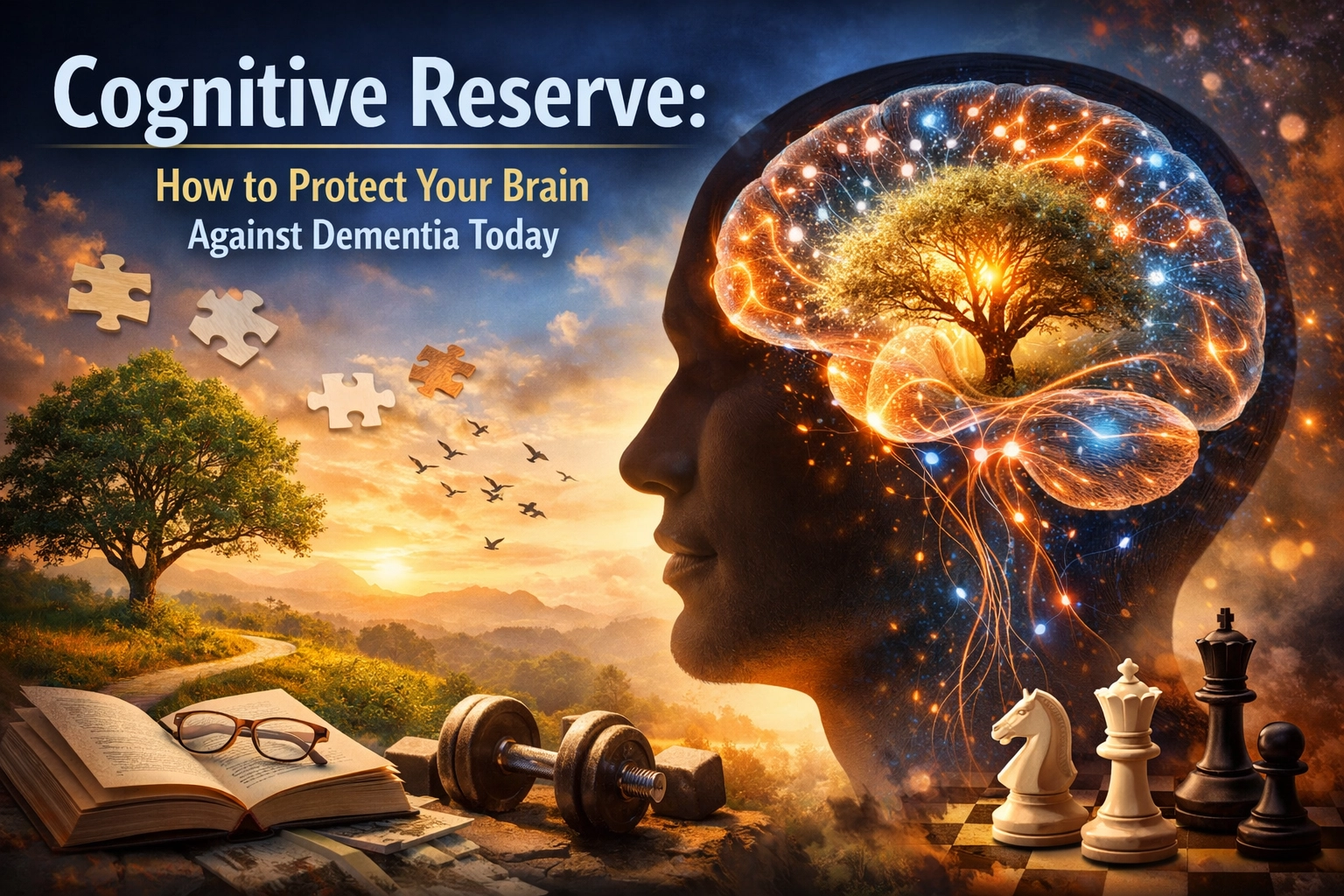
In the medical world of 2026, we’ve moved past simply trying to live longer. The new frontier is "Brain Span": ensuring our cognitive abilities last as long as our physical bodies. You’ve likely heard of people who, upon autopsy, showed significant brain plaques associated with Alzheimer’s, yet they never showed a single symptom of memory loss while they were alive.
How is that possible? The answer lies in Cognitive Reserve (CR).
Cognitive reserve is your brain’s ability to improvise and find alternate ways of getting a job done. Think of it as your brain’s "software" resilience. When one neural pathway becomes blocked or damaged by aging or disease, a brain with high cognitive reserve recruits a detour, using secondary pathways to maintain high-level function.
This guide explores the technical depth of cognitive reserve, the data-driven habits that build it, and how you can start "depositing" into your brain bank today to prevent dementia tomorrow.
The Science: Hardware vs. Software
To understand cognitive reserve, we must distinguish it from Brain Reserve. While they are related, they represent two different biological strategies for longevity.
| Feature | Brain Reserve (The Hardware) | Cognitive Reserve (The Software) |
|---|---|---|
| Definition | Physical structures like brain volume, number of neurons, and synaptic density. | The functional efficiency and flexibility of neural networks. |
| Measurement | MRI scans, head circumference, neuron counts. | Neuropsychological tests, IQ, educational attainment. |
| Flexibility | Static (mostly determined by genetics and early development). | Dynamic (can be improved throughout life via neuroplasticity). |
| Analogy | A computer with a massive hard drive. | Highly optimized code that runs fast even on old hardware. |
Research in 2026 suggests that while you can't easily change your "hardware" after a certain age, your "software" is incredibly malleable. Cognitive reserve is the reason two people can have the exact same level of brain tissue loss, yet one remains sharp while the other suffers from severe dementia.
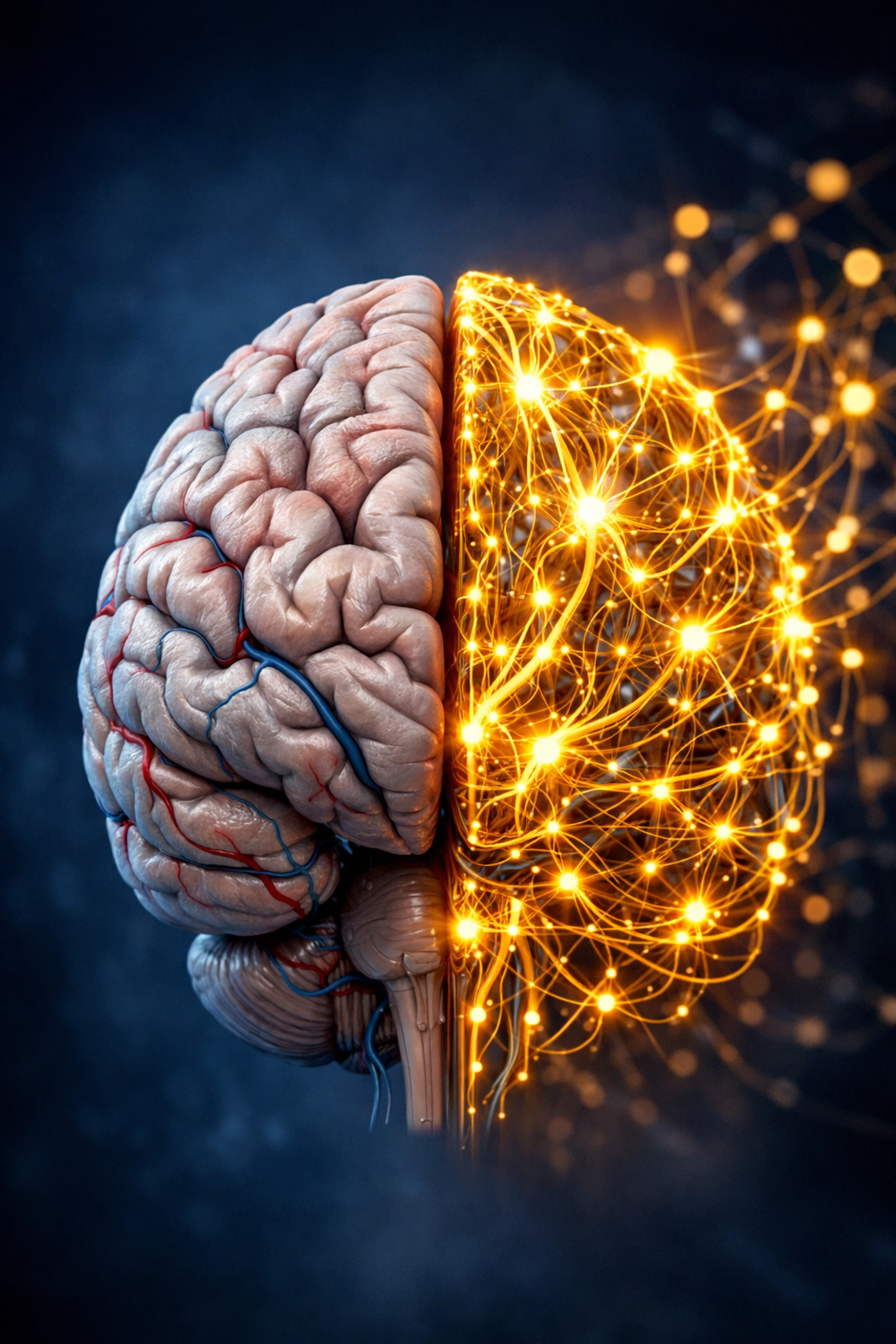
How Cognitive Reserve Delays Dementia by 5 Years
The most compelling data regarding cognitive reserve comes from longitudinal studies of aging. High cognitive reserve doesn't necessarily stop the biological "trash" (amyloid plaques and tau tangles) from accumulating in the brain. Instead, it changes the threshold at which those plaques start to cause functional impairment.
According to current research:
- The 5-Year Delay: Individuals with high cognitive reserve who eventually develop Alzheimer's disease experience the onset of clinical symptoms approximately 5 years later than those with low reserve.
- Incidence Reduction: High early-life reserve is linked to an 18% lower risk of dementia, while maintaining high late-life activity levels reduces incidence by 19%.
- The Prevention Potential: Experts now estimate that nearly 50% of all dementia cases worldwide could be prevented or significantly delayed by aggressively building cognitive reserve across the lifespan.
The Pillars of Cognitive Reserve: How to Build Your "Bank Account"
Building reserve isn't about doing one crossword puzzle a week. It requires "Cognitive Stepping": constantly challenging the brain with novel, complex, and social stimuli.
1. Educational Attainment and Lifelong Learning
Each additional year of formal education provides a cumulative benefit. Education early in life builds a "structural surplus" of synapses. However, the 2026 data is clear: Lifelong learning is just as vital. Learning a new language or a complex skill (like coding or a musical instrument) forces the brain to create entirely new neural maps, which is the definition of building reserve.
2. Occupational Complexity
Your 9-to-5 matters for your brain health. Jobs that involve "complex work with people" (mentoring, negotiating, leading) or "complex work with data" (analysis, synthesis, architectural design) are significantly more protective than repetitive manual tasks. If your job is repetitive, it is essential to seek complexity in your hobbies.
3. The "Social Brain" Hypothesis
Social isolation is one of the leading predictors of cognitive decline. Engaging in meaningful social interaction is one of the most cognitively demanding things a human can do. It requires real-time processing of verbal cues, body language, emotional regulation, and memory.

4. Novelty and Cognitive Flexibility
The brain is an efficiency machine. Once it masters a task, it "automates" it, using less energy and creating fewer new connections. To build reserve, you must fight automation.
- Don't just read: Summarize and debate what you read.
- Don't just play games: Switch to new games once you become proficient.
- The "Non-Dominant" Challenge: Using your non-dominant hand for daily tasks or taking new routes home are small but effective ways to force neural recruitment.
The Physiological Support System: BDNF and Sleep
You cannot build software if the hardware is crashing. Two biological factors are non-negotiable for cognitive reserve:
Brain-Derived Neurotrophic Factor (BDNF)
BDNF is essentially "Miracle-Gro" for the brain. It supports the survival of existing neurons and encourages the growth of new ones (neurogenesis).
- Vigorous Exercise: High-intensity interval training (HIIT) and Zone 2 steady-state cardio are the fastest ways to spike BDNF levels.
- Sunlight: Vitamin D and morning sunlight exposure are linked to higher BDNF expression.
The Glymphatic System (The Brain’s Dishwasher)
During deep sleep, your brain’s glymphatic system opens up, flushing out metabolic waste, including the amyloid-beta proteins associated with Alzheimer’s. If you don't sleep 7–9 hours, your cognitive reserve is being eroded by "trash" buildup faster than you can build new pathways.

A Practical 2026 Strategy for Every Decade
Building cognitive reserve is a marathon, not a sprint. Here is how to prioritize your efforts based on your current life stage.
In Your 20s and 30s: The Foundation
- Focus: Formal education and skill acquisition.
- Action: Master a difficult professional skill. Learn a second (or third) language. Build a baseline of high cardiovascular fitness to maximize "Brain Reserve" (physical volume).
In Your 40s and 50s: The Complexity Phase
- Focus: Managing "Inflammaging" and occupational growth.
- Action: Seek leadership roles or complex projects. Use a Continuous Glucose Monitor (CGM) to ensure blood sugar spikes aren't causing "brain fog" or neuro-inflammation. This is the decade where metabolic health dictates brain health.
In Your 60s and Beyond: The Novelty & Social Phase
- Focus: Avoiding the "Retirement Slump."
- Action: Volunteer, join social clubs, and take up "high-effort" hobbies like oil painting or strategy games. The goal is to remain a "novice" at something new every year.
The "Fast Decline" Paradox: A Word of Caution
There is one unique aspect of cognitive reserve to be aware of. Because people with high CR can function normally even with significant brain damage, once they finally do start showing symptoms of dementia, the decline can appear much faster.
This isn't because the disease is more aggressive, but because the brain has already "used up" all its detours. However, the trade-off is almost always worth it: you get more years of high-quality, independent life, even if the final stage is shorter.
Summary Checklist for Protecting Your Brain
- Learn something hard: If it doesn't feel frustrating, you probably aren't building reserve.
- Prioritize Zone 2 Exercise: Aim for 150 minutes per week to keep BDNF levels high.
- Socialize weekly: Real-world, face-to-face interactions are superior to digital ones.
- Protect your sleep: Treat 8 hours of sleep as a medical necessity for brain cleaning.
- Eat for the brain: Focus on the MIND diet (berries, leafy greens, fatty fish, and olive oil).

Cognitive reserve is perhaps the most empowering concept in modern neuroscience. It tells us that our cognitive destiny isn't just written in our DNA or determined by the "luck of the draw." Through our choices, our learning, and our social connections, we can build a resilient mind that stands strong against the passage of time.
About the Author: Malibongwe Gcwabaza
Malibongwe Gcwabaza is the CEO of blog and youtube, a platform dedicated to demystifying the cutting edge of longevity science and functional fitness. With a focus on data-driven wellness and "Deep Dive" education, Malibongwe works to bridge the gap between complex medical research and daily actionable habits. When not exploring the latest in bio-monitoring tech, he is an advocate for "The Centenarian Decathlon": training today for the physical and mental demands of being 100 years old.
About the Author