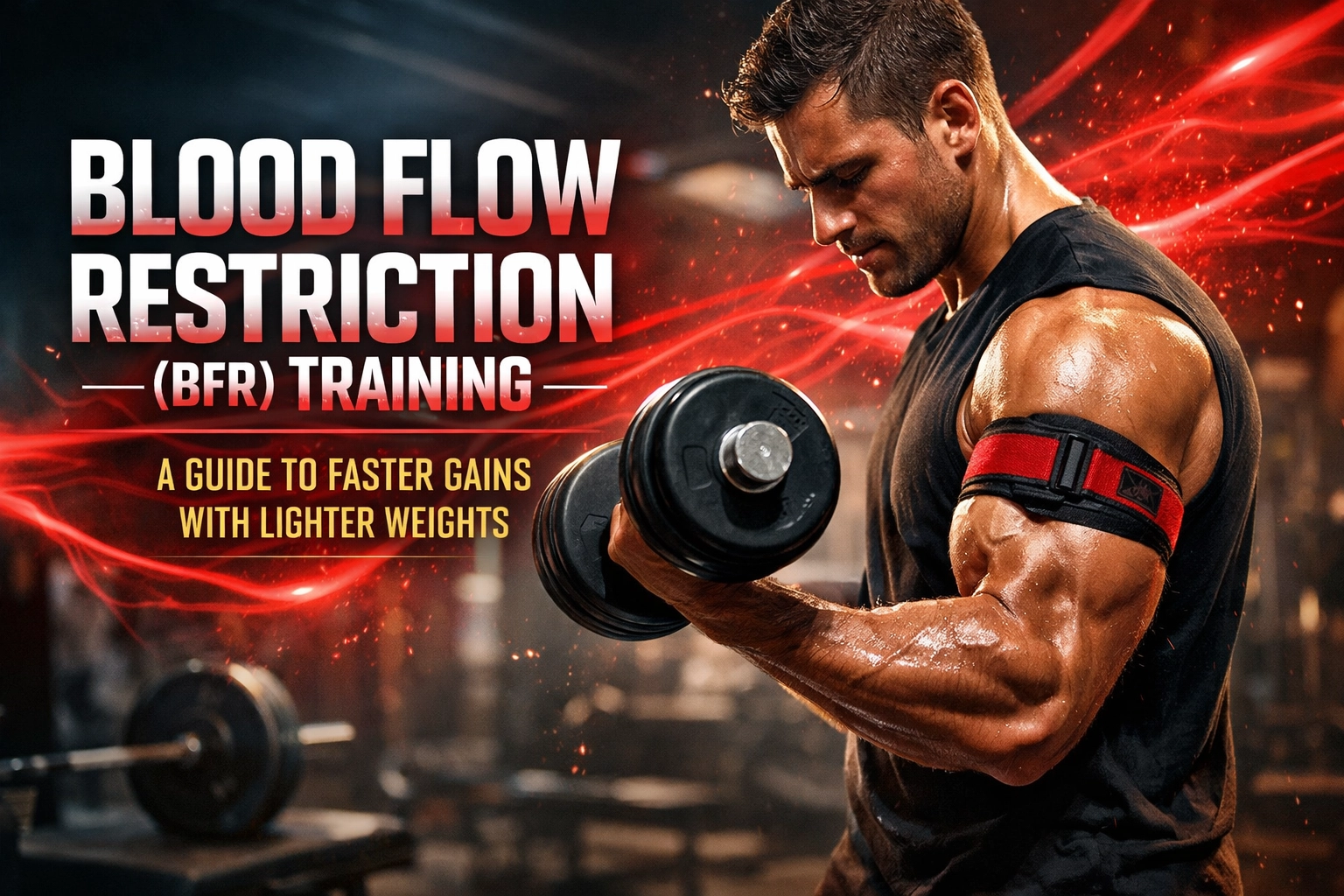
For decades, the fitness world lived by a rigid law: if you want big muscles and real strength, you have to lift heavy things. We were told that unless you were moving 70% to 85% of your one-rep max (1RM), your muscle fibers simply wouldn't "wake up" enough to grow.
But as we move through 2026, that dogma is being dismantled. Enter Blood Flow Restriction (BFR) training. Originally a niche technique used by elite Japanese powerlifters (known as Kaatsu) and later by physical therapists to rehab injured athletes, BFR has gone mainstream. It allows you to achieve the physiological benefits of a 400-pound squat while using only a fraction of that weight.
Whether you are a biohacker looking for "minimum effective dose" exercise, an aging athlete protecting your joints, or someone recovering from surgery, BFR is arguably the most efficient tool in your fitness arsenal.
What Exactly is BFR Training?
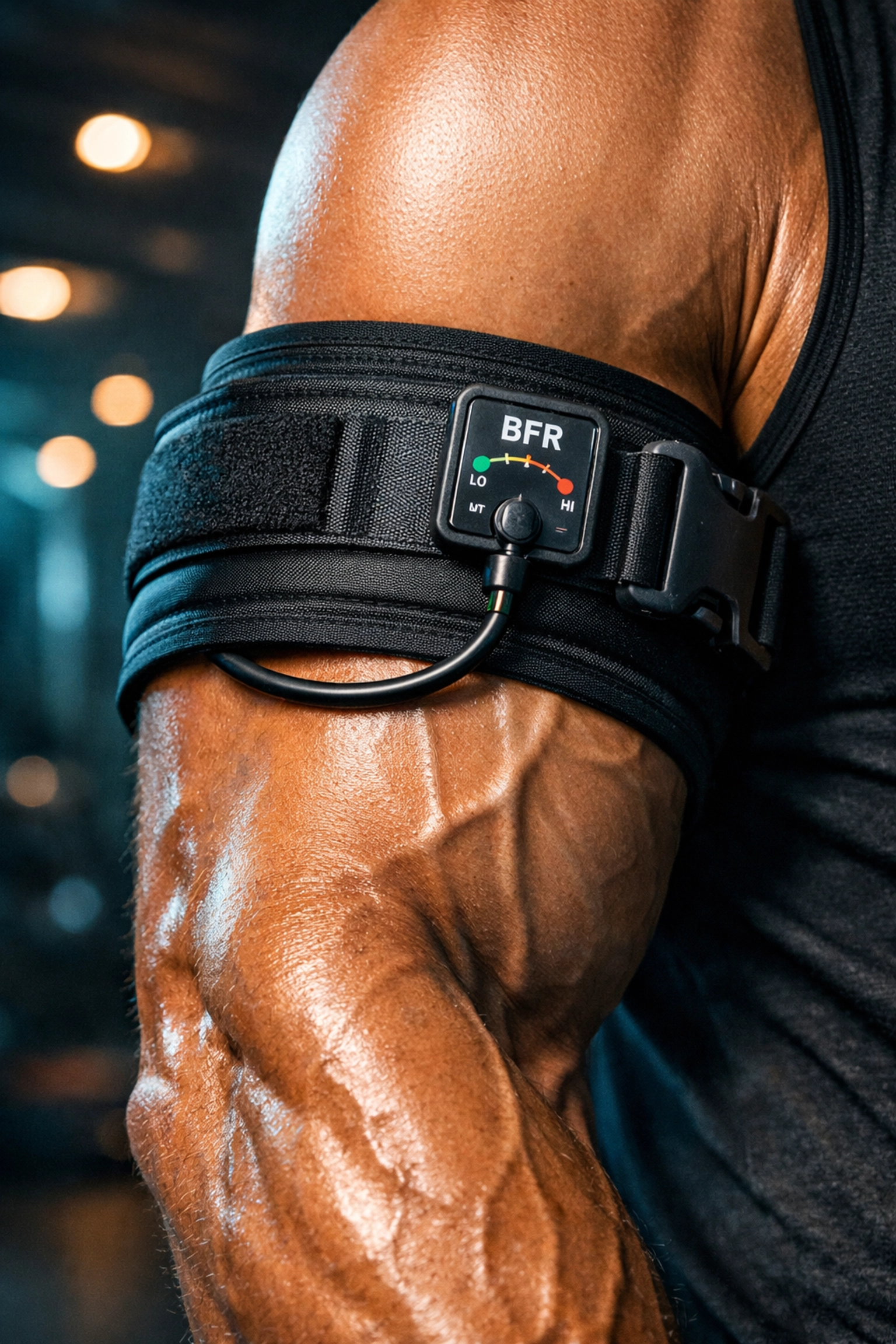
At its core, BFR involves wrapping a specialized pressurized cuff or elastic band around the top of a limb (arms or legs) during exercise.
The goal is unique: You want to restrict venous outflow (blood leaving the muscle) while maintaining arterial inflow (blood entering the muscle).
By allowing blood to pump into the muscle but preventing it from escaping, you create a localized "pooling" effect. This causes the muscle to swell and creates a highly acidic, low-oxygen environment. Your brain receives signals that the muscle is under extreme distress: similar to the feeling of a heavy 10-rep max set: even though you might only be lifting a 5-pound dumbbell or doing bodyweight air squats.
The Science of "Tricking" Your Muscles
To understand why BFR works, we have to look at how muscles usually grow. Normally, your body recruits "Slow-Twitch" (Type I) fibers for light tasks and saves the powerful "Fast-Twitch" (Type II) fibers for heavy lifting or explosive movements. Fast-twitch fibers have the most potential for growth (hypertrophy).
In a BFR state, the lack of oxygen (hypoxia) forces the slow-twitch fibers to fatigue almost immediately. To keep the movement going, your body is forced to recruit those "lazy" fast-twitch fibers, even though the weight is light.
The Four Primary Mechanisms of BFR Hypertrophy
- Metabolic Stress: The buildup of metabolites like lactate and hydrogen ions triggers a massive anabolic signaling cascade.
- Cellular Swelling: As blood pools, the muscle cells swell. The cell perceives this internal pressure as a threat to its structure and reacts by reinforcing its "walls" via protein synthesis.
- Hormonal Surge: Studies show that BFR can lead to a 290% increase in Growth Hormone (GH) secretion: significantly higher than traditional heavy lifting.
- Myostatin Inhibition: BFR has been shown to decrease myostatin, a protein that usually acts as a "brake" on muscle growth.
Table: Traditional Heavy Lifting vs. BFR Training
| Feature | Traditional Resistance Training | BFR Training |
|---|---|---|
| Load (% of 1RM) | 70% – 85% | 20% – 35% |
| Primary Goal | Mechanical Tension | Metabolic Stress / Hypoxia |
| Joint Impact | High | Very Low |
| Recovery Time | 48–72 hours | 12–24 hours |
| Hormone Response | High | Extremely High (GH Focus) |
| Fiber Recruitment | Load-dependent | Oxygen-depletion dependent |
Why BFR is the Ultimate Longevity Tool in 2026
As we prioritize "Healthspan" over just lifespan, BFR has emerged as a critical tool for the "Centenarian Decathlon."
As we age, our joints: knees, hips, and lower back: often become the bottleneck for our fitness. We want to maintain muscle mass to prevent sarcopenia, but heavy lifting can lead to tendonitis or cartilage wear. BFR solves this by providing a "heavy" stimulus with "light" consequences.
Research in 2025 and 2026 has increasingly shown that BFR isn't just for muscles; it improves vascular endothelial function (heart health) and can increase bone mineral density in populations that cannot tolerate heavy loading.

How to Implement BFR: The Practical Guide
You can't just tie a jump rope around your arm and hope for the best. Safety and precision are paramount.
1. The Equipment
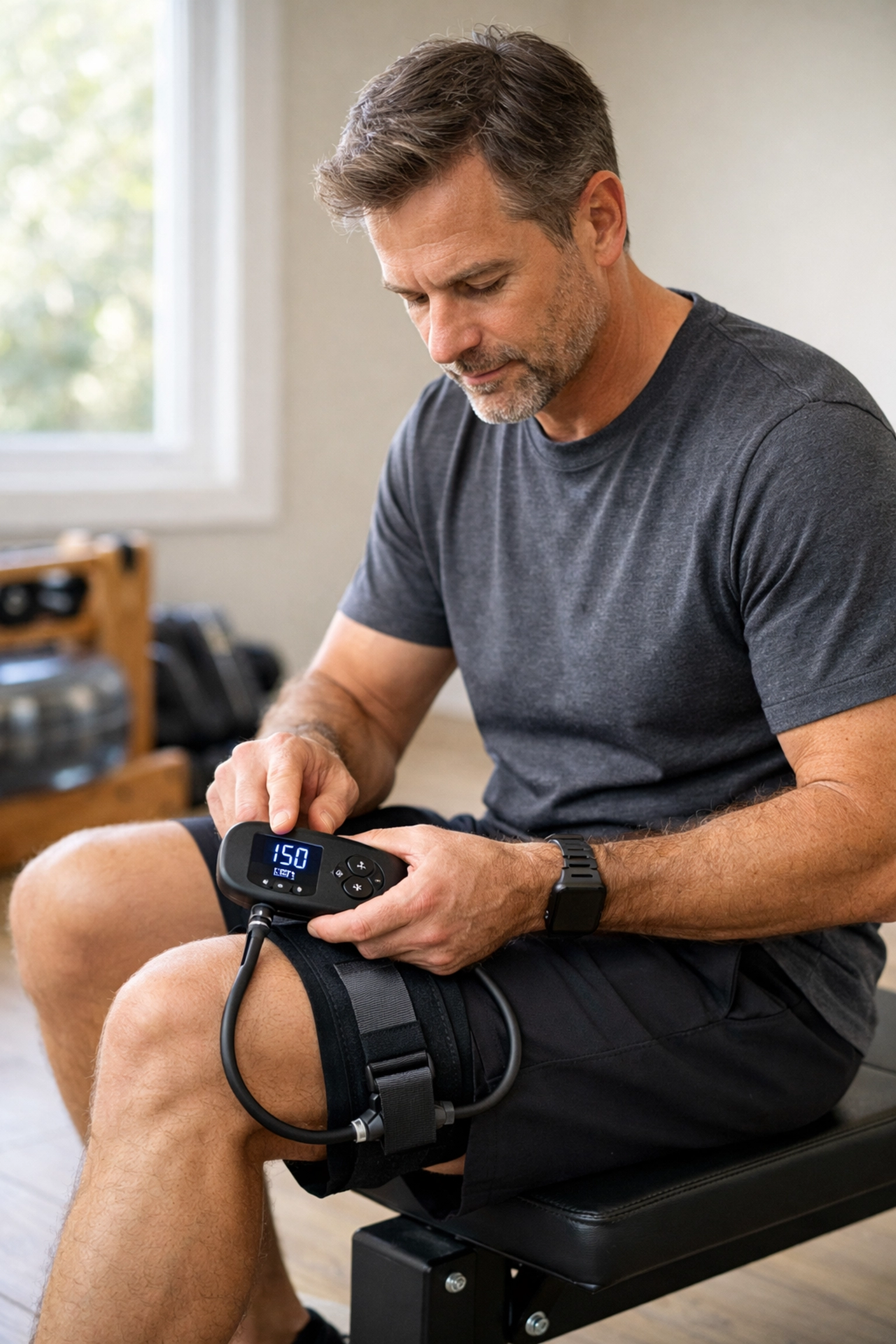
- Automatic Cuffs: These are the "gold standard." They use an internal computer to calculate your Limb Occlusion Pressure (LOP): the exact pressure needed to stop blood flow: and then set the cuff to a safe percentage of that (usually 50% for arms, 80% for legs).
- Manual Cuffs: These use a hand pump and a gauge. They are more affordable but require a learning curve to find the right pressure.
- Elastic Bands: While cheap, they are the least "data-driven" and carry a higher risk of accidental full arterial occlusion (which you want to avoid).
2. Cuff Placement
Cuffs should only be placed in two locations:
- Upper Body: At the very top of the arm, just below the shoulder, tucked into the armpit.
- Lower Body: At the very top of the thigh, just below the groin/hip crease.
Never wrap around the mid-calf or mid-forearm. This can cause nerve damage.
3. Finding the "Goldilocks" Pressure
If you aren't using an automatic cuff that calculates LOP for you, use the "Perceived Tightness" scale. On a scale of 1 to 10:
- Arms: Aim for a 5 or 6 out of 10.
- Legs: Aim for a 7 or 8 out of 10.
If you feel numbness, tingling, or your limb turns white/blue, the cuff is too tight. You are aiming for a deep reddish-purple "pump" look.
The "30-15-15-15" Protocol
The most scientifically validated rep scheme for BFR is the "30-15-15-15" method. This is designed to maximize metabolic stress while using light weights (20–30% of your max).
- Set 1: 30 reps (This depletes initial oxygen and builds lactate).
- Rest: 30 seconds (Keep the cuffs inflated!).
- Set 2: 15 reps.
- Rest: 30 seconds.
- Set 3: 15 reps.
- Rest: 30 seconds.
- Set 4: 15 reps.
By the final set, the "burn" should be intense. If you find it easy to finish the last 15 reps, the weight is too light. If you can't get to 10 reps on the second set, it's too heavy.
Best Exercises for BFR
Since BFR is based on light loads, isolation exercises or simple compound movements work best.
- For the Quads: Leg extensions or bodyweight/goblet squats.
- For the Hamstrings: Lying leg curls or glute bridges.
- For the Biceps/Triceps: Barbell curls and cable press-downs.
- For the Calves: Standing or seated calf raises.
Note on "Systemic" Effects: Even though the cuff is on your leg, the massive release of Growth Hormone into the bloodstream can actually help other parts of your body recover and grow. This is why BFR is often called "legal cheating."

Safety and Contraindications
While BFR is remarkably safe when done correctly, it is not for everyone. Because BFR increases internal pressure and affects blood return to the heart, you should consult a doctor if you have:
- A history of Deep Vein Thrombosis (DVT) or blood clots.
- Untreated high blood pressure or heart disease.
- Pregnancy (due to changes in blood volume).
- Varicose veins (severe cases).
A common myth is that BFR causes muscle damage (rhabdomyolysis). In reality, because the weights are so light, BFR actually causes less muscle damage than heavy eccentric lifting, which is why you can often do it daily or every other day without the typical "DOMS" (soreness).
The Verdict: Should You Use BFR?
BFR is no longer a gimmick; it’s a pillar of modern sports science. If you are a high-performer, it allows you to add volume to your training without burning out your Central Nervous System. If you are over 50, it’s the insurance policy your bones and muscles need.
By "training smarter," you aren't just saving time; you're saving your joints for the long haul.
About the Author: Malibongwe Gcwabaza
Malibongwe Gcwabaza is the CEO of blog and youtube, a leading digital platform dedicated to the intersection of longevity science and high-performance living. With a background in executive leadership and a passion for human optimization, Malibongwe focuses on bringing "lab-to-gym" insights to a global audience. When he isn't exploring the latest in biohacking, he is an advocate for functional fitness and sustainable wellness practices that help people live better, longer.

About the Author