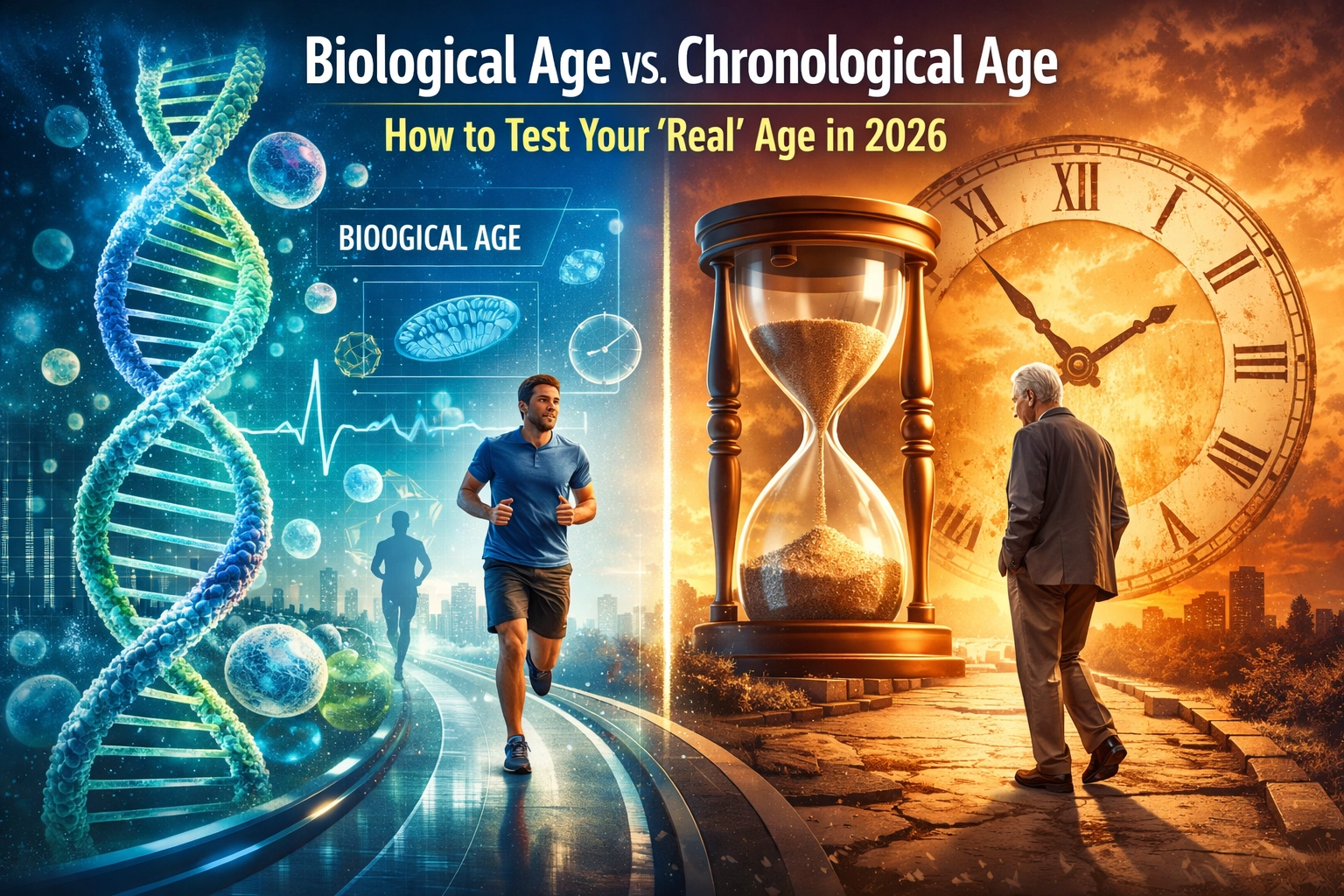
The number of candles on your birthday cake is officially a legacy metric. For decades, we defined aging by the calendar: a linear, unstoppable progression from birth to the present. But as we move through 2026, the scientific community and the wellness industry have pivoted toward a more precise measurement: Biological Age.
While your chronological age tracks the number of times you have orbited the sun, your biological age tracks the functional state of your cells, tissues, and organs. It is entirely possible for a 50-year-old to have the cellular profile of a 38-year-old, or conversely, for a 30-year-old to be aging at an accelerated rate due to chronic stress, poor nutrition, or environmental toxins.
This guide explores the high-tech landscape of 2026 longevity testing, the specific biomarkers that matter, and how you can utilize this data to optimize your healthspan.
The Science: Why the "Age Gap" Exists
Aging is not a single process but a collection of distinct cellular hallmarks. These include genomic instability, telomere attrition, and epigenetic alterations. The discrepancy between your calendar age and your biological age exists because of epigenetics: the study of how your behaviors and environment cause changes that affect the way your genes work.
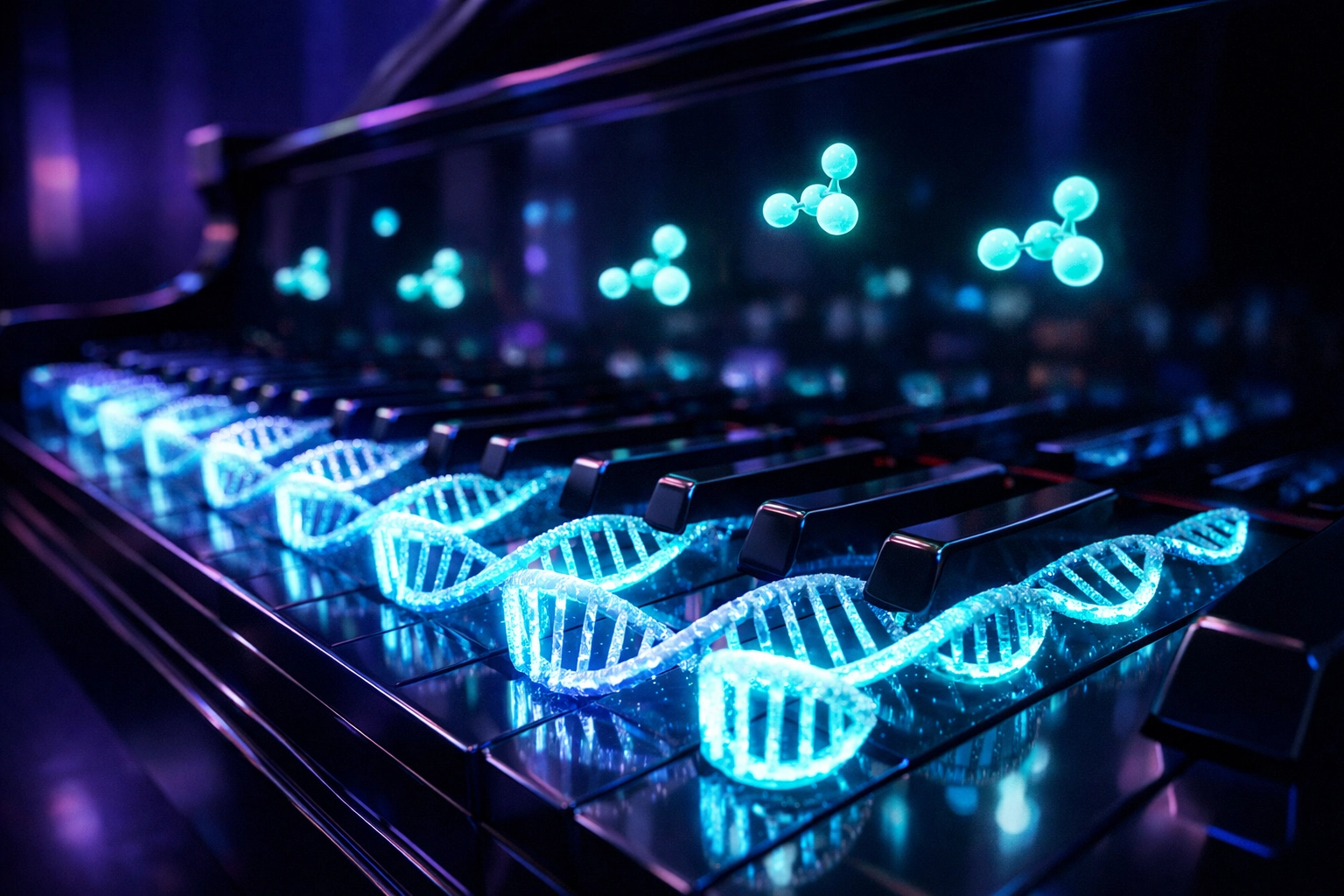
Unlike genetic changes, epigenetic changes are reversible. They do not change your DNA sequence, but they change how your body reads a DNA sequence. Think of your DNA as a piano and epigenetics as the sheet music. You can't change the piano, but you can change the tune being played.
The Role of DNA Methylation
The gold standard for measuring biological age in 2026 is DNA Methylation (DNAm). This involves chemical tags called methyl groups that attach to your DNA. As we age, these patterns change in predictable ways. By analyzing thousands of these "CpG sites," scientists can determine with high accuracy how fast your "biological clock" is ticking.
Top Biological Age Testing Methodologies in 2026
Testing has moved far beyond basic blood panels. Today, we utilize specialized "clocks" developed through machine learning and massive datasets.
1. Epigenetic Clocks (The Horvath vs. DunedinPACE)
There are two main types of epigenetic tests you will encounter today:
- Status Clocks (e.g., Horvath Clock): These provide a snapshot of your biological age at a specific moment. It tells you where you stand compared to the average population.
- Rate-of-Aging Clocks (e.g., DunedinPACE): Developed by researchers at Duke and Columbia, this is often called a "speedometer." Instead of giving you a "year" number, it tells you if you are aging at a rate of 0.8 years per year (slow) or 1.2 years per year (fast). For intervention tracking, the DunedinPACE is currently the most sensitive and actionable metric.
2. Glycan Biomarkers
GlycanAge testing looks at the sugar molecules (glycans) attached to your antibodies (IgG). These molecules are highly sensitive to systemic inflammation. Because inflammation is a primary driver of aging: a process now termed "inflammaging": measuring glycans provides a direct window into your immune system's biological age.
3. Telomere Length
Once the "holy grail" of aging, telomere testing (measuring the protective caps on your chromosomes) is now considered a secondary metric. While short telomeres are a sign of cellular senescence, they are more volatile and less predictive of overall health than epigenetic methylation patterns.
2026 Comparison Table: Leading Commercial Tests
| Test Provider | Primary Biomarker | Sample Type | Best For |
|---|---|---|---|
| TruDiagnostic (TruAge) | DNA Methylation (DunedinPACE) | Blood (Finger prick) | Deep clinical insights & rate of aging |
| NOVOS Age | DNA Methylation | Blood | Tracking specific lifestyle interventions |
| GlycanAge | IgG Glycans | Blood | Immune health & inflammation tracking |
| Tally Health | DNA Methylation | Cheek Swab | Consumer-friendly, routine monitoring |
| Elysium Index | DNA Methylation | Saliva | Baseline biological age assessment |
Technical Deep Dive: The Data Behind the Clocks
To understand why these tests are authoritative, we have to look at the correlation coefficients. Early "first-generation" clocks were trained simply to predict chronological age. While impressive, they weren't great at predicting health outcomes.
"Third-generation" clocks, like those used in 2026, are trained on longitudinal data: meaning researchers followed the same people for decades. They look for patterns that correlate with the onset of chronic diseases, cognitive decline, and physical frailty.
Key Insight: A study published in Nature Aging recently demonstrated that individuals with a biological age 5 or more years younger than their chronological age had a 40% lower risk of all-cause mortality over a 10-year period.
How to Test Your "Real" Age: Step-by-Step
If you are ready to move beyond the calendar, follow this protocol for the most accurate results:
- Select Your Metric: If you want to see if your new diet is working, choose a Rate-of-Aging test (DunedinPACE). If you want a baseline "age" for your social media bio, a Status Clock is fine.
- Standardize Your Collection: Epigenetic markers can fluctuate slightly based on acute stress or illness. Take your test in a fasted state, ideally on a morning where you haven't just completed an ultra-marathon or recovered from the flu.
- Establish a Baseline: Your first test is just a data point. The real value comes from the second test 6–12 months later.
- Review the "Hallmarks" Report: Most premium tests in 2026 provide sub-reports on immune exhaustion, inflammation, and even your "brain age."

Factors That "De-Age" Your Biology
The most exciting aspect of biological age testing is that the results are not a life sentence. In 2026, we have identified several high-leverage interventions that have been shown to "turn back the clock" in clinical trials.
Nutritional Interventions
- Sulforaphane and Polyphenols: These compounds found in cruciferous vegetables and berries act as "epigenetic modulators," helping to maintain youthful methylation patterns.
- Caloric Restriction Mimetics: Compounds like Spermidine and certain NAD+ precursors support autophagy (cellular cleanup), which prevents the accumulation of "zombie cells" that accelerate biological aging.
Physical Optimization
- VO2 Max Training: High-intensity interval training (HIIT) is strongly correlated with longer telomeres and more youthful epigenetic profiles.
- Resistance Training: Sarcopenia (muscle loss) is a primary driver of biological aging. Maintaining muscle mass keeps metabolic markers like HbA1c and insulin sensitivity in the "youthful" range.
Lifestyle Factors
- Circadian Alignment: Chronic sleep deprivation effectively "rusts" your cellular machinery. Using 2026 wearable tech to ensure deep sleep and REM cycles is essential for cellular repair.
- Hormetic Stress: Brief exposure to extreme cold (ice baths) or heat (saunas) triggers heat-shock proteins and sirtuins, which are the body's natural anti-aging defense mechanisms.

The Limits of Testing: What the Science Doesn't Tell You
While biological age tests are incredibly powerful, they are not crystal balls. It is important to remember:
- Tissue Specificity: A blood test measures the age of your immune cells. Your skin or your liver might be aging at a slightly different rate.
- Environmental Lag: If you start a healthy habit today, it may take 3 to 6 months for your DNA methylation patterns to reflect that change.
- No "Perfect" Number: There is no single "correct" biological age. The goal is a downward trend relative to your chronological baseline.
Summary: Taking Control of Your Timeline
In 2026, aging is no longer a passive process. By utilizing DNA methylation clocks and glycan analysis, we can finally quantify the impact of our lifestyle choices. Testing your biological age provides the ultimate feedback loop: it tells you exactly what is working and what isn't, allowing you to stop guessing and start optimizing.
Whether you are 25 or 75, the goal remains the same: to ensure your biological systems remain resilient, functional, and "young" for as long as possible.
About the Author: Malibongwe Gcwabaza
Malibongwe Gcwabaza is the CEO of blog and youtube, a leading digital platform dedicated to the intersection of longevity science and performance technology. With a background in health tech and a passion for data-driven wellness, Malibongwe focuses on making complex biological insights accessible to everyone. He spends his free time experimenting with Z2 training and researching the latest in epigenetic modulation.

About the Author