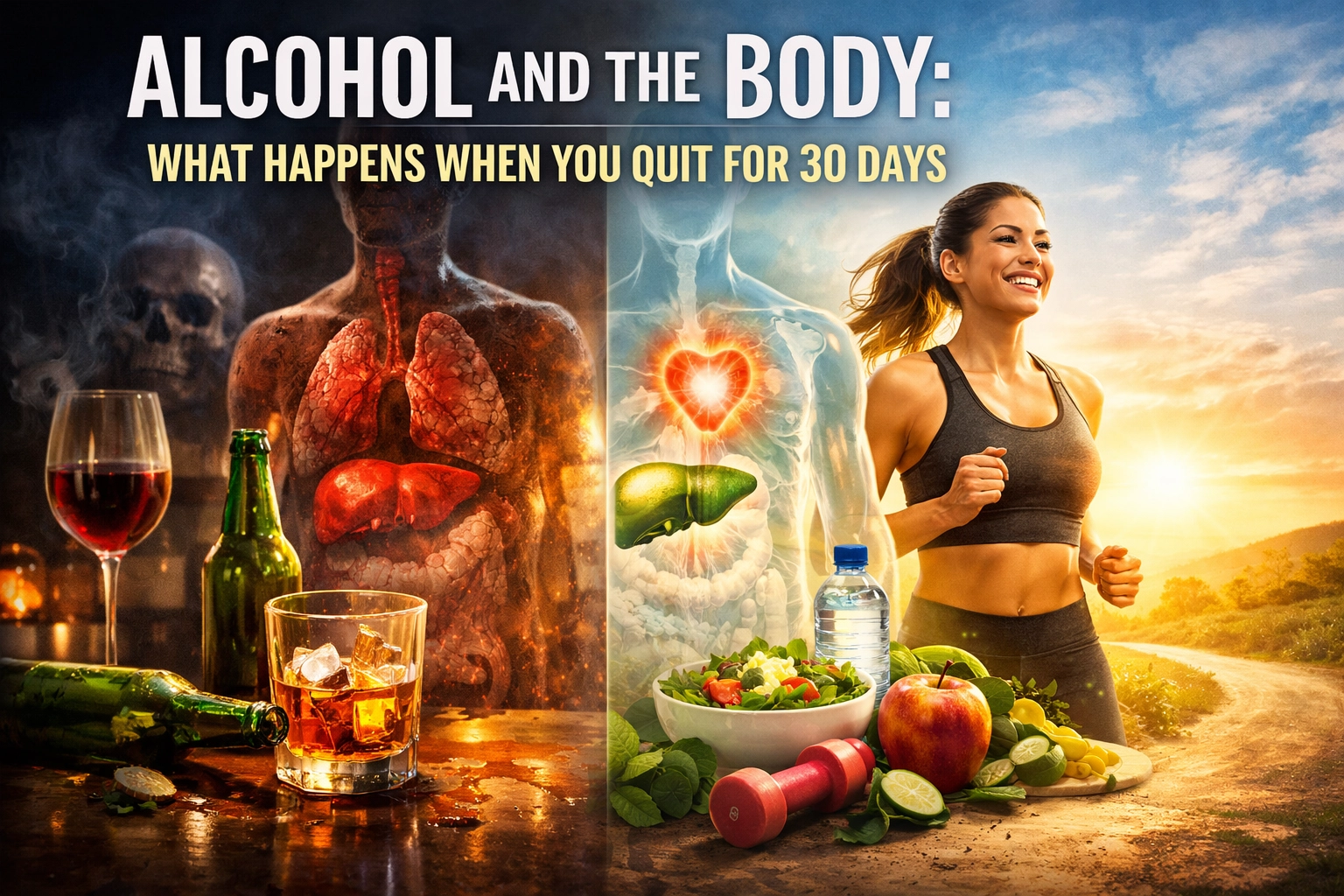
Taking a 30-day break from alcohol: often popularized as "Dry January" or "Sober October": is frequently viewed as a simple challenge or a post-holiday detox. However, from a physiological and neurological perspective, 30 days of abstinence is a profound metabolic intervention. By removing ethanol from your system, you are not just "taking a break"; you are allowing your body to initiate a sequence of regenerative processes that affect everything from cellular DNA repair to the architecture of your sleep.
In this deep dive, we will explore the granular, week-by-week biological shifts that occur when you quit drinking for a month, backed by the latest clinical insights for 2026.
The Immediate Shift: Days 1 to 7
The first week is arguably the most difficult, as the body transitions from a state of toxic processing to homeostasis. Alcohol is a central nervous system depressant that artificially stimulates the production of GABA (the "calm" neurotransmitter) while inhibiting glutamate (the "excitatory" neurotransmitter). When you stop, your brain experiences a "glutamate rebound," leading to temporary hyper-excitability.
Sleep Architecture and REM Rebound
While many people use alcohol as a sleep aid, it is actually a destroyer of sleep quality. Alcohol induces "sedation," which is not the same as physiological sleep. During the first week of sobriety, you will likely experience REM Rebound.
Alcohol suppresses Rapid Eye Movement (REM) sleep, the stage responsible for emotional processing and memory consolidation. As the substance leaves your system, the brain attempts to "catch up" on lost REM cycles. This can result in vivid dreams and night sweats, but by day seven, your sleep cycles begin to stabilize. Data from 2026 wearable sleep trackers consistently show a 20-30% increase in Deep Sleep and REM scores within the first seven days of abstinence.
Blood Sugar and Hydration
Alcohol is a diuretic that inhibits anti-diuretic hormone (ADH), forcing the kidneys to expel water. By the end of week one, your hydration levels normalize, leading to a noticeable reduction in "puffy" facial features and improved cognitive clarity. Furthermore, your blood sugar levels begin to stabilize as the liver is no longer preoccupied with neutralizing ethanol and can return to its primary job of glucose regulation.

The Metabolic Reset: Days 8 to 14
By the second week, the acute withdrawal phase is over, and the body moves into a systemic repair phase. This is where the "non-visible" benefits start to compound.
Digestive Health and the Microbiome
Ethanol is an irritant to the lining of the gastrointestinal tract. Chronic consumption can lead to "leaky gut" (increased intestinal permeability), allowing endotoxins to enter the bloodstream. By day 14, the gut lining begins to heal. More importantly, the diversity of your gut microbiome starts to shift. Alcohol tends to kill beneficial bacteria while promoting the growth of inflammatory strains. Two weeks of sobriety allows for a more balanced microbial environment, often resolving issues like bloating, acid reflux, and irregular digestion.
Skin Radiance and Inflammation
The "sober glow" is a real biological phenomenon. Alcohol causes peripheral vasodilation (the widening of blood vessels), which leads to redness and broken capillaries. It also triggers systemic inflammation. By the second week, the reduction in inflammatory markers like C-Reactive Protein (CRP) results in clearer skin, reduced acne, and a more even skin tone.
The Cognitive Surge: Days 15 to 21
The third week is characterized by significant neurological improvements. This is often when individuals report the "brain fog" finally lifting.
Neuroplasticity and BDNF
Research indicates that prolonged alcohol consumption inhibits Brain-Derived Neurotrophic Factor (BDNF), a protein that acts like "fertilizer" for your brain cells. By the third week of sobriety, BDNF levels begin to rise, enhancing neuroplasticity: the brain’s ability to form new neural connections. This results in:
- Improved Executive Function: Better decision-making and impulse control.
- Enhanced Focus: A longer attention span and reduced mental fatigue.
- Emotional Regulation: A reduction in the "hangxiety" (the low-grade anxiety caused by the chemical imbalance of a hangover).
Weight Loss and Fat Oxidation
Alcohol contains 7 calories per gram: nearly as much as pure fat: but provides zero nutritional value. More importantly, when alcohol is in your system, your body stops burning fat and prioritizes the elimination of the toxin. By week three, your metabolic rate returns to its efficient state. Without the "empty" calories and the metabolic pause, most individuals see a measurable reduction in visceral fat (the dangerous fat stored around organs).

The Cellular Rebirth: Days 22 to 30
As you approach the end of the month, the most significant health markers: those linked to long-term longevity: see a dramatic improvement.
Liver Regeneration and Enzyme Normalization
The liver is remarkably resilient. By day 30, liver fat can be reduced by as much as 15% to 20% in moderate-to-heavy drinkers. Clinical markers such as Alanine Aminotransferase (ALT) and Gamma-Glutamyl Transferase (GGT) typically drop into the optimal range. This reduction in "fatty liver" is one of the single best predictors of metabolic health and longevity.
Immune System Fortification
Alcohol suppresses the immune system by reducing the activity of white blood cells and interfering with the production of cytokines. By the end of the month, your immune response is fully restored. You become more resilient to common pathogens and experience faster recovery times from physical exertion.
Summary of Benefits: The 30-Day Comparison
To visualize the impact, let's look at the data-driven shifts typically observed in a 30-day sobriety period:
| Metric | Day 1 (Baseline) | Day 30 (Post-Abstinence) | Impact on Health |
|---|---|---|---|
| Sleep Quality | 55% Efficiency | 85-90% Efficiency | Better recovery & mood |
| Liver Fat | High (Steatosis risk) | Reduced by 15-20% | Lower metabolic disease risk |
| Hydration | Chronic Mild Dehydration | Optimal Cellular Hydration | Better skin & kidney function |
| Inflammation (CRP) | Elevated | Normal/Low | Reduced joint pain & aging |
| Blood Glucose | Fluctuating | Stable | Reduced Type 2 Diabetes risk |
| Weight | Baseline | 2-5 lbs reduction (avg) | Improved BMI |
The "Day 31" Strategy: How to Transition
Completing 30 days is a monumental achievement, but the real value lies in what you do next. For many, this month serves as a "calibration." You now have a baseline of how "good" your body is supposed to feel.
1. The Mindful Reintroduction
If you choose to drink again, do so mindfully. Notice how even a single glass of wine affects your sleep tracking data or your mood the next morning. Most people find that their "tolerance" has dropped significantly, which is a sign that their liver and brain have resensitized.
2. The 80/20 Rule
Instead of returning to daily or weekend-heavy drinking, consider a longevity-focused approach. Limit alcohol to specific social occasions, ensuring that 80% of your month remains "dry" to maintain the metabolic gains you’ve achieved.
3. Track Your Biometrics
Continue using your 2026 health tech: whether it's a CGM (Continuous Glucose Monitor) or a smart ring: to see the direct correlation between alcohol consumption and your biological age markers. Data is the best motivator for moderation.

Final Thoughts
Quitting alcohol for 30 days isn't just a test of willpower; it’s a biological reset that touches every organ system. From the molecular level of your DNA repair to the macro level of your mental clarity, the benefits are undeniable. Whether you decide to stay sober long-term or simply reduce your intake, you have given your body the gift of a clean slate.
Author Bio: Malibongwe Gcwabaza
CEO of blog and youtube
Malibongwe Gcwabaza is a visionary leader and health optimization advocate with over 15 years of experience in digital media and wellness strategy. As the CEO of blog and youtube, Malibongwe focuses on bridging the gap between complex clinical research and actionable lifestyle changes. He is a proponent of "The Centenarian Decathlon," focusing on functional fitness and metabolic health to ensure peak performance at any age. When he’s not analyzing the latest in longevity tech, he’s an avid practitioner of Zone 2 training and mindfulness-based stress reduction.
About the Author