
When we discuss "wealth" in the context of aging, we usually talk about 401(k)s and real estate. However, in the biological reality of 2026, the most valuable asset you own isn't in a bank: it's wrapped around your skeleton.
Sarcopenia, the age-related progressive loss of skeletal muscle mass and strength, is no longer viewed as an inevitable "side effect" of getting old. In modern longevity medicine, we view muscle as our "longevity currency." You spend it every time you move, every time you recover from an illness, and every time you need to stabilize your glucose levels. If your balance runs dry, your healthspan collapses.
By the age of 70, the average sedentary individual has lost nearly 40% of their total muscle mass compared to their 20s. This isn't just about aesthetics; it's about survival. This guide breaks down the high-level science of sarcopenia prevention and provides a technical roadmap to building and preserving your biological fortune.
The Biological Cost of Muscle Loss
Sarcopenia officially received its own ICD-10 clinical diagnosis code (M62.84) in 2016, marking a shift in how the medical community treats muscle wasting. It is a multi-factorial condition characterized by a decline in muscle quantity, quality, and physical performance.
The Three Stages of Sarcopenia
- Pre-sarcopenia: Decrease in muscle mass without yet impacting strength or physical performance.
- Sarcopenia: Low muscle mass combined with either low muscle strength or low physical performance.
- Severe Sarcopenia: All three criteria are met (low mass, low strength, low performance).

Why Muscle is an Endocrine Organ
We used to think muscle was just for movement. We now know that skeletal muscle is the body’s largest endocrine organ. When muscles contract, they release myokines: cell-signaling proteins that communicate with the brain, liver, and adipose tissue. Myokines like irisin and myostatin play critical roles in reducing systemic inflammation and improving cognitive function. When you lose muscle, you lose this internal pharmacy.
The Data: Why You Need a "Buffer"
After age 30, you lose roughly 3% to 8% of your muscle mass per decade. This rate accelerates significantly after age 60.
| Age Bracket | Estimated Muscle Loss (per decade) | Primary Driver |
|---|---|---|
| 30 – 50 | 3-5% | Sedentary lifestyle, slight hormonal shifts |
| 50 – 65 | 5-10% | Anabolic resistance, menopause/andropause |
| 65+ | 10-15% | Chronic inflammation (Inflammaging), malnutrition |
The goal of "longevity currency" is to build such a high surplus of muscle in your 30s, 40s, and 50s that even with natural age-related decline, you never hit the "frailty threshold": the point where you can no longer get out of a chair unassisted or survive a fall.
Strategy 1: Overcoming Anabolic Resistance
As we age, our bodies become less efficient at turning dietary protein into new muscle tissue. This phenomenon is called anabolic resistance. To fight this, we have to change our approach to both training and nutrition.
The Protein Threshold and the Leucine Trigger
The old RDA for protein (0.8g per kg of body weight) is widely considered insufficient for preventing sarcopenia in 2026. For those serious about longevity, the target is closer to 1.6g to 2.2g of protein per kilogram of body weight.
Crucially, you must hit the Leucine Trigger. Leucine is an essential amino acid that acts as a chemical "on-switch" for Muscle Protein Synthesis (MPS) via the mTOR pathway. For older adults, each meal should contain at least 2.5 to 3 grams of Leucine to overcome anabolic resistance.
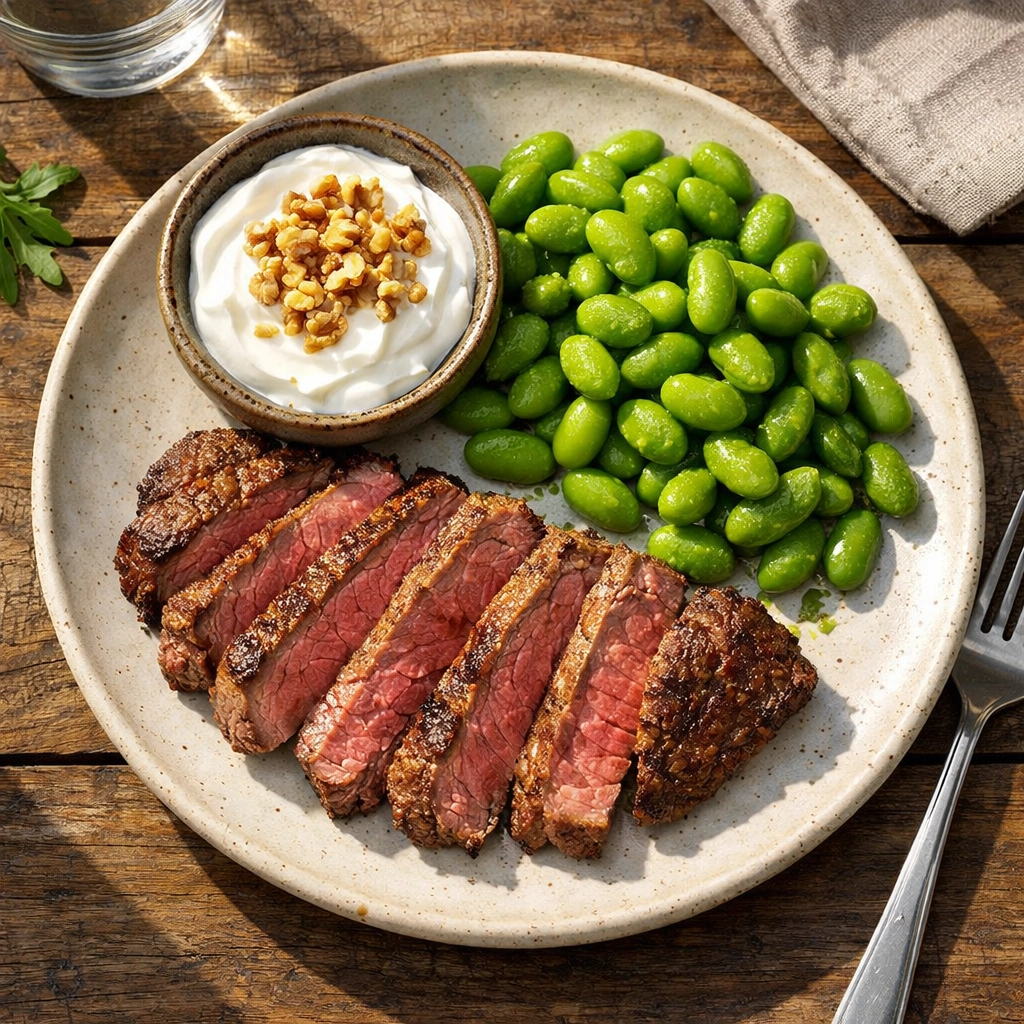
Top Leucine-Rich Sources:
- Whey Protein Isolate (Approx. 2.5g per scoop)
- Greek Yogurt (Approx. 2g per cup)
- Lean Beef (Approx. 2.8g per 100g)
- Soy Protein (Approx. 2g per 100g)
Strategy 2: Resistance Training (The Golden Standard)
You cannot "walk" your way out of sarcopenia. While aerobic exercise is vital for heart health, Hypertrophy-based resistance training is the only way to maintain and build the Type II (fast-twitch) muscle fibers that are lost most rapidly with age.
The 2026 Recommended Protocol
To maximize your longevity currency, your training must focus on three variables:
- Mechanical Tension: Lifting heavy enough weights to recruit high-threshold motor units.
- Progressive Overload: Constantly increasing the challenge to the muscle over time.
- Eccentric Control: The "lowering" phase of a lift is where much of the muscle signaling occurs.
Blood Flow Restriction (BFR) Training
For those with joint issues or limited mobility, BFR is a game-changer. By using specialized cuffs to partially restrict blood flow to a working limb, you can achieve significant muscle growth using very light weights (20-30% of your max). This tricks the brain into thinking the muscle is under massive stress, triggering a systemic anabolic response without the joint tax of heavy lifting.

Strategy 3: Measuring Your "Balance"
How do you know if your longevity currency is growing or shrinking? You need data-driven metrics.
1. Grip Strength
Handgrip strength is one of the most powerful predictors of all-cause mortality. It serves as a proxy for total body strength. In clinical settings, a grip strength of less than 26kg for men or 16kg for women is a major red flag for sarcopenia.
2. The DEXA Scan
The "Gold Standard" for body composition. A DEXA scan provides your Appendicular Lean Mass (ALM): the amount of muscle in your arms and legs. Dividing ALM by your height squared gives you your Skeletal Muscle Index (SMI).
3. The 30-Second Chair Stand
A simple functional test: How many times can you stand up and sit down from a standard chair in 30 seconds without using your hands?
- Excellent (Age 60-64): 14+ for women, 15+ for men.
- Risk Zone: Fewer than 8 reps.
Supplements for Muscle Preservation
While "food first" is the rule, certain supplements have survived the rigorous scrutiny of 2026 clinical trials for sarcopenia prevention.
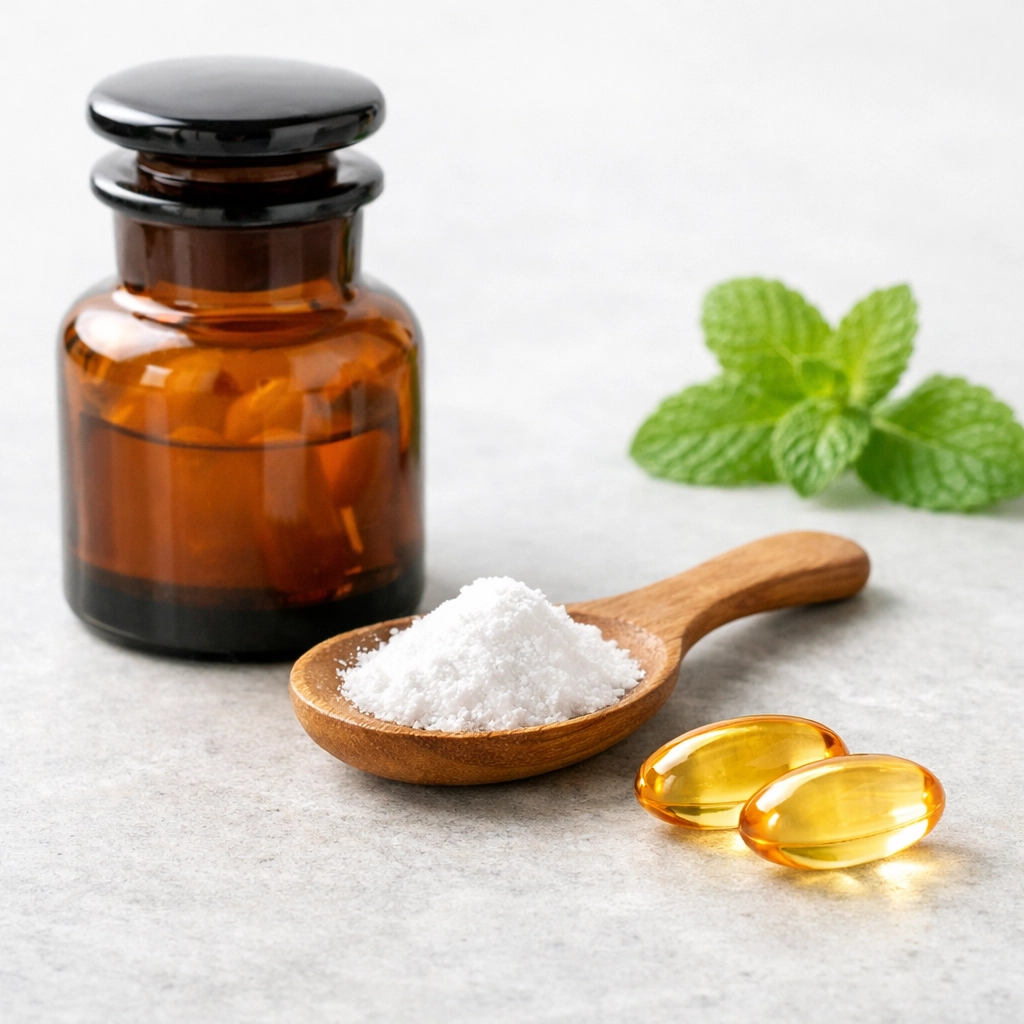
- Creatine Monohydrate: The most researched supplement in history. It aids in ATP recycling and has neuroprotective benefits. 5g daily is the standard for both brain and muscle health.
- Vitamin D3 + K2: Essential for calcium absorption and muscle contraction. Deficiency is strongly linked to muscle weakness.
- Omega-3 Fatty Acids: High-dose EPA/DHA (2g+ daily) has been shown to sensitize the muscle to protein intake, helping to combat anabolic resistance.
Summary: Your Longevity Checklist
To ensure your "Longevity Currency" doesn't go bankrupt, follow this high-level checklist:
- Resistance Train 3x Weekly: Focus on compound movements (squats, deadlifts, presses).
- Protein Pacing: Consume 30-40g of high-quality protein 3-4 times per day.
- Prioritize Sleep: 7-9 hours. Growth hormone, essential for muscle repair, is primarily released during deep sleep.
- Monitor Biometrics: Get a DEXA scan annually and test your grip strength every six months.
- Mitigate Inflammation: Manage stress and avoid ultra-processed foods that contribute to "inflammaging."
Muscle mass is more than just "gym culture." It is the structural foundation of your future independence. By treating your muscle as a currency today, you ensure you have the physical means to enjoy your life decades from now.
Author Bio: Malibongwe Gcwabaza
Malibongwe Gcwabaza is the CEO of blog and youtube and a leading voice in the intersection of technology and human performance. With a focus on data-driven longevity, Malibongwe explores how biological monitoring and advanced fitness protocols can extend the human healthspan. When not leading the company, he can be found in the weight room, practicing the "Longevity Decathlon" to ensure a high-performance future.
About the Author