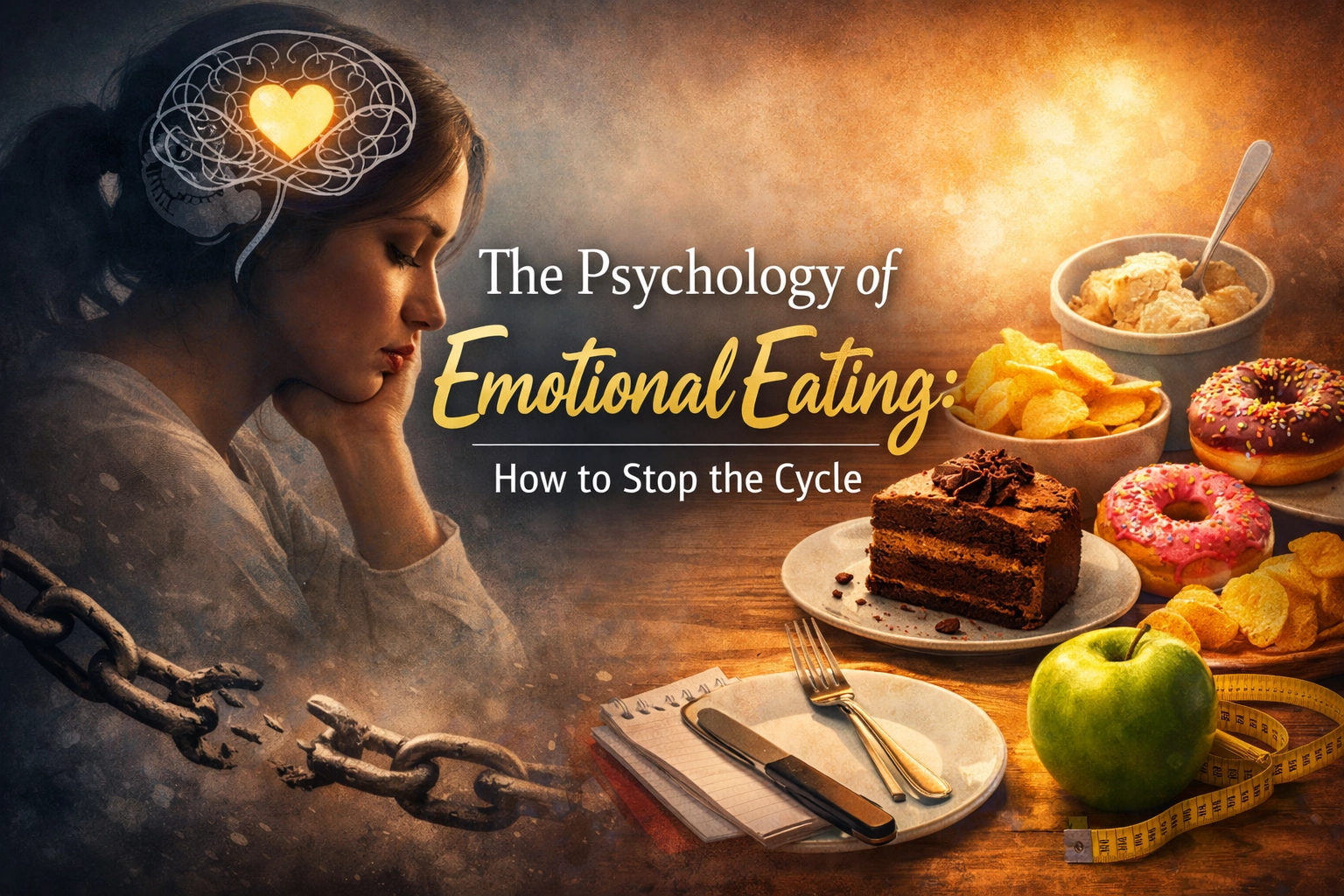
Emotional eating isn't a lack of willpower; it’s a sophisticated survival mechanism gone rogue. In 2026, as our understanding of the gut-brain axis and metabolic health deepens, we’ve moved past the "just stop eating" advice. We now recognize that for many, food is the most accessible pharmacological intervention for emotional distress.
According to data from the American Psychological Association, nearly 38% of adults reported engaging in emotional eating within the last month, with almost half of those individuals doing so weekly. When we use food to soothe negative emotions rather than satisfy physical hunger, we aren't just eating calories, we are self-medicating with dopamine.
This guide explores the neurological triggers of emotional eating, the physiological cycle of stress-induced cravings, and a science-backed framework to reclaim control over your relationship with food.
The Neurobiology of the "Comfort Food" Craving
To stop the cycle, you first have to understand the machinery behind it. When you experience stress, your body releases cortisol. This hormone is designed to provide energy for a "fight or flight" response. However, in our modern world, stress is rarely physical; it’s chronic and psychological.
High cortisol levels signal the brain to seek out high-energy fuel, specifically salty, sweet, and high-fat foods. These "palatable" foods trigger the release of opioids and dopamine in the brain's reward centers, specifically the ventral striatum and the orbitofrontal cortex.
This creates a powerful feedback loop:
- Trigger: You feel stressed, lonely, or bored.
- Action: You consume high-sugar/high-fat food.
- Reward: Your brain receives a temporary "hit" of pleasure, dampening the stress response.
- Consequence: The "food coma" or blood sugar crash follows, leading to guilt and more stress, which restarts the cycle.

Physical Hunger vs. Emotional Hunger: How to Tell the Difference
One of the primary challenges for emotional eaters is alexithymia, a clinical term for the inability to identify and describe emotions. When you can’t tell the difference between "I am sad" and "I am hungry," you treat both with a sandwich.
Use the following table to audit your hunger signals the next time you feel an urge to eat.
Comparison Table: Hunger Profiles
| Feature | Physical Hunger | Emotional Hunger |
|---|---|---|
| Onset | Develops slowly over time. | Hits suddenly and urgently. |
| Urgency | Can wait; doesn't feel like an emergency. | Needs to be satisfied now. |
| Preferences | Open to different food options (even healthy ones). | Craves specific "comfort" foods (pizza, chocolate). |
| Sensation | Physical signals like a growling stomach or low energy. | "Above the neck" cravings; focused on taste/texture. |
| Satiety | You stop when you feel full. | You keep eating even when uncomfortably full. |
| Post-Meal Feeling | Satisfaction and energy. | Guilt, shame, or regret. |
Why "Dieting" Often Makes Emotional Eating Worse
For years, the standard advice was to go on a restrictive diet. In 2026, we know this is counterproductive. Research shows that people with a history of restrictive dieting are significantly more vulnerable to emotional eating episodes.
When you restrict calories or entire food groups, you increase your baseline stress and hunger hormones (like ghrelin). This leaves your "self-control" battery drained. When an emotional trigger hits, you have zero cognitive reserves left to resist. The result is a "rebound" binge that reinforces the idea that you are "addicted" to food, when in reality, you are just physiologically depleted.

The 3 Pillars of Breaking the Cycle
Stopping the cycle requires a multi-pronged approach that addresses the mind, the body, and the environment.
1. Develop "Introspective Awareness"
If you can’t name it, you can’t tame it. Before reaching for food, practice the HALT method. Ask yourself: Am I Hungry, Angry, Lonely, or Tired?
If the answer isn't "Hungry," food will not solve the problem. Instead, create a "Dopamine Menu", a list of non-food activities that provide a similar (though perhaps milder) neurochemical lift:
- A 5-minute brisk walk (increases endorphins).
- Calling a friend (increases oxytocin).
- Deep breathing or cold exposure (resets the nervous system).
2. Nutritional Anchoring
To prevent the physiological "emergency" hunger that leads to emotional binges, you must stabilize your blood sugar. In 2026, the use of Continuous Glucose Monitors (CGMs) for non-diabetics has revealed how massive glucose spikes and subsequent "crashes" mimic the feeling of anxiety, triggering emotional eating.
- Prioritize Protein: Aim for 30g of protein at breakfast to suppress ghrelin.
- Fiber First: Eating vegetables before carbs slows the absorption of sugar, preventing the "crash" that leads to late-night cravings.
- Hydrate: Dehydration is often misidentified by the brain as a craving for sweets.
3. The "5-Minute Pause" Rule
Emotional eating is impulsive. The goal isn't to rely on willpower to say "no" forever, but to create a gap between the urge and the action.
When the urge to eat emotionally strikes, set a timer for five minutes. Tell yourself: "I can have the food, but I have to wait five minutes." During those five minutes, do a somatic check-in. Where do you feel the stress in your body? Is it a tight chest? A clenched jaw? By the time the timer goes off, the peak intensity of the emotional wave has usually passed.

The Impact of Microplastics and Endocrine Disruptors
Emerging 2026 research suggests that environmental factors like microplastics and "forever chemicals" (PFAS) may be playing a role in our emotional eating habits. These chemicals are known obesogens that can interfere with leptin (the fullness hormone) and insulin signaling. When your hormones are "noisy" due to toxic load, your brain's ability to regulate appetite is compromised. Choosing whole, unprocessed foods and filtered water isn't just about weight: it's about clearing the biological "static" so you can hear your body's true hunger signals.
Conclusion: Rewiring the Reward System
The psychology of emotional eating is deeply rooted in our biology, but the brain is plastic. Every time you choose a different coping mechanism: even if it's just a 30-second breathing exercise: you are weakening the neural pathway of the "food-reward" loop and building a new, more resilient one.
Be patient with yourself. You didn't develop this coping mechanism overnight, and you won't replace it overnight. The goal is progress, not perfection.
Author Bio: Malibongwe Gcwabaza
CEO & Wellness Strategist
Malibongwe Gcwabaza is the founder and CEO of "blog and youtube," a leading digital platform dedicated to cutting-edge health, fitness, and longevity research. With over a decade of experience in high-performance coaching and behavioral psychology, Malibongwe focuses on bridging the gap between clinical data and actionable lifestyle changes. He is a staunch advocate for "The Centenarian Decathlon" approach to fitness and believes that metabolic health is the foundation of mental well-being. When not analyzing the latest bio-monitoring tech, he can be found practicing Zone 2 training or exploring the intersection of neuro-athletics and cognitive longevity.
About the Author