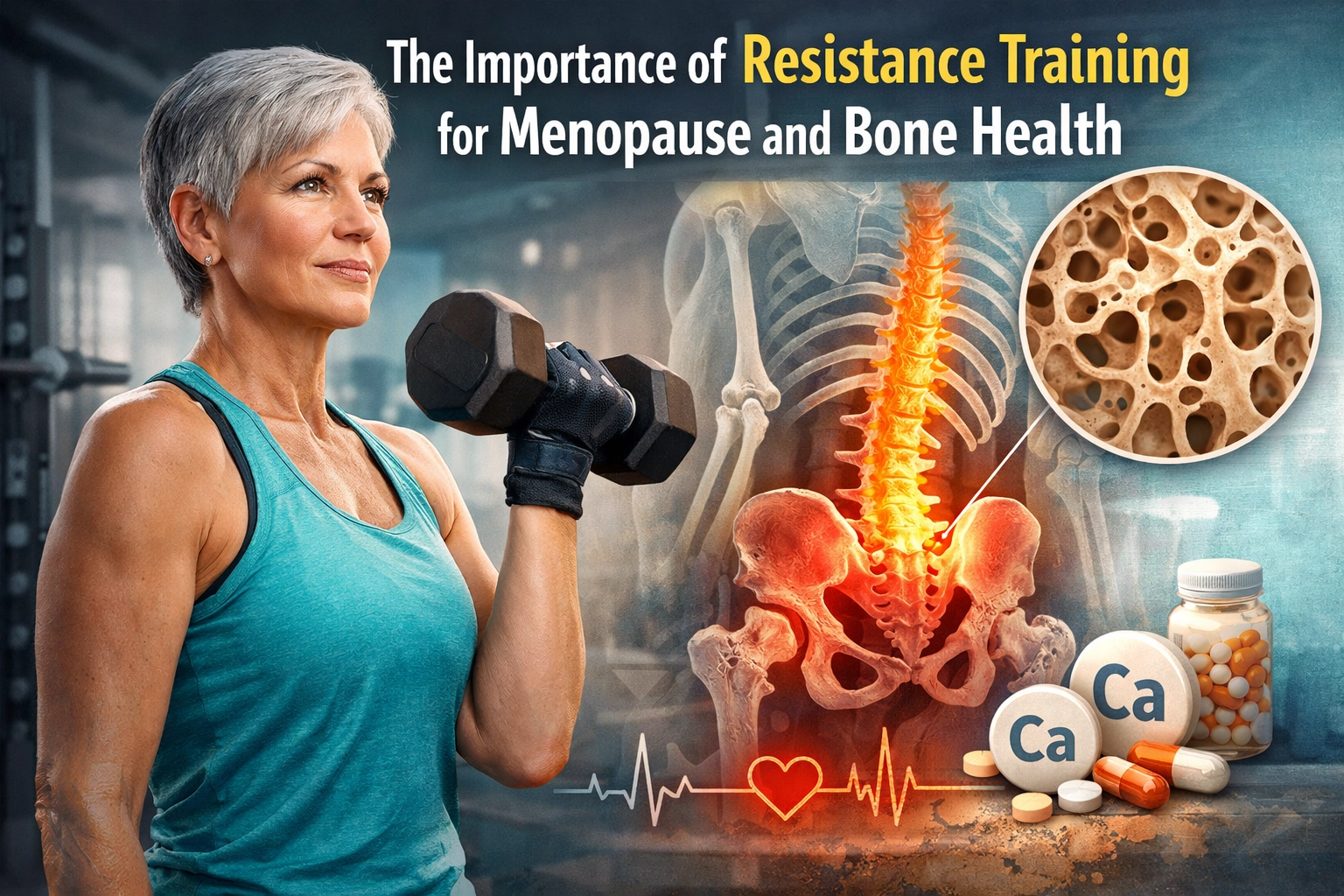
By the year 2026, the conversation around menopause has shifted from "managing symptoms" to "optimizing longevity." We are no longer just looking at how to stop hot flashes; we are looking at how to ensure the next thirty to forty years of a woman's life are spent in a body that is functional, strong, and resilient. At the center of this optimization is one non-negotiable pillar: resistance training.
The biological transition of menopause brings about a sharp decline in estrogen, a hormone that does much more than regulate reproduction. Estrogen is a master regulator of bone remodeling and muscle protein synthesis. When levels drop, the "protective shield" for your skeleton and musculature vanishes. This guide deep dives into why lifting weights is the most effective clinical intervention for bone health and metabolic stability during and after the menopausal transition.
The Biological Reality: Why Bones Break and Muscles Fade
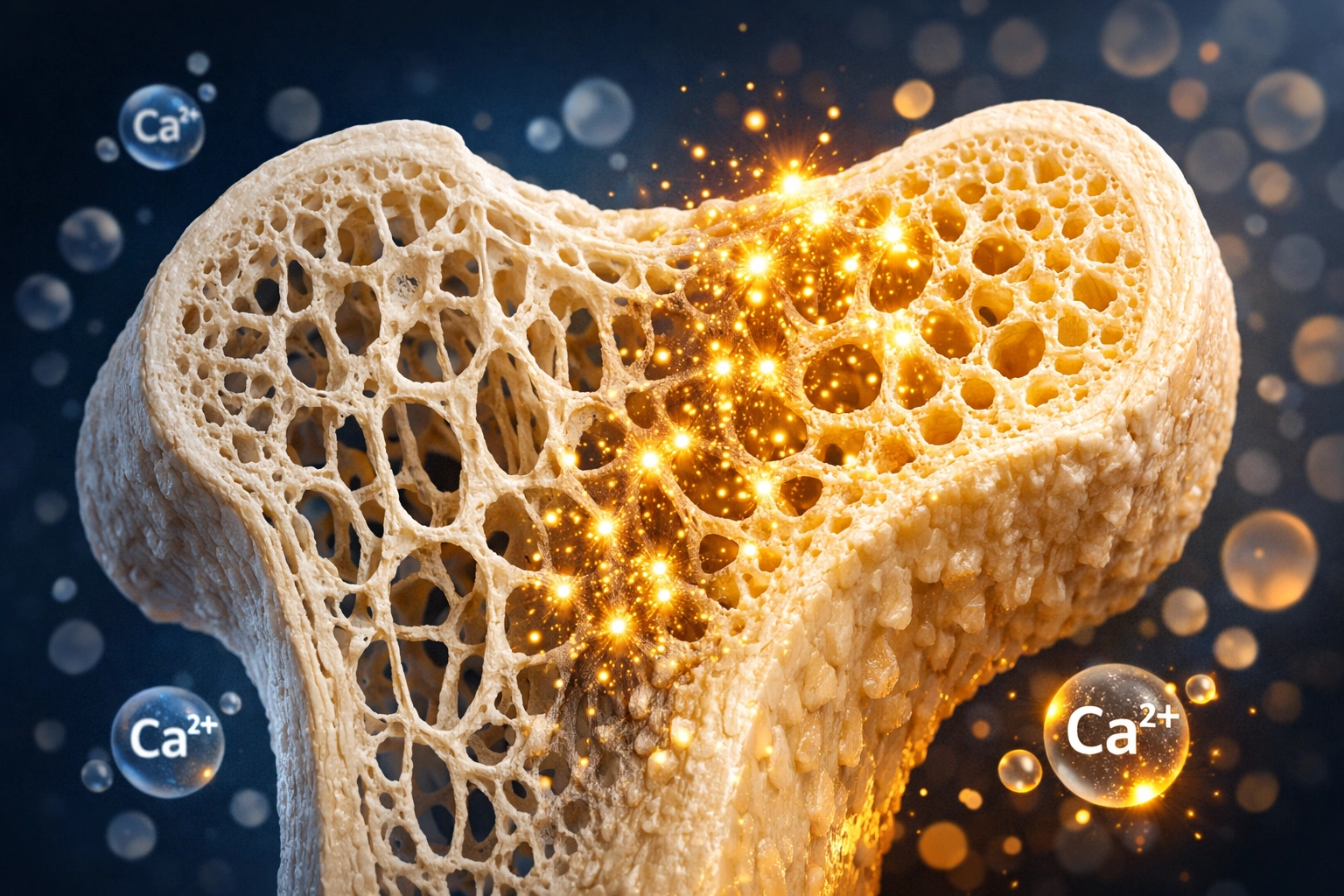
To understand why resistance training is mandatory, we have to look at the cellular level. Bone is a living tissue that is constantly being broken down (resorption) and rebuilt (formation).
- Osteoclasts: The "demolition crew" that breaks down old bone.
- Osteoblasts: The "construction crew" that lays down new bone mineral.
Estrogen typically keeps the demolition crew in check. When estrogen drops during perimenopause and menopause, the osteoclasts go into overdrive. The result is a net loss of bone mineral density (BMD). Women can lose up to 20% of their bone density in the five to seven years following menopause. This isn't just a "aging" issue; it’s a hormonal structural crisis.
Simultaneously, we face Sarcopenia: the age-related loss of muscle mass. Muscle isn't just for aesthetics; it acts as a shock absorber for your joints and a metabolic engine for your blood sugar. Without resistance training, the loss of muscle mass accelerates, leading to a higher risk of falls, which: when combined with fragile bones: is a recipe for life-altering fractures.
The Exeter Data: Proof That It’s Never Too Late
Recent research from the University of Exeter (2025-2026) has provided some of the most compelling evidence to date regarding low-impact resistance training for women aged 40–60. The study tracked women across various stages of the menopausal transition: pre, peri, and post: and found that the body’s ability to respond to mechanical loading does not disappear with estrogen.
| Metric | Improvement After 12 Weeks |
|---|---|
| Hip Function & Lower-Body Strength | +19% |
| Full-Body Flexibility | +21% |
| Dynamic Balance & Stability | +10% |
| Lean Muscle Mass | Significant Increase (with no change in total weight) |
The most vital takeaway from this data is that women in post-menopause saw nearly identical gains to those in perimenopause. Your biology is still "plastic": it can still change, adapt, and grow stronger regardless of your hormonal status.
Mechanical Loading: How Lifting Builds Bone
Bones follow Wolff’s Law, which states that bone grows or remodels in response to the forces or demands placed upon it. When you perform a heavy squat or an overhead press, the muscles pull on the tendons, which in turn pull on the bone. This mechanical "stress" signals the osteoblasts (the construction crew) to deposit more calcium and phosphate into the bone matrix.
However, not all exercise is created equal. Walking is great for cardiovascular health, but it is rarely enough to stimulate significant bone growth. To trigger the osteogenic (bone-building) effect, the load must be:
- Novel: The bone needs a stimulus it isn't used to.
- High Intensity: Weights should ideally be 70-85% of your one-rep max.
- Multi-directional: Loading the bone from different angles (squats, lateral lunges, rotations).
The Resistance Training Blueprint for 2026
If you are just starting, the goal isn't to look like a bodybuilder: it’s to build "The Centenarian Decathlon" body. You need enough strength to get out of a chair, pick up a grandchild, and recover from a trip or stumble.
1. The Compound Pillars
Focus on movements that utilize multiple joints. These provide the highest hormonal and mechanical "bang for your buck."
- Squat Variations: Goblet squats, box squats, or back squats. These target the femoral neck (the hip), a common site for osteoporotic fractures.
- Hinge Movements: Deadlifts or kettlebell swings. These strengthen the posterior chain and the lumbar spine.
- Push/Pull: Overhead presses and rows. These ensure the thoracic spine and wrists (another high-risk fracture zone) remain dense.
2. Frequency and Volume
For bone density, consistency beats intensity in the short term, but intensity beats consistency in the long term.
- 2-3 Days Per Week: Allow 48 hours between sessions for muscle and nervous system recovery.
- 3 Sets of 8-12 Reps: This is the "sweet spot" for hypertrophy (muscle growth) and bone loading.
Beyond the Bone: Metabolic and Mental Wins
While bone density is the headline, resistance training solves several other "menopause-adjacent" problems:
- Insulin Sensitivity: Muscle is the primary sink for glucose. By building more muscle, you improve your body's ability to handle carbohydrates, which helps combat the "menopausal middle" or visceral weight gain.
- Joint Stability: Strengthening the muscles around the knees and hips reduces the load on the cartilage, significantly lowering the pain associated with osteoarthritis.
- Neuro-protection: New data suggests that the myokines (chemicals released by muscles during contraction) cross the blood-brain barrier and help prevent cognitive decline and "brain fog."
Nutrition Synergy: Feeding the Machine
You cannot build bone or muscle from thin air. Resistance training is the architect, but nutrition provides the bricks.
- Protein is King: Aim for 1.2 to 1.6 grams of protein per kilogram of body weight. As we age, we become "anabolically resistant," meaning we need more protein to trigger the same muscle-building signals we did in our 20s.
- Vitamin D3 + K2: Vitamin D helps you absorb calcium, but Vitamin K2 acts as the "traffic cop" that directs that calcium into your bones rather than your arteries.
- Creatine Monohydrate: In 2026, creatine is no longer seen as a "bro supplement." For menopausal women, it has been shown to improve both muscle mass and cognitive processing speeds.
Safety and Progression: Avoiding the "Injury Trap"
Many women avoid lifting because they fear injury. However, the risk of not lifting (fractures, frailty) is far higher than the risk of a structured lifting program.
- Start with Isometrics: If you have joint pain, start with "holds" (like a plank or a wall sit). This builds strength without moving the joint.
- Progressive Overload: You must slowly increase the weight over time. If you lift the same 5lb dumbbells for three years, your bones will stop responding.
- Professional Coaching: If possible, work with a trainer who understands menopausal physiology. Form is paramount, especially regarding spinal alignment during deadlifts.
Summary: Your Longevity Currency
In the economy of aging, muscle and bone density are your most valuable currencies. You spend them every day just by living. Menopause attempts to bankrupt you by accelerating the withdrawal rate. Resistance training is your way of making massive deposits back into the bank.
It is never too late to start, but the best time to start was yesterday. Whether you are 45 and just noticing cycle changes or 65 and already diagnosed with osteopenia, the prescription is the same: Pick up something heavy, put it down, and repeat. Your future self will thank you for the strength you built today.
Author Bio: Malibongwe Gcwabaza
Malibongwe Gcwabaza is the CEO of blog and youtube and a leading voice in the 2026 longevity movement. With a background in health optimization and a passion for data-driven wellness, Malibongwe focuses on bridging the gap between complex medical research and practical, everyday habits. His mission is to empower individuals to take control of their biological age through functional movement, metabolic health, and cutting-edge bio-monitoring. When he isn't analyzing the latest health trends, he's likely practicing what he preaches in the weight room.
About the Author