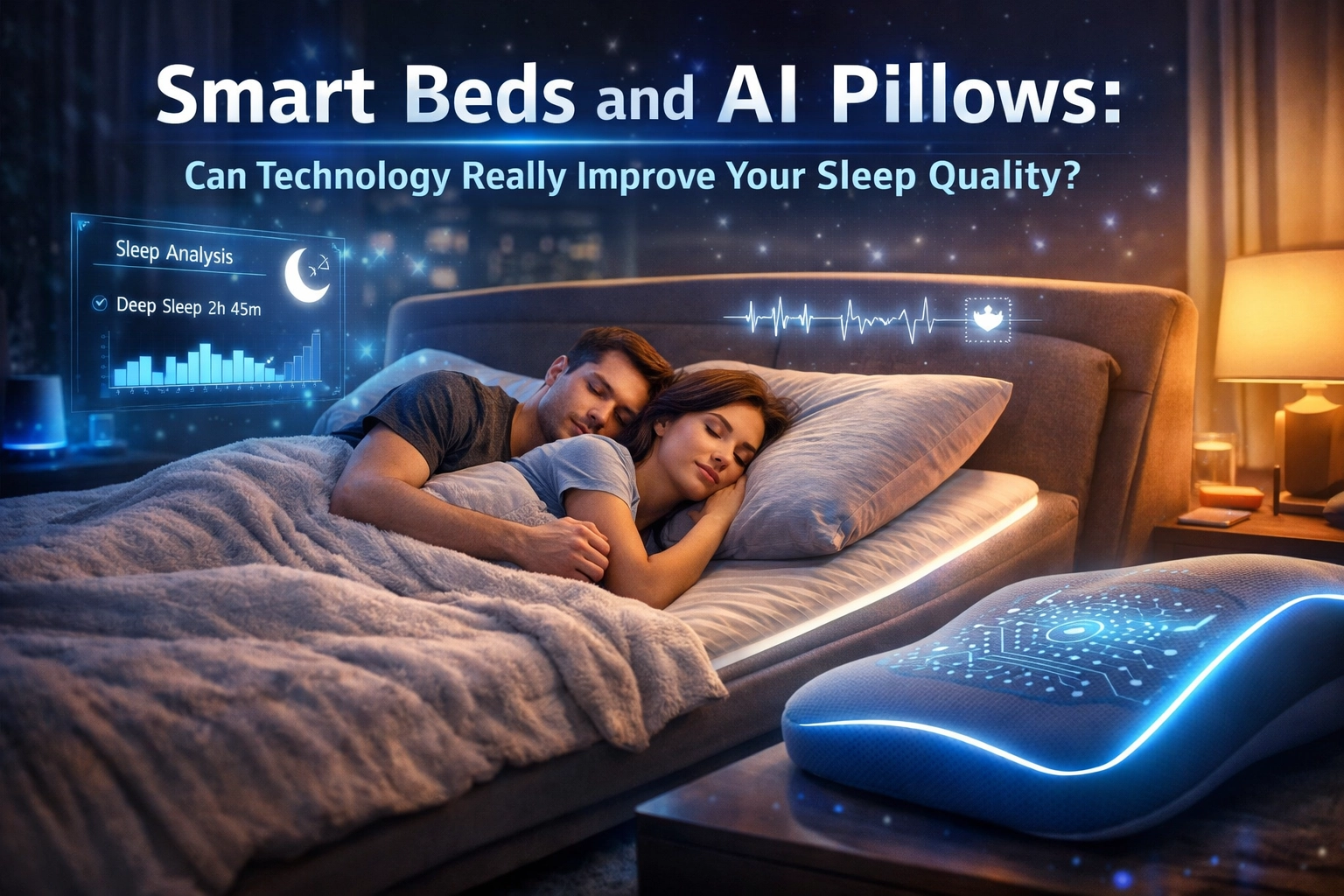
By 2026, the "dumb" mattress is becoming a relic of the past. For decades, we treated sleep as a passive state: something that just happened to us while we lay on a block of foam or springs. But as our understanding of longevity and "Healthspan" has evolved, we’ve realized that sleep is the most potent performance-enhancing drug in existence.
If you aren't optimizing your sleep environment, you’re leaving years of life on the table. Enter the era of the Smart Bed and the AI Pillow. We aren't just talking about a mattress that tracks your steps; we’re talking about integrated ecosystems that use machine learning to adjust your body temperature, spinal alignment, and respiratory health in real-time.
This guide dives deep into the high-tech world of sleep surfaces to answer the multi-thousand-dollar question: Does this tech actually move the needle on your health, or is it just expensive "sleep-tech" fluff?
The Science of Why "Smart" Matters
To understand why we need smart beds, we have to look at the biological failures of traditional mattresses. The human body is not a static object during the night. Our core temperature fluctuates, our heart rate variability (HRV) shifts between sleep stages, and our muscles lose tone during REM sleep.
Traditional mattresses provide a "static average." They are either too firm, too soft, too hot, or too cold at any given moment. Smart beds aim to solve this by transforming the sleep surface into a dynamic, responsive environment.
The Four Pillars of Smart Sleep Technology
- Thermoregulation: Active cooling and heating to match the body's circadian rhythm.
- Biometric Monitoring: Using ballistocardiography (BCG) to track heart rate, respiration, and movement without wearables.
- Adaptive Support: Real-time firmness adjustments via air chambers or mechanical actuators.
- Environmental Integration: Connecting with your smart home to adjust lighting, room temperature, and morning alarms based on your actual sleep stage.
Thermoregulation: The "Killer App" of Smart Beds
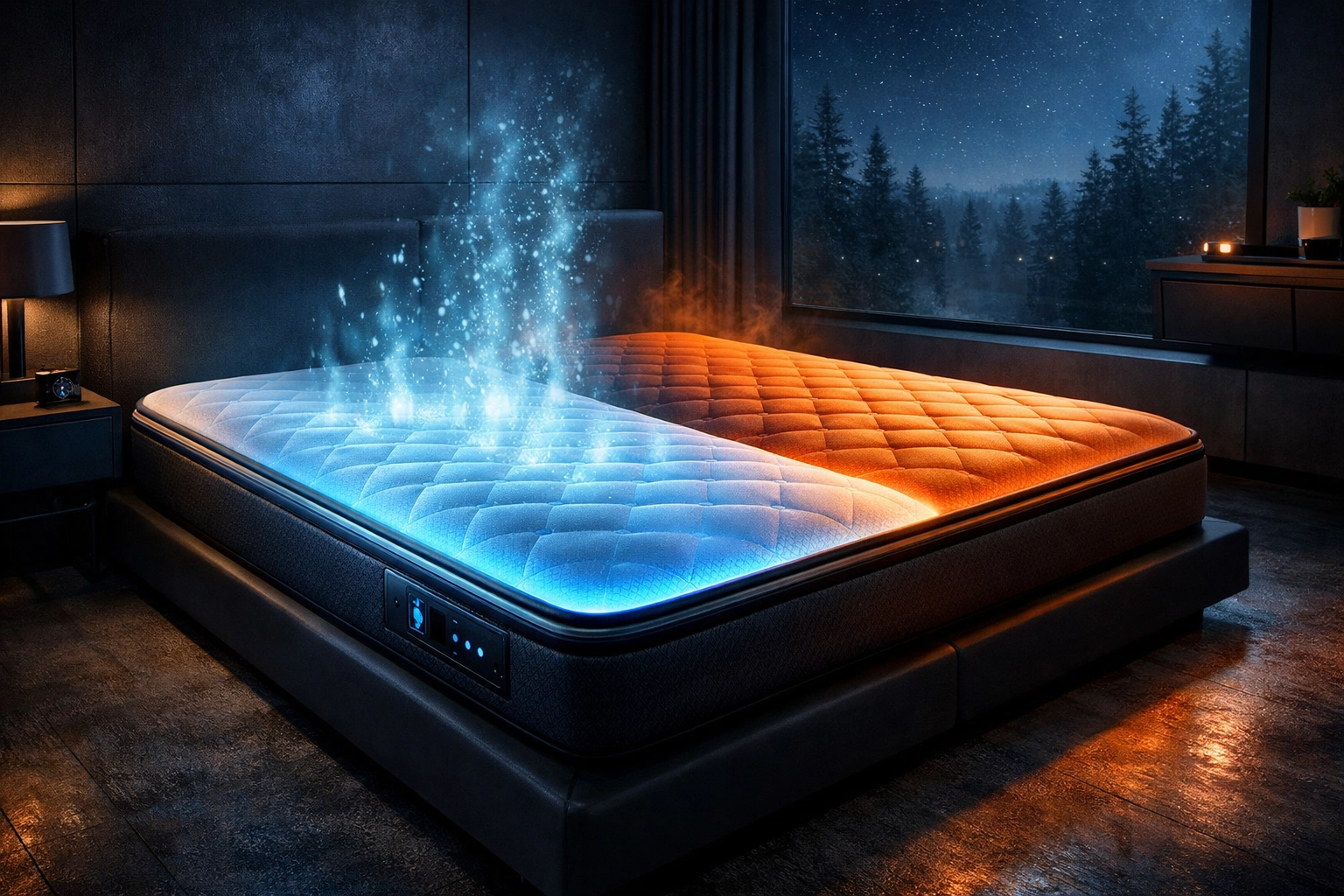
If you only look at one feature in a smart bed, make it temperature control. Research consistently shows that a drop in core body temperature is the primary trigger for sleep onset. Conversely, a rise in temperature is what helps wake us up.
Passive cooling (like "cooling gels" in standard mattresses) eventually heat-soaks and fails. Active cooling, pioneered by brands like Eight Sleep and Sleep Number, uses water-chilled grids or Peltier chips to actively pull heat away from the body.
Why It Works for Longevity
Deep sleep is when the glymphatic system: the brain’s waste-clearance system: is most active. If your body is struggling to dump heat, you stay in lighter stages of sleep longer. Data from 2025-2026 user cohorts suggests that active cooling can increase deep sleep duration by up to 15-20% in "hot sleepers."
The AI Pillow: Solving the Cervical Alignment Puzzle
While beds handle the torso and legs, the pillow is responsible for the most complex part of the musculoskeletal system: the cervical spine. An AI pillow isn't just a memory foam slab; it’s a device equipped with pressure sensors and micro-actuators.
How AI Pillows Function in 2026:
- Real-Time Height Adjustment: If you flip from your back to your side, the pillow detects the change in pressure and automatically inflates or deflates to maintain a neutral spine.
- Anti-Snore Technology: Many AI pillows now include microphones that detect the specific frequency of snoring. When detected, the pillow gently increases its height or vibrates to encourage you to shift positions, opening the airway without waking you up.
- Integrated Bone Conduction: High-end models use bone conduction to play binaural beats or white noise directly into your inner ear, ensuring your partner isn't disturbed.
Technical Comparison: Smart Tech vs. Traditional Surfaces
| Feature | Traditional Mattress | High-End Smart Bed (2026) | AI Pillow |
|---|---|---|---|
| Support Mechanism | Static Foam/Springs | Dynamic Air Chambers | Adjustable Air/Fluid Cells |
| Temperature | Passive (Heat-soaking) | Active (Chilled/Heated) | Active/Phase Change Material |
| Data Collection | None | HR, HRV, RR, Sleep Stages | Respiratory Rate, Snore Alerts |
| Firmness | Fixed | Real-time adjustment | Real-time height adjustment |
| Life Span | 7-10 years | 10-15 years (modular parts) | 3-5 years (electronics focus) |
The Role of Machine Learning (ML) in Sleep
The "AI" in these products isn't just a marketing buzzword. It refers to the algorithms that process the massive amounts of data collected by the bed’s sensors.
In 2026, these systems use Edge AI to process your biometrics locally. The bed learns your "sleep signature." For example, it might notice that your HRV drops significantly on Tuesday nights (perhaps after a late-night workout). The AI then proactively lowers the bed temperature by 2 degrees on Tuesday nights to assist in recovery. This move from reactive tracking to proactive optimization is the hallmark of modern smart furniture.

Is It Worth the Investment? (The ROI of Sleep)
Smart beds are expensive, ranging from $3,000 to over $10,000. To justify this, we have to look at the "Sleep ROI."
1. Chronic Pain Mitigation
For those with sciatica, lower back pain, or fibromyalgia, the ability of a bed to shift firmness mid-night to alleviate pressure points is worth more than any supplement. By reducing "tossing and turning," the bed prevents the micro-awakenings that ruin sleep architecture.
2. The Couple’s Compromise
One of the leading causes of sleep divorce (sleeping in separate rooms) is differing environmental preferences. Smart beds allow for "Dual Zone" control. One partner can sleep on a "Firm 80" at 65°F, while the other enjoys a "Soft 30" at 72°F.
3. Early Warning Health System
Because these beds monitor resting heart rate and respiratory rate with medical-grade accuracy (comparable to ECG in some studies), they serve as an early warning system. An unexplained spike in resting heart rate overnight is often the first sign of an oncoming illness or overtraining syndrome, allowing you to pivot your lifestyle before you fully crash.
The Potential Downsides: Privacy and "Orthosomnia"
We cannot discuss smart tech without addressing the risks.
- Data Privacy: Your sleep data is incredibly intimate. In 2026, ensuring your bed manufacturer uses end-to-end encryption and doesn't sell your biometric "signatures" to insurance companies is paramount.
- Orthosomnia: This is a clinical term for the perfectionist pursuit of the "perfect sleep score." Some users become so anxious about their sleep data that the anxiety itself causes insomnia.
- EMF Concerns: While most modern smart beds use shielded electronics or hardwired connections to minimize Electromagnetic Fields (EMF), sensitive individuals may still have concerns about sleeping on top of a sensor grid.
Integrating Your Sleep Stack
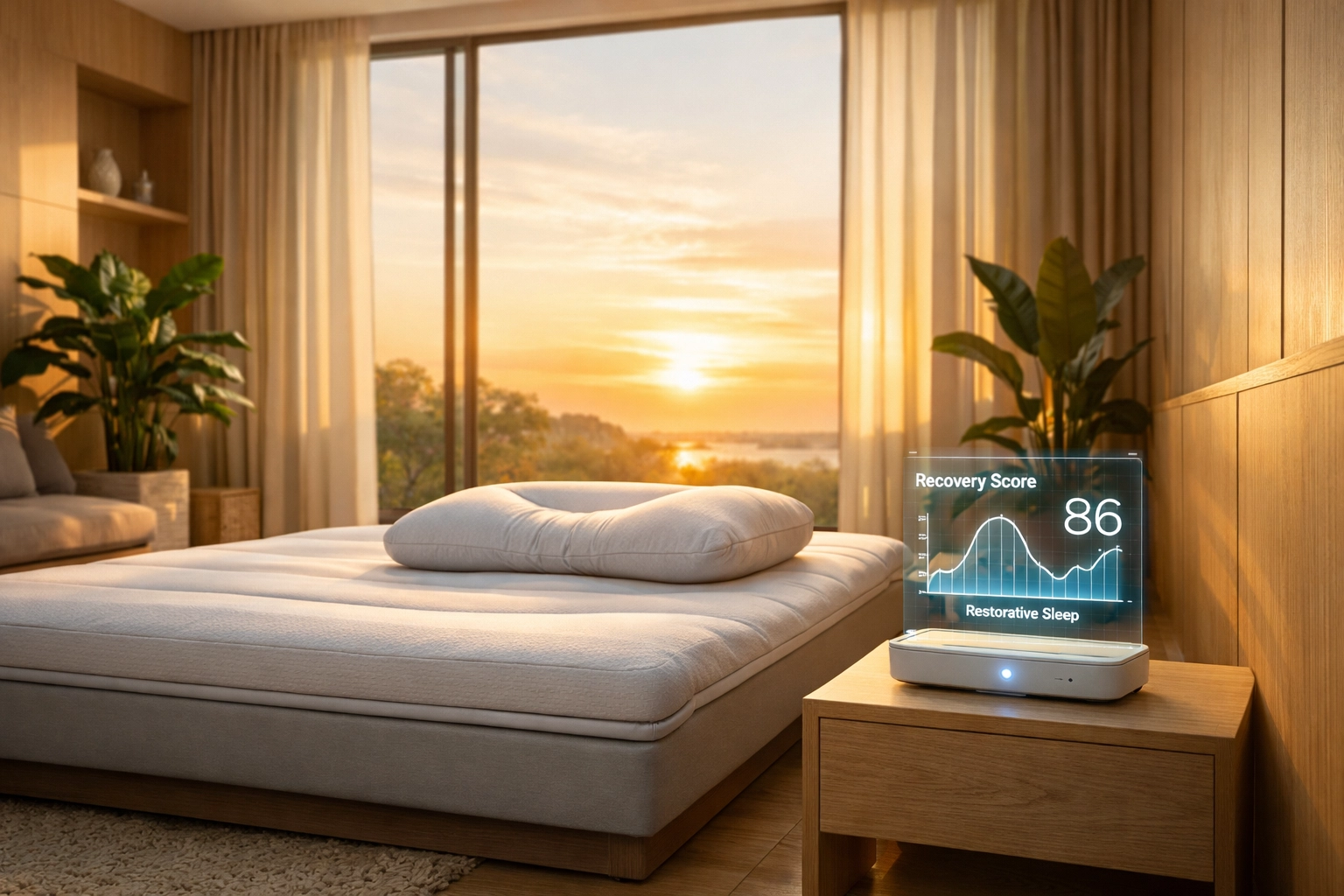
For the ultimate 2026 setup, your smart bed shouldn't act alone. It should be the hub of your "Sleep Stack."
- Evening Wind-down: At 9:00 PM, your bed begins pre-cooling so it's at the optimal temperature when you climb in.
- The Blackout: As the bed detects you've entered Stage 1 sleep, it sends a signal to your smart hubs to ensure all lights are off and the front door is locked.
- The Thermal Alarm: Instead of a jarring sound, your bed begins to slowly warm up 30 minutes before your alarm. This signals your body to stop producing melatonin and start producing cortisol, leading to a natural, "non-groggily" wake-up.
Final Verdict: Science or Hype?
The verdict is clear: The technology is real, but the execution matters.
A smart bed won't fix a bad lifestyle. If you drink three espressos at 4:00 PM and scroll on your phone until midnight, a $10,000 mattress cannot save you. However, for those who have already mastered the basics of sleep hygiene, smart beds and AI pillows represent the final 10% of optimization that can lead to significantly better recovery, improved cognitive function, and a longer healthspan.
The "modest" 28 minutes of extra restful sleep reported by Sleep Number users might sound small, but compounded over a year, that is 170 hours of additional recovery. In the world of high-performance health, that is a massive win.
About the Author: Malibongwe Gcwabaza
CEO & Longevity Strategist
Malibongwe Gcwabaza is the founder and CEO of "blog and youtube," a leading platform dedicated to the intersection of biotechnology, fitness, and human performance. With a background in organizational leadership and a passion for bio-hacking, Malibongwe focuses on how emerging technologies can be leveraged to extend the human healthspan. He is an early adopter of smart-home health integrations and has spent the last five years testing every major sleep-tech innovation on the market. His mission is to simplify complex health data into actionable strategies for the modern professional.
About the Author