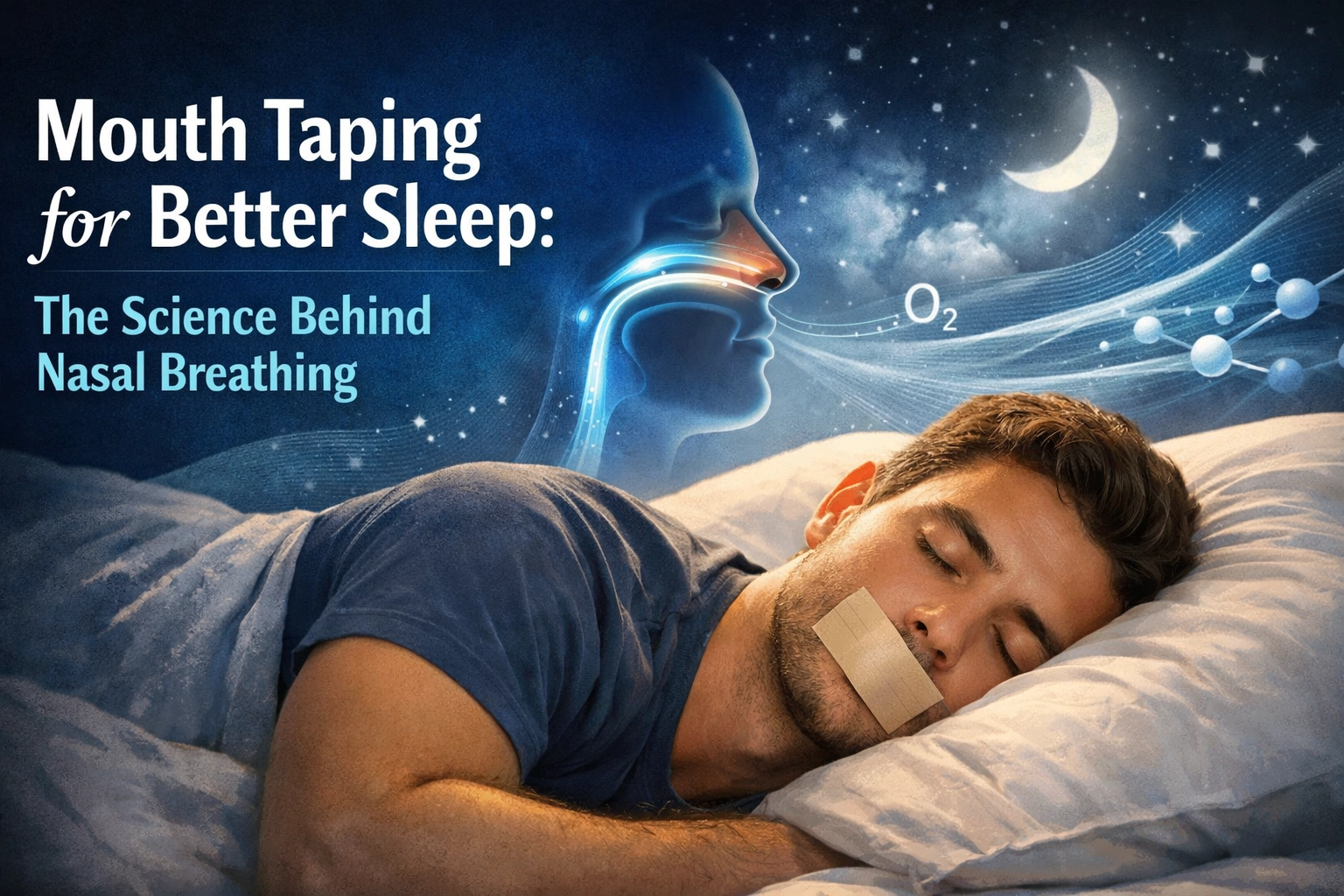
By 2026, the global wellness community has moved past "quick fixes" and toward "biological optimization." Among the most debated yet scientifically intriguing trends is mouth taping. While it sounds like a hostage situation or a bizarre TikTok challenge, the physiological foundation of mouth taping: enforced nasal breathing: is rooted in respiratory biology that modern medicine is only beginning to fully quantify.
For most, mouth breathing is a default setting during sleep, often a result of chronic stress, congestion, or poor myofunctional habits. However, forcing the body to breathe through the nose during the eight-hour sleep window can fundamentally alter your blood chemistry, sleep architecture, and even your facial structure over time.
This guide dives into the technical mechanics of nasal breathing, the clinical data behind mouth taping, and how to safely implement this practice in a 2026 biohacking routine.
The Biological Superiority of Nasal Breathing
To understand why we would tape our mouths shut, we first have to look at why the nose exists. Humans are "obligate nasal breathers" by design. The nose is not just a secondary straw for air; it is a sophisticated filtration and conditioning system.
1. Filtration and Humidification
The nasal passages are lined with cilia (tiny hairs) and mucous membranes that trap dust, allergens, and pathogens. As air passes through the turbinates: complex bony structures inside the nose: it is warmed to body temperature and humidified to 100% saturation. Mouth breathing bypasses this, delivering cold, dry, unfiltered air directly to the lungs, which can trigger inflammation and bronchoconstriction.
2. The Nitric Oxide Advantage
This is the "secret sauce" of nasal breathing. The paranasal sinuses continuously produce Nitric Oxide (NO). When you breathe through your nose, you carry this NO into your lungs.
- Vasodilation: NO relaxes the smooth muscles of the blood vessels, increasing oxygen uptake in the lungs.
- Sterilization: NO is antiviral and antibacterial, acting as a first line of defense against airborne infections.
- Oxygen Delivery: By increasing the efficiency of oxygen-to-CO2 exchange, nasal breathing ensures higher oxygen saturation in the tissues.

Nasal vs. Mouth Breathing: A Technical Comparison
| Feature | Nasal Breathing | Mouth Breathing |
|---|---|---|
| Air Preparation | Filtered, warmed, humidified | Cold, dry, unfiltered |
| Nitric Oxide (NO) | High production and delivery | Negligible |
| Diaphragm Use | Engages lower lung lobes | Often shallow, chest-based |
| CO2 Retention | Optimal (Bohr Effect) | Excessive "off-gassing" |
| Nervous System | Parasympathetic (Rest & Digest) | Sympathetic (Fight or Flight) |
| Oral Health | Maintains saliva and pH balance | Dry mouth, high acidity, cavities |
The Science of Mouth Taping and Sleep Apnea
The primary clinical application for mouth taping has been in the treatment of mild Obstructive Sleep Apnea (OSA) and chronic snoring. When the mouth drops open during sleep, the tongue is more likely to fall backward, obstructing the airway (the retropalatal space).
Clinical Findings (2022-2025 Data)
A pivotal study involving patients with mild OSA demonstrated that enforcing a closed-mouth posture reduced the Apnea/Hypopnea Index (AHI) by an average of 47%. In these subjects, the AHI dropped from a clinical "mild apnea" state (8.3 events per hour) to a nearly normal state (4.7 events per hour).
Another trial involving 30 participants showed that mouth taping significantly reduced the intensity of snoring. The mechanism is simple: nasal breathing increases the tone of the airway muscles and prevents the "floppy" tissue vibration that causes the snoring sound.
Impact on REM Sleep
Recent 2026 research into sleep architecture suggests that nasal breathing may facilitate longer durations of REM (Rapid Eye Movement) sleep. One study noted a 15% increase in REM cycles when mouth breathing was eliminated. This is likely due to the stabilization of blood oxygen levels, preventing the micro-arousals that occur when the brain detects a drop in oxygen (hypoxia).
The Bohr Effect: Why CO2 is Your Friend
A common misconception is that CO2 is a "waste gas" we need to get rid of as fast as possible. In reality, the Bohr Effect dictates that hemoglobin requires a certain concentration of CO2 in the blood to "release" oxygen into your cells.
Mouth breathing leads to hyperventilation: expelling too much CO2. When CO2 levels drop too low, hemoglobin holds onto oxygen more tightly, meaning your tissues (including your brain) actually receive less oxygen despite you breathing more air. Mouth taping forces a slower, more controlled respiratory rate, keeping CO2 at the "Goldilocks" level for maximum oxygenation.
How to Optimize Your Mouth Taping Protocol
If you are ready to transition from a mouth breather to a nasal breather, you shouldn't just reach for standard duct tape. The skin on the lips is delicate, and safety is paramount.
1. Choose the Right Tape
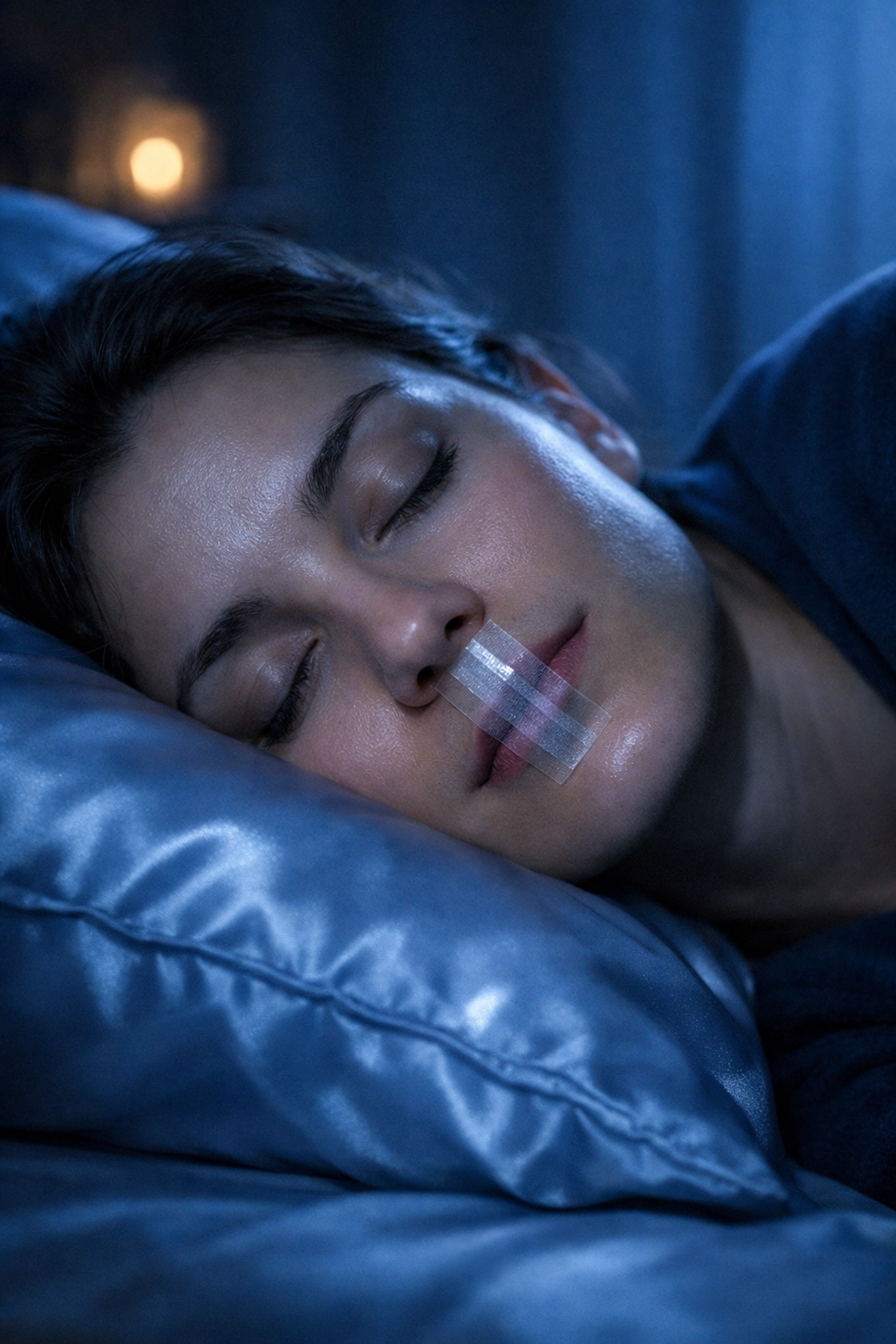
In 2026, specialized "sleep tapes" or "myofunctional tapes" are widely available. These are usually:
- Hypoallergenic: To prevent rashes or irritation.
- Porous: Allowing a tiny amount of airflow in case of an emergency.
- Center-Hole Designs: Some tapes feature a small slit in the middle to reduce the psychological "claustrophobia" of a sealed mouth.
2. The Daytime "Test Drive"
Never tape your mouth for the first time right before bed. Apply the tape for 30 minutes during the day while reading or working. This allows your nervous system to realize that it is perfectly capable of breathing through the nose and prevents panic-induced waking during the night.
3. Clear the Nasal Passages
Mouth taping is dangerous if your nose is structurally or acutely blocked. Use a saline rinse (Neti pot) or a nasal dilator (internal or external strips) to ensure maximum patency before applying the tape.

Contraindications: Who Should Avoid Mouth Taping?
While mouth taping is a powerful tool, it is not for everyone. You should consult a physician if you have:
- Severe Sleep Apnea: If you use a CPAP machine, do not stop or modify your treatment without medical supervision.
- Nasal Obstructions: Deviated septums, nasal polyps, or chronic sinusitis must be addressed first.
- Gastrointestinal Issues: If you suffer from frequent acid reflux (GERD) or vomiting, taping the mouth presents an aspiration risk.
- Alcohol or Sedative Use: Anything that severely depresses the central nervous system makes mouth taping risky, as your body may not wake up if breathing becomes difficult.
Data Tracking: How to Know It's Working
In the era of personalized health, we don't have to guess. If you use a wearable (Oura Ring, Whoop, Apple Watch), look for these specific 2026 metrics after one week of mouth taping:
- Respiratory Rate: A lower, more stable respiratory rate during sleep.
- Oxygen Saturation (SpO2): Fewer "dips" in oxygen levels throughout the night.
- HRV (Heart Rate Variability): An increase in HRV, indicating better parasympathetic (recovery) tone.
- Resting Heart Rate: Often drops as the heart doesn't have to work as hard to circulate oxygen.

The Bottom Line
Mouth taping is a low-cost, high-reward biohack that addresses the root cause of many sleep disturbances: inefficient respiration. By leveraging the body's natural "Nitric Oxide factory" and optimizing the Bohr Effect, you can transition from "surviving" your sleep to "thriving" in your recovery. It is a return to our biological roots: where the nose is for breathing and the mouth is for eating and speaking.
Author Bio
Malibongwe Gcwabaza is the CEO of blog and youtube and a dedicated advocate for functional longevity. With a background in metabolic health and human performance, Malibongwe focuses on translating high-level clinical research into actionable lifestyle protocols. Having spent years optimizing his own "Centenarian Decathlon" training, he believes that the simplest interventions: like how we breathe: often yield the most profound results for long-term healthspan. When not reviewing the latest in 2026 health tech, he can be found practicing Zone 2 training or experimenting with advanced nutritional strategies.
About the Author