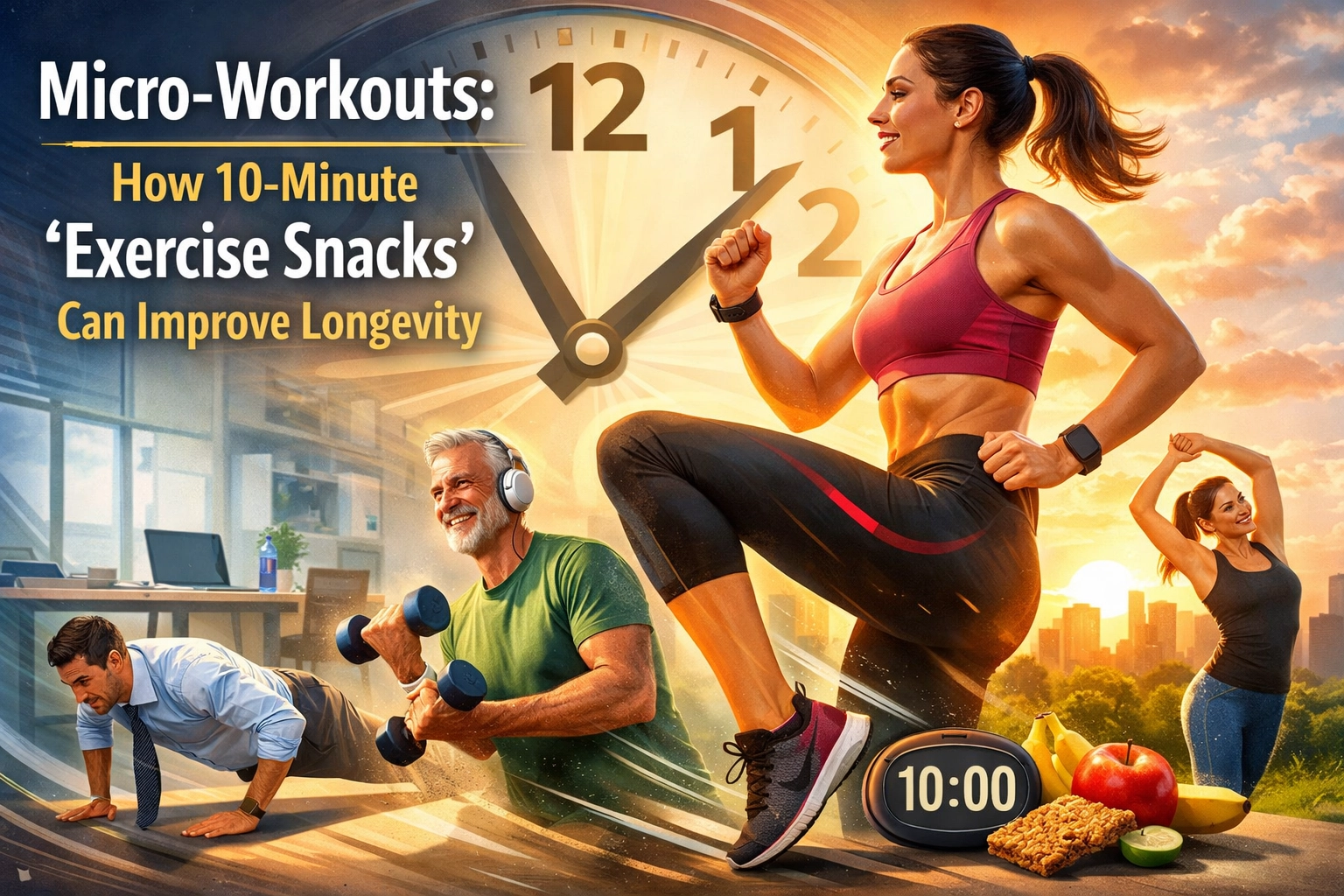
For decades, the gold standard of fitness was the "30 minutes a day, five days a week" rule. But as we move through 2026, the science of longevity has pivoted. We are no longer obsessed with the duration of a workout; we are obsessed with the biological signaling it triggers. Enter the era of Micro-Workouts, also known as "Exercise Snacking."
Recent clinical data suggests that short, high-intensity bursts of activity: sometimes lasting as little as 60 seconds: can provide many of the same metabolic and cardiovascular benefits as a traditional hour-long gym session. For the busy professional or the longevity-focused individual, this isn't just a convenience; it is a fundamental shift in how we manage our biological age.
The Science of VILPA: Vigorous Intermittent Lifestyle Physical Activity
The term gaining traction in medical journals is VILPA. This refers to brief, sporadic bouts of vigorous activity that happen during daily life: think of sprinting to catch a train, carrying heavy groceries up three flights of stairs, or a rapid-fire set of air squats between Zoom calls.
A landmark study published in The Lancet (October 2023) and corroborated by follow-up longitudinal data in early 2026 has changed the game. The research followed over 25,000 non-exercisers and found that just three to four one-minute bouts of VILPA per day were associated with:
- A 40% reduction in all-cause and cancer-related mortality.
- Up to a 49% reduction in death related to cardiovascular disease.
Why Micro-Workouts Work: The Physiological Mechanisms
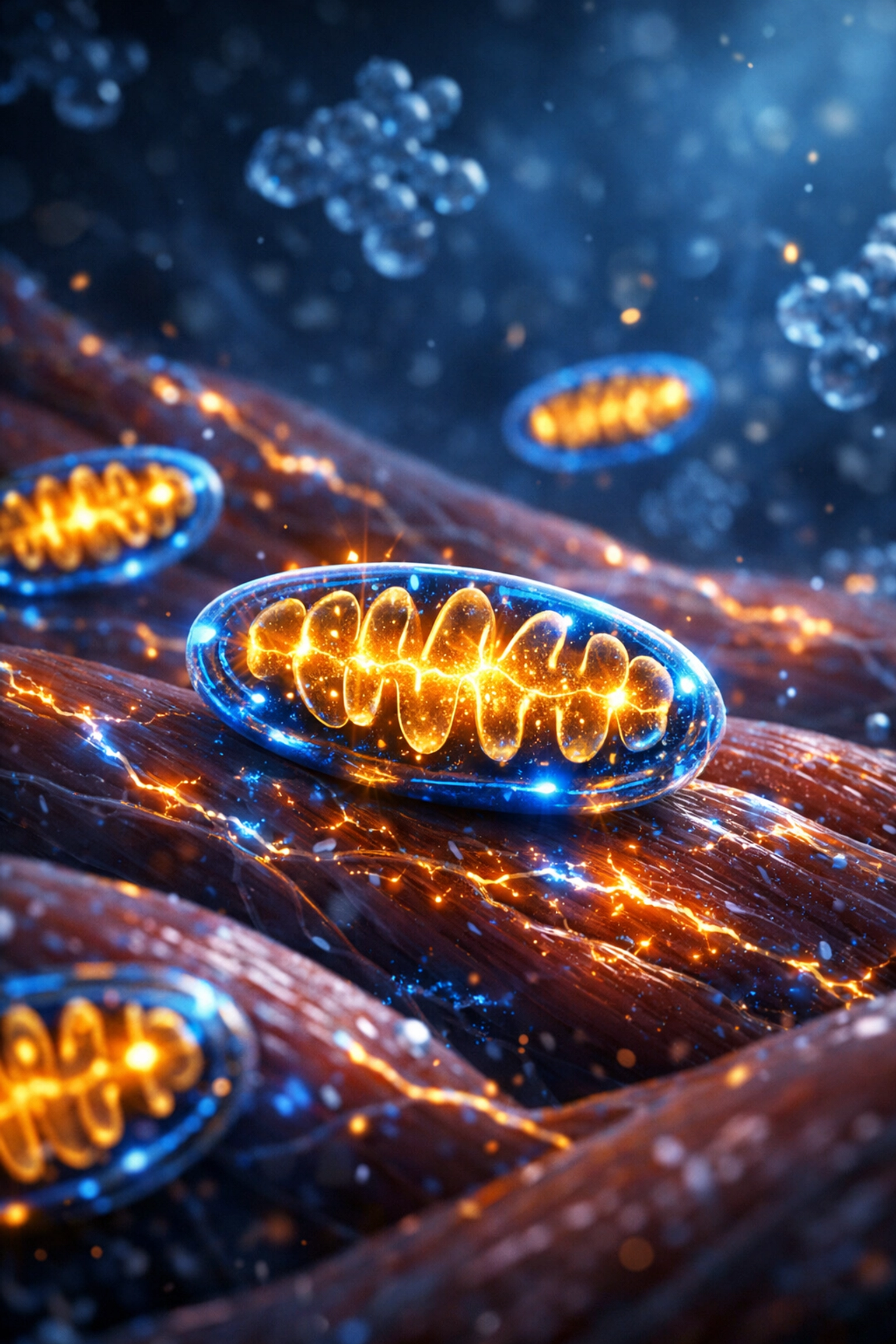
The reason a 10-minute block (or several 1-minute blocks) works so well comes down to hormesis. Hormesis is the biological phenomenon where a brief, controlled stressor triggers a massive repair response in the body. When you perform a micro-workout at high intensity, you are essentially sending a "danger" signal to your mitochondria, forcing them to become more efficient.
- Mitochondrial Biogenesis: Short bursts of intensity stimulate the production of new mitochondria, the powerplants of your cells. More efficient mitochondria mean better energy production and slower cellular aging.
- GLUT4 Translocation: Even a two-minute walk or a set of lunges triggers the movement of GLUT4 receptors to the surface of your muscle cells. This allows your body to clear glucose from the bloodstream without needing massive amounts of insulin, directly combating Type 2 diabetes and metabolic syndrome.
- EPOC (Excess Post-exercise Oxygen Consumption): High-intensity micro-workouts create an "oxygen debt." Your body has to work harder for hours afterward to return to a resting state, effectively keeping your metabolic rate elevated long after the 10-minute session ends.
Comparing Traditional Cardio vs. Micro-Workouts
To understand where micro-workouts fit into your 2026 longevity protocol, let’s look at the data comparing them to steady-state cardio.
| Metric | Traditional Cardio (45+ Mins) | Micro-Workouts (Total 10 Mins) |
|---|---|---|
| VO2 Max Improvement | High | Significant (if intensity is maximal) |
| Insulin Sensitivity | Moderate/Long-lasting | Acute/High-impact |
| Cortisol Impact | Can be high (if overtrained) | Low to Moderate |
| Adherence Rate | ~35% after 6 months | ~82% after 6 months |
| Time Efficiency | Low | Extremely High |
| Primary Goal | Endurance/Aerobic Base | Metabolic Health/Longevity |
VO2 Max: The Ultimate Longevity Metric
If you follow the work of longevity experts like Dr. Peter Attia or researchers in the 2026 space, you know that VO2 Max is perhaps the strongest predictor of how long you will live. A high VO2 Max doesn't just mean you’re "fit"; it means your heart, lungs, and muscles are functionally young.
Micro-workouts are uniquely suited to boosting VO2 Max because they allow for "repeated maximal efforts." It is much easier to give 100% effort for 60 seconds than it is to give 80% for 45 minutes. By spiking your heart rate into Zone 4 or Zone 5 for short durations multiple times a day, you are effectively "re-training" your upper aerobic limit.

The "Exercise Snack" Menu: 3 Ways to Implement
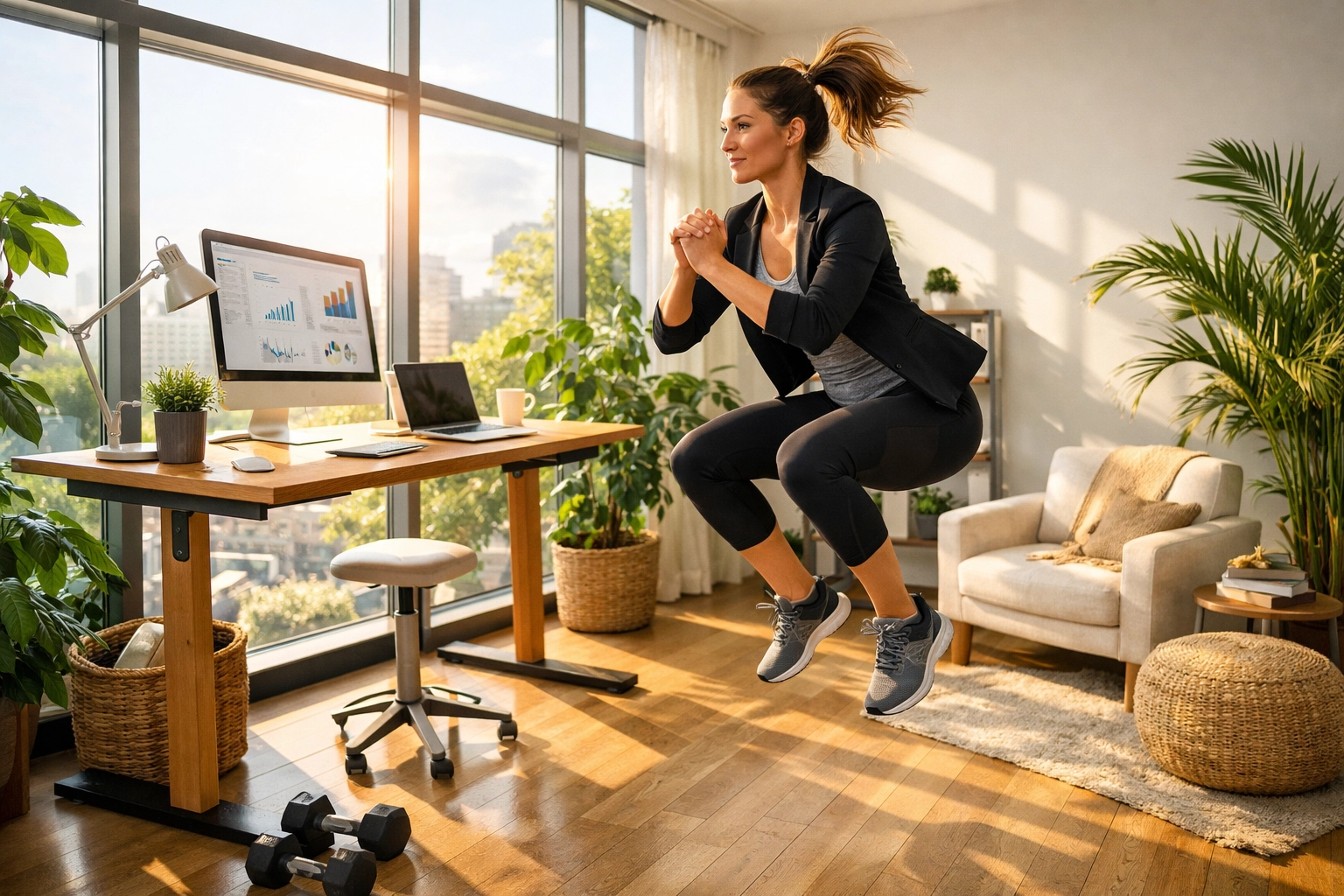
You don't need a gym to improve your healthspan. In 2026, the most effective micro-workouts are those that require zero equipment and can be done in office attire.
1. The Metabolic Reset (2 Minutes)
- Goal: Glucose clearance after a meal.
- Protocol: 40 seconds of air squats, 20 seconds of rest, 40 seconds of wall pushes, 20 seconds of rest.
- The Data: This brief interruption prevents the "post-prandial spike" in blood sugar that causes arterial damage.
2. The Cardiovascular Spike (5 Minutes)
- Goal: VO2 Max maintenance.
- Protocol: 30 seconds of high knees (all-out effort), followed by 30 seconds of slow walking. Repeat 5 times.
- The Data: This mimics the intensity of HIIT (High-Intensity Interval Training) but fits within a coffee break.
3. The "Centenarian Decathlon" Prep (10 Minutes)
- Goal: Functional strength and bone density.
- Protocol: 2 minutes of lunges, 2 minutes of planks, 2 minutes of glute bridges, 2 minutes of step-ups, and 2 minutes of "dead hangs" (or pulling movements).
- The Data: Resistance-based micro-workouts combat sarcopenia (age-related muscle loss), which is a leading cause of frailty in older age.
Overcoming the "Sedentary Trap"
A common misconception is that a one-hour gym session at 5:00 PM "undoes" the damage of sitting for eight hours at a desk. Science now tells us this isn't true. We call this the "Active Couch Potato" syndrome.
Sitting for prolonged periods causes "lipoprotein lipase" (an enzyme that breaks down fat) to shut down. Micro-workouts act as a "switch" that turns these enzymes back on. Even if you are a marathon runner, you still need 10-minute exercise snacks throughout the day to keep your cellular machinery humming.
Practical Tips for 2026 Fitness Integration
To make micro-workouts a permanent part of your lifestyle, consider these tech-forward and habit-stacking strategies:
- Set Bio-Triggers: Use your wearable (Oura, Whoop, or Apple Watch) to alert you when your "movement score" drops. Instead of a generic "Time to stand" notification, set a "Time for 20 squats" goal.
- The "Staircase Rule": In 2026, elevators are for the infirm. If you are going up fewer than five floors, sprint them. This is a built-in VILPA session that costs you zero extra time.
- Phone Call Isometrics: While on a non-video call, perform calf raises or wall sits. You are building "isometric strength" (strength without movement), which is excellent for joint stability and blood pressure regulation.
- The Kitchen Timer: While waiting for the kettle to boil or the microwave to finish, do a set of push-ups against the counter. This "habit stacking" ensures you never "forget" to workout.
Summary: Every Minute Counts
The takeaway from current longevity research is clear: The barrier to entry for health has never been lower. You do not need a 90-minute block of time, a designer outfit, or a monthly membership to significantly extend your life.
By strategically inserting 10-minute micro-workouts into your day, you are directly influencing your gene expression, protecting your cardiovascular system, and ensuring that your "Healthspan" (the years you live in good health) matches your "Lifespan."
In 2026, we don't find time for exercise; we weave it into the fabric of our existence.
About the Author: Malibongwe Gcwabaza
CEO & Longevity Strategist
Malibongwe Gcwabaza is the CEO of Blog and YouTube, a leading digital platform dedicated to the intersection of biotechnology, fitness, and human performance. With a background in health-tech and a passion for data-driven wellness, Malibongwe focuses on making complex longevity science accessible to a global audience. He advocates for "Bio-Efficiency": the art of achieving maximum health results with minimal time investment. When not analyzing the latest VO2 Max research, he can be found practicing "exercise snacks" in the boardroom.
About the Author