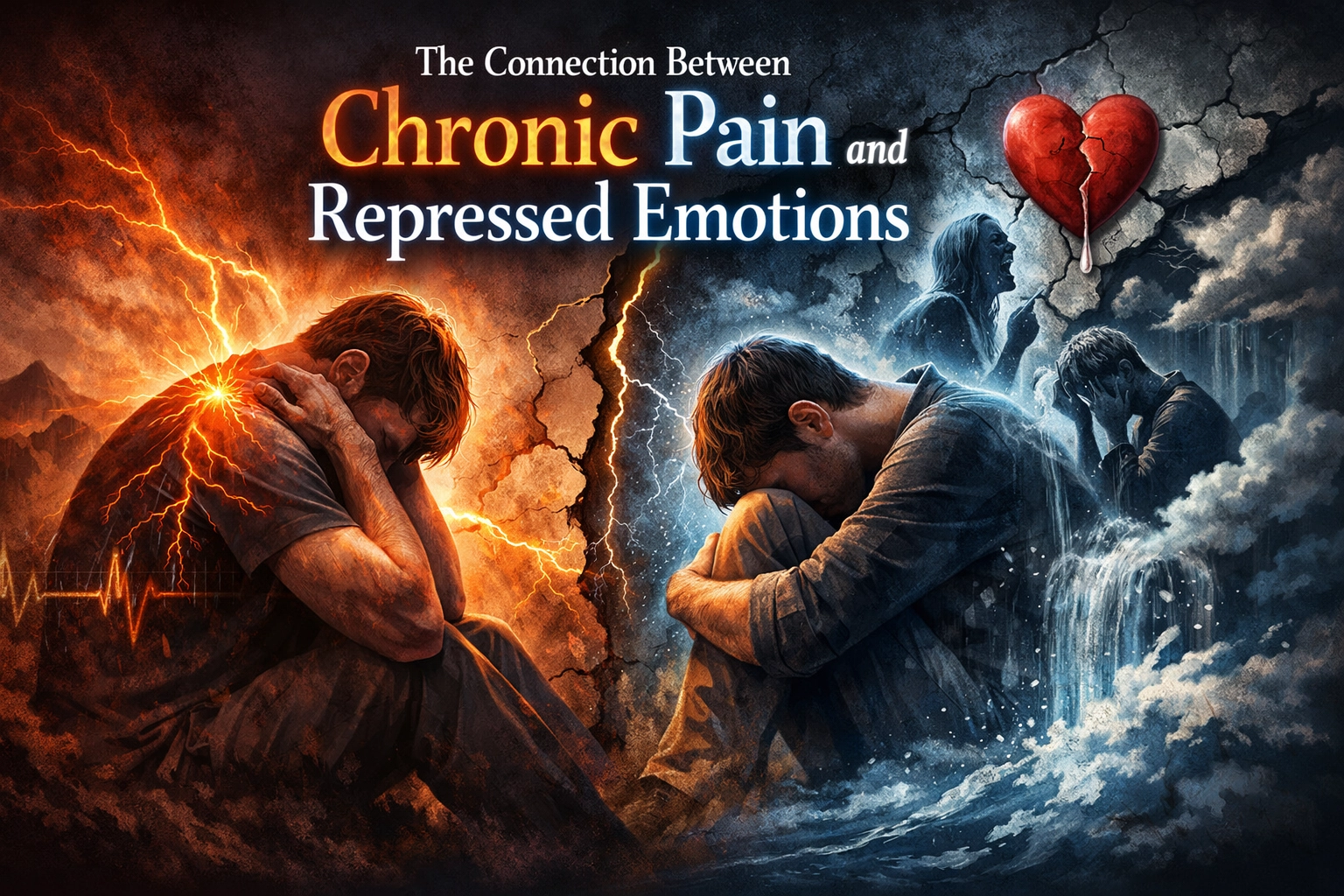
For decades, the medical establishment viewed chronic pain through a purely structural lens. If your back hurt, there must be a disc issue. If your joints ached, it had to be inflammation or wear and tear. But as we move through 2026, the paradigm has shifted. We now understand that the human body is not just a collection of mechanical parts; it is a complex, bio-plastic system where the "software": our emotions and nervous system: dictates the "hardware" experience of pain.
The link between repressed emotions and chronic physical pain is no longer a "fringe" theory. It is a documented neurological phenomenon. When we suppress anger, grief, or fear, those emotions don't simply vanish. They stay in the body, manifesting as muscle tension, restricted blood flow, and neural sensitization. This guide explores the deep-seated connection between what you feel (or don't feel) and the physical signals your brain produces.
The Neurology of "Psychogenic" Pain
To understand why repressed emotions hurt, we have to look at how the brain processes signals. The brain’s Anterior Cingulate Cortex (ACC) is responsible for processing both physical pain and emotional distress. In 2026, neuroimaging research has confirmed that when a person experiences social rejection or suppresses intense anger, the ACC lights up in almost the exact same way as it does during a physical injury.
When emotions are repressed: a process known as experiential avoidance: the brain creates a diversion. Dr. John Sarno, a pioneer in this field, theorized that the brain generates physical pain to distract the individual from overwhelming unconscious emotions. While the terminology has evolved into "Neuroplastic Pain" or "TMS" (Tension Myositis Syndrome), the core principle remains: the brain uses the body to express what the mind cannot voice.
The "Ironic Process" of Suppression
There is a psychological concept known as the "Ironic Process Theory." Essentially, the harder you try to suppress a thought or feeling, the more "active" it becomes in your subconscious.
- Detection: The brain monitors for the "forbidden" emotion (e.g., rage toward a spouse).
- Suppression: The brain exerts energy to push that emotion down.
- Hyper-accessibility: Because the brain is constantly checking to make sure the emotion is suppressed, the emotion stays at the forefront of the nervous system’s "radar," keeping the body in a state of high alert (sympathetic dominance).
The Role of Cortisol and Chronic Inflammation
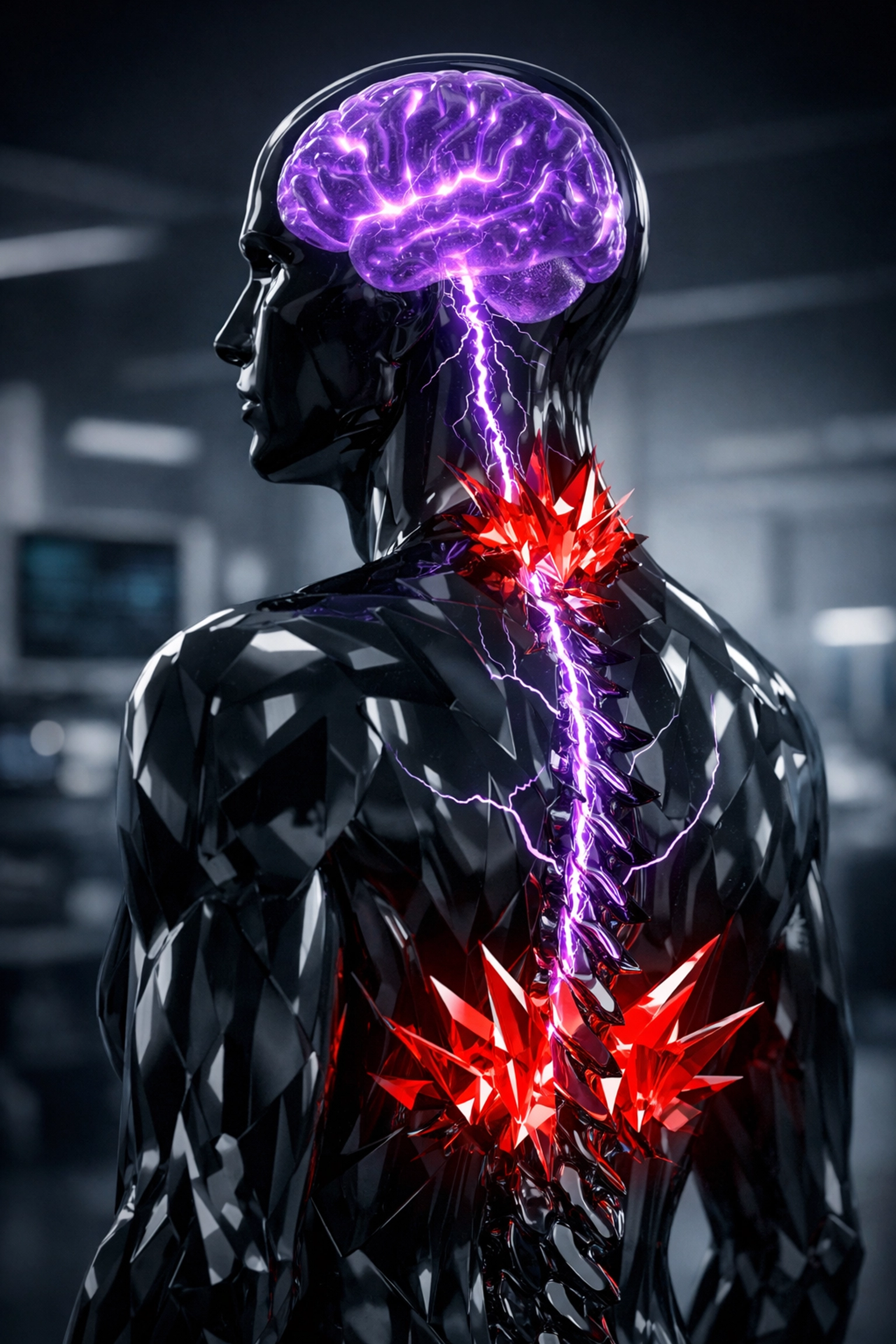
When emotions are repressed, the body stays in a state of "low-grade" fight-or-flight. This keeps the HPA axis (Hypothalamic-Pituitary-Adrenal axis) activated, leading to a constant drip of cortisol and adrenaline into the bloodstream.
In a healthy system, cortisol is anti-inflammatory. However, chronic exposure to cortisol leads to Glucocorticoid Receptor Resistance. Essentially, your cells stop listening to the signal to turn off inflammation. This results in "Inflammaging": a state where the body is chemically primed for pain.
Data Insight: Emotional Markers in Chronic Pain Patients
| Condition | Common Emotional Correlation | Physiological Mechanism |
|---|---|---|
| Chronic Low Back Pain | Repressed Anger / Perfectionism | Muscle guarding and reduced blood flow (Ischemia) |
| Fibromyalgia | Childhood Trauma / Hyper-vigilance | Central Sensitization (overactive nerves) |
| Tension Headaches | High "People Pleasing" / Anxiety | Sustained contraction of cranial muscles |
| IBS / Gut Pain | Unresolved Fear / Control issues | Enteric nervous system dysregulation |
Alexithymia: The "Feeling Blindness"
A significant factor in the connection between pain and emotions is Alexithymia. This is a personality trait characterized by the inability to identify and describe emotions in oneself.
Research in 2025 and 2026 has shown that individuals with high levels of alexithymia have a significantly lower threshold for physical pain. Because they cannot "process" an emotion through language or conscious awareness, the nervous system has only one way to communicate that something is wrong: Physical Symptoms.
If you cannot say, "I feel incredibly overwhelmed and unsupported," your body may say it for you by locking up your neck and shoulders. The pain becomes a "somatic metaphor" for the underlying emotional state.

5 Steps to Identifying and Releasing Repressed Emotion Pain
If you suspect your chronic pain has an emotional component, traditional physical therapy might only offer temporary relief. To achieve a "permanent" fix, you must address the nervous system.
1. Somatic Tracking
Instead of fearing the pain, observe it with curiosity. When the pain flares, ask: "What was I thinking right before this started?" or "What emotion am I avoiding right now?" By shifting from "Fear" to "Curiosity," you signal to your brain that the pain is not a threat, which helps deactivate the danger signal.
2. Emotional Awareness and Expression Therapy (EAET)
Unlike standard CBT (Cognitive Behavioral Therapy), which focuses on changing thoughts, EAET focuses on feeling the suppressed emotions. This often involves:
- Unsent Letters: Writing a raw, unfiltered letter to someone you are angry with (and then destroying it).
- Voice Dialogue: Giving the pain a "voice" to see what it wants to say.
3. Breaking the "Goodist" Pattern
Many chronic pain sufferers share a specific personality profile: they are "Goodists": perfectionistic, people-pleasing, and highly self-critical. These traits necessitate the repression of "selfish" or "aggressive" emotions. Learning to set boundaries and accept "imperfect" emotions is often the key to physical recovery.
4. Vagus Nerve Regulation
The vagus nerve is the highway of the parasympathetic nervous system. If you are stuck in a cycle of repression and pain, your vagus nerve tone is likely low. Techniques like box breathing, humming, and cold exposure can help "reset" the system, making it easier for the brain to stop sending pain signals.
5. Journal Speak
Developed by Nicole Sachs, LCSW, this involves 20 minutes of "trash can" journaling. You write down the most horrific, irrational, and "bad" thoughts you have. The goal isn't to be a good person; it's to give the subconscious a pressure-release valve so it doesn't have to use physical pain to get your attention.

The 2026 Perspective: It’s Not "All in Your Head"
One of the biggest hurdles for patients is the fear that an emotional diagnosis means the pain isn't real. Let's be clear: The pain is 100% real.
Whether the signal starts from a torn ligament or a repressed childhood memory, the end result is the same: the nerves are firing, and you are hurting. The difference lies in the treatment. If the cause is a "software" issue (neural pathways), then "hardware" solutions (surgery, injections) will not only fail but can actually reinforce the brain's belief that the body is broken, further increasing the pain.
Case Study: The "Phantom" Sciatica
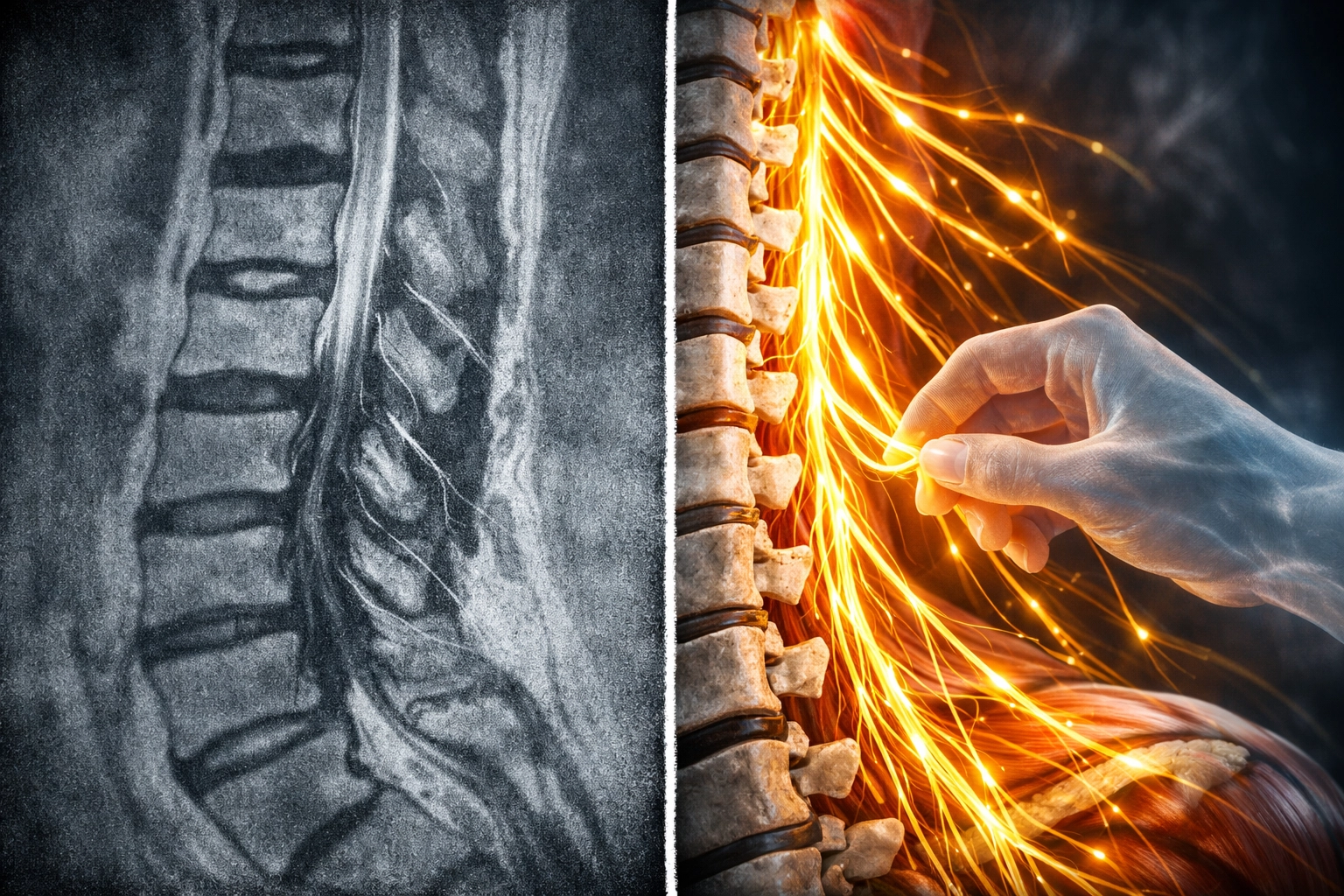
In a 2026 clinical trial, 50 patients with chronic sciatica and "clean" MRIs (no significant disc herniation) were put through an 8-week emotional processing program.
- Result: 72% reported a significant reduction in pain.
- Insight: The majority of these patients identified a "trigger event": usually a period of high domestic stress: that occurred within three months of the pain starting.
Summary and Key Takeaways
The connection between chronic pain and repressed emotions is a call to look at health holistically. To heal, we must move beyond the physical and address the internal environment of our minds.
- Pain is a Messenger: Often, chronic pain is a "danger signal" from a nervous system that feels overwhelmed.
- Suppression is Stress: Pushing down "negative" emotions keeps the body in a state of high-cortisol inflammation.
- Personality Matters: Perfectionism and people-pleasing are high-risk traits for neuroplastic pain.
- Expression is Recovery: Giving emotions a safe outlet can literally "un-wire" chronic pain pathways in the brain.
As we continue to explore the frontiers of bio-hacking and longevity, the most powerful tool in our kit might not be a supplement or a wearable, but our own emotional honesty.
About the Author: Malibongwe Gcwabaza
CEO of blog and youtube
Malibongwe Gcwabaza is a wellness visionary and the CEO of blog and youtube, a leading digital platform dedicated to the intersection of high-performance fitness and holistic health. With over a decade of experience in identifying emerging health trends, Malibongwe specializes in translating complex neurological research into actionable lifestyle strategies. His work focuses on "Total Human Optimization," helping individuals bridge the gap between mental resilience and physical longevity. When he isn't leading the company, Malibongwe is an advocate for functional movement and the science of longevity.
About the Author