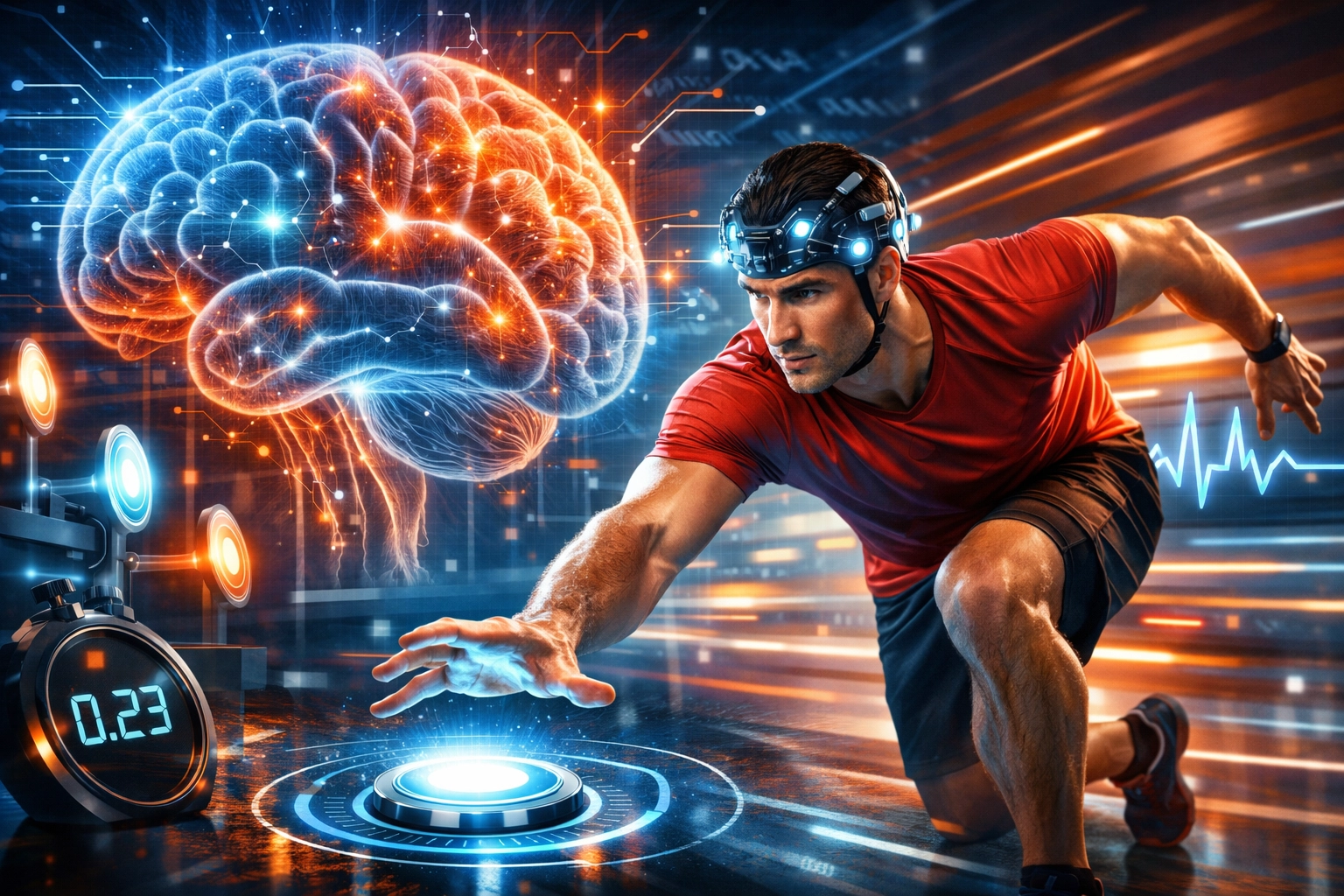
For decades, the fitness industry has been obsessed with the "hardware" of the human body. We lift heavier weights to increase muscle fiber diameter, run sprints to improve mitochondrial density, and stretch to lengthen fascia. But in 2026, the elite tier of performance has shifted its focus to the "software": the nervous system.
Every physical movement you make: whether it’s catching a falling glass or hitting a 95-mph bioactive baseball: begins as an electrical signal in the brain. The speed and accuracy of that movement are dictated by the efficiency of your neural pathways. This is the realm of Neuro-Athletics. It is the science of training the brain to process sensory information faster, leading to explosive improvements in physical reaction time.
The Science of the "Neural Gap"
Reaction time is not just a single event; it is a chain of biological processes. To improve it, we must understand the "Neural Gap": the time elapsed between a stimulus and the physical response. This process follows a specific sequence:
- Detection: Sensory organs (eyes, ears, skin) receive a stimulus.
- Transduction: The stimulus is converted into an electrical impulse.
- Transmission: The impulse travels via afferent nerves to the brain.
- Integration: The brain (specifically the prefrontal cortex and motor cortex) processes the data and decides on a response.
- Execution: The brain sends a signal back down the spinal cord to the muscles to contract.
Neuro-athletics aims to shorten the time spent in stages 3 and 4. Through a process called myelination, repeated neural training thickens the fatty sheath around your nerves, allowing electrical signals to travel at speeds up to 200 miles per hour. By optimizing these pathways, we don’t just move faster; we move more "accurately" under pressure.
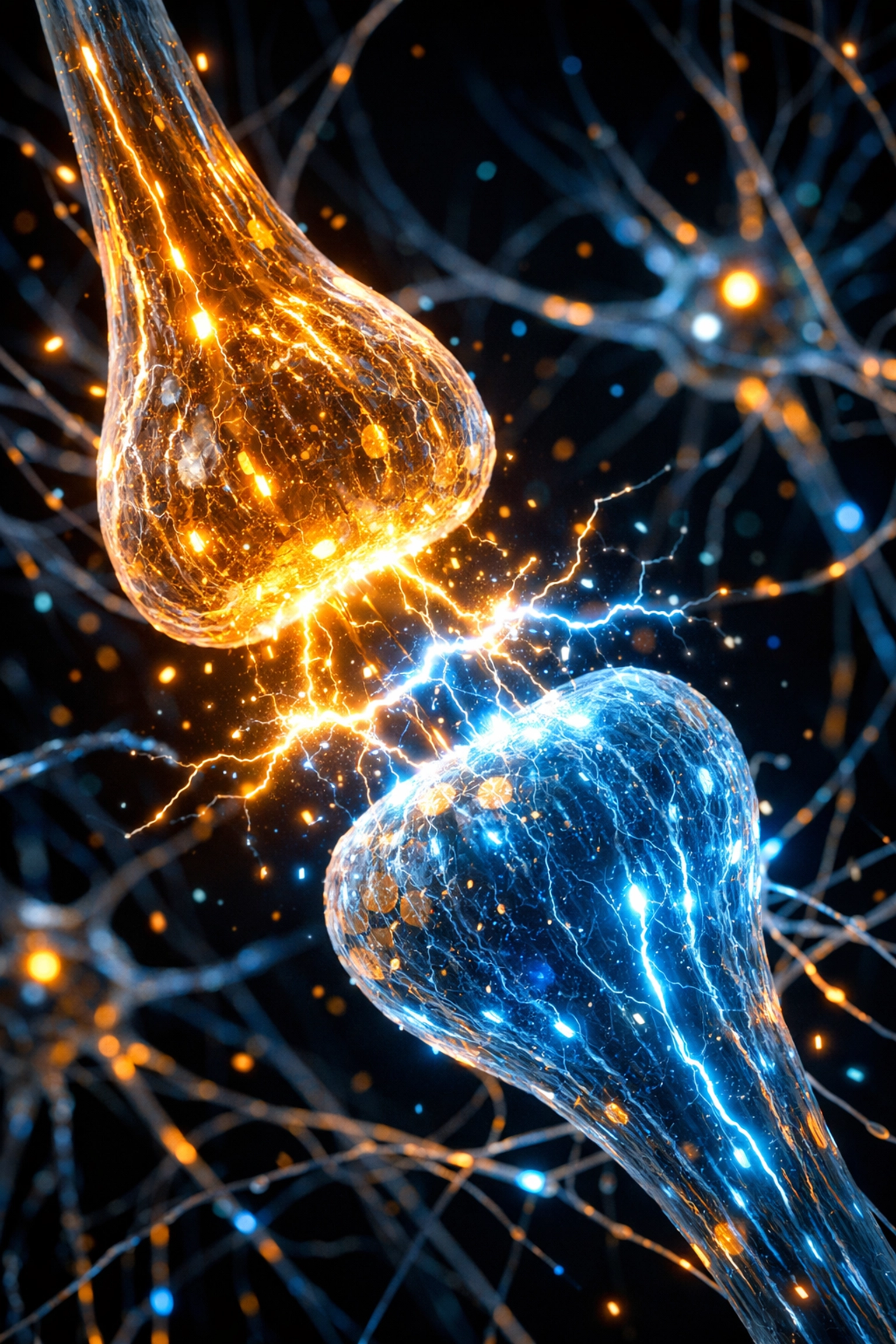
The Three Pillars of Neuro-Athletic Training
To build a faster brain, you cannot simply play more sports. You must isolate the systems that feed information to the brain. In the neuro-centric model, these are categorized into three distinct pillars.
1. The Visual System
The eyes are not just for seeing; they are the primary input for the motor system. Over 80% of all sensory information enters through the eyes. If your visual tracking is "noisy" or slow, your brain will artificially slow down your physical movement as a safety mechanism.
- Saccades: The ability of the eyes to jump quickly between two points.
- Smooth Pursuit: The ability to track a moving object smoothly without losing focus.
- Peripheral Awareness: The ability to see what is happening in the "corners" of your vision while focusing on a central point.
2. The Vestibular System
Located in your inner ear, this is your body's GPS and accelerometer. It tells your brain where you are in space and which way is "up." If your vestibular system is slightly "uncalibrated," your brain perceives a threat of falling. This leads to increased muscle tension and slower reaction times because the brain is prioritizing balance over performance.
3. The Proprioceptive System
This is your "body map." It consists of millions of sensors in your joints, muscles, and skin. Neuro-athletics uses specific drills to "clarify" this map. The clearer the map, the faster the brain can execute a movement without needing to "double-check" where the limb is located.
Technical Comparison: Traditional vs. Neuro-Athletic Training
| Feature | Traditional Training | Neuro-Athletic Training |
|---|---|---|
| Primary Focus | Muscles, Lungs, Heart | Brain, Nervous System, Eyes |
| Primary Metric | Weight lifted, Calories burned | Latency (ms), Visual Clarity |
| Adaptation Mechanism | Hypertrophy, Aerobic Capacity | Neuroplasticity, Myelination |
| Fatigue Type | Peripheral (Muscular) | Central (Neural) |
| Equipment | Barbells, Treadmills | Strobe glasses, VR, Balance beams |
Advanced Techniques to Improve Reaction Time
If you want to move like an elite athlete in 2026, you need to implement these high-level neuro-drills into your routine.
Brain Endurance Training (BET)
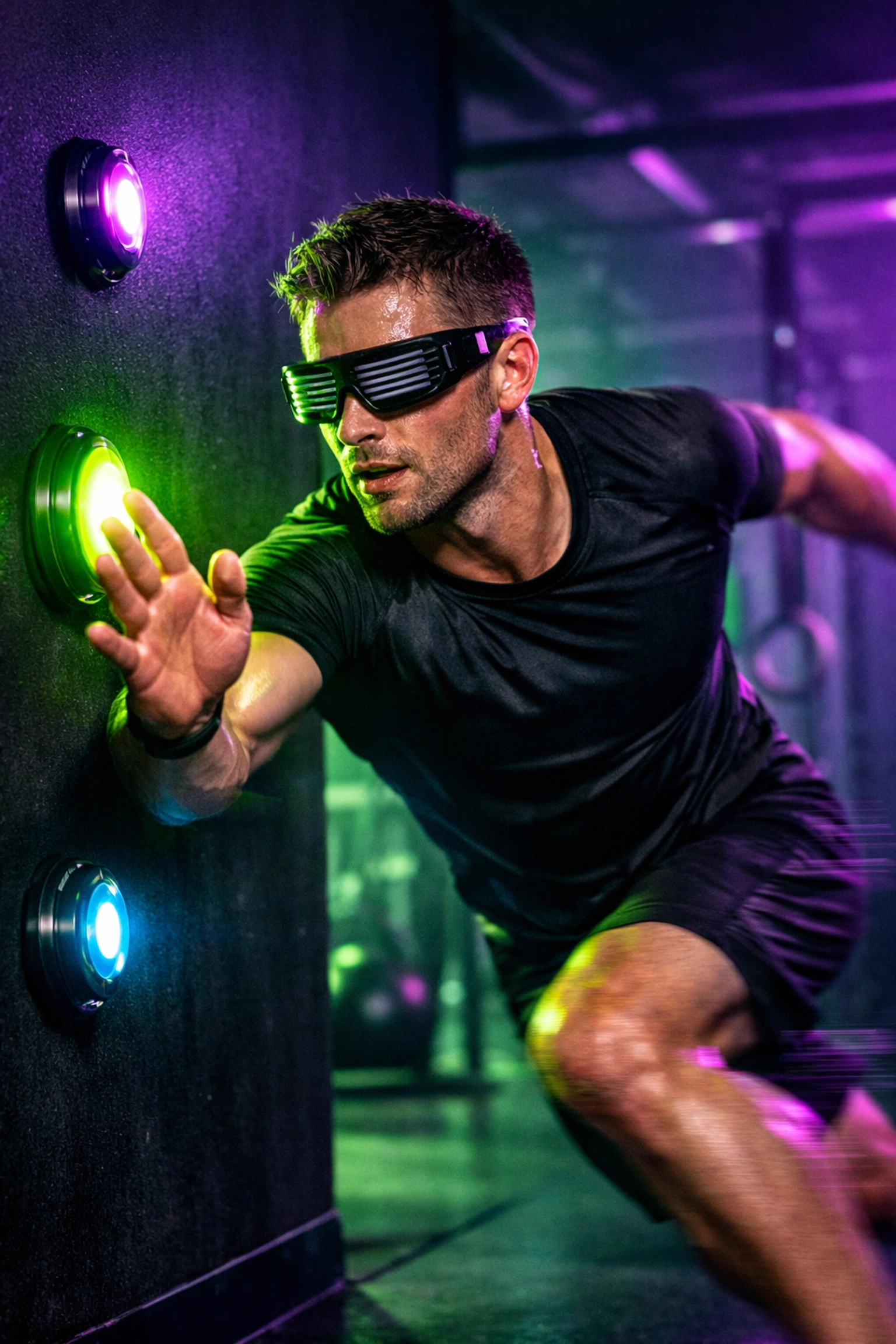
This involves performing cognitively demanding tasks simultaneously with physical exercise. For example, performing a 10-minute HIIT session while solving complex mental math or reacting to color-coded light signals (like BlazePods).
Why it works: It increases the "cognitive load." When you return to normal competition without the mental tasks, the physical movement feels significantly easier and faster because your brain has been conditioned to handle high-stress processing.
Strobe Training
Using liquid crystal glasses that flicker between clear and opaque, you force the brain to process visual information with fewer "frames."
The Data: Research shows that athletes who train with strobe glasses improve their "visual memory" and can predict the trajectory of objects much faster than those who use standard vision.
The Stroop Effect in Motion
The Stroop test (naming the color of a word when the word itself spells a different color) is a classic cognitive stressor. In neuro-athletics, we take this to the gym. You might perform a lateral lunge and only step on a specific color tile when a coach shouts a word that clashes with that color. This trains the prefrontal cortex to filter out "noise" and execute movements with zero hesitation.
Implementing a "Brain-First" Routine: A 4-Week Protocol
You don't need a million-dollar lab to start. Here is a simple but effective protocol to integrate neuro-athletics into your existing fitness regime.
Week 1: Calibrating Inputs
- Daily Visual Sprints: Spend 2 minutes a day jumping your eyes between two targets (Saccades) as fast as possible for 30 seconds, 3 times.
- Balance Drills: Perform single-leg stands while moving your head left-to-right (Vestibular activation).
Week 2: Increasing Neural Load
- Peripheral Awareness Walks: Walk through a park or gym and name objects in your periphery without moving your eyes from a central point.
- Reaction Taps: Use a partner to drop a ruler or use a phone app to test and record your baseline reaction speed.
Week 3: Cognitive Integration
- Shadow Boxing with Math: If you are a runner or boxer, perform your movement while counting backward from 100 by 7s (100, 93, 86…).
- Color-Coded Sprints: Set up four cones of different colors. Have a partner call out a color after you have already started running.
Week 4: Performance Testing
- The "Neural Stress" Test: Re-test your reaction speed using the same metrics from Week 1. Most users see a 10-15% reduction in latency (the time it takes to react) by this stage.
The Role of Tech: VR and AI in 2026
We cannot talk about neuro-athletics without mentioning Virtual Reality. Systems like Rezzil or WIN Reality allow athletes to enter "Hyper-Speed" modes. In these environments, you can practice against stimuli that are 20% faster than real life. When you take the headset off, the real world appears to "slow down," a phenomenon known as the Neural Flicker Effect. This is the ultimate "cheat code" for reaction time, as it forces the brain to up-regulate its processing speed to survive the simulation.
Conclusion: The Future is Sub-Second
Physical strength has a ceiling, but neural efficiency is remarkably plastic. Whether you are an aging athlete looking to maintain your edge or a professional seeking that extra 50 milliseconds of advantage, neuro-athletics is the frontier. By training your brain to see better, balance better, and decide faster, you aren't just improving your sport: you're optimizing the very system that makes you human.
Stop training just the "meat." Start training the "machine" behind it.
Author Bio: Malibongwe Gcwabaza
Malibongwe Gcwabaza is the CEO of Blog and Youtube, a premier destination for cutting-edge health, wellness, and fitness insights in 2026. With a background in human performance and a passion for bio-hacking, Malibongwe focuses on translating complex neuroscientific principles into actionable strategies for high-performers. He believes that the next decade of human evolution will be won not in the weight room, but in the synapses of the brain. When not researching the latest in GLP-1 nutrition or VO2 Max optimization, he can be found testing the latest VR neuro-trainers in his home lab.
About the Author