In the hyper-accelerated world of 2026, our nervous systems are under a type of pressure our ancestors never faced. Between constant digital notifications, "always-on" work cultures, and the physiological impact of urban living, most of us spend our days in a state of low-grade sympathetic dominance: better known as "fight or flight."
If you feel constantly wired but tired, struggle with digestive issues, or find it impossible to quiet your mind at night, the culprit likely isn't your personality; it’s your vagus nerve. As the primary component of the parasympathetic nervous system, the vagus nerve acts as the body's internal "brake pedal." When it’s functioning optimally, you can transition from stress to calm in seconds. When it’s weak, you stay stuck in a loop of anxiety and inflammation.
This guide explores the science of the vagus nerve and provides five high-leverage, data-backed techniques to reset your system and improve your "vagal tone."
Understanding the "Wandering Nerve"
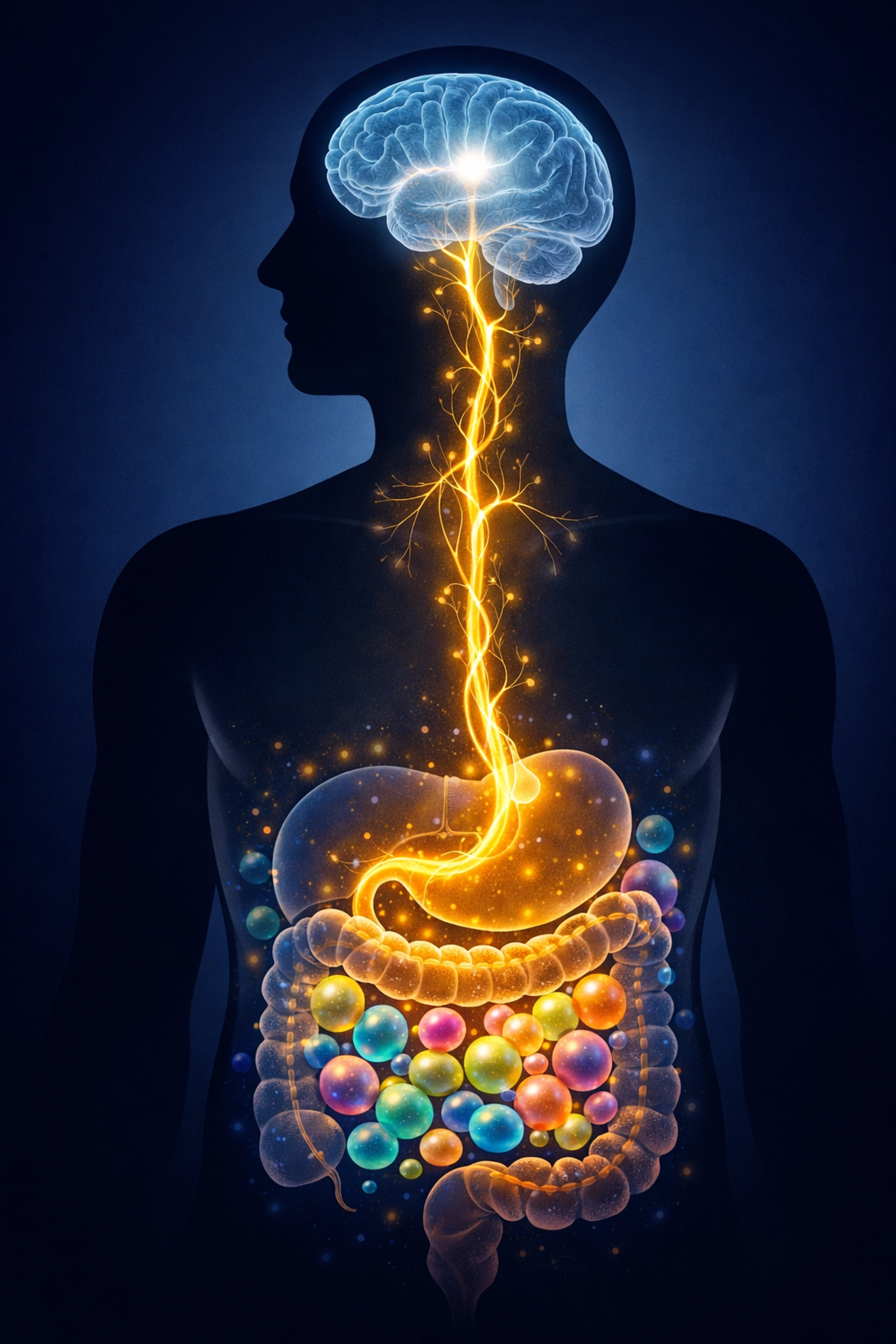
The vagus nerve (Cranial Nerve X) is the longest and most complex of the cranial nerves. Its name comes from the Latin word for "wandering," which is fitting because it travels from the brainstem down through the neck, into the chest, and deep into the abdomen.
It is the bidirectional superhighway of the body. While 20% of its fibers send signals from the brain to the organs (efferent), a staggering 80% of its fibers send sensory information from the body back to the brain (afferent). This means your brain "knows" you are stressed because your gut and heart tell it so via the vagus nerve.
The Metrics of Calm: Heart Rate Variability (HRV)
To understand if these techniques are working, we look at Heart Rate Variability (HRV). HRV is the measure of the variation in time between each heartbeat. Contrary to popular belief, a healthy heart does not beat like a metronome; it is slightly irregular.
- High HRV: Indicates a robust, flexible nervous system that can handle stress and recover quickly (High Vagal Tone).
- Low HRV: Indicates a nervous system stuck in a stress response (Low Vagal Tone).
According to 2025 clinical meta-analyses, increasing your vagal tone through the following interventions can reduce systemic inflammation by suppressing pro-inflammatory cytokines like TNF-alpha.
1. Respiratory Sinus Arrhythmia: The Power of the Exhale
The fastest way to access the vagus nerve is through the lungs. The vagus nerve passes through the diaphragm, and its activity is directly linked to the rhythm of your breath.
When you inhale, your sympathetic nervous system (SNS) slightly increases your heart rate to circulate oxygenated blood. When you exhale, the vagus nerve secretes acetylcholine, which acts as a chemical brake to slow the heart down. This phenomenon is called Respiratory Sinus Arrhythmia (RSA).
The Technical Protocol: 4-8 Breathing
To maximize vagal stimulation, your exhalation must be longer than your inhalation.
- Inhale through the nose for 4 seconds (engaging the diaphragm, not the chest).
- Hold for 2 seconds (optional).
- Exhale through pursed lips for 8 seconds.
By doubling the length of the exhale, you are sending a physiological signal to the brainstem that there is no immediate threat, forcing the body into a "rest and digest" state.

2. Thermal Stress: The Mammalian Dive Reflex
Cold exposure is perhaps the most potent "acute" reset for the nervous system. When your face or body is suddenly exposed to cold water, it triggers the Mammalian Dive Reflex. This is an evolutionary survival mechanism that immediately slows the heart rate and redirects blood to the brain and heart.
How to Apply Cold for Vagal Reset
You don't need a $5,000 cold plunge tub to achieve this. Research in 2024 showed that localized cooling of the vagus nerve is highly effective.
| Technique | Duration | Physiological Impact |
|---|---|---|
| Face Submersion | 30 Seconds | Rapidly lowers heart rate via trigeminal nerve signaling. |
| Vagus Ice Pack | 5–10 Minutes | Placing an ice pack on the side of the neck (carotid sheath) stimulates the vagus. |
| Cold Shower Finish | 60 Seconds | Systemic release of norepinephrine followed by parasympathetic rebound. |
Safety Note: If you have a history of heart conditions, consult a physician before attempting sudden cold exposure.
3. Auditory and Vibrational Stimulation
The vagus nerve innervates the muscles of the throat (pharynx and larynx) and the external ear canal. This anatomical reality makes sound and vibration incredibly effective tools for a reset.
Chanting and Humming
The "Voo" breath, popularized by Dr. Peter Levine, involves taking a deep breath and making a low-frequency "Voo" sound on the exhale. The vibrations created in the throat physically stimulate the vagus nerve as it passes through the neck.
Auricular Vagus Nerve Stimulation (aVNS)
The concha and the tragus (the small cartilage bump) of your ear are the only places where the vagus nerve's sensory fibers come to the surface of the skin.
- The Technique: Using clean fingers, gently massage the inside of your ear (the hollow area above the ear canal) in circular motions for 2–3 minutes. This can significantly reduce cortisol levels in high-stress moments.

4. Oculocardiac Reflex and Eye Movement
There is a fascinating link between our eyes and our heart. The Oculocardiac Reflex (OCR) is a decrease in pulse rate associated with traction applied to the extraocular muscles or compression of the eyeball. While we don't recommend pressing on your eyes, we can use specific eye movements to signal safety to the brain.
The "Basic Exercise" (Stanley Rosenberg Method)
This technique realigns the atlas (C1 vertebra) and reduces tension in the brainstem area where the vagus nerve originates.
- Lie on your back with your fingers interlaced behind your head.
- Without turning your head, look as far to the right as you comfortably can with just your eyes.
- Hold this position until you feel a spontaneous "release": usually a sigh, a yawn, or a swallow.
- Repeat on the left side.
This simple shift in the extraocular muscles signals the brain to move out of a "hyper-vigilant" scanning state and into a settled, social engagement state.
5. The Gut-Brain Connection: Probiotics and Fasting
Because 80% of vagal communication is bottom-up (gut to brain), the state of your microbiome directly influences your mood and stress resilience. Certain strains of bacteria, often called psychobiotics, communicate with the brain specifically via the vagal pathway.
The 2026 Gut-Vagus Protocol
- L. Rhamnosus Stimulation: Clinical trials have shown that Lactobacillus rhamnosus can alter GABA expression in the brain, but only if the vagus nerve is intact. Without the vagus, the brain doesn't receive the "calm" signal from these bacteria.
- Intermittent Fasting: Short-term fasting (12–16 hours) has been shown to increase vagal activity by allowing the enteric nervous system to enter its "housekeeping" phase (the Migrating Motor Complex).
Summary of Techniques for Daily Life
To maintain a resilient nervous system, consistency is more important than intensity. Use the table below to choose the right technique for your current environment.
| Situation | Recommended Technique | Time Required |
|---|---|---|
| Before a big meeting | 4-8 Breathing | 2 Minutes |
| Morning "Brain Fog" | Cold Splash / Face Submersion | 30 Seconds |
| Winding down for sleep | Ear Massage (aVNS) | 3 Minutes |
| After a stressful conflict | "Voo" Humming or Chanting | 1 Minute |
| Sitting at a desk all day | Oculocardiac Eye Movement | 2 Minutes |
Conclusion
Resetting your vagus nerve isn't about eliminating stress: that’s impossible in the modern age. It's about building physiological flexibility. By training your body to return to a state of calm after a stressor, you reduce the long-term wear and tear on your cardiovascular and immune systems.
Start with the 4-8 breathing technique today. It’s free, it’s instant, and your nervous system will thank you for it.
Author Bio
Malibongwe Gcwabaza is the CEO of blog and youtube and a leading voice in the 2026 longevity movement. With a background in health technology and high-performance bio-monitoring, Malibongwe focuses on making complex physiological science accessible to everyone. His mission is to help people optimize their healthspan through data-driven habits and simple, effective lifestyle interventions. When he’s not deep-diving into the latest neurobiology research, he’s likely practicing what he preaches in a cold plunge or on a trail run.
About the Author