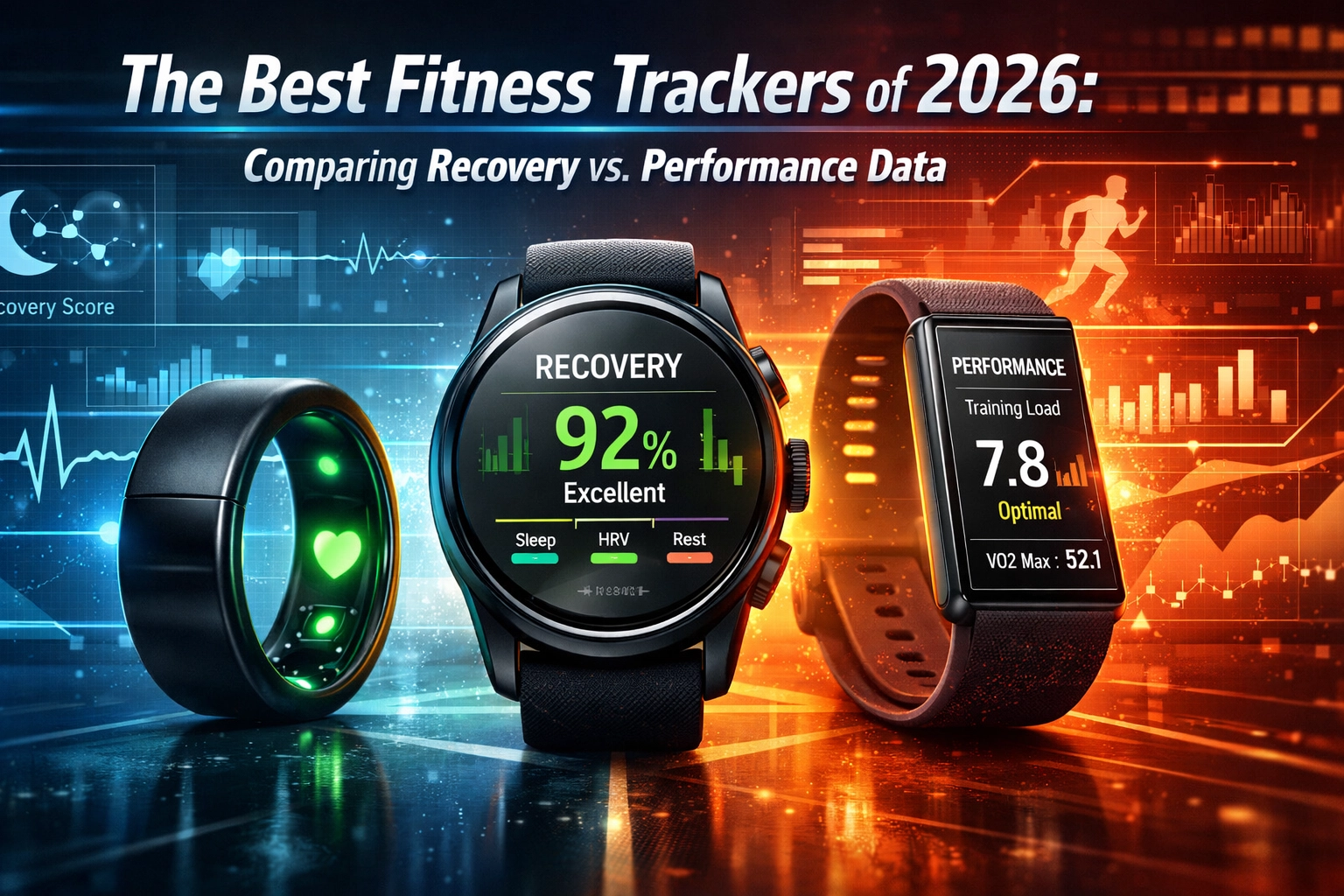
By 2026, the fitness tracker market has split into two distinct philosophies. On one side, we have devices designed to tell you how hard you can push (Recovery-Focused). On the other, we have devices designed to show you exactly how hard you did push (Performance-Focused).
Choosing the right wearable is no longer about counting steps; it is about deciding which data stream will actually move the needle for your specific longevity and fitness goals. Whether you are training for a "Centenarian Decathlon" or trying to optimize your sleep architecture, the hardware you strap to your wrist (or finger) acts as the peripheral brain for your biology.
The Core Conflict: Recovery vs. Performance
The fundamental difference lies in the sampling rate and the intent of the algorithms.
Recovery-focused trackers prioritize passive, high-fidelity monitoring during periods of rest and sleep. They look for subtle shifts in the autonomic nervous system to determine "Readiness."
Performance-focused trackers prioritize active data collection. They utilize multi-band GPS, high-frequency optical heart rate sensors, and integration with external sensors (like power meters) to measure output, strain, and mechanical efficiency.
1. Recovery-Focused Giants: Whoop 5.0 and Oura Ring 4
In 2026, recovery tracking is dominated by screenless or low-profile devices that disappear into your lifestyle.
Whoop 5.0: The Strain and Recovery Specialist
Whoop remains the gold standard for athletes who want a "hands-off" approach to data. The 5.0 model has iterated on the 4.0 by improving the photoplethysmography (PPG) sensor array, using more LEDs to penetrate deeper into the tissue for more accurate Heart Rate Variability (HRV) readings.
- The Killer Feature: The Whoop Journal and AI Coach. It correlates lifestyle behaviors (like late-night meals or magnesium supplementation) with your recovery score.
- Data Insight: It focuses heavily on "Healthspan" metrics, tracking your biological trends over months rather than just daily fluctuations.
- Best For: Individuals who prioritize nervous system balance and want to avoid overtraining.
Oura Ring 4: The Discrete Health Lab
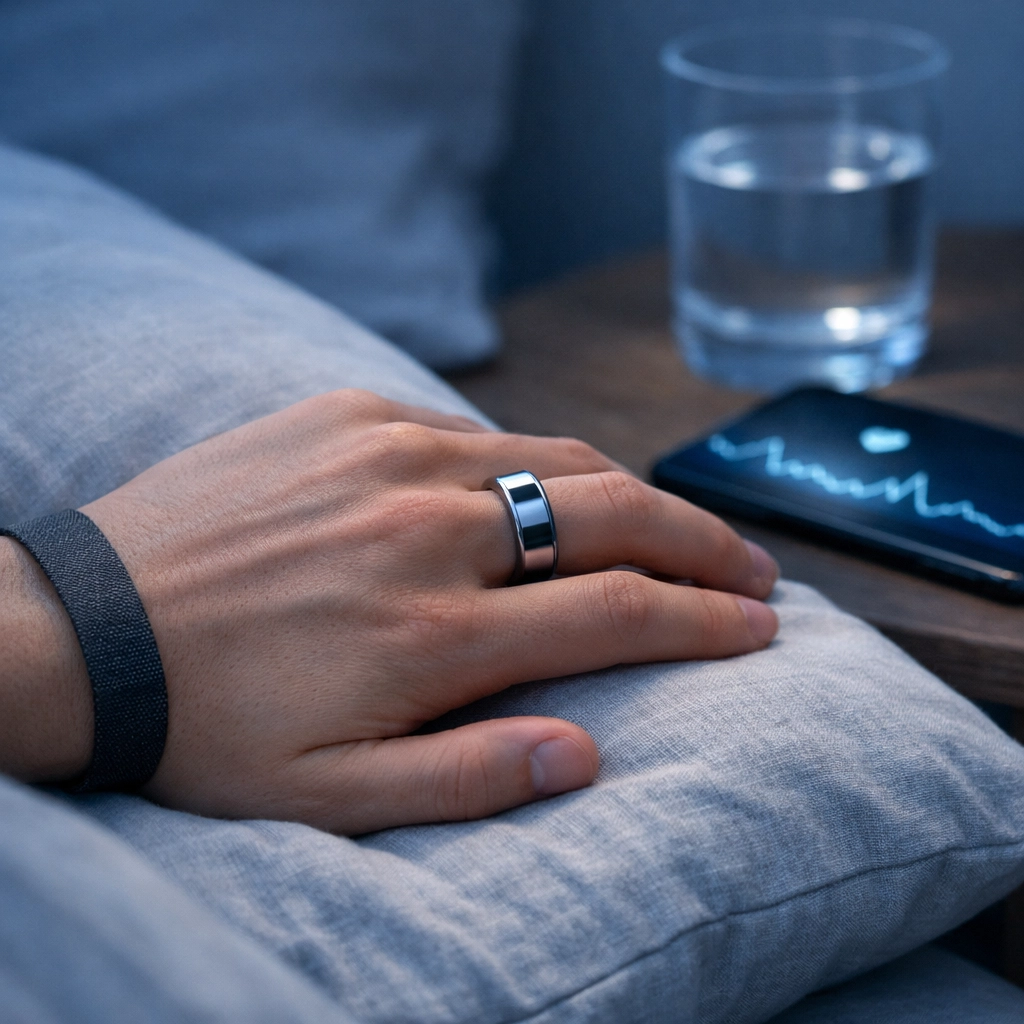
The Oura Ring 4 has solidified its place as the best wearable for sleep and female-specific health. By moving sensors to the finger: where the pulse is easier to read than the wrist: Oura achieves near-clinical accuracy for sleep staging.
- The Killer Feature: Integration with metabolic health platforms and cycle-syncing partnerships.
- Data Insight: Oura’s "Readiness Score" is a composite of resting heart rate, HRV, body temperature, and previous day's activity. In 2026, its ability to detect "Pre-Sickness" (viral onset) remains unmatched.
- Best For: Professional workers, biohackers, and women tracking hormonal health.
2. Performance-Focused Powerhouses: Garmin and Apple
If you need to know your exact pace while climbing a mountain or your power output during a sprint, these are the heavy hitters.
Garmin Fenix 8 and Forerunner 970
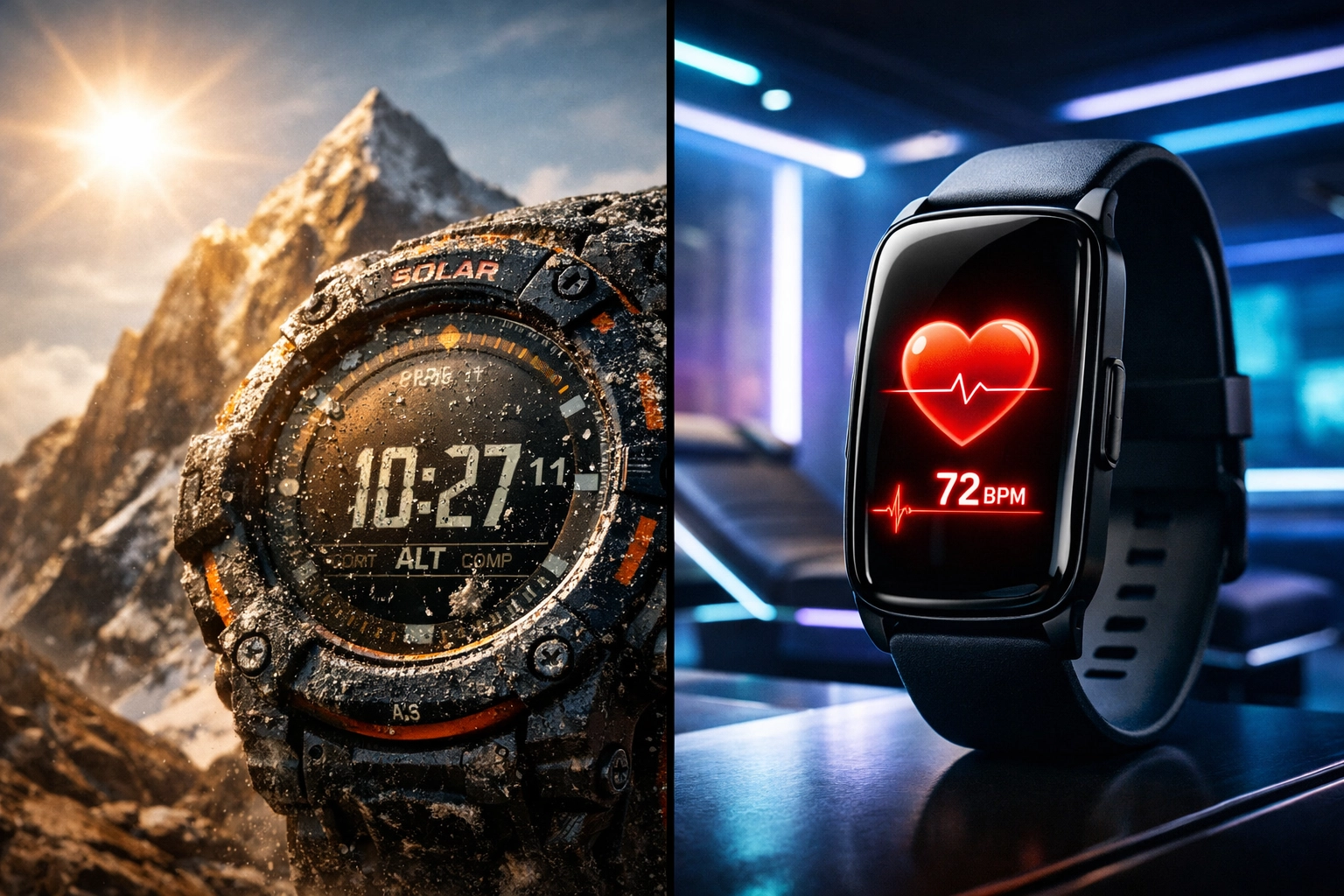
Garmin continues to rule the endurance world. The Fenix 8, with its dual-frequency GPS and solar charging, is essentially a rugged computer for the wrist.
- The Killer Feature: Training Readiness and Real-Time Stamina. Garmin uses your VO2 Max and recent training load to predict exactly how much "gas" you have left in the tank during a workout.
- Data Insight: Garmin's "Body Battery" has evolved. In 2026, it incorporates more stress data, helping you understand how mental fatigue impacts physical performance.
- Best For: Marathoners, triathletes, and outdoor adventurers.
Apple Watch Series 10 / Ultra 3
Apple has the highest sensor accuracy in the mainstream market. Research consistently shows that Apple’s heart rate tracking during high-intensity exercise is the closest to a chest strap.
- The Killer Feature: The Ecosystem and Vitals App. Apple’s ability to flag AFib (Atrial Fibrillation) and other cardiac irregularities makes it a proactive medical device.
- Data Insight: Apple focuses on "Closing Rings," which is a behavioral psychology masterclass. However, for 2026, the new "Training Load" feature finally allows users to see if they are overreaching or staying productive.
- Best For: The "Hybrid Athlete" who wants a smartwatch that doubles as a high-end fitness tracker.
2026 Comparison Table: Performance vs. Recovery
To make your decision easier, here is a breakdown of how the top contenders stack up across the metrics that actually matter for longevity and performance.
| Feature | Whoop 5.0 | Oura Ring 4 | Garmin Fenix 8 | Apple Watch Ultra 3 |
|---|---|---|---|---|
| Primary Goal | Recovery/Strain | Holistic Wellness | Performance/Nav | Versatility/Health |
| HRV Accuracy | Elite (Nightly) | Elite (Nightly) | High (Continuous) | Very High |
| GPS Capability | None (Uses Phone) | None | Multi-Band (Elite) | Multi-Band (High) |
| Battery Life | 4-5 Days | 7 Days | 20+ Days (Solar) | 2-3 Days |
| Sleep Tracking | High Detail | Gold Standard | Good | Excellent |
| Key Metric | Recovery % | Readiness Score | Training Readiness | Activity Rings |
Deep Dive: The Data That Actually Matters
When you are looking at your dashboard in 2026, don't get distracted by "Steps" or "Calories Burned" (which are largely estimates). Focus on these three high-value data points:
1. Heart Rate Variability (HRV)
HRV is the measure of the variation in time between each heartbeat. It is controlled by the autonomic nervous system. A high HRV generally indicates that your body is in a "parasympathetic" (rest and digest) state and is ready to take on stress.
- Performance Tip: If your HRV is 20% below your baseline, consider a Zone 2 cardio session instead of a heavy lifting day.
2. VO2 Max
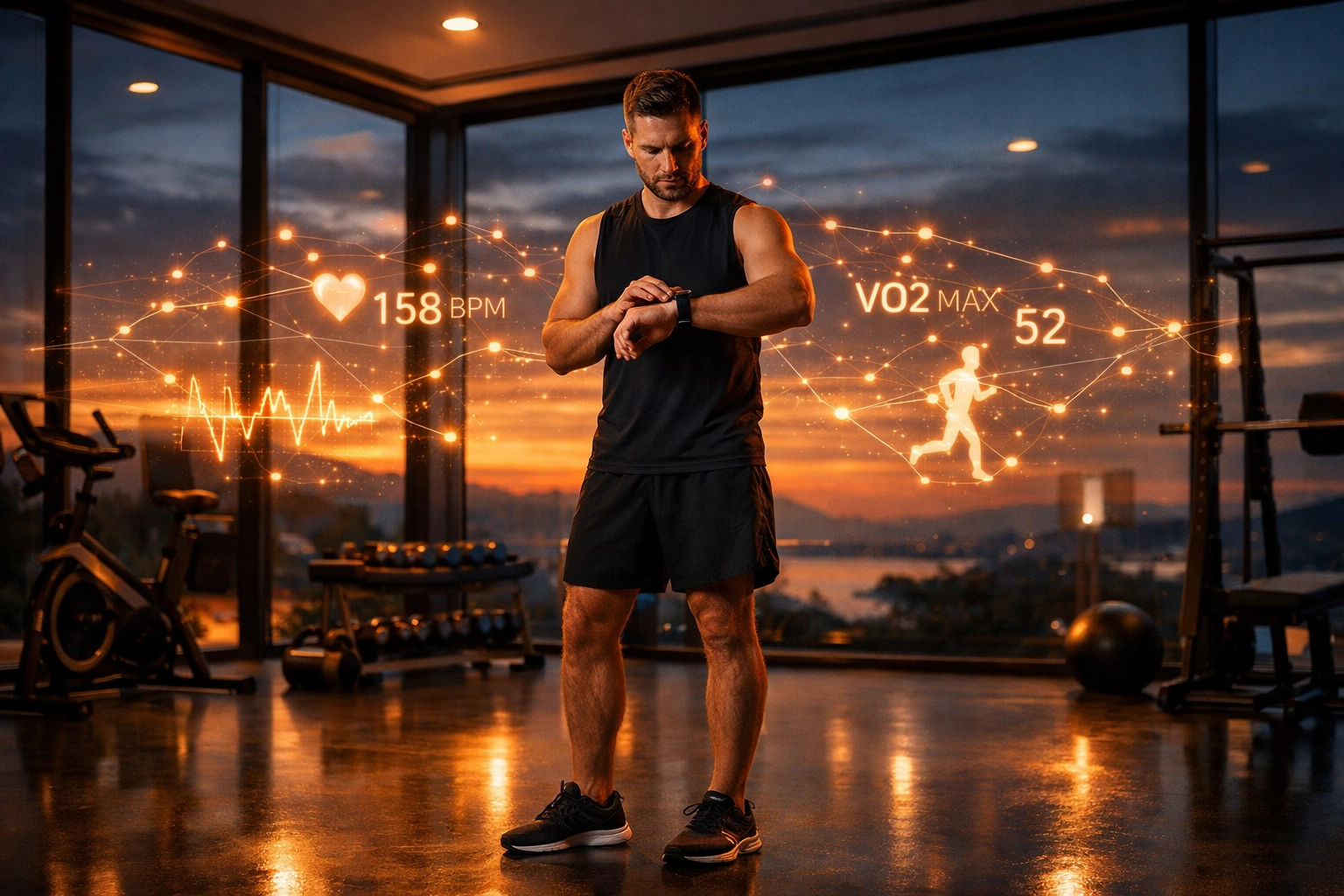
VO2 Max is the maximum amount of oxygen your body can utilize during intense exercise. It is one of the strongest predictors of lifespan.
- Data Insight: Garmin and Apple provide the most stable VO2 Max estimations. If this metric isn't moving, your aerobic base (Zone 2) is likely neglected.
3. Sleep Architecture
It’s not just about how long you slept; it’s about the ratio of REM to Deep Sleep.
- Deep Sleep: Essential for physical repair and GH (Growth Hormone) release.
- REM Sleep: Essential for cognitive function and emotional processing.
- 2026 Trend: Devices like the Oura Ring 4 now provide "Sleep Efficiency" scores that help you identify if your bedroom environment (light, temp) is sabotaging your recovery.
The Rise of "Bio-Monitoring" in 2026
We are seeing a shift where trackers are integrating with other hardware. In 2026, the best fitness trackers don't work in isolation.
- CGM Integration: Many high-end trackers now sync with Continuous Glucose Monitors (like Dexcom or Supersapiens) to show how your workout intensity affects your blood sugar in real-time.
- Blood Pressure Monitoring: The "Premium MG" models and some high-end smartwatches now offer cuffless blood pressure monitoring, a massive leap for cardiovascular health tracking.
- AI Coaching: We have moved past generic "get more sleep" notifications. AI coaches now analyze your data and say: "Your HRV is low because your body temperature rose by 0.5 degrees last night. You are likely fighting a late-night meal or an oncoming cold. Suggesting a 20-minute restorative yoga flow instead of your planned 5-mile run."
Summary: Which One Should You Buy?
- Choose Whoop 5.0 if you want to optimize your training based on recovery and don't care about having another screen in your life. It’s for the dedicated athlete who wants to master their nervous system.
- Choose Oura Ring 4 if you want the most discrete form factor and world-class sleep data. It is the best choice for those focused on general longevity and metabolic health.
- Choose Garmin Fenix 8 if you are an endurance junkie. If you run, cycle, or swim, the data density and battery life provided by Garmin are still the industry benchmark.
- Choose Apple Watch Ultra 3 if you want one device to rule them all. It provides the best balance of health monitoring, safety features, and high-accuracy workout tracking.
Final Thoughts
In 2026, the "best" tracker is the one you actually wear. Data is only useful if it leads to a change in behavior. If you have all the performance data in the world but never look at your recovery metrics, you are likely redlining your engine toward burnout. Conversely, if you only track recovery, you might never push yourself hard enough to trigger the adaptations required for true fitness.
The most successful athletes in 2026 are "Hybrid Trackers": they use a performance device (like a Garmin) during the workout and a recovery device (like an Oura or Whoop) for the other 23 hours of the day.
Author Bio: Malibongwe Gcwabaza
Malibongwe Gcwabaza is the CEO of "blog and youtube," a leading digital hub for health, wellness, and fitness technology. With over a decade of experience in the biohacking and performance space, Malibongwe specializes in translating complex biometric data into actionable lifestyle changes. He is a firm believer in using technology to extend "Healthspan" and spent most of 2025 testing the latest wearable prototypes in the Swiss Alps.
About the Author