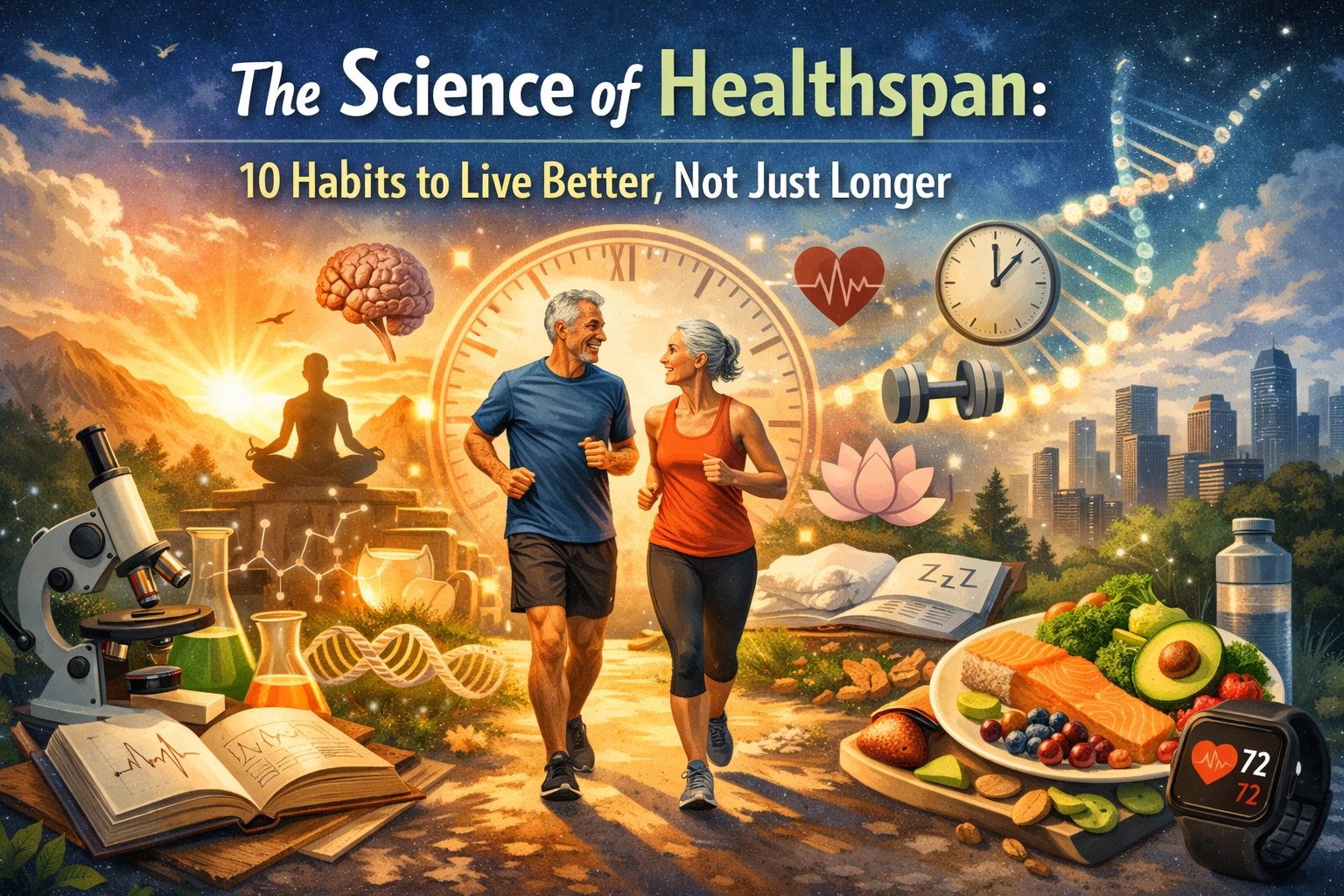
By 2026, the global conversation has shifted. We are no longer obsessed with just "living long": we are obsessed with "living well." While modern medicine has mastered the art of keeping people alive through chronic illness (lifespan), it has historically struggled to keep people functional, sharp, and vibrant (healthspan).
Healthspan is defined as the period of life spent in good health, free from the chronic diseases and disabilities of aging. Data from the McKinsey Health Institute suggests that while average lifespans have increased, we still spend about 50% of our lives in "less than good" health. This guide breaks down the biological mechanisms of aging and the 10 science-backed habits required to close the gap between how long you live and how well you live.
Understanding the "Hallmarks of Aging"
To optimize healthspan, we must address the "Hallmarks of Aging": a framework of biochemical processes that lead to cellular decline. These include genomic instability, telomere attrition, epigenetic alterations, and mitochondrial dysfunction. The habits below are designed to target these specific cellular pathways.
Lifespan vs. Healthspan: A Comparison
| Metric | Lifespan Focus | Healthspan Focus |
|---|---|---|
| Primary Goal | Postponing death | Maintaining physiological function |
| Key Indicators | Mortality rates | VO2 Max, Grip Strength, Cognitive Function |
| Intervention | Reactive (Treating disease) | Proactive (Bio-optimization) |
| End Result | Years lived | Years lived with vitality |
1. Prioritize High-Intensity Strength Training (Sarcopenia Prevention)
Sarcopenia, or age-related muscle loss, is one of the greatest threats to longevity. Starting in your 30s, you lose 3–8% of your muscle mass per decade. Muscle isn't just for aesthetics; it is a metabolic organ. It acts as a glucose sink, helping to regulate insulin sensitivity and prevent Type 2 Diabetes.
The Strategy: Aim for at least two sessions of heavy resistance training per week. Focus on compound movements: squats, deadlifts, and presses. Research shows that higher muscle mass is inversely correlated with all-cause mortality.

2. Master Your Zone 2 Aerobic Base
While strength is vital, your cardiorespiratory fitness (CRF) is perhaps the strongest predictor of how long you will live. VO2 Max: the maximum amount of oxygen your body can utilize during exercise: is directly linked to healthspan.
Zone 2 Training is steady-state exercise where you can still hold a conversation but feel the effort. It optimizes mitochondrial efficiency and increases the number of mitochondria in your cells.
- Target: 150–180 minutes of Zone 2 per week.
- The Science: This builds "metabolic flexibility," allowing your body to switch efficiently between burning fats and carbohydrates.
3. Leverage Protein for Cellular Repair
In 2026, the "low protein" myths of the past have been debunked for the aging population. To maintain muscle and support the "mTOR" pathway (responsible for cell growth) appropriately, protein intake must be optimized.
The Habit: Aim for 1.6 to 2.2 grams of protein per kilogram of body weight. Distribute this across 3–4 meals to maximize Muscle Protein Synthesis (MPS). High-quality leucine-rich sources (whey, eggs, lean meats) are critical for triggering the body's repair mechanisms.
4. Optimize Sleep Architecture and the Glymphatic System
Sleep is the body’s only time for "neurological waste management." During deep sleep, the glymphatic system flushes out amyloid-beta plaques: the metabolic waste products linked to Alzheimer’s and cognitive decline.
The Technical Fix:
- Temperature: Keep your room at 18°C (65°F).
- Light: Use red-spectrum lighting 2 hours before bed to trigger natural melatonin production.
- Consistency: Wake up at the same time every day to anchor your circadian rhythm.
5. Embrace Hormetic Stress (Sauna & Cold)
Hormesis is the biological phenomenon where a low dose of a stressor triggers a beneficial adaptation.
- Heat (Sauna): Frequent sauna use (4-7 times a week) is associated with a 40% reduction in all-cause mortality. The heat triggers Heat Shock Proteins (HSPs), which repair misfolded proteins in your cells.
- Cold (Plunging): Cold exposure increases norepinephrine and triggers the production of "brown fat," which is thermogenic and metabolically active.

6. Metabolic Flexibility and Intermittent Fasting
Constant grazing keeps insulin levels chronically elevated, which shuts down autophagy: the body’s cellular "cleanup" process. Autophagy allows your body to identify and recycle damaged cell components (senescent or "zombie" cells).
The Habit: Practice a 14:10 or 16:8 fasting window. This doesn't mean eating less; it means eating in a condensed timeframe to allow insulin to drop low enough for autophagy to activate.
7. Gut Microbiome Diversification
Your gut health dictates your systemic inflammation levels (often called "Inflammaging"). A diverse microbiome produces Short-Chain Fatty Acids (SCFAs) like butyrate, which protect the gut lining and regulate the immune system.
The 30-Plant Rule: Research suggests that individuals who eat 30 different types of plants per week have significantly more diverse microbiomes than those who eat 10 or fewer. This includes nuts, seeds, herbs, and spices.
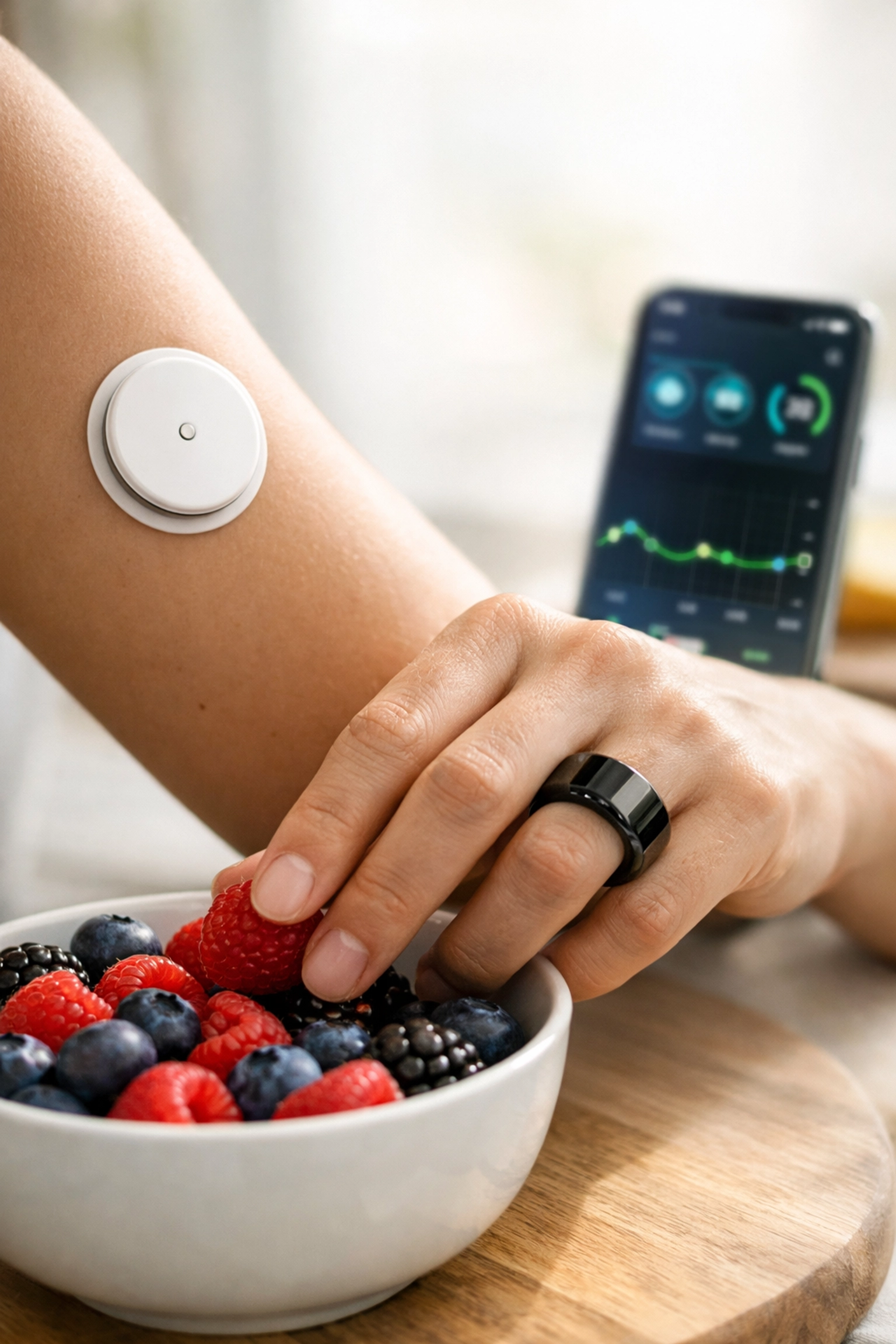
8. Monitor Biomarkers via Wearables (CGMs and Oura)
In 2026, we no longer guess; we track. Continuous Glucose Monitors (CGMs), once only for diabetics, are now essential for the health-conscious. They show you in real-time how a "healthy" bowl of oatmeal might be causing a massive insulin spike that leads to cellular damage.
Key Markers to Watch:
- HbA1c: Your 3-month average blood sugar.
- hs-CRP: A marker of systemic inflammation.
- ApoB: A more accurate predictor of cardiovascular risk than standard LDL.
9. Cognitive Reserve and Neuroplasticity
Healthspan isn't just physical; it's mental. To prevent cognitive decline, you must build a "Cognitive Reserve." This involves challenging the brain with "novelty and complexity."
The Habit: Don't just do crosswords. Learn a new language, pick up a musical instrument, or practice complex motor skills like dancing or rock climbing. These activities force the brain to create new neural pathways (neurogenesis).
10. Social Connection and the "Blue Zones" Factor
The longest-lived populations (The Blue Zones) have one thing in common: strong social fabrics. Loneliness is now biologically recognized as being as detrimental to healthspan as smoking 15 cigarettes a day. Chronic loneliness elevates cortisol and increases systemic inflammation.
The Habit: Prioritize "high-quality" social interactions. This means face-to-face time, shared meals, and a sense of community or "Ikigai" (purpose).
Implementing the Longevity Protocol
Transitioning to a healthspan-focused lifestyle can feel overwhelming. The key is to view these habits as a "compounding interest" account for your future self.
Sample 2026 Longevity Daily Schedule
| Time | Action | Biological Purpose |
|---|---|---|
| 07:00 | Sunlight Exposure (10 mins) | Circadian Reset / Cortisol Spike |
| 08:00 | Zone 2 Cardio (45 mins) | Mitochondrial Biogenesis |
| 12:00 | High Protein Meal (40g+) | Muscle Protein Synthesis |
| 17:00 | Resistance Training | Sarcopenia Prevention |
| 20:00 | Sauna / Cold Plunge | Hormetic Stress Adaptation |
| 22:00 | Sleep in Cold, Dark Room | Glymphatic Clearance |
Summary: The Future of Your Health
Extending your healthspan is not about a single "magic pill" like NMN or Metformin: though those may play a role in the future. It is about the consistent application of biological stressors and recovery. By focusing on muscle mass, metabolic flexibility, and cellular repair, you aren't just adding years to your life; you are ensuring that your 80s and 90s are spent on the hiking trail, not in a hospital bed.
About the Author: Malibongwe Gcwabaza
CEO of blog and youtube
Malibongwe Gcwabaza is a visionary leader and health optimization advocate dedicated to bridging the gap between complex longevity science and everyday wellness. With a focus on data-driven lifestyle interventions, Malibongwe leads blog and youtube in delivering high-authority content that empowers individuals to take control of their biological destiny. When not analyzing the latest biotech trends, he is an avid practitioner of Zone 2 training and functional fitness.
About the Author