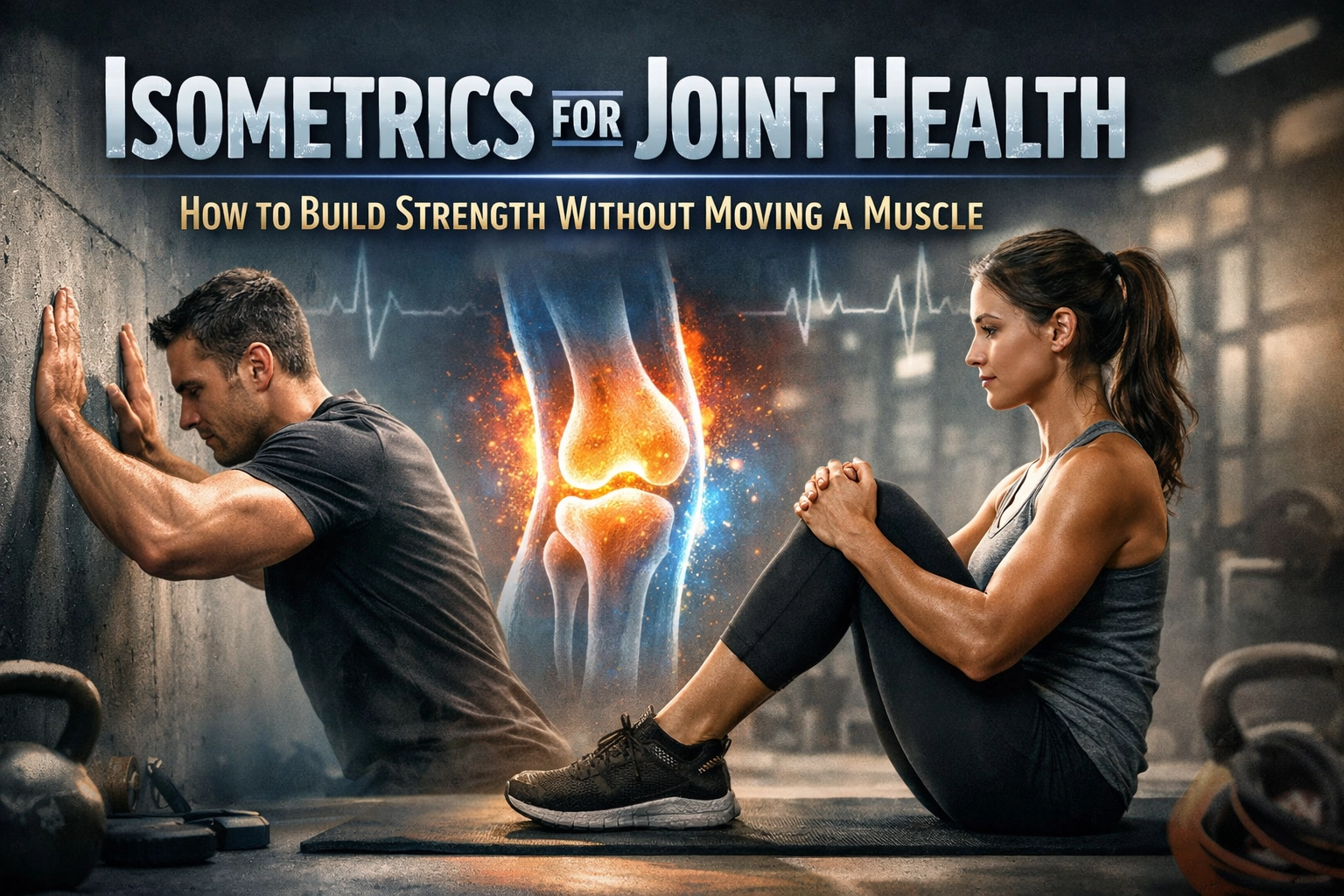
For decades, the fitness industry has been obsessed with movement. We measure progress by repetitions, distance, and velocity. If you aren't moving, the logic went, you aren't working. However, as we move into 2026, the science of longevity and "pre-hab" has pivoted toward a quieter, more intense form of training: Isometrics.
Isometric exercise involves muscle contraction without a change in the length of the muscle or visible movement in the joint. While it might look like someone is simply standing still or pushing against a wall, the internal physiological environment is one of extreme tension and rapid adaptation. For anyone dealing with joint "wear and tear," chronic inflammation, or those simply looking to build a "bulletproof" frame for the next thirty years, isometrics are the most undervalued tool in the shed.
The Physiology of Static Strength
To understand why isometrics work, we have to look at the motor unit. In traditional "isotonic" lifting (like a bicep curl), the muscle alternates between shortening (concentric) and lengthening (eccentric). While effective for building mass, these movements create "shear force" on the joint: the grinding of bone and cartilage under load.
Isometrics bypass this. When you hold a static position at a high intensity: typically 70% to 90% of your Maximum Voluntary Contraction (MVC): you recruit a massive number of motor units simultaneously. Because there is no movement, the joint remains in a neutral, safe position while the muscle and connective tissues bear 100% of the load.
The Two Types of Isometrics
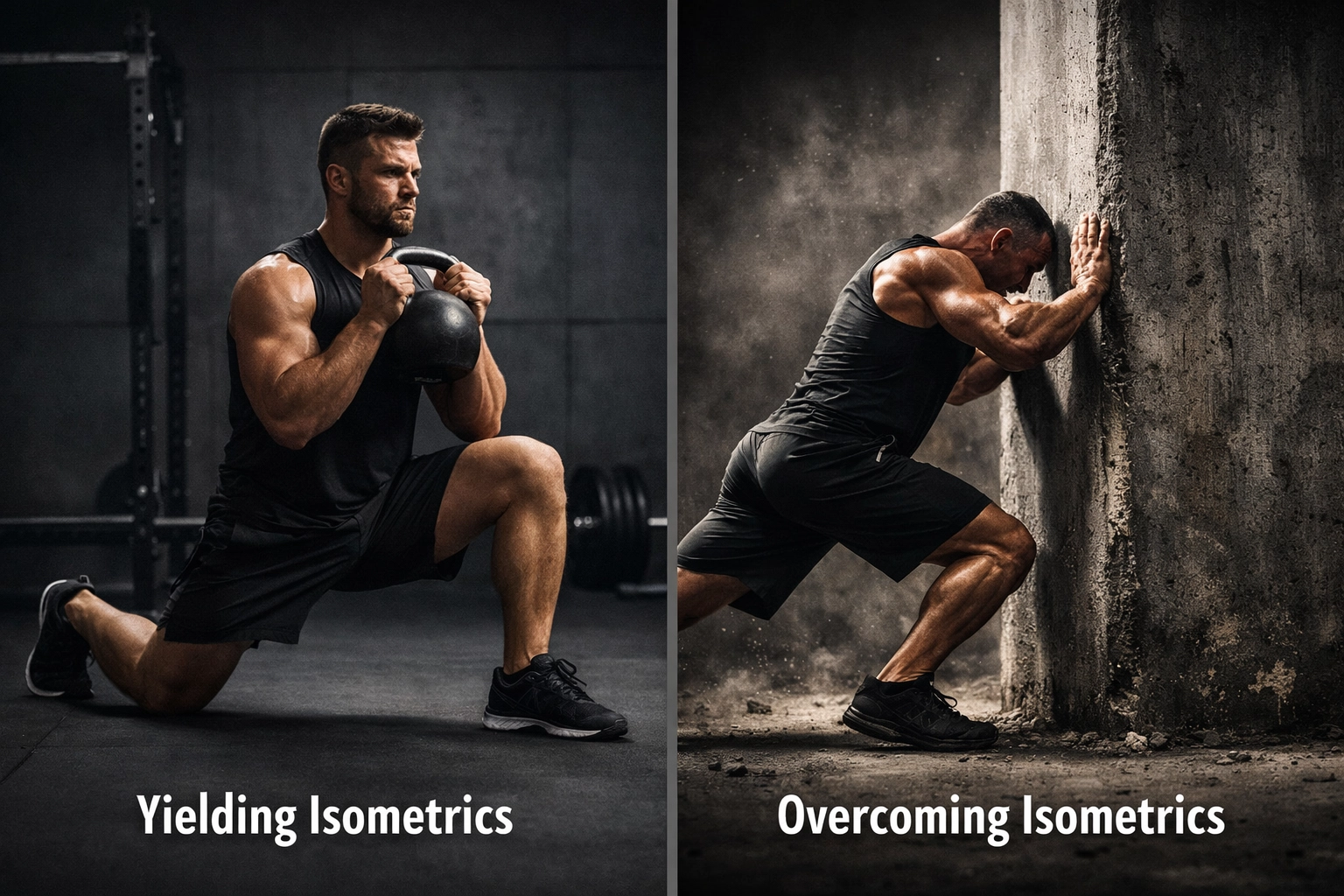
Not all "holding still" is created equal. In 2026, sport science distinguishes between two primary modalities:
- Yielding Isometrics (Holding): You are resisting a load that wants to move you (e.g., holding a heavy goblet squat at the bottom). This is primarily used for structural integrity and hypertrophy.
- Overcoming Isometrics (Pushing): You are pushing or pulling against an immovable object (e.g., pushing against a concrete wall as hard as possible). This is a "neurological" lift that trains the brain to recruit more muscle fibers.
Why Isometrics are the "Secret Sauce" for Joint Longevity
The most significant breakthrough in recent years is the discovery of the Analgesic Effect of isometric loading. Research has shown that a 45-second heavy isometric hold can reduce joint pain for several hours immediately following the session.
1. Tendon Remodeling and Collagen Synthesis
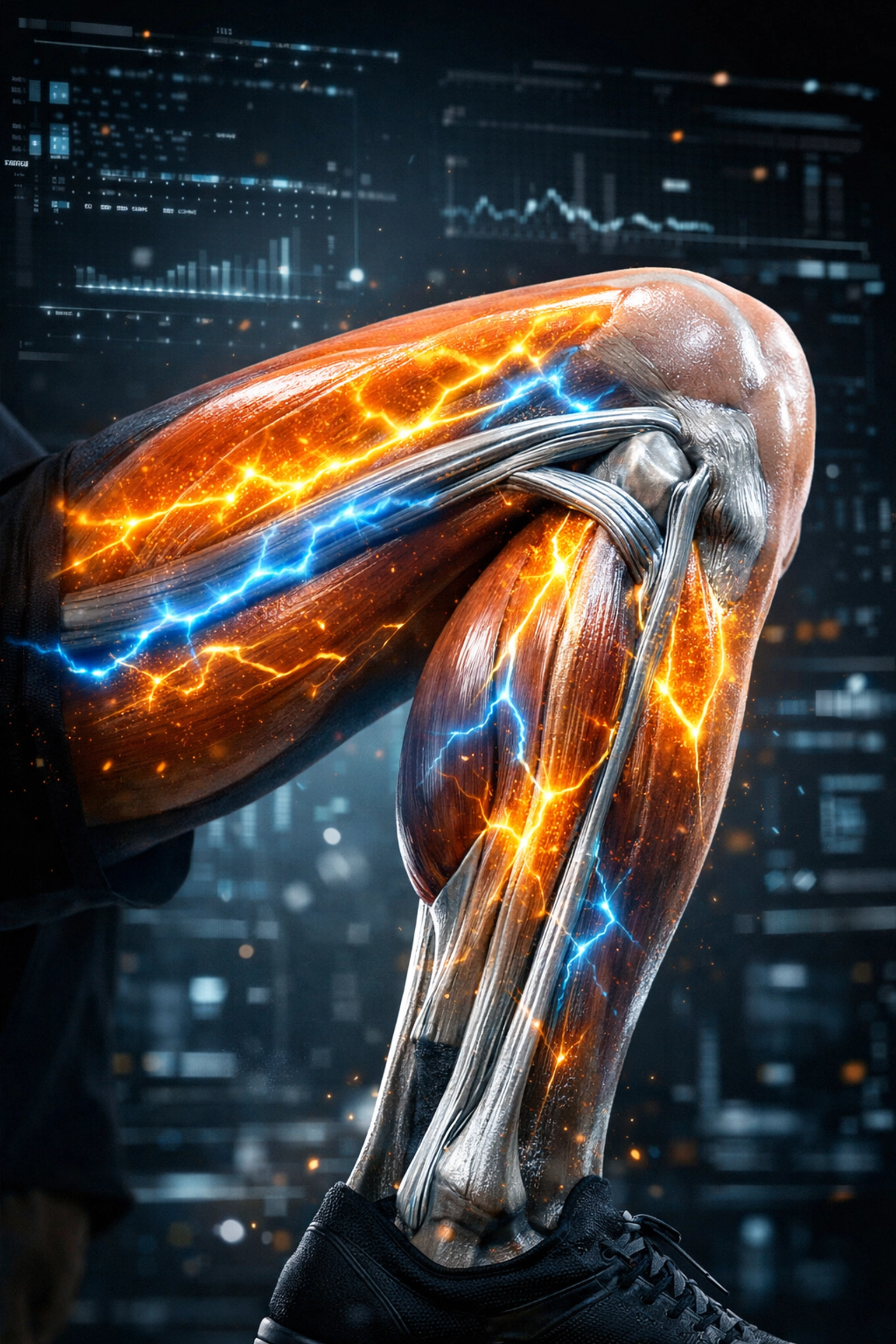
Tendons are notoriously slow to heal because they have limited blood flow. However, they are highly responsive to "mechanical tension." When you hold a heavy isometric load, you trigger a process called Viscoelastic Creep. This "stretches" the collagen fibers within the tendon, signaling the body to deposit new collagen and strengthen the matrix. Unlike traditional lifting, which can "snap" or irritate a sensitive tendon, the steady pressure of an isometric hold builds the tendon's load-bearing capacity without the friction of movement.
2. Eliminating the "Inhibition" Loop
When a joint is injured, the brain often "shuts off" the surrounding muscles to protect the area. This is known as Arthrogenic Muscle Inhibition (AMI). This creates a vicious cycle: the joint hurts, the muscle weakens, and because the muscle is weak, the joint takes more stress and hurts even more. Isometrics break this cycle. Because they are low-impact, the brain feels "safe" enough to allow full muscle activation, allowing you to regain strength even while a joint is technically in recovery.
| Benefit | Isotonic (Moving) | Isometric (Static) |
|---|---|---|
| Joint Shear Force | High | Near Zero |
| Tendon Loading | Dynamic/Variable | Constant/High |
| Neurological Drive | Medium | Very High |
| Recovery Time | 48-72 Hours | 12-24 Hours |
| Equipment Needed | Full Gym | Minimal to None |
Hypertrophy Without Motion: Can You Grow?
A common myth is that isometrics won't build "real" muscle size. Data from 2025 and 2026 clinical trials suggests otherwise. The key is Muscle Length.
Research indicates that isometric contractions performed at a lengthened position (for example, holding the very bottom of a split squat) result in significantly more muscle growth than contractions in a shortened position. This is due to "stretch-mediated hypertrophy." By staying in the most difficult part of the range of motion for 30 to 60 seconds, you create massive metabolic stress and hypoxia (lack of oxygen) in the muscle, which are primary drivers for growth.
The 2026 "Joint-First" Isometric Protocol
To implement this into your routine, you don't need to quit your current workouts. Instead, use isometrics as "primers" or "finishers." Here is a highly technical, three-tier approach to building joint-resilient strength.
Phase 1: The Analgesic Primer (For Pain Relief)
If your knees or shoulders ache before a workout, do this first.
- Exercise: Wall Sit (for knees) or Cross-Body Doorway Pull (for shoulders).
- Intensity: 50-60% effort.
- Duration: 45 seconds per hold.
- Rest: 60 seconds.
- Goal: Use the "analgesic effect" to numb the joint pain so you can move safely.
Phase 2: Overcoming Isometrics (For Neurological Power)
This trains your nervous system to "fire" harder.
- Exercise: The "Immovable Deadlift" (Pulling on a bar pinned under safety racks).
- Intensity: 100% "All-out" effort.
- Duration: 6 to 10 seconds.
- Sets: 3-5 sets.
- Goal: Maximize motor unit recruitment without the systemic fatigue of a heavy moving deadlift.
Phase 3: The Functional Yield (For Structural Integrity)
- Exercise: Split Squat Hold (bottom position, 1 inch off the floor).
- Intensity: Bodyweight or light weight.
- Duration: 60-90 seconds (the "burn" zone).
- Goal: Build "Viscoelastic Creep" in the patellar tendon and strengthen the vastus medialis (VMO) for knee stability.
Safety Considerations: The Blood Pressure Myth
For years, doctors warned against isometrics because of the Valsalva Maneuver: the tendency to hold your breath and spike blood pressure during a static hold. While it’s true that internal pressure rises, modern cardiology has found that "Isometric Resistance Training" (IRT) is actually one of the most effective ways to lower resting blood pressure over the long term.
The secret? Rhythmical breathing. Never hold your breath during an isometric hold. Keep a steady, "straw-breathing" cadence. This manages the intra-abdominal pressure while still allowing the muscles to work at max capacity.

Advanced Implementation: Bio-Monitoring Tension
In the current 2026 landscape, many athletes are using wearable EMG (electromyography) sensors to track isometric intensity. Since you aren't moving weight, it’s easy to "cheat" by letting your effort drop. If you don't have sensors, use a Rate of Perceived Exertion (RPE) scale:
- RPE 7: You’re working, but you could talk.
- RPE 9: Your muscles are shaking (this is the sweet spot for strength).
- RPE 10: Total systemic effort; impossible to hold for more than 10 seconds.
Conclusion
Isometrics are not just "rehab" exercises for the elderly or the injured. They are a high-performance methodology that respects the biological reality of our joints. By incorporating static holds, you are essentially "armoring" your connective tissues, allowing you to train harder in your dynamic movements without the typical "shelf life" associated with heavy lifting.
If you want to be the person still squatting and sprinting at age 80, you need to start being still today.
About the Author: Malibongwe Gcwabaza
Malibongwe Gcwabaza is the CEO of blog and youtube and a leading voice in the 2026 longevity movement. With a background in human performance and a passion for data-driven wellness, Malibongwe focuses on bridging the gap between complex clinical research and everyday fitness. His "depth over breadth" philosophy has helped thousands of readers transition from traditional "grind" culture to intelligent, science-backed bio-hacking. When he isn't nerding out over tendon collagen synthesis, you can find him practicing what he preaches in the mountains of South Africa.
About the Author