
For decades, the gold standard for predicting heart disease has been a combination of blood pressure readings, cholesterol panels, and BMI. But as we move further into 2026, a much simpler, low-tech metric is proving to be a more accurate predictor of cardiovascular mortality: the strength of your squeeze.
Grip strength is no longer just a measure of how well you can open a pickle jar or hold a barbell. It has emerged as a "vital sign" of biological age and systemic health. Recent longitudinal data suggests that your handgrip strength is a window into your heart’s future, often flagging risks that traditional blood pressure cuffs might miss.
In this deep dive, we’ll explore the technical science behind the grip-heart connection, the data-driven benchmarks you need to hit, and how to improve your "longevity squeeze."
The Science: Why the Hand Predicts the Heart
At first glance, the muscles in your forearm seem to have nothing to do with the cardiac muscle pumping blood in your chest. However, grip strength is what researchers call a proxy for systemic physiological reserve.
When you squeeze a dynamometer (the device used to measure grip strength), you aren't just testing local muscle fibers. You are testing:
- Neuromuscular Integrity: The ability of your central nervous system to recruit motor units.
- Muscle Mass Quality: The density and health of your skeletal muscle.
- Vascular Health: The efficiency of blood flow to peripheral tissues.
The PURE Study: The Turning Point in Cardiac Research
The most significant evidence comes from the Prospective Urban Rural Epidemiology (PURE) study. This massive undertaking tracked over 142,000 adults across 17 countries for four years. The findings were staggering.
For every 5-kilogram (11-pound) decline in grip strength, there was a:
- 16% increased risk of death from any cause.
- 17% increased risk of cardiovascular death.
- 7% increased risk of a non-fatal heart attack.
- 9% increased risk of stroke.
Perhaps most surprisingly, the study concluded that grip strength was a stronger predictor of cardiovascular death than systolic blood pressure. While high blood pressure is a symptom of cardiovascular strain, low grip strength is a marker of underlying frailty and biological aging.

Data-Driven Insights: Benchmarks for 2026
To understand where you stand, you need to compare your squeeze against established norms. Grip strength is measured in kilograms (kg) or pounds (lb) using a calibrated hydraulic dynamometer.
The following table represents the "Healthy Range" for adults in 2026, compiled from recent epidemiological meta-analyses.
Grip Strength Standards (Kilograms)
| Age Group | Men (Excellent) | Men (At Risk) | Women (Excellent) | Women (At Risk) |
|---|---|---|---|---|
| 20–29 | >52 kg | <38 kg | >32 kg | <20 kg |
| 30–39 | >50 kg | <36 kg | >30 kg | <18 kg |
| 40–49 | >46 kg | <32 kg | >28 kg | <16 kg |
| 50–59 | >42 kg | <28 kg | >24 kg | <14 kg |
| 60–69 | >38 kg | <24 kg | >20 kg | <12 kg |
| 70+ | >32 kg | <20 kg | >18 kg | <10 kg |
Note: If you fall into the "At Risk" category, it does not mean you have heart disease, but it indicates that your biological "buffer" against disease is low.
The Biological Link: Autonomic Balance and Inflammation
How exactly does a strong grip translate to a healthier heart? The answer lies in two areas: Autonomic Nervous System (ANS) balance and Inflammaging.
1. Vagal Tone and Resting Heart Rate
Research shows a strong correlation between grip strength and a lower resting heart rate. People with higher muscular fitness tend to have better "vagal tone." The vagus nerve is the primary component of the parasympathetic nervous system (the "rest and digest" system). Better vagal tone allows the heart to recover faster from stress and maintain a steady, efficient rhythm.
2. Myokines vs. Cytokines
Muscle is an endocrine organ. When you engage in the type of heavy lifting required to build grip strength, your muscles release myokines. These are small signaling proteins that have anti-inflammatory effects on the entire body: including the lining of your arteries (the endothelium). Conversely, low muscle mass is often associated with higher levels of pro-inflammatory cytokines, which accelerate atherosclerosis (hardening of the arteries).
3. Metabolic Flexibility
Grip strength is also a marker for metabolic health. Studies have found inverse correlations between grip strength and triglycerides, as well as fasting blood glucose levels. Essentially, a body that is strong enough to produce high force is a body that is better at processing fuel and maintaining insulin sensitivity.
The "Isometric Miracle": Lowering Blood Pressure Through Your Hands
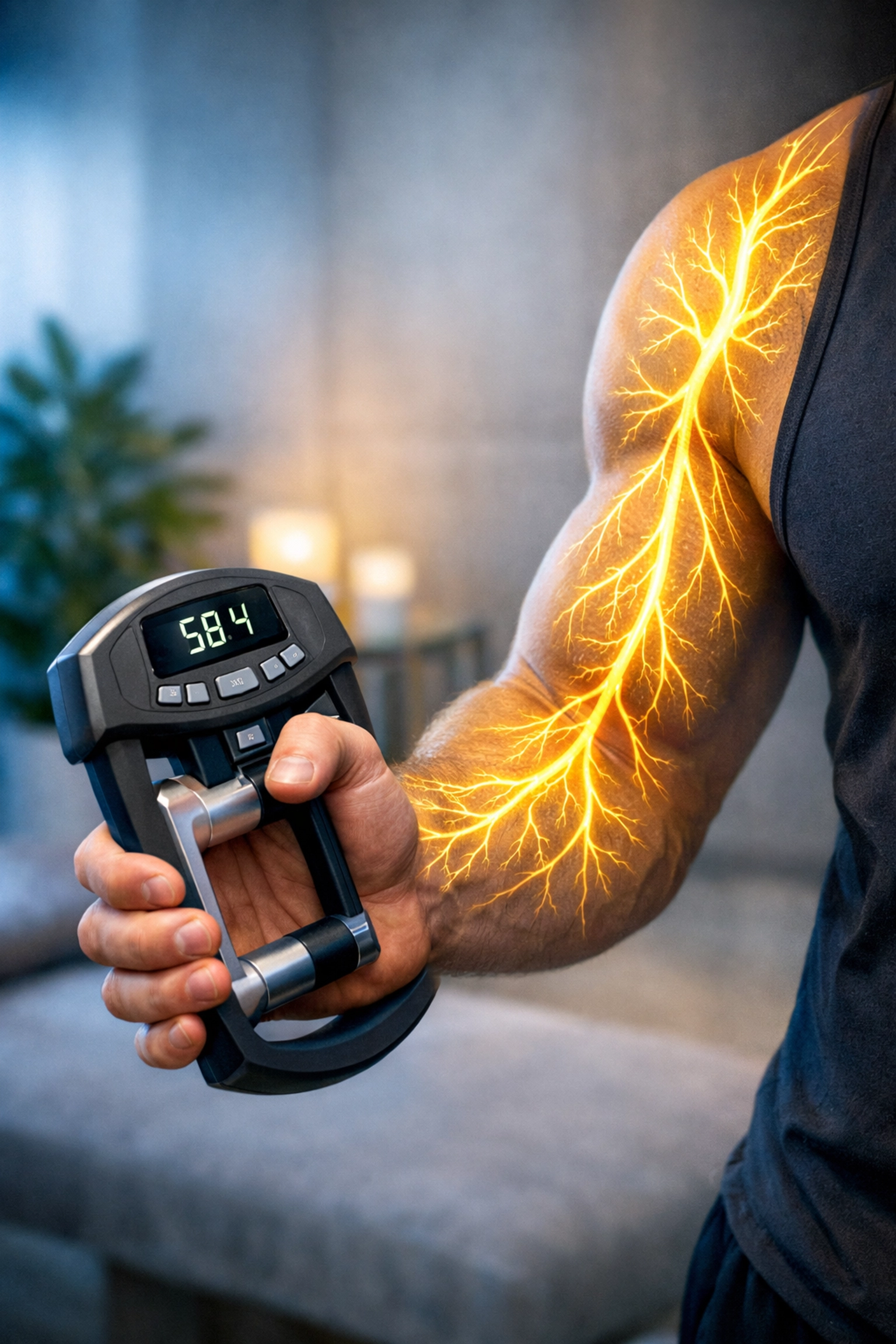
One of the most actionable discoveries in 2026 fitness science is the use of Isometric Handgrip Training (IHT) to treat hypertension.
While heavy cardio and lifting are great, the simple act of squeezing a handle at a specific intensity for a set time can significantly lower blood pressure.
The Protocol:
- Squeeze a dynamometer or grip trainer at 30% of your maximum voluntary contraction (MVC).
- Hold the squeeze for 2 minutes.
- Rest for 1 minute.
- Repeat 4 times per hand.
- Perform this 3 times per week.
Clinical trials have shown that this specific protocol can reduce systolic blood pressure by 8–10 mmHg over 8–12 weeks. This is comparable to the effects of some blood pressure medications, without the side effects. It works by inducing "brachial artery flow-mediated dilation": essentially training your blood vessels to relax and expand more effectively.
How to Optimize Your Grip Strength for Longevity
If your grip strength is lacking, you don't just need to squeeze a rubber ball. You need to integrate "grip-intensive" movements into your fitness routine.
1. The Farmer’s Carry
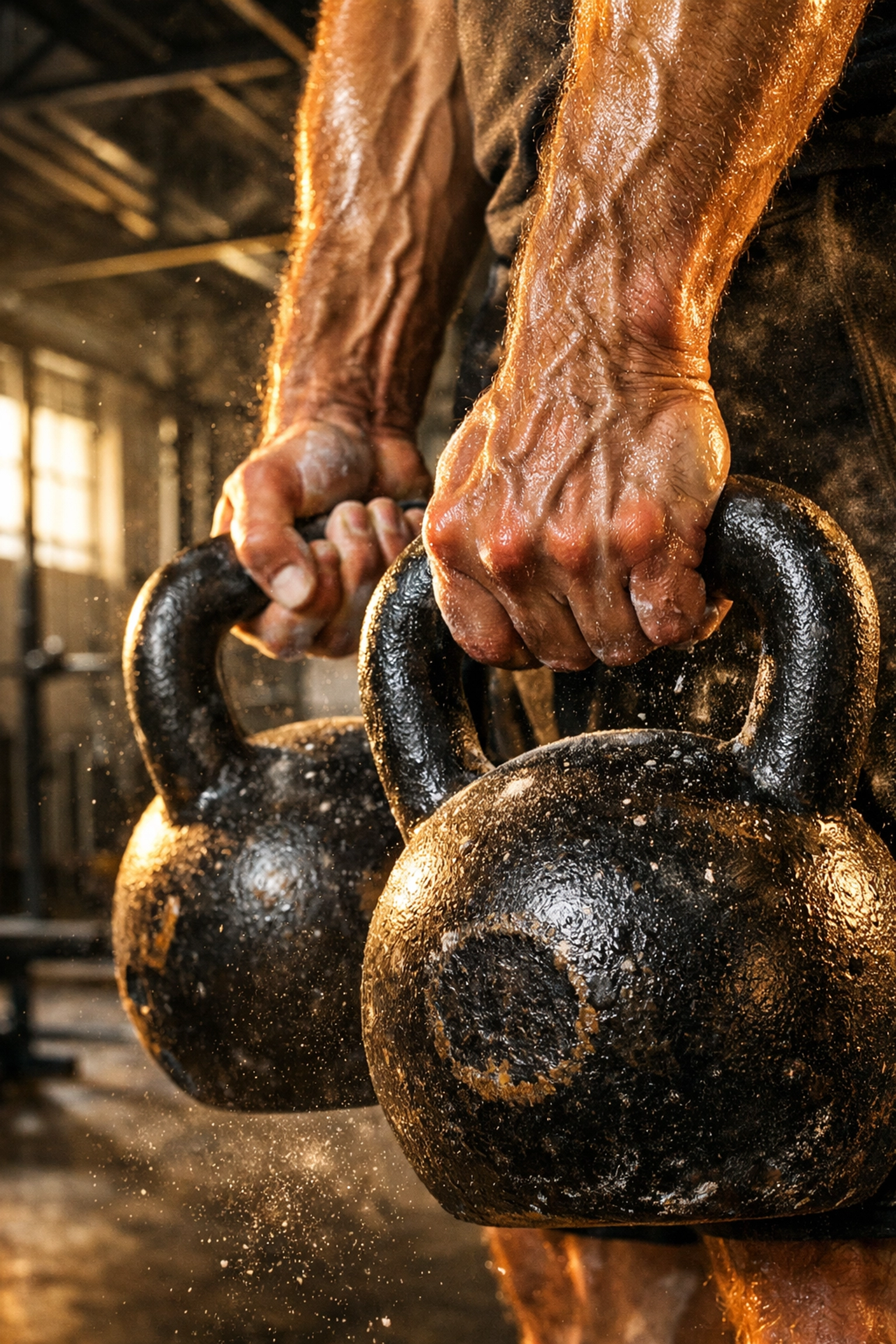
This is the king of grip exercises. Pick up the heaviest dumbbells or kettlebells you can safely hold and walk for 30–60 seconds. This builds "working grip" and challenges your cardiovascular system simultaneously.
2. Dead Hangs
Hang from a pull-up bar for as long as possible. This decompresses the spine while forcing your forearms to support your entire body weight. Aim for a 60-second hang as a baseline for heart health longevity.
3. Thick Grip Training
Use "fat grips" or wrap a towel around dumbbells. The increased diameter makes it harder to close your hand, recruiting more muscle fibers in the forearms and increasing the neural drive required for the lift.
Measuring Your Progress in 2026
In the current era, we have moved beyond the basic analog dynamometer. New smart-grips sync with your health apps (like Apple Health or Oura) to track your grip strength alongside your sleep and heart rate variability (HRV).
Tracking these together allows you to see how your "systemic reserve" fluctuates. If your grip strength drops by more than 10% on a particular morning, it is often a sign of central nervous system fatigue or systemic inflammation: indicating you might need a recovery day to protect your heart.
Summary Checklist for Heart Health
- Test annually: Use a dynamometer to find your baseline (refer to the table above).
- Monitor the trend: A sudden drop in grip strength is more concerning than a consistently low one.
- Integrate Isometrics: Use the 30% MVC protocol if you are managing high blood pressure.
- Lift Heavy: Prioritize compound movements like deadlifts and carries that naturally challenge your grip.
Handgrip strength is a simple, elegant, and powerful tool. It’s a reminder that the body is an interconnected system: and sometimes, the secret to a long life is held right in the palm of your hand.
About the Author: Malibongwe Gcwabaza
Malibongwe Gcwabaza is the CEO of blog and youtube, a leading digital platform dedicated to the intersection of biotechnology, fitness, and longevity. With a background in health tech and a passion for data-driven wellness, Malibongwe focuses on translating complex physiological research into actionable habits for the modern professional. When he’s not analyzing the latest longevity clinical trials, he can be found practicing the "Centenarian Decathlon" in his local gym.
About the Author