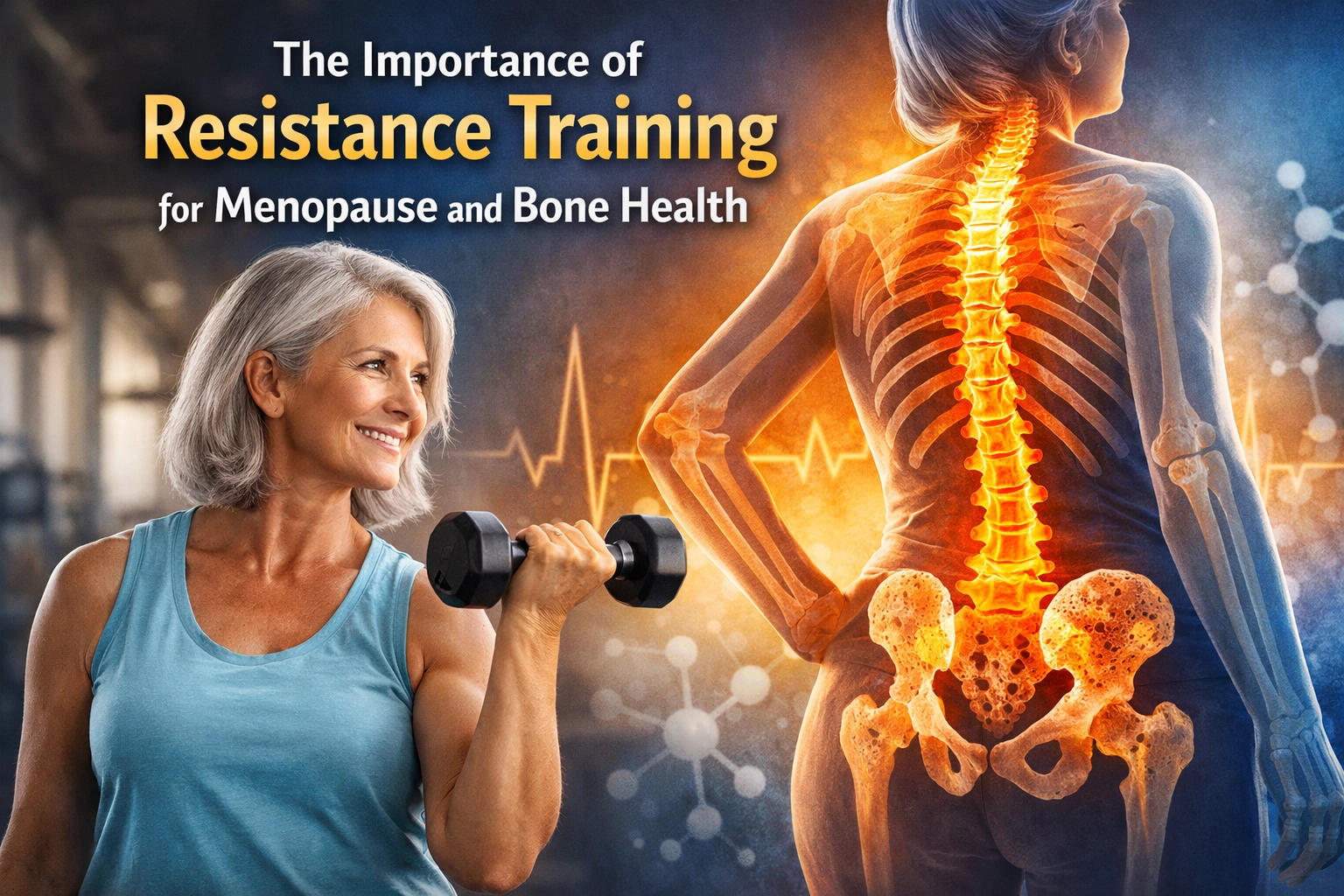
For decades, the standard health advice for women entering menopause was simple: walk more, eat less, and maybe try some light yoga. But as we move through 2026, the clinical consensus has shifted dramatically. If you are navigating the menopausal transition, "light" exercise is no longer the gold standard. To protect your skeleton, maintain your metabolism, and preserve your independence, you need to lift heavy things.
Resistance training isn't just a hobby for bodybuilders; for menopausal women, it is a physiological necessity. This guide dives deep into the science of why muscle mass is your "longevity currency" and how to build a skeletal system that lasts a century.
The Estrogen Cliff: Why Physiology Changes After 45
To understand why resistance training is mandatory, we have to look at the hormonal shift. Estrogen is often pigeonholed as a reproductive hormone, but it is actually a master regulator of female metabolism and tissue regeneration.
Estrogen plays a critical role in:
- Osteoblast Activity: These are the cells responsible for building new bone.
- Muscle Protein Synthesis: Estrogen helps the body utilize amino acids to repair and build muscle fibers.
- Insulin Sensitivity: It helps your cells take up glucose, preventing the "midsection weight gain" common in menopause.
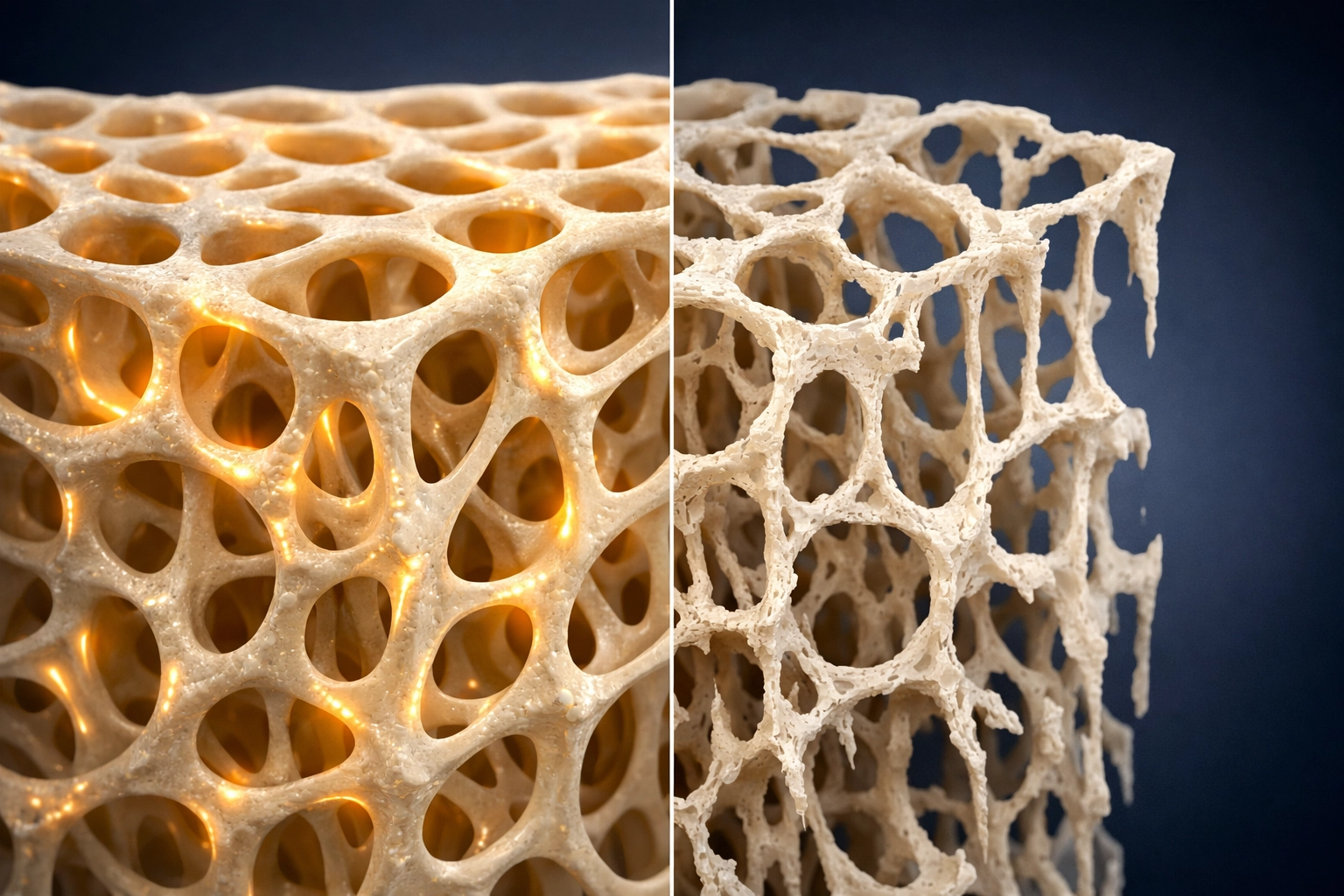
When estrogen levels plummet during perimenopause and menopause, the protective "shield" over your bones and muscles vanishes. Bone resorption (the breakdown of bone) begins to outpace bone formation. Without a powerful stimulus to counteract this, women can lose up to 20% of their bone density in the five to seven years following menopause.
The Science of Bone Health: Wolff’s Law and Mechanotransduction
Bones are living tissues that respond to stress. This is known as Wolff’s Law: bone grows or remodels in response to the forces placed upon it.
When you perform a heavy squat or a deadlift, your muscles pull on your bones via tendons. This mechanical tension creates a process called mechanotransduction. The physical "deformation" of the bone tissue (at a microscopic level) sends signals to osteocytes, which then recruit osteoblasts to lay down new mineral density.
Walking is great for cardiovascular health, but it doesn't provide enough "peak load" to trigger significant bone remodeling. You need the high-magnitude strain that only comes from resistance training.
Understanding Your Bone Density Scores (T-Scores)
If you’ve had a DEXA scan, you’ll see a T-score. Here is how the medical community categorizes these numbers in 2026:
| T-Score Range | Classification | Action Plan |
|---|---|---|
| -1.0 or higher | Normal | Maintenance via Progressive Overload |
| -1.0 to -2.5 | Osteopenia | Aggressive Resistance Training + Nutrition |
| -2.5 or lower | Osteoporosis | Supervised Lifting + Medical Intervention |
Sarcopenia vs. Dynapenia: The Fight for Muscle and Power
Most people have heard of Sarcopenia (the age-related loss of muscle mass). However, a more critical metric for women in 2026 is Dynapenia: the loss of muscle strength and power.
Research shows that we lose muscle strength three times faster than we lose muscle mass. During menopause, the decline in fast-twitch (Type II) muscle fibers is particularly sharp. These are the fibers responsible for "saving" you if you trip on a curb. If you don't train for power and strength, your reaction time slows, and your risk of a life-altering fall skyrockets.
The 2026 Data Point: A 12-week resistance training study recently showed that post-menopausal participants experienced a 19% increase in hip function and a 21% increase in full-body flexibility. Crucially, these gains were consistent regardless of whether the women were on Hormone Replacement Therapy (HRT) or not, proving that the muscle is still capable of adapting to stress even in a low-estrogen environment.
The 5 Pillars of a Menopause Strength Program
If you’re ready to start, you don't need to spend two hours in the gym. You need intensity and consistency. Here is the framework for an effective 2026 longevity-focused strength program.
1. Prioritize Compound Movements
Forget the "thigh master" or light pink dumbbells. Focus on movements that use multiple joints and large muscle groups:
- Squat variations (Goblet squats, Box squats)
- Hinge movements (Deadlifts, Kettlebell swings)
- Pushing/Pulling (Overhead presses, Lat pulldowns, Seated rows)
2. Focus on "Heavy" Loads
To stimulate bone growth, the weight needs to be challenging. In technical terms, you should be working at 70-85% of your One-Rep Max. In simpler terms: if you are doing 10 reps, the 8th, 9th, and 10th reps should be very difficult to finish with good form.
3. Add a Power Element
Because fast-twitch fibers disappear quickly after menopause, include explosive movements once a week. This could be jumping rope, medicine ball slams, or "speed" squats where you stand up as fast as possible.
4. Progressive Overload
The body adapts quickly. If you lift the same 10lb weights for three years, your bones will stop getting stronger. You must gradually increase the weight, the reps, or decrease the rest time to keep the stimulus "novel."
5. Frequency and Recovery
- Frequency: 2–3 full-body sessions per week.
- Recovery: Menopausal bodies often take longer to recover. Ensure you have 48 hours between intense sessions.

Nutrition Synergy: Feeding the Bone and Muscle
You cannot out-train a poor diet, especially when hormones are shifting. To maximize the benefits of resistance training, you need two primary building blocks:
- Protein is Non-Negotiable: Aim for 1.2 to 1.6 grams of protein per kilogram of body weight. If you are lifting heavy, your body needs leucine (an amino acid) to trigger muscle repair.
- Micronutrient Support:
- Vitamin D3 + K2: D3 helps you absorb calcium; K2 ensures it goes into your bones rather than your arteries.
- Magnesium: Essential for over 300 biochemical reactions, including bone mineralization and sleep quality.
Mental Health and the "Gymtimidation" Factor
We cannot ignore the psychological impact of menopause. Increased anxiety and "brain fog" can make the gym feel like a hostile environment. However, resistance training is a potent neuro-protective tool.
Lifting weights releases BDNF (Brain-Derived Neurotrophic Factor), often called "Miracle-Gro for the brain." It helps combat the cognitive decline associated with the menopausal transition and provides a sense of agency and empowerment at a time when many women feel their bodies are "betraying" them.
Summary: Your Longevity Currency
In 2026, we no longer view menopause as a disease to be cured, but a transition to be managed with precision. Muscle mass and bone density are not just about aesthetics; they are the literal foundation of your future health.
By committing to a progressive resistance training program, you aren't just "working out": you are investing in your 80s, 90s, and 100s. You are ensuring that you can carry your own groceries, travel the world, and remain metabolically healthy for decades to come.
About the Author: Malibongwe Gcwabaza
CEO of blog and youtube
Malibongwe Gcwabaza is a visionary leader in the health and wellness tech space, dedicated to bridging the gap between clinical research and daily lifestyle habits. With over a decade of experience in digital health media, Malibongwe focuses on "Healthspan": the idea that living longer is only valuable if we live better. He is a staunch advocate for evidence-based fitness protocols and is currently leading initiatives to make longevity science accessible to everyone through simplified, actionable content. When not at the helm of the company, he can be found in the weight room, practicing what he preaches.
About the Author